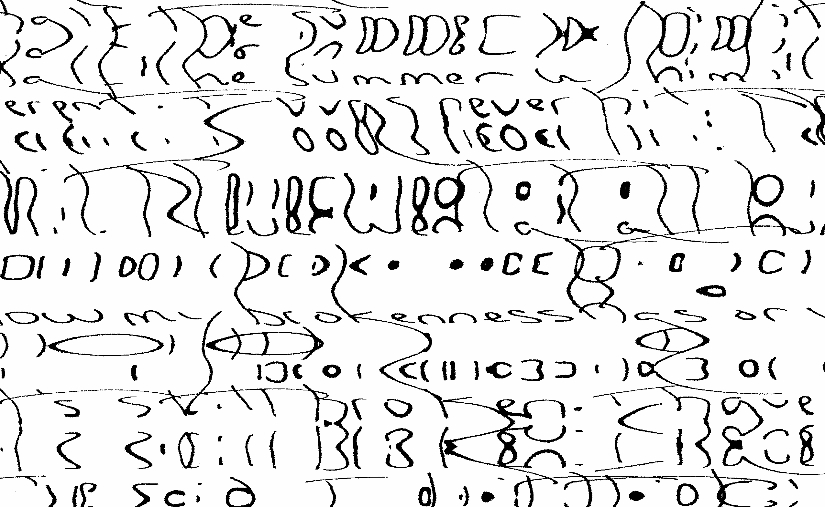
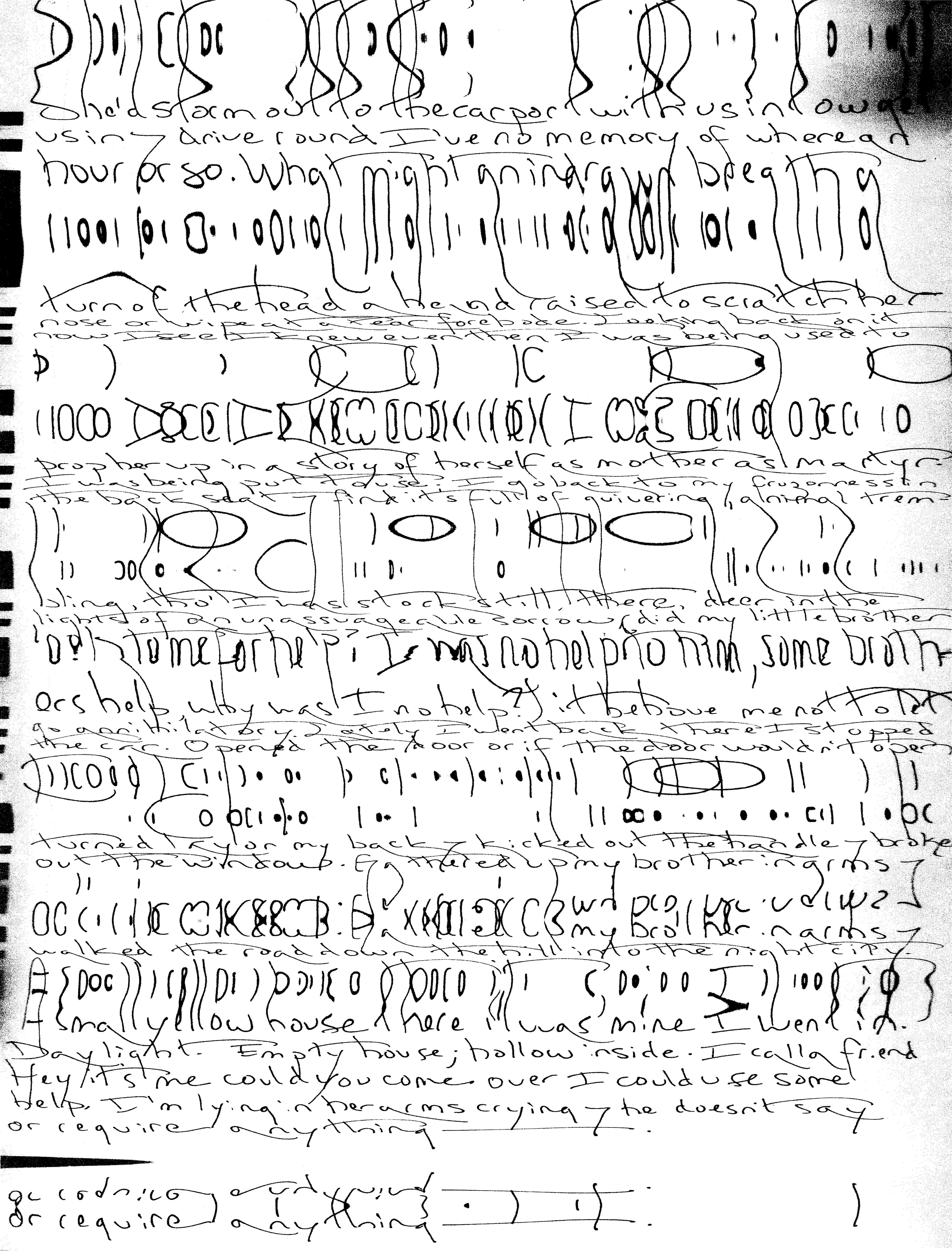
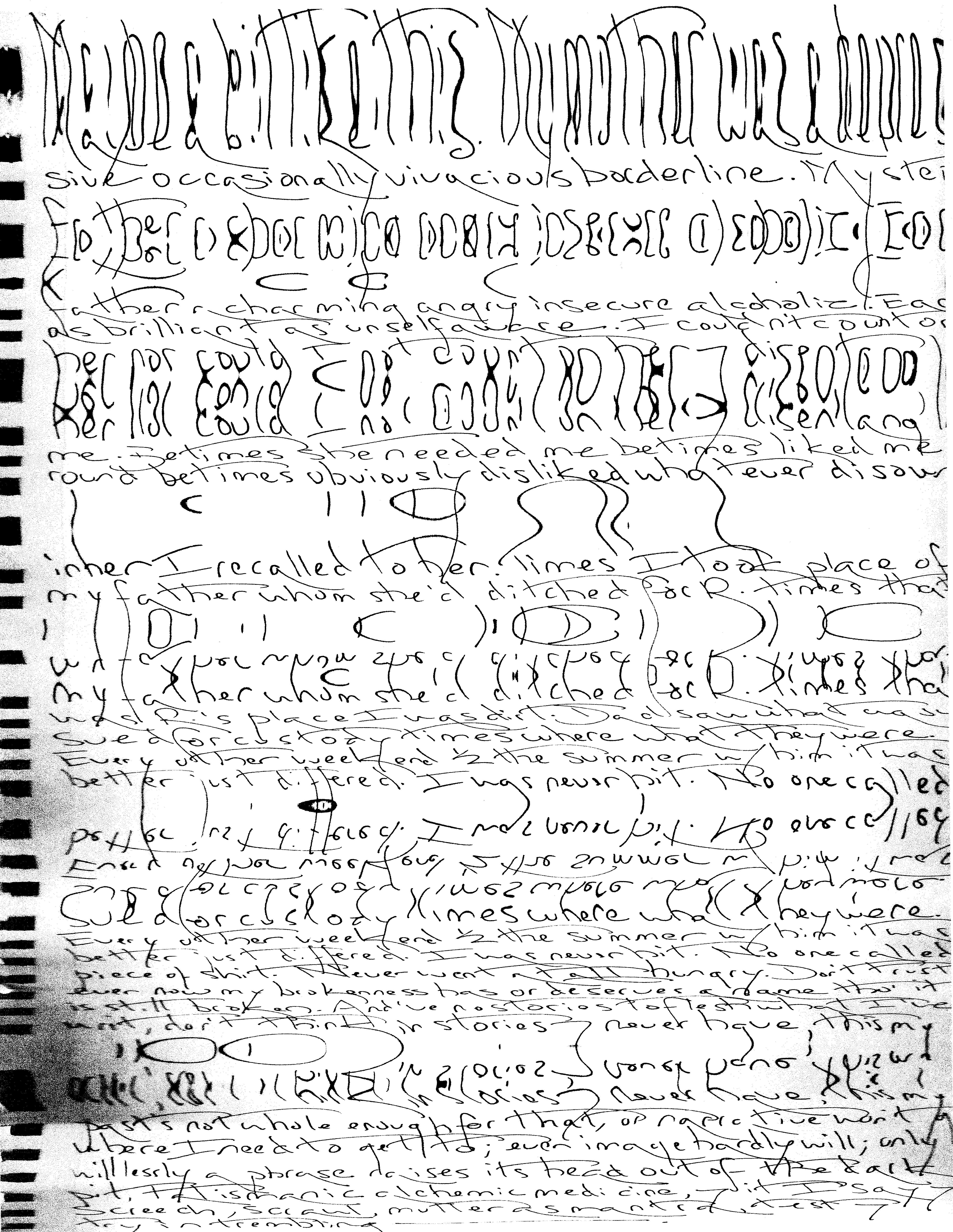
Asemic writing is writing you can’t read. Semic writing is writing you can. (A back formation, there’s no such word.) I am at play, finessing the difference, with aasemic writing.
A joy of asemic writing is that it draws all the promise of meaning-making, all the whole multifoliate interpretive apparatus, into activity, w/o resolution or conclusion. It’s Steinian indeterminacy, in not the syntax but the graphemes. It’s the made mark as blastocyst, as stem cell, as potential to become. Is it a Deleuzian plateau? Maybe, still sweating that concept out.
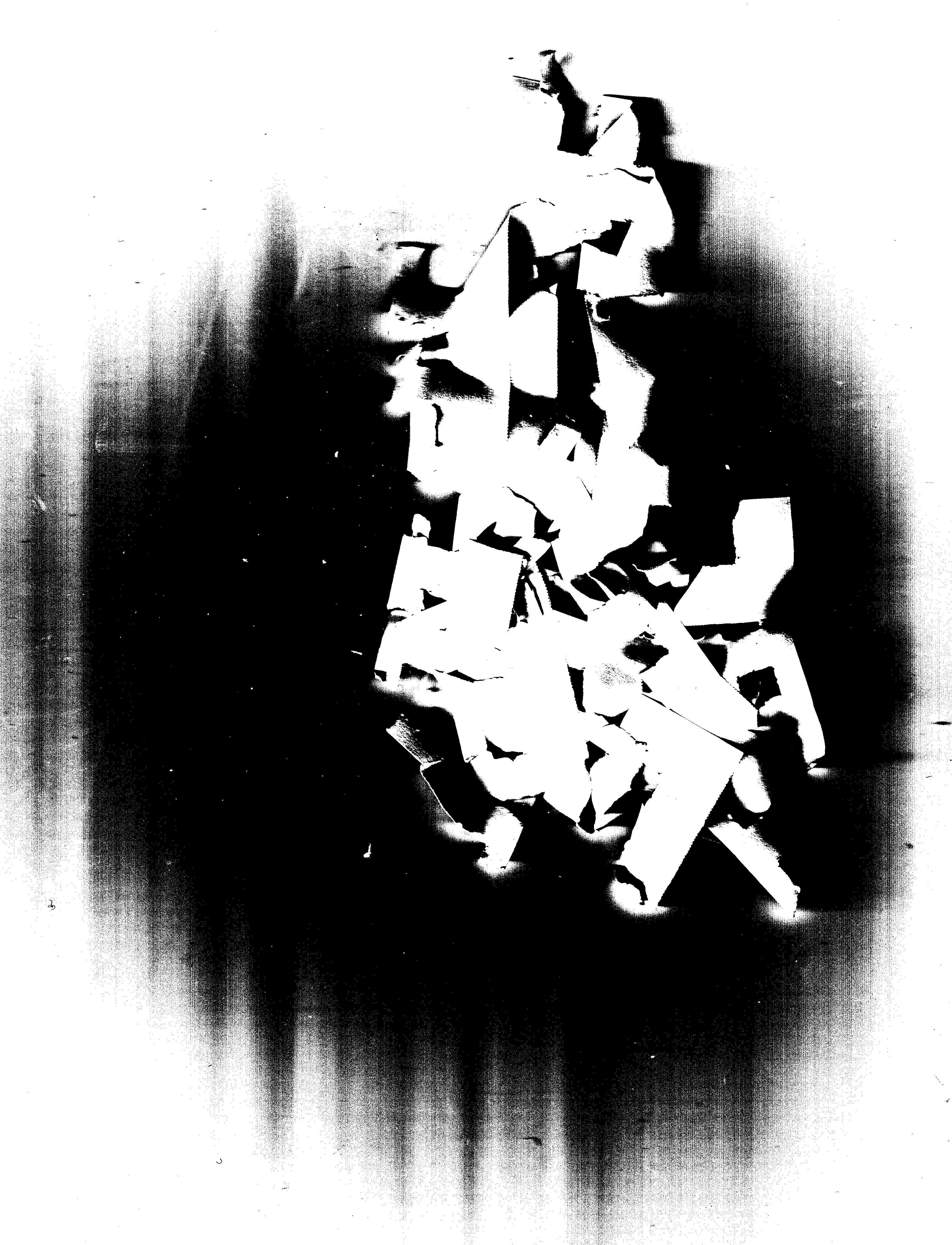
So the aasemic script I’ve been playing with is neither indeterminate nor determinate. (GOD you can take this non-dualist thing too far, mm? how’s this not just centrist squish?) It starts with a journal page transcribed in a projective hand – descender a plunge, cross-stroke a jailbreak. Then I wave or shiver it over the photocopier light bar as it slides under, gathering data in.
All this is lead in to say, The New Post-Literate has posted a few, and that makes me happy, cuz they’re the first bits of Overject to be published, other than here, which don’t count. Here’s the link.
And here are a few other recent offerings there I think especially cool.
The home page of The New Post-Literate where it’s all to be found.
A lot of my trouble w/ academic parlance comes from trying to translate Buddhist vocabulary and values to a non-Buddhist circumstance. Most of the rest of it comes from being a lazy and a lousy Buddhist. (The latter’s 90%.)
Feste to Viola, Twelfth Night, “I am [a] corrupter of words.” After they’ve just rung their changes on live, stand, lie. I compared the move on lie to a triple-axle – Viola to Feste, “yo watch this move” – and one of my students found a sextuple axle in it, bam. Post-structuralism, its insights, e.g., words’re banana peels, dates back at least to Shakespeare, if not to Jesus? “On this rock I build my church,” that’s a pun, Jesus is making a funny, I told them, explaining the finger joints of a dactyl, by way pterodactyl. Petros (Peter), petra (rock). Long live the rhizome. Weed shoot that cracks the rock.
What made me think to redesign two courses, poetry workshop, Shakespeare intro, at the same time? I sniffle this at the tail end of a 60 hour week, on my way into another, having calced that, when I work I mere 40 hour week, I earn what I would serving burgers in SeaTac, where a sane minimum wage is on offer. Last week, and this, more like $10 an hour. It’s good I love what I do.
And I do. Above’s not what I sat me down to whine. Sat down rather with this.
Was slipping across campus, fat binder in hand, full of matter I spent days compiling for a teaching award I am, for reals, honoured to be considered for. That compiling said matter for consideration is exhausting depleting and ironic is no one person’s fault and goes some way to explaining abstractions like Patriarchy and The Man.
Was gliding across campus, one student evaluation in there heavier than all the others, it called my course asinine and me moronic. Now I’m insecure about a lot but smart ain’t on the list. (About the only thing not on the list? Uh oh.) But that someone was harbouring that much hate and I didn’t know – K that hurt.
Friend teachers, you know this, right? A hundred evals, ten adoring, thirty really fond of you, thirty more are favourable, twenty-five more are various flavours of meh, and five kinda somewhat negative, and one of those over-the-top hostile. Which one stays with you? Which do you have conversations with in the 3 am? Way to get my attention.
All this is to say, I’m lugging this fat portfolio to the office where I need to drop it, and I run into A., a former student, and we say a happy hi. She says, you look exhausted, I say, that’s funny, I am exhausted. I ask how she is. She says not so hot. I say what’s up. She tells me what’s up, a bit. I say, are you getting some help. She says she is. I say, come by and talk, and we make a plan for her to.
A couple hours later, I remember talking to my chair, about a senior colleague poaching my classroom, in a way that felt, I’ll use the word uncollegial. And K., my chair, getting it and asking, how can I help, and me saying and I really meant it – the help I need, you’re giving by hearing me.
Brushed my mind, remembering that, maybe I might have been something like that, a little, for this kid. Why do I give a flying fuck about evaluations.
They’re momentary gestures of mind, captured freeze-dried and framed.
I teach a poetics of the moment. I’m testing a pedagogy of the moment. What would be an institution of the moment? Anarchy, probably.
Anyway, I dropped off my fat gelid binder of congealed impressions, and back on the same walkway, happily met two current poetry students, both smart and talented, one quiet and very keen, one confident and a bit slacker, and we chatted a couple minutes about John Taggart’s “Rothko Chapel Poem,” which, ahem, at least the second hadn’t started, but still I came away thinking, you guys are why I do this.
An award would be nice. Won’t get it but that’s beside the point. Only connect. It keeps recurring in Tom Phillips’s A Humument and while superficially it’s a shout-out to Forster I think more truly it’s a distillation of all that’s holy in the English literary tradition, worthy of salvage. I find it writ large in Taggart –
To love to love those to love those who
are in to love those who are in a condition
in a condition
of hiding to love those who are in
a condition of hiding to
love those as children as the
valiant children who have gone into hiding
children who hide in a house from the roaring.
Care touches the face, untwists the face. (“Peace on Earth”)
and even crosswise in Malvolio, the poor sod. We’re bound to misunderstand each other. Is that what his cross-gartering means. I thank him either way for saying so.
I was having trouble finding an image for topside. Liked this I found in Jacket 2 but it felt in the wrong key for the post –
John Taggart
Decided, blogger of the mo, to just plug in a phrase from Taggart, “care touches the face,” and use something from the first screen of image results.
Oh my fucking dear.
Want to try it? Try “care touches the face” as an exact search string, w/ quotation marks, see how much comes up, how much care we have for this great man and his work. (I got 3 images.)
Now try ‘care touches the face’ without quotation marks. What great care we have for skin care products, deathlessness, commerce, sex, and the pubic triangle one of those sits at the centre of.
I got lucky (“got lucky”), the latter search, specs set to large image, got me to this somewhat earnest site, God love ’em. Gotta go teach tomorrow, g’night.
Oh my, getting prepped to teach Shakespeare takes some time. Eats whole days, all up, slurp and yum. Well here’s, as a sort of sorbet, and sans much comment, another bit of Martian script for yehs.
The source text, a draft of it, should you wish it’s, here.
I’m liking how movement across the moving beam of the copier instantiates hesitancy, rush, prolongation, quavering. Not necessarily exactly when and as I felt them, writing this, but I felt them, writing this.
Pee, ess, I say “Martian script” with deference to Hélène Smith, and mean what is called more properly asemic writing, to which a not bad intro is here. Ah I’m commentating said I wouldn’t that.
I was at a lovely poetry event last night, Kitchen Sessions Bellingham, very capacious in its tastes (its heart also), though the emphasis was spoken word, and I found me thinking near the end, Cool. Spoken word poets are the scops, the bards, of our time. And this form they work in, spoken word, is about the one form we’ve got that says direct intense heartfelt personal disclosure is crucial to (not an impediment to) the art.
And here you are (we in here said to me) doing “total translation” of an oral poem. Which means sometime or other you’re going to need to translate its orality. Meanwhile here you also are, wanting to draw intense heartfelt you into art, without arting it up the way your literary training says you’re supposed to.*
And so why not (we in here said to me) take these journal pages you’ve been making, and rewrite them as performance poems?
Brilliant! Didn’t work.
Who knows, maybe I’ll make and do a performance poem, now that I see I’m not done till I also translate the poem’s oral being, but the journal pages (here’s the one I’ve been working with tonight –
–) are wood, not plastic, have grain, can’t be remoulded into just any shape.
These thoughts come quick on the heels of an e-mail exchange with one of my most trusted readers about a draft of a bit of Overject. She expressed, not doubts, not trepidation, nor unease – astonishment, that’s the word, a mix of consternation and amazement – about the journal pages, of which the above’s one of three. And they were the three I was most concerned of, not for the personal exposure, surprisingly that don’t fret me much, but for the aesthetic risks they run, which are grave: banality, triteness.
So, the other play I’ve tried out this evening, is to rock** or wave the sheet up and down as the scanner scans. A translation of orality, I suppose, in that it makes visual the scop‘s or the slam poet’s speeds and slows. Sort of, sort of.
And I think, we’ll see, that’s how it’ll look in the book.
The Martians are writing us.
Not to us – us.
* Why not? I think we’re back at “total translation = translate the translator.” The text is made of layers, some of them finished, some of them inchoate. The translator is made of layers, some of them public, some of them inchoate.
** How is rock the verb for the gentlest most restful action imaginable, the noun for the oldest hardest substance known to us? (I’m setting the music aside for the mo.)
That’s a wrap on Spring and All and great good fun it’s been. Dunno if I’ve had a class meet this one so freely or fleetly before. Here are their first exercises in case any’d like to play along:
Write a poem that interrupts itself more than once.
Write a poem that enacts or embodies spring.
Write a poem with no metaphor or simile in it.
Any familiar with Spring and All will get why. (WILLIAM LOGAN. YOU COULD TRY THESE. IF YOU THINK THE HISTORICAL WHEELBARROW MATTERS TRY THESE.
And I quote, “The only realism in art is of the imagination.”
And I quote, “First must come the transposition of the faculties to the only world of reality that men know: the world of the imagination.”
And I quote, “poetry: new form dealt with as a reality in itself.”
WILLIAM LOGAN. THE PROVENANCE OF THE RED WHEELBARROW DON’T MATTER. READ THIS. SAVE YOURSELF. WE SUFFER W/ YOU. – da white chickens
and no we no Plato)
So much to say about this little poem, which is so easily denatured, benumbed, by anthologies, high school classrooms. Students often come to college hating it. Or, worse, thinking it a metaphor. Consider, there’s no metaphor in it –
so much depends
upon
a red wheel
barrow
glazed with rain
water
beside the white
chickens
How, though, does it tell us not to cut to metaphor? Its particularity. There aren’t a lot of particulars, but those there are, they have roughness, rugosity, they refuse the reduction, the simplification, the let’s just say it dumbing-down, you gotta do to a thing before you can make it tenor in a metaphor, and space-tie it to a vehicle. That the rainwater glazes the surface it lies on, makes it tangible, specific, momentary, and unconvertible.
It’s language, so it’s part of a system of semiotic exchanges, no way round that, but it resists entry into the second-order system of exchanges that sustain literary tropes like metaphor. It refuses to be made currency.
—What depends on a red wheelbarrow,
I asked them to consider, beforehand, and please commit it to paper?
—And be particular?
—The poem, one said, depends on it.
Yeah, good answer.
The wheelbarrow is, as one student said, touching our earlier talk of Buber’s I-Thou, let be a value in itself. Though it’s in ordinary use a tool, instrument, for the sake of the poem it’s a good in itself. (Coulda gone to Heidegger there but thought to spare her. But think Van Gogh’s worn out shoes.)
I got tenor and vehicle the wrong way round up there, but I ha!, like my metaphor too well to bother to fix it.
This one is, by the by, for my old teacher Don Revell. I wonder how he is.
Much else I’d love to say, but time presses, and appetite. I treated myself last night to a Dungeness crab after a tenured colleague made me sad, angry, perplexed by poaching my classroom from me – today I well remember I’m contingent labour – and half’s in the fridge there awaiting me eagerly.
So I won’t try to say all the else about the poem I learned today from talking with my students about it. Why it’s a not the red wheelbarrow – the definite article would be more particular but at the cost of exclusion. And how much world comes to mind metonymically, a barnyard and American era, without the edge-smoothing of metaphor (“not that there’s anything wrong with that”). That each line is a moment of perception beseeching total attention. For reals, see how it’d be broke if the lines broke different –
glazed with
rain water
beside the
white chickens
– it’s destroyed, right? All the held energy, everything bearing the elements up in a network of dynamic tensions, gone. Line as perceptual trace. A whole world for as long as it lasts, and gone when it’s gone. So the next can live.
One week in, both my classes, and they’re so nice! In a life that feels, gonna just say it, a bit thin for human company, my teaching is textured, rugose. They go by fast, these students, even those I connect with beyond the usual. (They’ve got lives to get on with, yo?) But in their meteoric transits through, briefly they’re as if my kids – kids I never raised, but get to feel tender toward a spell, aren’t they.
Didn’t think to go there. (Even the ones who don’t remember my name. The ones whose names I have to reach for. Somehow, and more than formally, them too. What is that?) (A leopard makes a rhizome with a newborn baboon. Our instincts, drives, are endlessly various and flexible; are originally free; hence, maybe, art.*) (There’s a thesis for you – interspecies bonds and art happen by the same mechanisms.**)
My mind goes this way, these ways, thanks to William Carlos Williams’s Spring and All, first text of our rhizome workshop, whose motive is life and more life, life in nooks and crannies, life in standing water and sickbeds. Spring and yes are synonyms.
It’s late, Sunday tracking to Monday, so just this, second para:
There is a constant barrier between the reader and his consciousness of immediate contact with the world. If there is an ocean it is here. Or rather, the whole world is between:
Consider how odd that is. Intimacy with the world is intact. Consciousness of intimacy with the world is intact. There’s a barrier, and it’s constant, but it’s not anywhere you’d think to posit it. More than intact, maybe, inviolable, and yet, a barrier, a constant one.
And more – the barrier between you and your awareness of intimacy with the world – is the world. How are you not intimate with that?
Dharma of a red wheelbarrow. Why the participle glazed matters, why the prepositions, their stationing in mental space, matters.
so much depends upon
a red wheel barrow
glazed with rain water
beside the white chickens
And a key to Paterson. I think so. Williams is a shitkicker, but his question’s a loving one, why don’t we treat each other more tenderly as we might? That’s not rhetorical – if it were it’d be schlock. He’s really asking. He puts a life’s energy into asking.
He moved me to ask it too. I tend to ask in the first person singular, cuz the plural feels presumptuous, though as I’ve looked at my poetry this weekend, I’ve had fears of narcissism … I, I, I, the vowel in die, the vowel in live (adj.) …
In which vein, this little one came yesterday, out of crumpled disjecta, I see a bear cub, but that may be my pareidolia talking.
* Check out that link! See if you don’t think art is incipient there. In the leopard’s uncertainty – do I nurture or do I pounce. In its unfitness – how will it feed its new charge. And in its untowardness – it’s ventured where it should not have. Those are three of the uns of art, yes, no?
It’s broken, I mean, into a new space, which it, and the baby baboon, and the forest, and 2 million YouTube views all honour in their ways.
As I do you by tapping “Publish.” G’night.
** (Next morning.) Try this. Art is second-order play. Art is when play becomes the content of new play. Which could be why it feels to us both vital and inutile, and why its nature slips out of our grasp, and why we’re tempted to think of it as transcendent, when in fact it’s supervenient …
Some friends on Salt Spring Island are raising money so they can invite two, maybe three Syrian families to come live there with them there. Maybe they will make new lives, new starts, there. Maybe they will go from faces in the news to friends you run into in the grocery store. How nice is that?
It strikes me as the most, a sliver of the only, important thing.
If you want to send them a few bucks you can here.
It’s hard to feel loss even when it’s right in your face. My dad, he’s in decline, I don’t want to see it. Three hours after we’d had lunch together he was asking if I’d had lunch with them. He’s going. Next time I see him he’ll be a little more gone. Don’t want to see or feel any of it. And yet I don’t want not to more.
And when it’s not your family, and not your people, and not your problem …
And yet it is, and it is, and it is – and you know it, yo?
A bit more from the syllabus of my upcoming poetry worksop.
How’s that for a Freudian typo. Workshop.
Something started happening with the presentations in a class I taught last spring. Between the work of the presenting student, and my pesky interrupts, and the contributions of everyone else, they ceased to be presentations, without becoming anything else at all defined. A little bit seminar, a little bit Q&A, quite a lot of free-for-all. The presenter and I were, in effect, teaching the class together in an ongoing improvisation, and though there was sometimes awkwardness there was a lot of joy. I think a lot got learned. I came to call the practice co-teaching.
Scruffy, unpredictable, co-teaching is a surrender of control and dispersal of authority very much in the spirit of the rhizome. So I propose that we take up co-teaching as a practice this quarter also. First time round, it came adventitiously, and I don’t want to over-plan things now, it might kill the spontaneity. Soon to come, then, bare traces of a structure, offered tentative, for us to revise if we find them too much, or too little, or simply amiss.
For now. Each of you will sign up to co-teach one poetry text and one poetics text. (Full list below.) In most cases you’ll be collaborating with one fellow student and with me. I’ll give you some pointers – poems or concepts I think important to touch on in the text – and will count on you to develop a plan of action, ahead of time, with your student collaborator. (If you need to involve me in your plans ahead of time, cool, but otherwise I’m happy improvising in response to whatever unfolds.) Sign-up will happen soon, so please acquaint yourself with the course texts promptly.
The list, i.e., the crazy we be up to:
William Carlos Williams, Spring & All
Robert Creeley, Pieces Charles Olson, “Projective Verse”
John Taggart, “The Rothko Chapel Poem” Denise Levertov, “Some Notes on Organic Form”
Ghandl of the Qayahl Llaanas, from Nine Visits to the Mythworld* John Cage, “Lecture on Nothing”
Will Alexander, from Towards the Primeval Lightning Field* Calvin Bedient, “Against Conceptualism” (CV)
Adonis, from Selected Poems* Federico García Lorca, “Theory and Play of the Duende”
Jean Valentine, Break the Glass Lyn Hejinian, “The Rejection of Closure”
Coral Bracho, from Firefly under the Tongue* Adrienne Rich, “When We Dead Awaken”
*Selections to be worked out in consultation with co-teachers.
From Poetics of the Rhizome. A course set to start soon.
Before the World Wide Web, there was a worldwide web. Human beings are recent guests in that web, guests often rude and destructive, but sometimes stunned with awe, or love.
[T]he Great Subculture which runs underground through all history … [a] tradition that runs without break from Paleo-Siberian Shamanism and Magdalenian cave-painting; through megaliths and Mysteries, astronomers, ritualists, alchemists and Albigensians; gnostics and vagantes, right down to Golden Gate Park. – Gary Snyder, “Why Tribe”
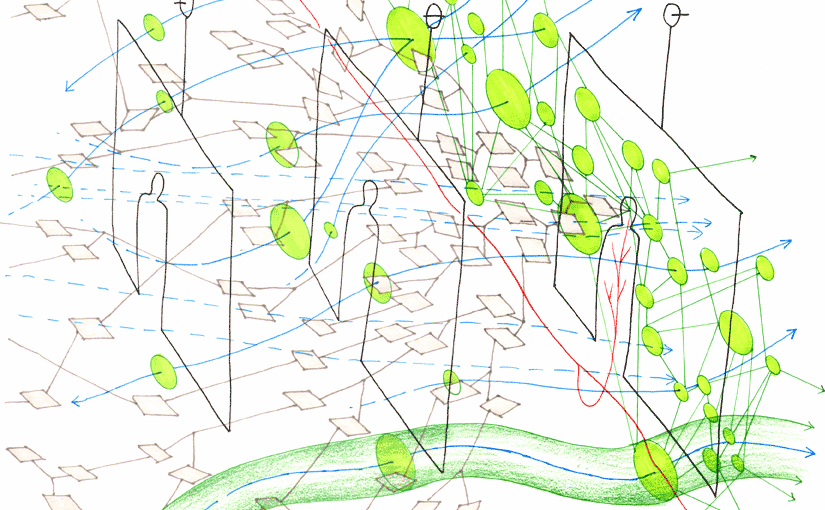
Rats are rhizomes. Burrows are too, in all of their functions of shelter, supply, movement, evasion, and breakout. The rhizome itself assumes very diverse forms, from ramified surface extension in all directions to concretion into bulbs and tubers. When rats swarm over each other. The rhizome includes the best and the worst: potato and couchgrass, or the weed.… The wisdom of the plants: even when they have roots, there is always an outside where they form a rhizome with something else – with the wind, an animal, human beings…. “Drunkenness as a triumphant irruption of the plant in us.” – Gilles Deleuze and Felix Guattari, A Thousand Plateaus
I would describe poetry as ecology in the community of words. – Jed Rasula, This Compost
[T]he separate perspectives of my two eyes converge upon the raven and convene there into a single focus. My senses connect up with each other in the things I perceive … each perceived thing gathers my senses together in a coherent way, and it is this that enables me to experience the thing itself as a center of forces. – David Abram, The Spell of the Sensuous
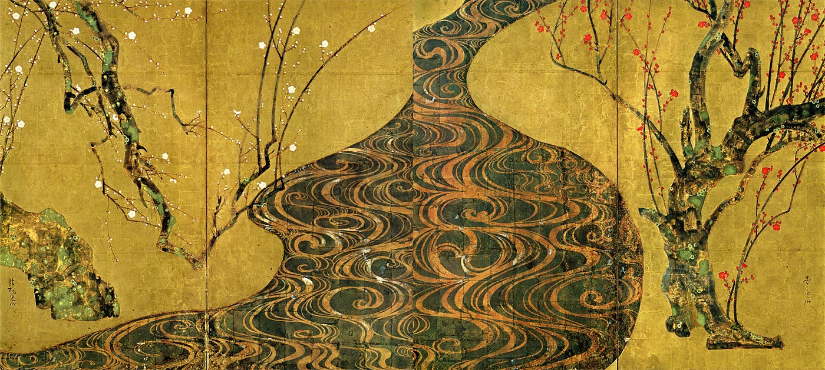
This old plum tree is boundless. All at once its blossoms open and of itself the fruit is born. It forms spring; it forms winter. It arouses wind and wild rain…. Its whirling, miraculous transformation has no limit. Furthermore, the treeness of the great earth, high sky, bright sun, and clear moon derives from the treeness of the old plum tree. – Eihei Dōgen, “Plum Blossoms”
Most of each thing is whole but contingent on something about the nearest one to it – Fanny Howe, “The Splinter”
Common threads here are multiplicity and interdependence. There’s no one way to be human. There’s no one way to be a poem. There’s no one way to be at all! And no one way to say so.
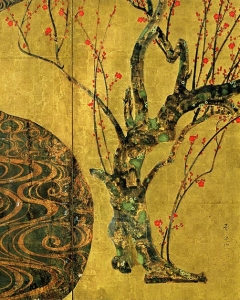
My students are you reading. Winter is coming. You’re gonna be asked, early on, to write spring. The image atop is Red and White Plum Blossoms by Ogata Kôrin. You can read a nice treatment of it here.
Here’s what Dōgen Zenji, my teacher’s teacher’s teacher, and on, has to say about painting spring:
When you paint spring, do not paint willows, plums, peaches, or apricots – just paint spring. To paint willows, plums, peaches, or apricots is to paint willows, plums, peaches, or apricots. It is not yet painting spring.
It is not that spring cannot be painted. My late master, old buddha, he alone was a sharp-pointed brush that painted spring.
So be the sharp-pointed brush painting spring. Or whatever.
Last week I had the pleasure of reading in the epic recital of Beowulf at Bellingham’s local meadery, Honey Moon, þæt wæs good fun. The opening lines wouldn’t quit me after so I kept messing with them. Here’s the result.
My first movie. Crude stuff, okay, but what I’m keen on? Putting images I’ve made by hand in motion and putting sound and voice to them. Doubt I’m done exploring that.
Check out, while I’m channeling the pre-mod, Benjamin Bagby’s astonishing recreation of these same lines. My Old English is too crappy for me to know for sure, but I think he’s probably the Olivier, the Brannagh, of the scop set.










 My students are you reading.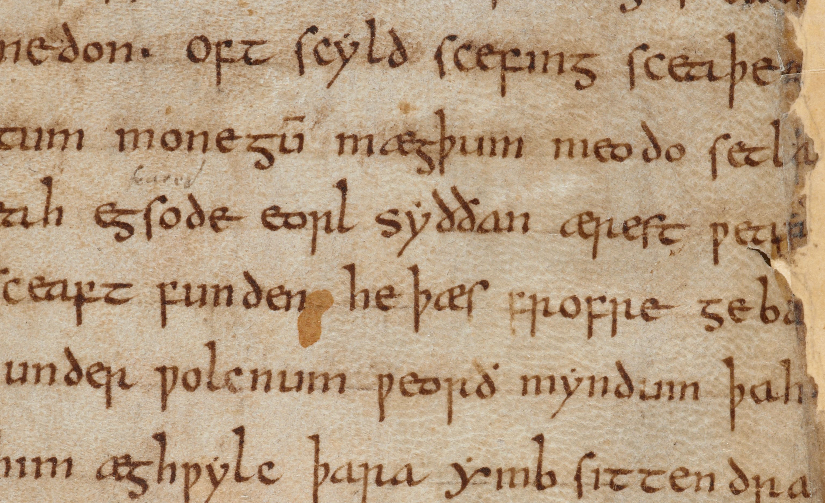
 The Art of Compost