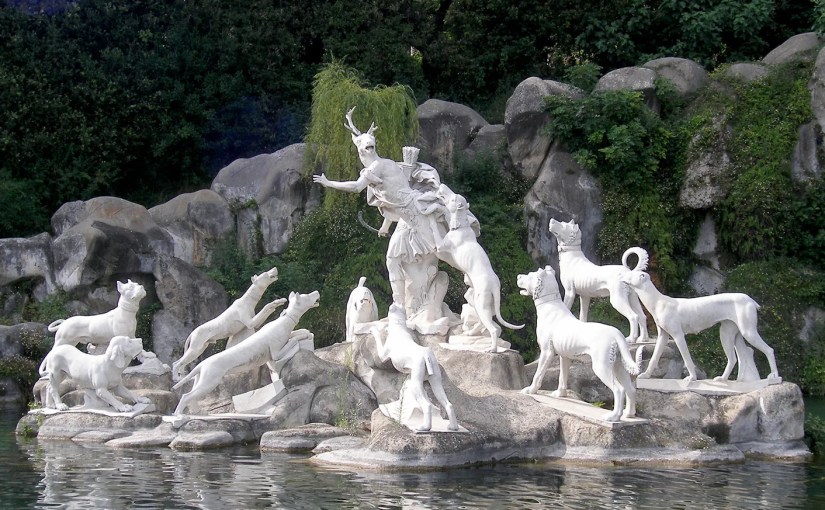
Dougal Fraser, 1944 – 2014

Tomorrow is the memorial for a favourite teacher, Dougal Fraser, up in Vancouver, and I’m not going to make it, having been laid low with bronchitis and a slipped disk (yes one can cough that hard), so I’ll post here the remarks I’d thought to make there.


Mostly I want to say that Dougal helped instil in me a love of poetry that will last me my life long. And that’s a comfort I thank him for. And so I thought I’d read a few bits of poetry that came to mind when the invitation came to speak today.

One speaks to my sense of something dark or even tragic in his seeing. Because it’s hard being a person, it just is, and he knew it, and he wanted us to enter the world not ignorant of the fact.

This is from the Old English poem “The Seafarer.” The speaker is saying why he prefers a life of restless wandering at sea to one of easy complacency on land. And today I hear in his words a case for a life of restless wandering in mind.

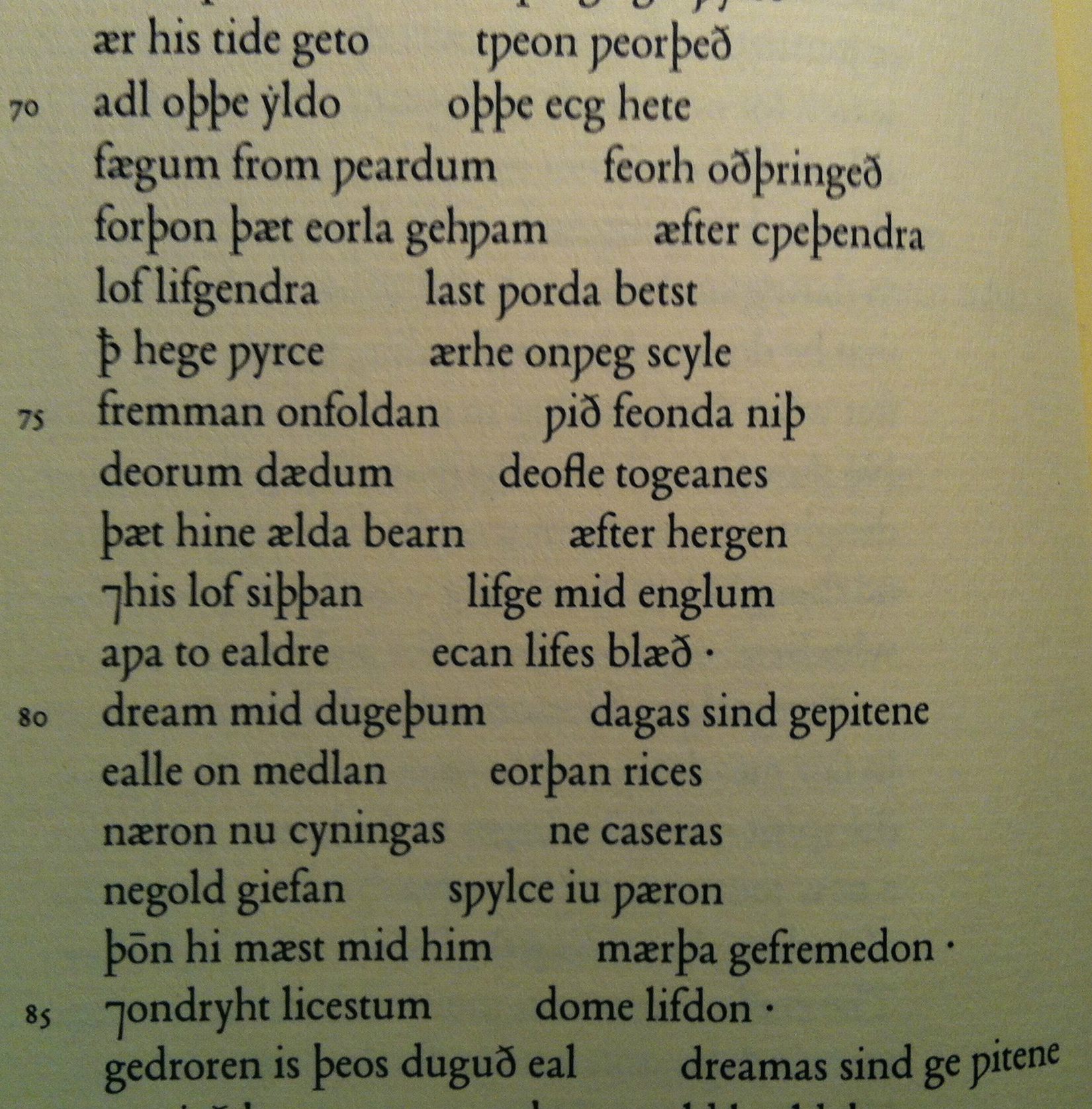
The Old English poem, the bit I have in mind, looks like this

Seafarer

and sounds

a little like this

and translated goes a bit like this

Always, for each, one of three things
near the end has thrown all in doubt:
illness, old age, or rage of the sword
wrests life from all who must, fated
to die, go forth. The best word-trace
a man may leave is the praise of those
who live to speak afterward: how he
brought to pass, before he went on,
good works on earth against evil,
daring acts to confound the devil,
the children of men praise him after,
that praise resounds forever and ever
among angels, the glory of eternal life,
joy in the host of heaven. Those days
of majesty on earth have passed now
though, there are no kings or caesars
or goldgivers like there once were,
performing the most glorious deeds
and living in lordly renown. Fallen
that company and past those joys.


Dougal was also, as all who knew him know, a reservoir of joy, and irreverent unto high iconoclasm, by which I mean a great clown, a clown of greatness. So Shakespeare’s Falstaff comes too to mind — the one whose wit’s so sharp it might skewer not just kings but kingship. Here he is on the verge of undoing the whole code of manhood and warmongering.

How then? Can honour set to a leg? No. Or an arm? No. Or take away the grief of a wound? No. Honour hath no skill in surgery, then? No. What is honour? A word. What is in that word ‘honour’? What is that ‘honour’? Air. A trim reckoning. Who hath it? He that died o’Wednesday. Doth he feel it? No. Doth he hear it? No. ‘Tis insensible then? Yea, to the dead. But it will not live with the living? No. Why? Detraction will not suffer it. Therefore I’ll none of it. Honour is a mere scutcheon. And so ends my catechism.

Scutcheon: decorative heraldic panel. That his agenda’s mostly selfish just sweetens the dish.


I didn’t come to either of these works in my studies with Dougal — only later. As a last taste, one bit from something we did read together in Brit Lit 12, whose magnificent rhythms made it through my thick intemperate skin somehow. This from 1 Corinthians 13:

When I was a child, I spake as a child, I understood as a child, I thought as a child: but when I became a man, I put away childish things. For now we see through a glass, darkly; but then face to face: now I know in part; but then shall I know even as also I am known.

Dougal, I don’t know who you are seeing face to face right now — maybe a heavenly host, maybe a diet of worms — but I hope you are having a good laugh together. You were brilliant and fickle and kind and mean in the best imaginable way and one of the most fully human beings it has been my good fortune to know.

Paperwhites, for Elise

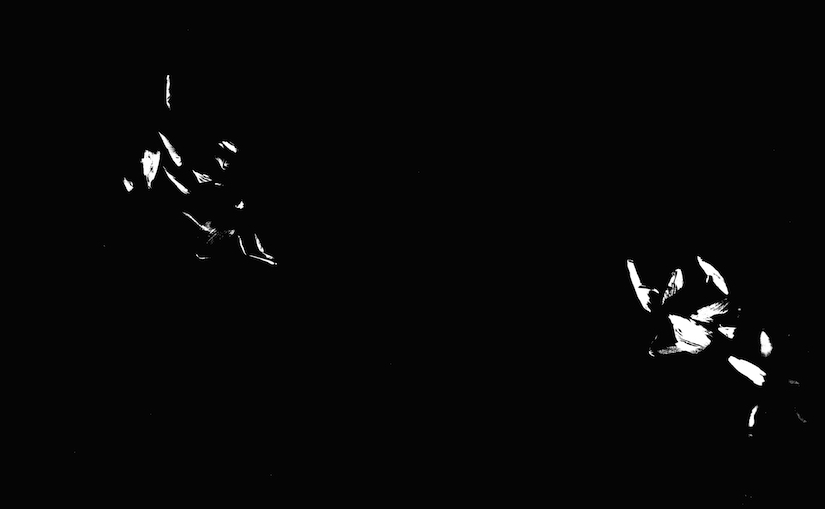
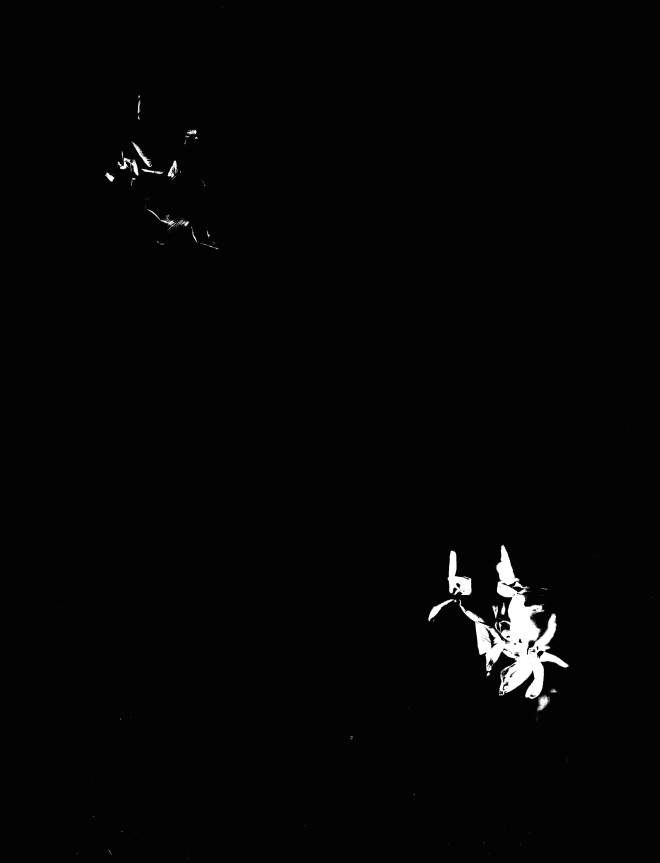
An exercise I give my poetry students: “Write a flower. Don’t write about a flower. Just write a flower.” Heh heh. Evil sumbitch I am. But I think I might have done that this morning. I had vaguely in mind to cut some paperwhites (narcissus) I had growing indoors from bulbs when they first began to falter and bring them to the photocopier and see what they had by way of elegy in them.

So I did. This one’s I think the best to stand alone. If I keep thinking so it’ll end Dumuzi as Paperwhites, for Elise.

Paperwhites, for Elise

Elise was always a bit scandalized (and skeptical and intrigued and mortified and drawn) by my drift in this direction (“Chris, you’re not going to abandon MUSIC, are you?!?!?”) and I offer her this elegy in the cheerful teasing spirit in which our overlapping divergent aesthetics met. I’ve rarely loved disagreeing, being disagreed with, so much.

(Really. That many ?s and !s and more. Of how many people can you expect to say you’ll miss their e-mails acutely?)

Of the two dozen or so scans I made, quick quick, little thinking, the latter half come together as a tableau I think, and elegy. And something about ones and twos and threes, and how when you’re close to yourself there are more and fewer than one there, just as when you’re close to a friend there are more and fewer than two there.

Junk mail bricolage (I)

A few weeks ago I took Dumuzi – a manuscript I had thought pretty much done – back into the shop for an overhaul. Started incorporating handwritten bits, pages of journal writing, fragments of the myth stroked out on scraps torn from junk mail envelopes, and’ve been pretty pumped about where it seems to be headed.

And my feelings in the wake of Elise’s passing, which have surprised me in their intensity, though why should they really, I loved her as a true friend, far from derailing the work seem to have thrown themselves into it for fuel. (I showed her one of them, not posted here today, and true to generous form, she flared, though it was far outside her taste, gladness on my behalf.)

Here’s one. I should say, this is the part of the book that tells the story of Dumuzi’s consort’s, Inanna’s, journey to the underworld, i.e., death and metamorphosis. As she readies for her journey (as if anyone chose such a journey) she gathers her me, her powers, which are all the powers of culture, our being as civilized beings.

her-me-1-3.jpg

And the other.

her-me-2-3.jpg

You’ll see some anger in it. Okay so yeah I’m pissed. Some of it’s, I’m pissed at the world, it took my friend. Even, let’s say it, pissed at my friend, she got took. And, some of it’s anger at, well, junk mail, and a life among and as commodity, even as it’s also an effort to subvert commodification. Sounding like a lit prof now shutting up.


What am I doing here. I don’t know. Something about an elegy in motion. If blog (I first typed glob) as form lets me do something my private journal nor a public statement won’t, too, it’s to do with catching the gist of the feel of the thought on the fly.

More with Elise

Stunned by how hard this is. Made it through a day of teaching and mostly held my shit together — even managed to tell the nice coffee lady why I was sad without breaking even one tear — but I’m stunned by how much this hurts. Have I hurt this much before in my adult life when no rejection, zero, was involved?

On some level I’m just baffled. Elise was here, now she’s gone — wha? I was JUST talking to her. I mean, it’s the art of fucking compost, people, you’d think he’d get it, decay, metamorphosis? Heraclitus, hello?

Thought I had in a calmer moment. Part of growing into mind is what they call object constancy. Mommy went out of the room but she still is. Toy rolled under the couch but it still is. Epistemology of peekaboo. Death points in the other direction. Is that part of the hard of it, that it cuts against the grain of the growth of thought, how our thought grows up?

Also feeling, I’ll share with you, intensely mixed feelings about blogging this. Elise is becoming a public commodity — becoming, as I think it was Auden said of Yeats, her admirers — and I resist it, she had a texture, a grain, a personhood inimitably her own, and I hate seeing it already being made something consumable.

The thought that I might contribute to that galls me. So does the thought that I might be pimping private feelings at a public wall. And yet. Even with all that I feel moved to say what she meant and means to me. Even if most of what I’m saying is mostly inchoate.

I’m growing a poem in some glass drops I’ll post when it’s ready. In the meantime this by Jean Valentine I wanted to read her when I saw her last. We didn’t get to it — we read a few poems by Bishop instead and it was lovely to me to live with her a spell in the touch of the light sharp seeing they shared — so here it is.

DOOR IN THE MOUNTAIN

Never ran this hard through the valley
never ate so many stars

I was carrying a dead deer
tied on to my neck and shoulders

deer legs hanging in front of me
heavy on my chest

People are not wanting
to let me in

Door in the mountain
let me in

Elise Partridge

My dear dear friend Elise Partridge passed away yesterday evening. She was a marvellous poet and an even more so person. Warm loving acute witty skeptical wry and humane. I am sort of reeling with it (though her death was known to be coming for a while) and don’t have much more to offer than that right now. Here though the first lines of the first poem (“Everglades”) of her first book (Chameleon Hours) —

Nothing fled when we walked up to it,
nor did we flinch

Not a bad note on which to open a life’s work. No fear and no frightening. God I’m going to miss her.

Urgent Note for My Son Langston

A poem by Theresa Williams, one of the students in my recently done Intro to Creative Writing courses. Of all the many moving documents to come out of Ferguson and its crisis and the web of crises it belongs to this one’s moved me most. It’s so good it about annihilates the distinction between “personal” and “political.” And seems freeform but has an astonishingly clear ear — give a listen.


Urgent Note For My Son Langston

to be pinned to his collar upon age eleven

This is Langston.
He likes mutant turtles and the ghost grey
power ranger please
do not
shoot him he
is your new friend he
will jump in your arms
and ask
to be swung
in circles not
in news spin

please he
is scared of very loud
noises and he would not
respond to a shot he
might just fall in dirt
infra red and not move at

all like when we play ninjas and he is the blackest
because he say that’s the baddest

and I say no but
he say yes so
I’m the blackest

so how to make easy
topic better get meta
and none of this race shit really matters so
low I talk hawking but he waffles
and I don’t give a
fuck bout machines
stretched in time
I just need Langston man boy
demon home
in time please don’t

kill him he likes pancakes not waffles
like on Sundays when he asks for extra syrup
I pour on so much syrup
yes please
don’t fire we hymn strange hold
hands I put him on hips even
altars big
ger black
er and scary

arms scare
crow my neck brow clammy
while he mouths the words mom and god
round his tongue, spun like a fat marble.

And I know this note is a little long, but I just thought you should know that
this is Langston
and I love him he absorbs all the light
and so can you I mean yes
he’s not an angel stole once maybe twice
you learned his lesson well he

is or might be volatile please
return home safe so I can see the blue white
light from top peaks of his covers pulled tight
round his door bends blackbodies soft
sweet pulse a blue night

Kung and Eleusis

Dear Don,

“Pound against abstraction” is too simple. “Pound on the right use of abstraction”? Money, exempli gratia, is an abstraction, a mark of work done or value added, and may be used aright, if securely anchored in nature’s abundance or in the works of men & women attuned to nature, read heaven & earth, read tao.

And so usura is a defilement of nature, money attached to acts of no worth, parasitism, sucking the life out of creative man, productive man (sympathies with Marx here are several), leaving in place of living culture a table chandeliered & girdled by dry husks, locust shells pretending to the status & stature of men.


Re/ my efforts to reconcile Pound’s fascist sympathies. War & loss hurt & pitched him into extremity. I do get that. And suppose, had there been no Hitler, we would not think quite so ill of Mussolini … the Jews, at least, were safer in Italy than in Vichy, viz. Primo Levi. Still though the hate in some of these chansons makes me sad. I know the hate is for practices, not for persons, but his poetic method leads him to embody practices in persons, and the bile does seem to me a stain.

Not to go too far into psycho-babel, but in my few but gathering years on earth, I’ve come to think, no one hates like that, but in hating something within & disowned. Usura, standing for sthg. weak or blurred in himself, is demonized, & stuffs the eighth circle with demons. (I guess it don’t take much to mint a fascist, dismay at what men & women do, a sense of what glories they might do, & a notion of, a program for, bridging the distance.)


You asked before about sustained vision & gathered fragments. And yes, I see the arc, from Modernist imperative — contain & master the material, the work as Work, magisterial opus — through the humbling of cage & tent & ant (a centaur in his dragon world: he does that, I realized yesterday, the ant does—stands square on four legs, rears up on two, to feed or to preen) in Pisa — to a postmodern surrender, work as simply working, a submission that says, the whole is uncontainable, containment diminishes it, & you, just mark a track through it, that suffices.


Of the species of postmodern, some seem to me blackly comic, nihilistic graveyard whistling, or intellectual gamesmanship, or just despair, thinly veiled, at the incommensurability of mind & world, the pretensions & ambitions, the benightedness, of one, and the mute implacable face of the other, blank & alien as a sheer canyon redrock wall. This is not that.

What’s here is a faith that the world is whole, no striving called for. Any step one takes, however contingent & inflected, is connected to, & reflects within it, every other possible step. (The light unsevered from its source though it touches on all things.) There is no such then as fragment. Whole is whatever the eye sees whole — sees as whole — sees wholly.

I’ll spare us both the self-evident pun. And I do not mean some new-aged mushy faith that all-is-one whereby we float nine inches off the ground & smile sweet & beatific. Rather the heart of the heart of the Heart Sutra —

Form is exactly emptiness,
Emptiness exactly form,

— from which my own work is trying (through fat tectonic plates of notion & control) to gush hotly forth.


I should add here that my reading of postmodern poetry has grown up some since I wrote this. And I see more obstacles to lining up Pound with the dharma than I did then.


By this the whole work comes home to a sweet orphaned song —

I have tried to write Paradise.

Do not move
        Let the wind speak
                    that is paradise

Let the Gods forgive what I
                    have made

Let those I love try to forgive
                    what I have made

Paradise is. The whole work, all its striving, every utterance, wonderfully needless. And, as transcript of its own arrival at this point, complete w/ atonement, a great gift to the tribe.

From mastery through humbling to freedom, the bits growing smaller & smaller, pounded & ground down in the mortar & pestle of one sensitive & impassioned mind, but the vision is singular, is a vision of its own activity & arc, of which Pound’s own concerns (“I am not a demigod, / I cannot make it cohere”) and confessions  (“That I lost my center / fighting the world”) are seamlessly part.


Cutting across that arc (for the method is, one thought cut slantwise through another) (the arc, I mean, from parts that try to make a whole, to parts that are wholes) is this axis: Confucius — Eleusis.

The work can’t be reduced to any one, or any several, polarities, there is much mixture & flux in it, so I don’t want to claim more for this one than is seemly, but here, just this. Confucius, his China, is a pole of quiet & contemplation, in which one steps outside of passion, into a reasoned ethics, attuned to a tao of change that does not itself change. Eleusis & related rites (Dionysus, Adonis, Tammuz, Osiris), are a pole of activity, passion, coitus, a flux in which one is fully immersed.

The Seven Lakes Canto, XLIX, though not re/ Kung-fu-tse, is Confucian in its quality of mind; is as Kenner says the still heart of the turning wheel. Canto XLVII, close at hand, is the force & fire that turn the wheel. Here then the Tammuz/Adonis rite in which the death of the vegetation god is mourned (“the red flame going seaward” his blood at midsummer) even as small potted plants thrust up shoots of wheat.

Odysseus into the cave fades into Tammuz gone underground. Odysseus ploughing (& heeding Hesiod’s dicta — harmony with natural orders) becomes the farmer drawing Tammuz back into life & air. And his going into the cave is at once entombment & impregnation:

Hast’ou a deeper planting, doth thy death year
Bring swifter shoot?
Hast thou entered more deeply the mountain?

The light has entered the cave. Io! Io!
The light has gone down into the cave,
Splendour on splendour!
By prong have I entered these hills:
That the grass grow from my body,
That I hear the roots speaking together,
The air is new on my leaf

These two cantos work as cathode & anode, set just a bit apart, activity & stillness. The energy that moves between them is the godlike “power over wild beasts” in which each canto comes to rest.


Finally. This thought & exemplum. My reading of Pound and my own writing have begun to draw together a little. Here’s a small recent effort to make use of his line and cadence:

UNION. SQUARE.

Slabs of a crumbling white cheese
baskets of onions, and small fragrant leeks
             wild purslane & gold purslane
white wine, brown eggs and willow cuttings

Gone one whose bones are ground down
             white flour, white wool
             black flour, & black wool
grey dust at sift through the scumbled earth
rain on the fruit-spur as light shakes the twig.
             Mind-ground, blossom-heart,
spring wind blowing madly, here, now, there . . .
—Well, they thought they had it all
                   but they didn’t have it all
—Oh once you have that you don’t get rid of it
             le grain, le blé, le sang
             les os qui la terre arée

pollen hangs on air under white pines.
—Monday she goes, an ontologist,
                         that’s the specialist
Hangs on the air, not pure or impure
gold fines the lord breaks in through
             Αδοναι                    Adonis
             gold that leavens the tree
all once wild, now a sweet sauce
                                    earth-tuft of herb
apples in a wood crate on a fold-out card table

It is disappointing in a dozen ways. I can already smell the dissatisfactions to come. 1. Imitative. 2. First stanza’s got no metafurs in it. 3. Furrin’ languages. 4. Nuttin’ happens. 5. Mind-ground, blossom-heart, was ist? 6. Nuttin’ happens again.

But here’s what I like in it, what hints at future openings & ventures. 7. The cadences emerge out of the material and are durational as well as accentual … are, to my ear anyway, musical phrasings. 8. Each line is its own completion. 9. No interstitial tissue, narrative, syntactical, or otherwise, it trusts the process. 10. It has twists and turns … arrives in the end where it started, but hasn’t followed a course you might have predicted. 11. Has the recursion & overlap to which I have for a long time been drawn, but uses them less forcefully, braids them into the thought more naturally. 12. Ain’t about control.

Re/ that last. Writing it was a strange experience. I kept wanting to impose shape on it, shapeliness, coherence, and then noticing that impulse & renouncing it … find instead I said the shape inside it. That feels like entering a new country — so what if the first steps are clumsy, tentative? A poem that says is instead of should be. What a relief.

Pound’s ideograms

Dear Don,

You asked me to think about the “sustained vision” one might find in (through) fragments but I have not got so far along as that. Instead I have been sinking into, plashing about in, the ideogram.
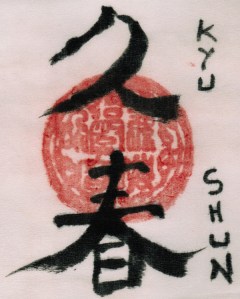
p 3 KyushunAm I silly to be pleased that the second half of my dharma name, Kyushun (kyu = “endless,” shun = “spring”) echoes characters found in the Cantos?

The second character, “spring,” is composed of two elements. The lower of them (three horizontal strokes joined by two vertical) is the character for the sun. It shows up in the Cantos  in the ideograms for “dawn” (“bright dawn on the sht house / next day / with the shadow of the gibbets attendant”) and for “no” or “not” (“a man on whom the sun has gone down”).

Also recall Pound’s explication in ABC of Reading of the Chinese ideogram: man + tree + sun –> “sun tangled in the tree’s branches, as at sunrise, meaning now the East.”

The other element is I believe the character for “tree.” Without the three horizontals it would be the character for “person.” And so made visual is the kinship known since ancient days between human and tree.


Spring is the sun come through the roots of the tree. When Daidoshi named me I felt an arrow go through my forehead. All at once my name had been a truth of my life all along. The calligraphy above is his, on my rakusu.


Where does all this lead? Nowhere and everywhere. I want to notice just one thing, that Pound uses the ideogram in two ways in Rock-Drill, what I’ll call pictorial & ideational.

The pictorial is treated so magnificently by Kenner that little can be added. E.g., his unpacking of ling, “sensibility,” early on.
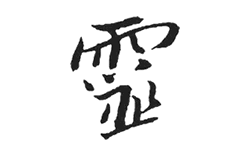
ling-1_ZhuDEn bas, as ground, the figure for ritual or witchcraft — compounded of the characters for doing things properly (this is appropriate witchcraft) and the waving sleeves of a moving officiant.

En haut, as gable & presiding air, heaven hung with clouds, beneath them three raindrops, together meaning “fall as the big drops fall on a parched day.”

These images and gestures, compounded thus, from sensual life, actual life, mean “the spirit or energy of a being, in harmony with the invisible and by ritual drawing down beneficence.”

Sensibility as the connection to (among) earth, human, & heaven, realized through right observance (right seeing, rites observed), that is, through te, or virtu.


This is (once more) embodiment. Combining stylized images of ROSE, CHERRY, IRON RUST, and FLAMINGO to make a word for “red,” rather than attaching a sound (“red,” “rouge,” “rousse”) whose relationship to the thing it names is arbitrary.

The ideogram offers, says Pound, a way for the mind to resist the lure of abstraction. A way to think generally, to trade in ideas, without losing contact with the actual, the concrete, the specific instance without which speech is just so much hot & circling wind.

Without, that is, making thought a game of moving counters here there & all about, matching & separating on the basis of putative likeness & unlikeness, which can only be credited when the actual features of a thing, its suchness, its particularity, have been planed off, and the gouge marks sanded & veneered away.

In the world itself, everything is everything else, and each thing is utterly selfsame. Not one, not the other, not neither, not both. Speech can’t reach here.


A practice that invoked an idea more directly than our speech can would be a gift of the mind to the mind of the first order. For Pound the ideogrammic method is more than just plunking some Chinese calligraphy down in a poem. It is a new way of doing thinking.


Reworking this writing now, I see how I was starting to flounder. Pound’s grandiosity invoked my considerable own. Unexpectedly, it was Williams who came to speak to me more, in this work I did with Don. I’m leaving most of the flaws I see here as I see them. And of course all the flaws I don’t see have gone untouched.


Words are of course employed. They are made into images (or scraps of memory, or bits of overheard speech, or foreign phrases, or names from myth, or historical incidents) which are then built up, compounded, just as they are built up in a Chinese character or a film by Eisenstein. It is in the space between the images (or scraps of memory, etc.) that the spark jumps, the light flows, the wind roams about, & the mind finds itself.


One crafts the image precisely to make the space around it precise. This is all being set down too hastily. Let me try to work it out through an example. We might take this passage as a single ideogram (comparable in complexity to ling above):

“From the colour the nature
                    & by the nature the sign!”
Beatific spirits welding together
                    as in one ash-tree in Ygdrasail.
                         Baucis, Philemon.
Castalia is the name of that fount in the hill’s fold,
                         the sea below,
                                                  narrow beach.
Templum aedificans, not yet marble,
                             “Amphion!”

The first two lines invoke Heydon’s “doctrine of signatures” and work somewhat like the radical, establishing the general semantic (spiritual) sense of the ideogram. That sense is hard to spell out (real thoughts are) but it has something to do with vegetal power, and each thing fulfils its nature, and a thing’s nature is discernible.

At any rate, this is the sign under which, or the mood within which, the next strokes are presented. “Strokes” because, as in the ideogram, there is no logical or discursive linkage, space is left in which the mind may roam & flash about.)


The next element in the character, three strokes in three lines, entwines two stories with the same signatures, that of the Norse world-heaven tree and that of Baucis & Philemon, who, faithful to the gods, are spared the annihilating flood, & grow in old age into intertwined trees. Instantiations, not mere instances, of vegetal power, of earth and heaven conjoined (recall ling), and of truth to one’s own nature.


Thus far likeness, rhyme, homeomorphism, is building the character. But the ideogrammic method, like Eisenstein’s montage, is about gauged differences, for only in difference is there a space for the mind-spark to leap.

The distance is marked by shifts in sense (syntax switches from fragment to full sentence) and rhythm (musical phrasing switches from mostly short syllables to mostly long) but our concern here (insofar as these things can be isolated) (that is at best an enabling fiction, at worst a wrong way of life) is phanopoeia.

We have left the trees and come back to the water. The scene is presented in three glimpses — a fountain encleft in a hill fold (and I sense here the sexual feminine, mate to the virile power of the world-heaven tree), the sea below, a narrow beach — in a staccato & yet fluid fashion that recalls the beach scene of Canto II. (One ideogram can call to mind another one hundreds of pages prior.)


The final strokes of the character draw it together, even as they extend and leave it open. “Templum aedificans,” building the temple. The temple of the Cantos, the temple in which Baucis and Philemon serve as caretakers, the temple the universe is, borne up & arranged by the world-heaven tree.

“not yet marble” because the original temples were of wood, the columns fluted tree trunks — suggesting (not saying) (real thoughts are unspoken) that the marble columns to come have virtu to the extent that they recall (but do not slavishly copy) their origins.

The last stroke, “Amphion!” Terrell: “Hermes taught him to play the lyre so well that when he became king of Thebes he fortified the city with a wall magically conjured up by his music: at the sound of his lyre the stones moved into place by themselves.”

The power of one rooted in his own nature. It joins earth & heaven & human life & gives one sway over wild beasts & field stones.


Does the whole canto, does the whole of the Cantos, fall into ideograms in this way? I amn’t sure. The white space after “Amphion!” articulates the sequence, asks one to look at it as a whole that reflects back on itself, but it is the only such space in Canto XC, and I wonder whether, if Pound meant us to read the way I just have, he would have scored the verse a bit differently. Anyway, I’ve only barely scratched the surface here. I do sense though that in its several formal arenas—melopoeia, phanopoeia, logopoeia, mythopoeia—the poem is a unitary project. Pound against abstraction. A title for a final paper?


Yeah plenty of floundering here along with a few honest gleams. Curious how an anti-system is just another system. But if you can’t put your errors and strayings on display in a blog post — well then what’s a blog for? Scheduling this one for Dec. 30. Happy, if somehow you’ve made it this far, new years all.


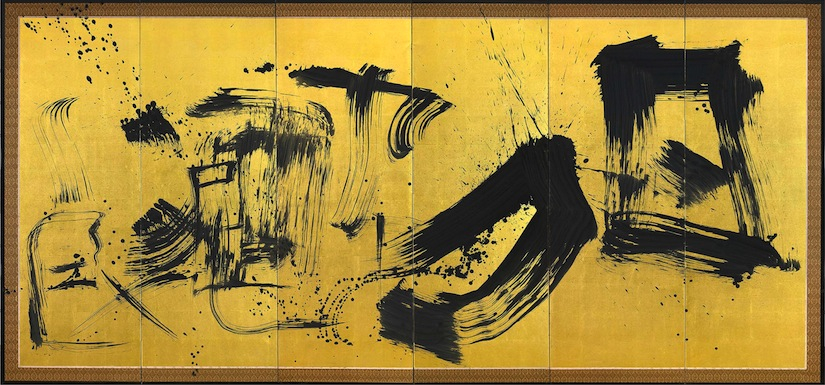
UPDATE. And the image up top, here it is big –
7132 - big

Ryoji Koie. A six-fold paper screen. Ink on paper and gold ground. Japan, 2013. An example of the hibi deisui (blind drunk everyday) style. Don’t know if that’s blind drunk or blind, drunk. More on him here (scroll down some).

teaching portfolio

Terraces the colour of stars

Dear Don,

“Memory supplants history in the humbled mind,” you wrote. To which we might add that epic fallen to fragments becomes lyric, and those lyric scraps of myth and history may become well nigh indistinguishable from personal memory.

So that the Pisan Cantos, held at a certain angle, in a certain light, read as if all of Europe were sifting through the fragments washed up in and of its ruin, trying to comprehend its downfall.

And to separate what it might still love from the dross of its vanity, gazing eastward for equivalences that might be insights, Kuanyin ≒ Aphrodite, rain as Tao ≒ Heraclitean flow, apricot blossoms on the wind as gallows at the camp’s edge terribly clarify the mind.


At a certain angle, in a certain light. The poems are a tsunami in their mass energy valences. Any effort to summarize encapsulate or contain them seems further folly. So I will just tell you the way I am floating along with them this morning.


It starts with defiance and venom. Mussolini as a “dead bullock” eaten at by maggots. Lenders as “loan lice.” The mind is at work on the scale of history, the “enormous trag­edy of the dream” now lost of the ideal city “whose terraces are the colour of stars.”

Pound heaps scorn and contempt upon those he calls guilty, FDR, Churchill, banks, rich Jews. This noise goes on for some time. But even at the outset, turning words are at work in the mind:

The suave eyes, quiet, not scornful,
                              rain also is of the process.

Those same eyes appear some hundred pages later — “there came new subtlety of eyes into my tent” —Kuanyin? Aphrodite? — to release the hymn of self-abnegation, in which love and right action are got free at last of resentment and vanity.


One side of it is letting the world enter, really enter, the tent. To admit that “rain also is of the process” is not idle or abstract in a roofless cage. The other side is, get humble, erase yourself, let the world enter, that is the way through:

ОЎ ΤΙΣ, ОЎ ΤΙΣ? Odysseus
                             the name of my family.

Things flow. So let them. The Pisan Cantos are (this morning) (for this reader) about the thorny ecstatic work of getting out of the way. To be Odysseus is to be skilled in many things, polumetis, a man of twists and turns, and one such turn is to be no man at all.


The poem flows. So let it. ОЎ ΤΙΣ, “no man,” recalls here and everywhere “’Tis. ’Tis. Ytis!” in Canto IV, the cry of Philomela become nightingale. Which connects in turn to the orchestrated birdsong of Canto LXXV. Which connects to the birds composing themselves on wires in Pound’s tent-straitened view. Who sing in Canto LXXXII this song

                             f           f
                                             d
                                                    g

which I hear as the drawn-out first syllable, and then descending scale, of “Terreus! Terreus!” — Philomela given the power to name he who raped her and cut out her tongue to foster silence.


This would be a way to write about the Cantos: choose one node, trace all that it echoes or actuates, how they foster speech when speech is due, rich silences otherwise.

For so many noticings don’t fit the arc I’ve staked out for myself.

A key that shows up in the first moments: periplum, circumnaviga­tion, as in “the great periplum brings in the stars to our shore.” Not sure what to make of this. Feels like a concession that the world is whole, and epic strivings unnecessary, but that may be my effort, once more, to turn Pound into a dharma holder.


The poem is one left parenthesis and another. So I can hardly say it makes a clean transit from benightedness to insight. That would be too happy an ending — that would be an ending. To the last Pound is hailing Il Duce, his lieutenants, various collaborators whom history has since found, and I’ve no reason to question the verdict, cowards and villains.

There is though a gradual shift in the relative weights given to vitriol (accusation, explanation, calumny) and humility (surrender, sympathy, wakeful attention) — to being right and being alive. A few of the energies at work in that shift:

Hey Snag wots in the bibl’?
wot are the books ov the bible?
Name ’em, don’t bullshit ME.
                                                ОЎ ΤΙΣ
a man on whom the sun has gone down

As Odysseus, become No Man, is connected to Elpenor, a man remembered only for the company he kept, so Pound, as No Man, is connected to the prisoners and guards of the DTC, anonymous but for the place he gives them in his poem. (His giving goes hand in hand with sympathy.) (His humbling is an enlarging.)


As Pound settles into the ascetic attention forced on him by his confinement, mist and clouds, stray camp animals, vagrant insects become charged with meaning:

that the ants seem to wobble
as the morning sun catches their shadows

Sometimes that meaning takes on the dimension of myth, not in the way of epic sweep and portent, but of lyric intensity, the moment eternal: the butterfly, Aphrodite or Psyche, at the smoke hole. Identity with the insects makes humility absolute —

As a lone ant from a broken ant-hill
from the wreckage of Europe, ego scriptor.

— out of humility comes a new allegiance —

nothing matters but the quality
of the affection —
in the end — that has carved the trace in the mind
dove sta memoria

— a descent into memory with consolation from Confucius —

“How is it far, if you think of it?”

— peppered with eruptions of the old rage —

                    interest on all it creates out of nothing
the buggering bank has;                   pure iniquity
                    and to change the value of money, of the unit of
money
                              METATHEMENON
                     we are not out of that chapter

(as if the deep disappointment of the world could be laid at the feet of the banking industry — we are not out of that habit) and in time a reaffirmation—

Amo ego sum, and in just that proportion

To be as one loves.


Such luminous details fall like seeds into a welter of sensation, memory, argument, and myth. And after a near endless swirling gestation they break up through the soil and the world greens with a new sort of understanding:

What thou lovest well remains,
                                             the rest is dross,
What thou lov’st well shall not be reft from thee
What thou lov’st well is thy true heritage

Humbled, the sun gone down on him, made no man, Pound overwinters, all that long summer, to green in autumn with hard insight:

Pull down thy vanity, it is not man
Made courage, or made order, or made grace,
             Pull down thy vanity, I say pull down.
Learn of the green world what can be thy place
In scaled invention or true artistry,
Pull down thy vanity


I am of Pound’s company in this if in no other thing: “Learn of,” not “Learn from,” because of how long “from” would take to say. The music matters. Music is the matter.


The hate that went out turns inward as ruthless self-excoriation —

Thou art a beaten dog beneath the hail,
A swollen magpie in a fitful sun,
Half black half white
Nor knowst’ou wing from tail
Pull down they vanity
                         How mean thy hates
Fostered in falsity
                         Pull down thy vanity,
Rathe to destroy, niggard in charity

— that also is of the process, the Tao of prison, the way of awful reflection. Allowed to flow, it flows, then is gone. What one has loved — that one has loved — remains:

                         To have gathered from the air a live tradition
or from a fine old eye the unconquered flame
This is not vanity.


Well I have tried to work here with a light hand but still feel I have striven to reduce the irreducible. So let me say as I wrap up that these poems are teaching me a different sort of attention. They are not vessels, nor is there any vessel to hold them, they’re mind in motion, world in motion, soul in process, one meets them as a rainstorm or a storm surge. I mean the only way to read them is surrender. One could spend a lifetime in them and not find the depth of them, and that — fascistic rantings notwithstanding — is a great beautiful good.

teaching portfolio
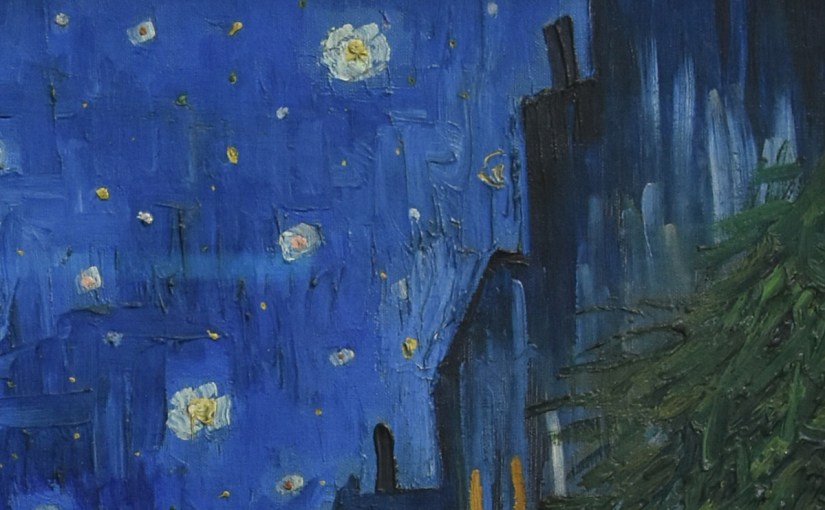
Thin glitter of water

Another letter to Donald Revell on Ezra Pound. (Queuing up a few in the lull between writing camp and Christmas).


Dear Don,

I’ve been thinking about the “lyrical principle” as Kenner frames it. “That words or names, being ordered in time, are bound together and recalled into each other’s presence by recurrent sounds.” As Pound’s practice develops, seems to me, the elements that recur grow larger and larger, until in the Cantos, as he manages recurrence on varying scales, from phoneme to homeomorph, he makes lyric a mode of logic. A logic that loses not one eyelash of particular existence, because it doesn’t abstract or deduct, but exemplifies and counterpoints.


In his early Provençal translations the recurring element is the phoneme. The effect is loyal to the troubadour and his rhymes and clanky maybe in a modern English ear:

“Up! Thou rascal, Rise,
        I see the white
        Light
        And the night
                Flies.”

No less dense, but more subtly modulated, is a later (1951) rendering of Montanari:

A swallow for shuttle, back,
Forth, forth, back
        from shack to
marsh track:
        to the far
sky-line that’s fading now

The consonantal music is so finely tuned that one might miss the quieter more drawn-out play of the vowels: swallow – forth – now. Not to mention the aural pleasure of the switch to long i and a sounds in the last line, enacting the swallow’s sudden shot off into the distance.


A long time before, in Cathay, Pound had brought the work and play of recurrence and departure to whole words — the refrain-words I spoke of before in “Song of the Bowmen of Shu” and “The River-Merchant’s Wife.” And in “The Beautiful Toilet” he mixes, as Kenner shows, the word-repetitions of the original Chinese (blue … blue) with lighter aural ligatures (willows – overfilled) that convey the spirit of the Chinese original’s musical patterning and avoid the clunky literalisms of Waley’s rendering.


In the Cantos the repeated elements grow larger — words, phrases, motifs — but the arrangement, and the intelligence it calls into play, remain musical. In Canto IV Diana bathes in a forest pool. The air is “alight with the goddess” herself, her limbs loading and endowing matter with divinity —

Ivory dipping in silver,
        Shadow’d, o’ershadow’d
Ivory dipping in silver,

Hidden by a forest canopy impenetrable to sunlight, the goddess lives in an eternal present, a light at once flowing and still.

What that image does in the eye (light made liquid) the music of recurrence (a word lightly varied nestled in a phrase exactly doubled) does in the ear. So that time circles round, flows but stands in place, in us also.


Then Actaeon, poor boy, blunders in:

The dogs leap on Actaeon,
        ‘Hither, hither, Actaeon,’
Spotted stag of the wood;
Gold, gold, a sheaf of hair,
        Thick like a wheat swath,
Blaze, blaze in the sun,
        The dogs leap on Actaeon.

The paradisal now of the goddess meets historical (tragic) human time. The word spoken twice aloud, hither, hither, urges haste, propels time body matter forward, while those repeated silently, gold, gold blaze, blaze, fix attention, intensify the sensory moment, hush and slow the mind. Meanwhile, on a larger scale, the phrase that bookends the scene, “The dogs leap on Actaeon,” fixes the unfolding action in place, so Actaeon enters mythic time.

Not, it has to be said, on the same terms as a god would enter.


With Actaeon’s entry the sun blazes into the scene. And this penetration of myth by history, of a divine now by historical time, releases light into the world. “Thus the light rains, thus pours, o lo soleils plovil.

Carroll finds in this line “the important canto motif of the light-water-stone progression which finally ends in crystal, i.e., the transmutation of the fluid transparency of subjective experience into the objective solidity of stone through poetry.”

If this is right, and if the light is that of a goddess, too, set loose in the world, and also the light of the Paradiso, which it must be, then the goddess can be nothing but an instance (purified, rarefied) of consciousness.

And if that’s right, there’s no divine eternal now after all, just human time, mostly fallen into history, but at certain points — points at which, for which, gods stand — fleetingly redeemed.


Getting too lofty and well ahead of me. No time here, or space now, for the homeomorphic rhymes, Cadmus and Odysseus, venturing they know not where, Itys and Cabestan, their hearts served up on plates, Actaeon and Vidal, gotten in their own trouble. But to note as I sign off a point or two where the poem wells up with an image of its own activity.

The liquid and rushing crystal

and

Ply over ply, thin glitter of water;
Brook film bearing white petals.

and

Adige, thin film of images,

 and

And Tian … with his hand on the strings of his lute
The low sounds continuing
        after his hand left the strings,
And the sound went up like smoke, under the leaves,

teaching portfolio