Paper cutouts

Article in this morning’s NYT about a show soon to open at MOMA of Matisse’s late paper cut-outs.

Matisse - EscargotIs it totally college-dorm-room of me to love the clarity and ease in them? A sense of having come all the way through struggle.

Writes Holland Cotter of a detail from Two Dancers, from a design for a production by the Ballet Russe de Monte Carlo:

Puncture marks that dot the slivers are records of the many times each had been pinned, unpinned, repositioned and pinned again. For Matisse, it seems that trial-and-error rawness, some evidence of struggle, validated the work.

Traces of process. Linking Matisse to footpaths formed by the acts of animal and human feet and to the lines of horses and bison laid down once and again on cave walls in the south of his country. We’re never not close to the heart of compost.

The writer’s antennae

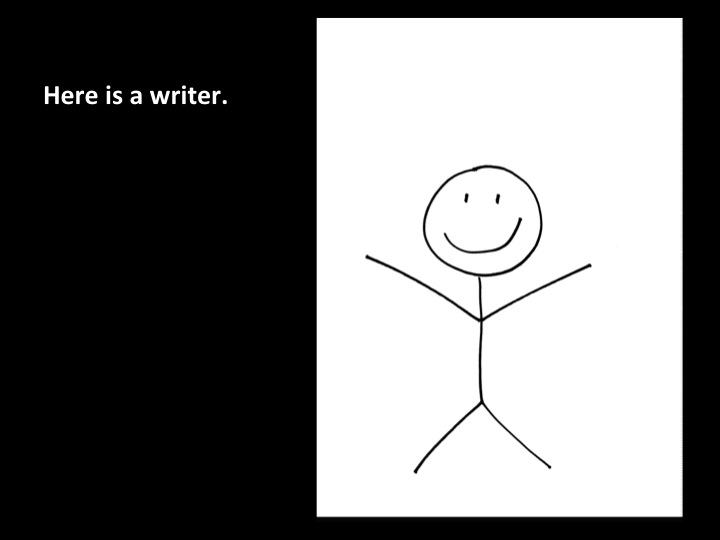
Early in the quarter I draw a stick figure on the board.

Slide1

And here, I say, are the writer’s most important tools.

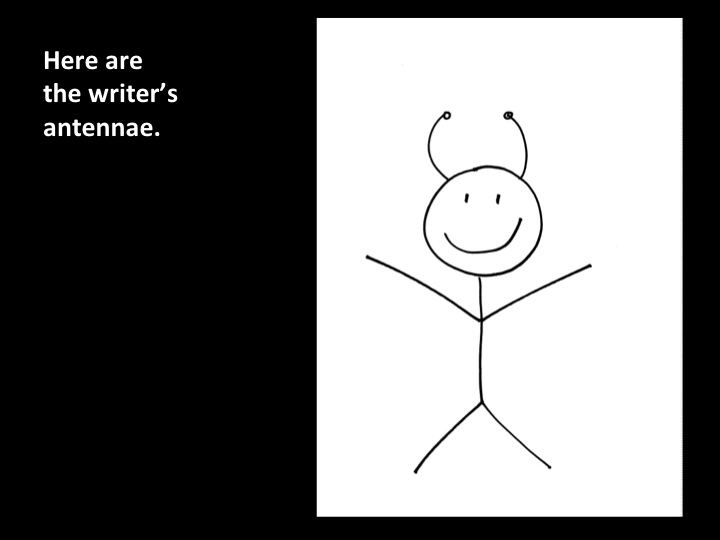
Slide2

Your antennae are how you pay moment-to-moment attention to the texture of your own felt experience. The good news? Everyone in this room has antennae. (They’re not so sure it’s good news.)

Everyone has them. But a lot of student writers don’t know they have them. Or they know but they don’t trust them. Or they would trust them but they have trouble hearing the signals.

And so one theme of the weeks to come is,

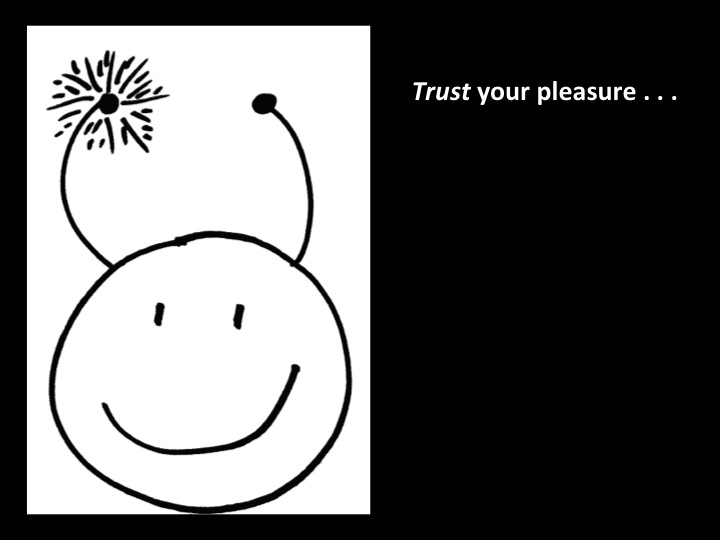
Slide3

it’s good guidance. Excitement, curiosity, expansion. Another,

Slide4

it’s just as intelligent as your pleasure is. Dismay, contraction, anger. You might not think so but it’s as great a gift.

And then I put them to work, noticing spots, in something they wrote for that day, where they feel noticeably excited or bored. Because that’s how the signals register. Not as good ideas but as immediate spontaneous intuitive perceptions.


POSTSCRIPT. Notes drawn from a presentation last spring for a panel called “Poems of Ours We Hate.” Hope, when I have time, to post the whole powerpoint thang, with animations! voice-over! For now just its title — “Dismay. Erasure. Monsterface.”

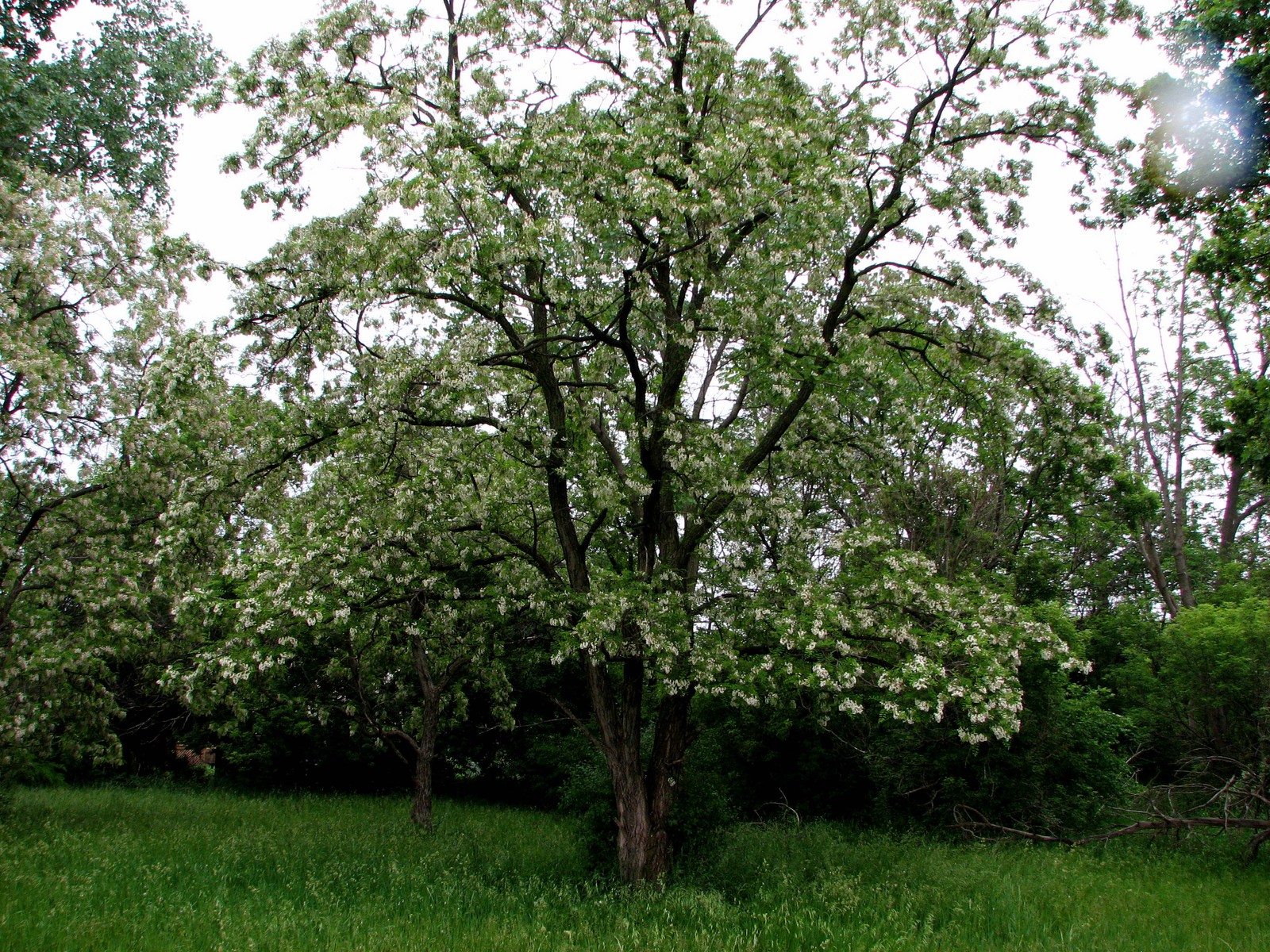
Two locust trees

To broaden our discussion of parts of speech, their places and powers, we read two versions of a poem by William Carlos Williams, “The Locust Tree in Flower.” One goes this way.

Among
the leaves
bright

green
of wrist-thick
tree

and old
stiff broken
branch

ferncool
swaying
loosely strung —

come May
again
white blossom

clusters
hide
to spill

their sweets
almost
unnoticed

down
and quickly
fall

A very pretty poem about a pretty old tree. A lovely coined word, “ferncool,” whose extravagance only starts to look off in the light of the renunciations of the later version. Which goes this way.

Among
of
green

stiff
old
bright

broken
branch
come

white
sweet
May

again

This poem never fails to stun me. Ten Thirteen words on ten thirteen lines. (Oops. One line short of a sonnet.) All but three are monosyllables. The thing’s almost entirely empty. And out of that great narrow strait the poem blossoms endlessly.

And not a metaphor to be found here. All the power comes from metonymic resonance and a powerful torque applied to syntax.

For instance the strange construction

Among
of
green

How can we be both among and of? Among means in the midst of but distinct from. Of means belonging to and identified with.

Are we thrown to a green we remain apart from? Or do we belong to a green we can’t get out of? Spring is the swell and swirl of the new it is and does. And so the poem dizzies, endizzes, lucky us.

Master Dogen said to his monks:

When you paint spring, don’t paint willows, plums, peaches, or apricots — just paint spring. Painting willows, plums, peaches, or apricots is painting willows, plums, peaches, or apricots. It’s not yet painting spring.

The longer poem paints a pretty picture of a locust tree. The shorter invites us to be spring in the tree.

These thoughts, by the way, formed in collaboration with my students, who saw deep and well into this one.


POSTSCRIPT. Want a master class in revision? Track how the first version becomes the second. What words go, what words stay, how the words that stay drift into new places. The depth of the letting go here is astonishing. Nothing less than total.


Black Locust

teaching portfolio

Exercise: A paragraph

The prompt:

Write a paragraph, on any subject, in any genre. One restriction: every word has to begin with the letter A.

Once the groans have settled down they get to work. After a few minutes I give them a break and we compile some word lists.

Nouns: aardvark, atom, alien, Amy, Ahmed, alligator …

Verbs: assert, affirm, anger, angle, aim, am, are …

Adjectives, adverbs …

Prepositions: about, after, at, above

Conjunctions: and, although

Articles: a, an

Some material to work with. And you wouldn’t believe the things Andy Aardvark gets up to as amorous aliens advance assertively.

A silly prompt I remembered from a high school English class. And a not too bad entry to parts of speech.

Word.

We had a good chat, our first class on the word, about parts of speech and their different powers. I laid a trap by asking, Which part of speech has the most bang for the buck? Adjectives, I was waiting to hear, adverbs. They didn’t fall for it. Verbs, they said, nouns. Yup.

Acts and actors are the meat of it. Things and what they do. Acts and the things they act through. (That one is easy to say, one a bit contorted, says something about the bias of our language.)

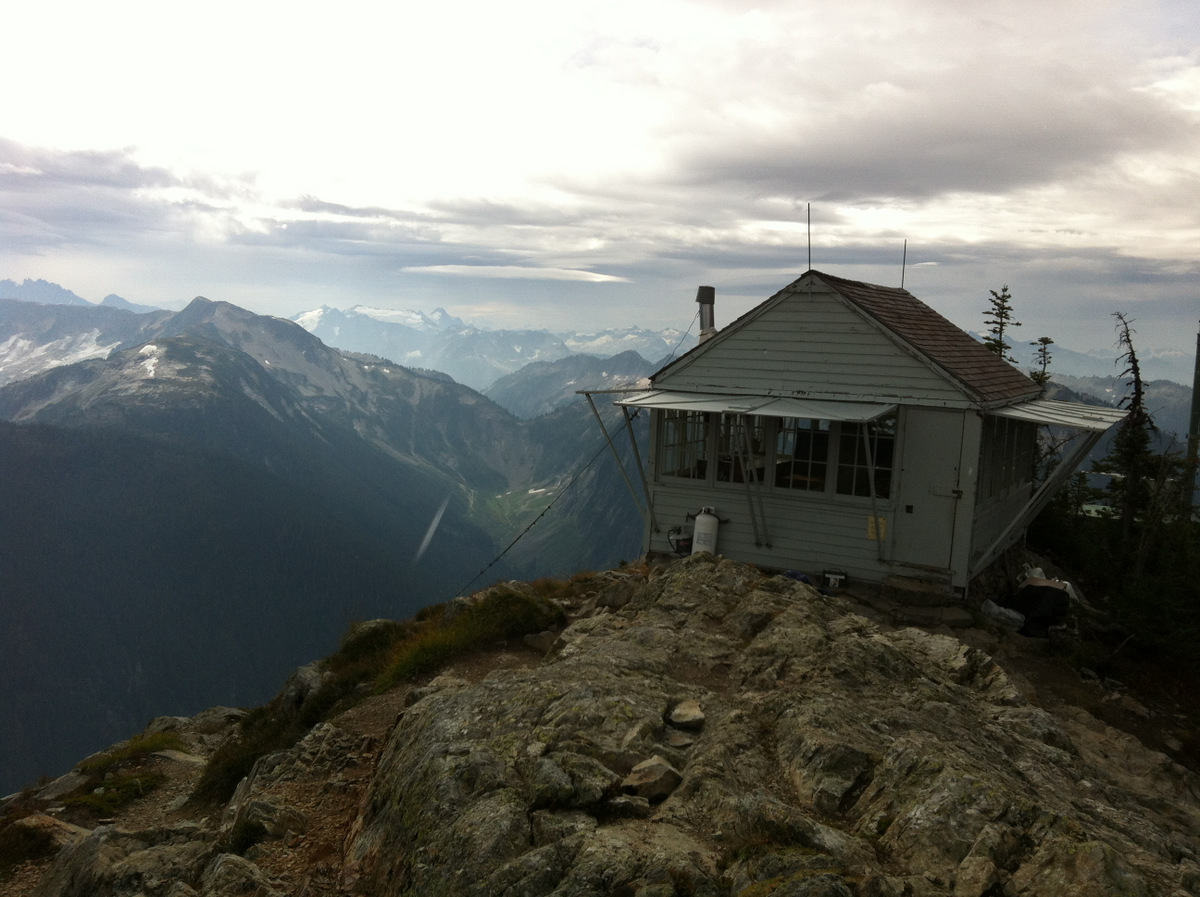
But I was headed for the lowly preposition. To get there I told a story. I had been backpacking a couple weeks earlier in the North Cascades. The first day we were sunriddled.
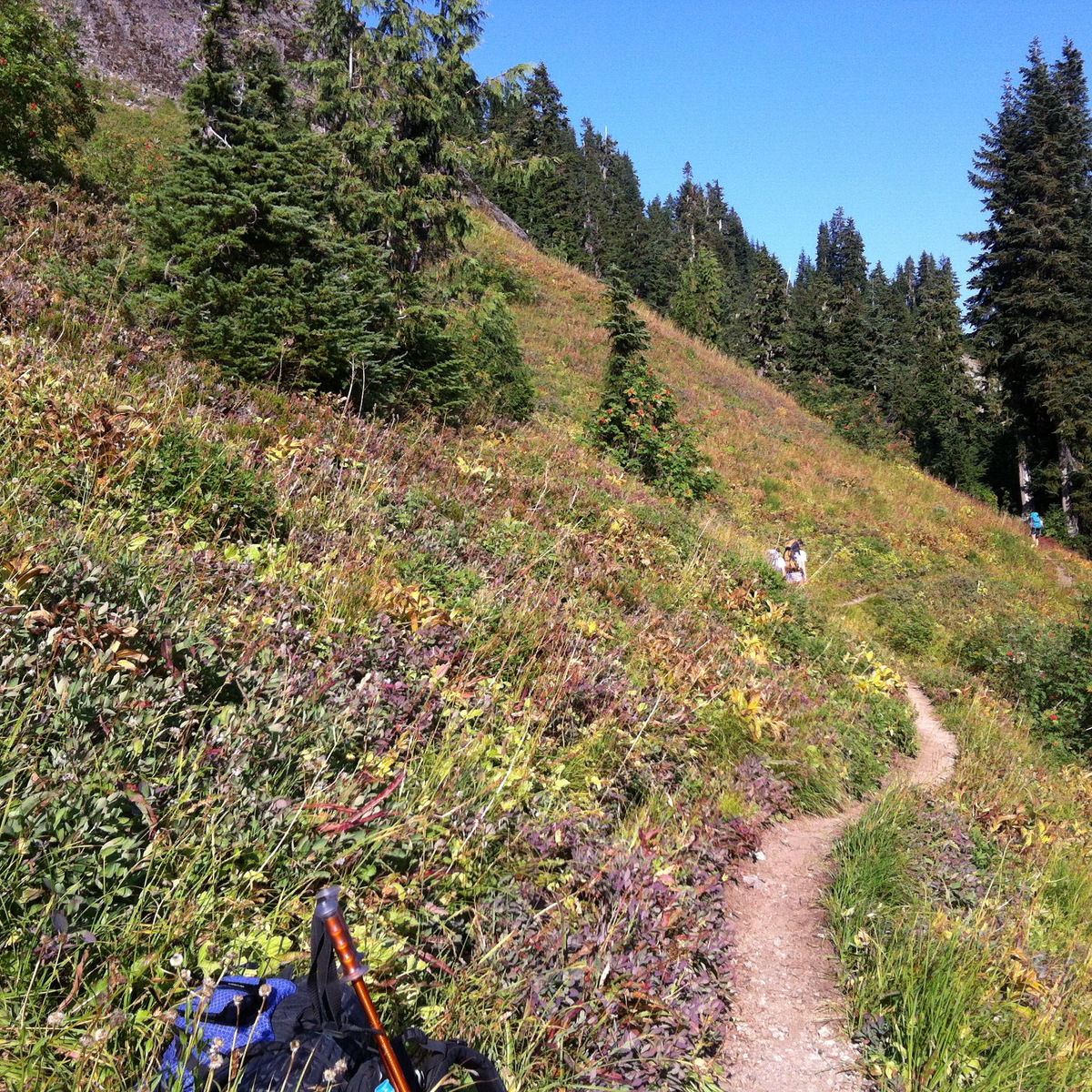
IMG_0337

The next day some clouds came in.

IMG_0378

Through the afternoon they kept on coming.

IMG_0379

The two peaks are Shuksan and Baker. It was spitting rain by the time we set up camp 4000 feet lower by the Chilliwack River.

All the next day was rain. Sorry no pictures. Had to keep moving. We climbed back into the subalpine and set up camp in the pouring rain.

And there we were, huddled under a little tarp stretched between two mountain hemlocks, soaked to the bone, heating water for our freeze-dried soup. And I thought to myself

I’m under a tarp, but it’s raining on me.

And it struck me how much I would give to be able to say instead

It’s raining near me.

Small little word. Big huge diff. And then I thought, pissily,

It’s raining at me.

And thus was a lesson plan born.

We (I’m back in the classroom now) sounded out the changes. What other prepositions can we sub in? How does that one change change the meaning, the feeling?

It’s raining in me (metaphor for sad)

It’s raining for me (God complex)

It’s raining above me (virga)

It’s raining through me (a diffuse or dissolved body)

It’s raining from me (God complex squared)

The nouns and verbs stay the same. The pronouns stay the same. Only the lowly preposition changes. And yet with each change the whole carnival picks up stakes and shifts in a flash to a different world. The word for it is proprioceptive. I take the word from Olson and the image from Dickinson.

I’ve known a Heaven, like a Tent
To wrap its shining Yards
Pluck up its stakes, and disappear
Without the sound of Boards
Or Rip of Nail—Or Carpenter
But just the miles of Stare
That signalize a Show’s Retreat
In North America

No Trace—no Figment of the Thing
That dazzled, Yesterday
No Ring—no Marvel
Men, and Feats
Dissolved as utterly
As Bird’s far Navigation
Discloses just a Hue
A plash of Oars, a Gaiety
Then swallowed up, of View

Check out those nouns, those verbs, those preps. (I count one adjective.) And the feel of being in a mountainous vastness she can never have seen with her physical eye.

Student work: Anagram poems

One more before this body heads to the gym. My students did great work with the anagram prompt. A few excerpts, posted with their permissions —

CHRYSANTHEMUM

musty men are her master
they see her as a chummy trashy muse


WANDERLUST

we learn as stars learn
sedated
wasted as a last sunset


PUGNACIOUS

pugs can coop up
in a soup can


GUNSHOT

shoot to sun
oh unhung sun
so soon


WEATHERS

Earth sews art,
water, seas

trees thrash
that were at rest

here we
are rare

we stare at stars,
aware


DREAMING

i dear am dreaming
in man-made greed


FINGERS

ginger grins
green ferns
fire rising

I see sense in freeing sin.


LUMINESCENT

sun: i see it set in mist
mice scuttle, still
insects teem in nite’s lull


ANXIETIES

I see sentient entities
six ants in tea


AUTHORIZED

I hear the tzar roar

I tour the tear
I hear the horror

teaching portfolio