Shakespeare, Martian script

Oh my, getting prepped to teach Shakespeare takes some time. Eats whole days, all up, slurp and yum. Well here’s, as a sort of sorbet, and sans much comment, another bit of Martian script for yehs.


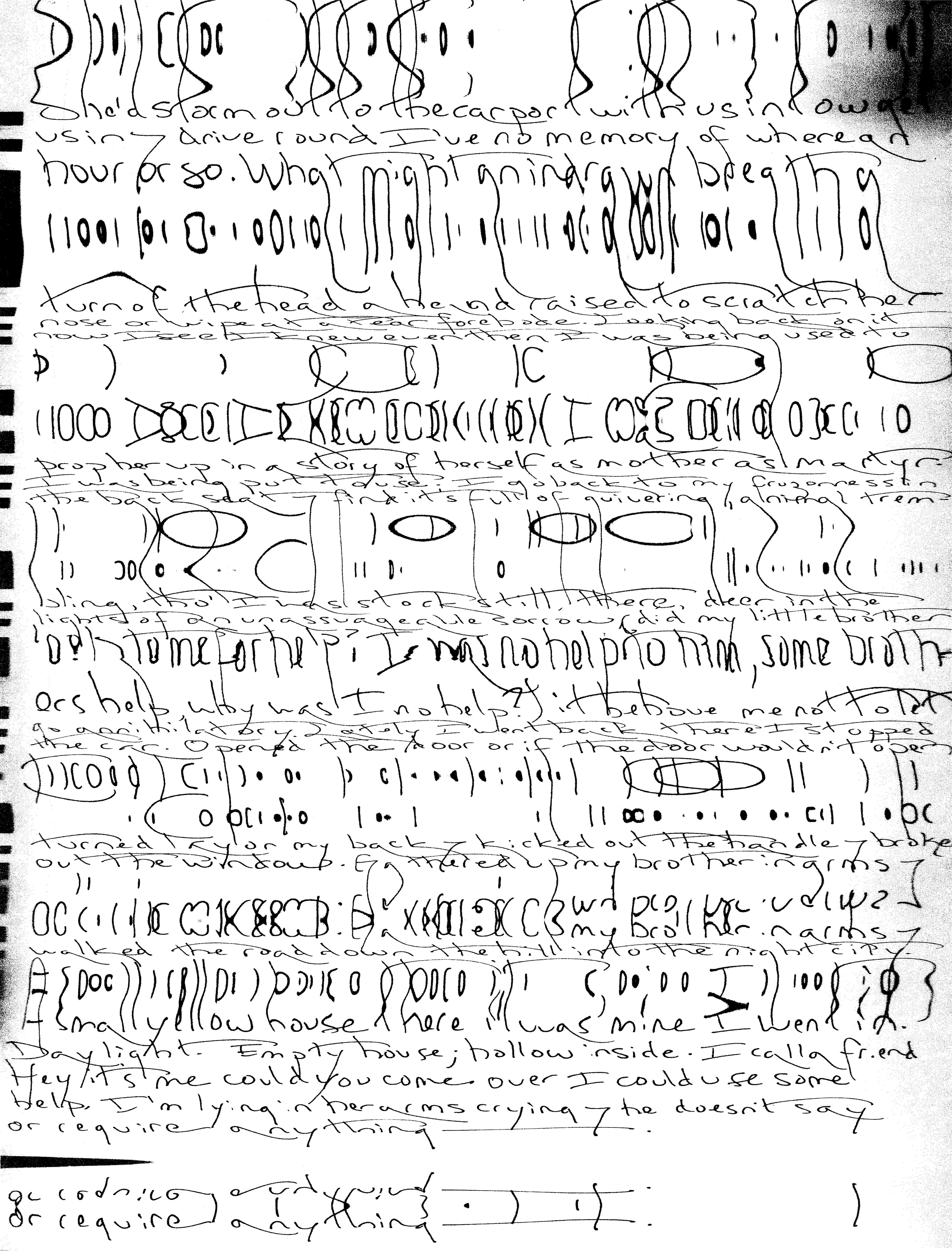
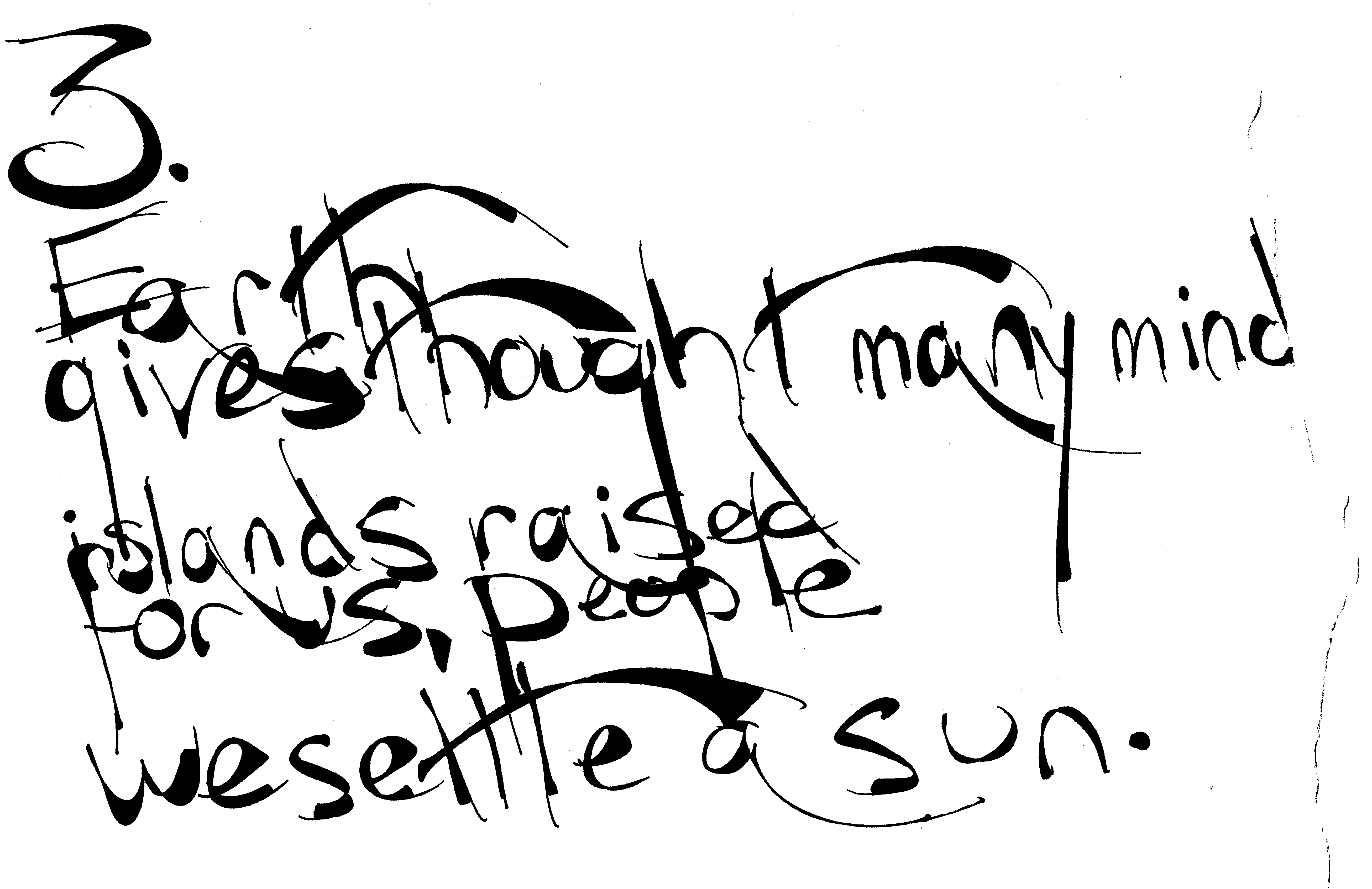
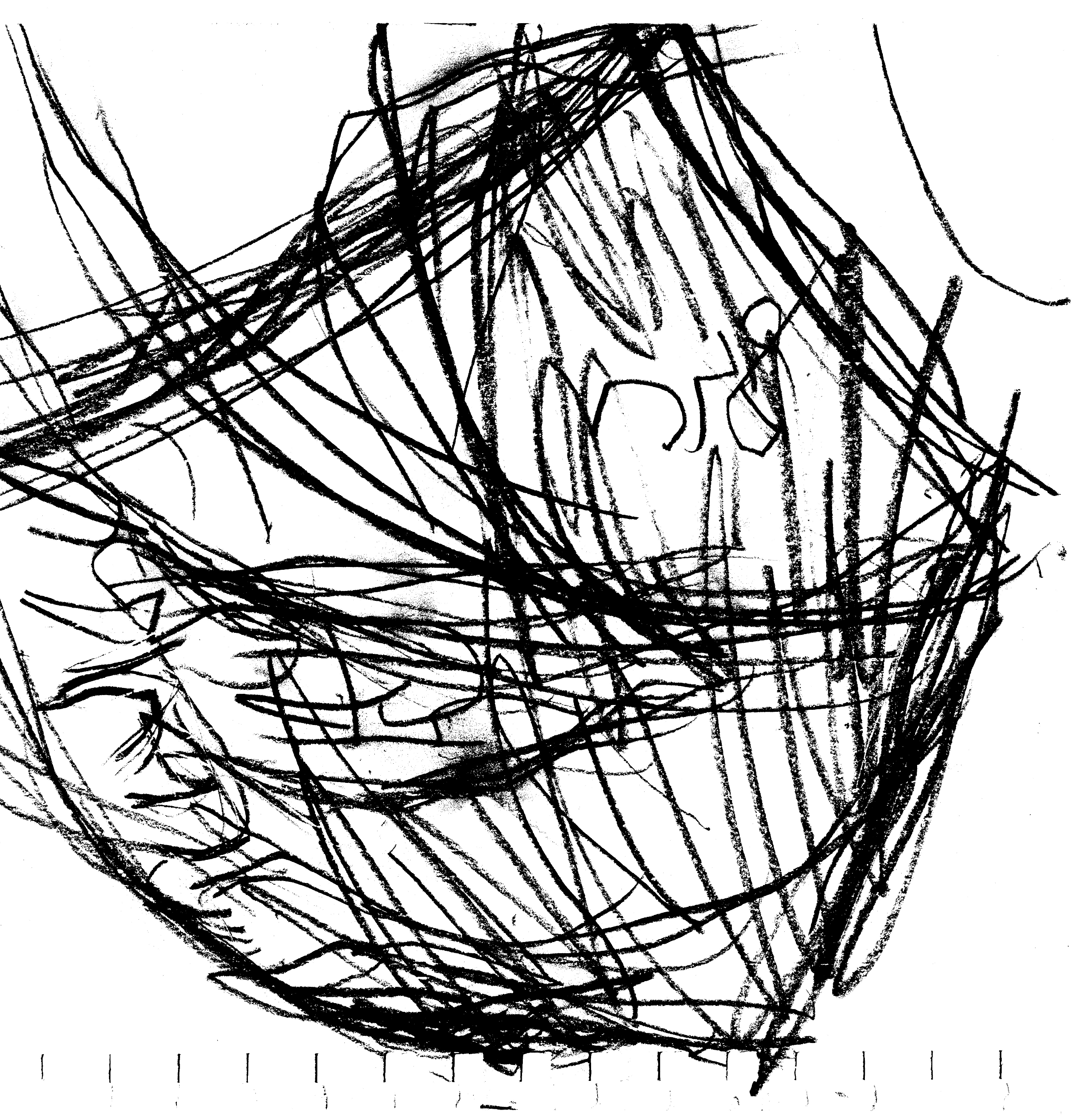
She'd storm - warped

The source text, a draft of it, should you wish it’s, here.

I’m liking how movement across the moving beam of the copier instantiates hesitancy, rush, prolongation, quavering. Not necessarily exactly when and as I felt them, writing this, but I felt them, writing this.

Pee, ess, I say “Martian script” with deference to Hélène Smith, and mean what is called more properly asemic writing, to which a not bad intro is here. Ah I’m commentating said I wouldn’t that.

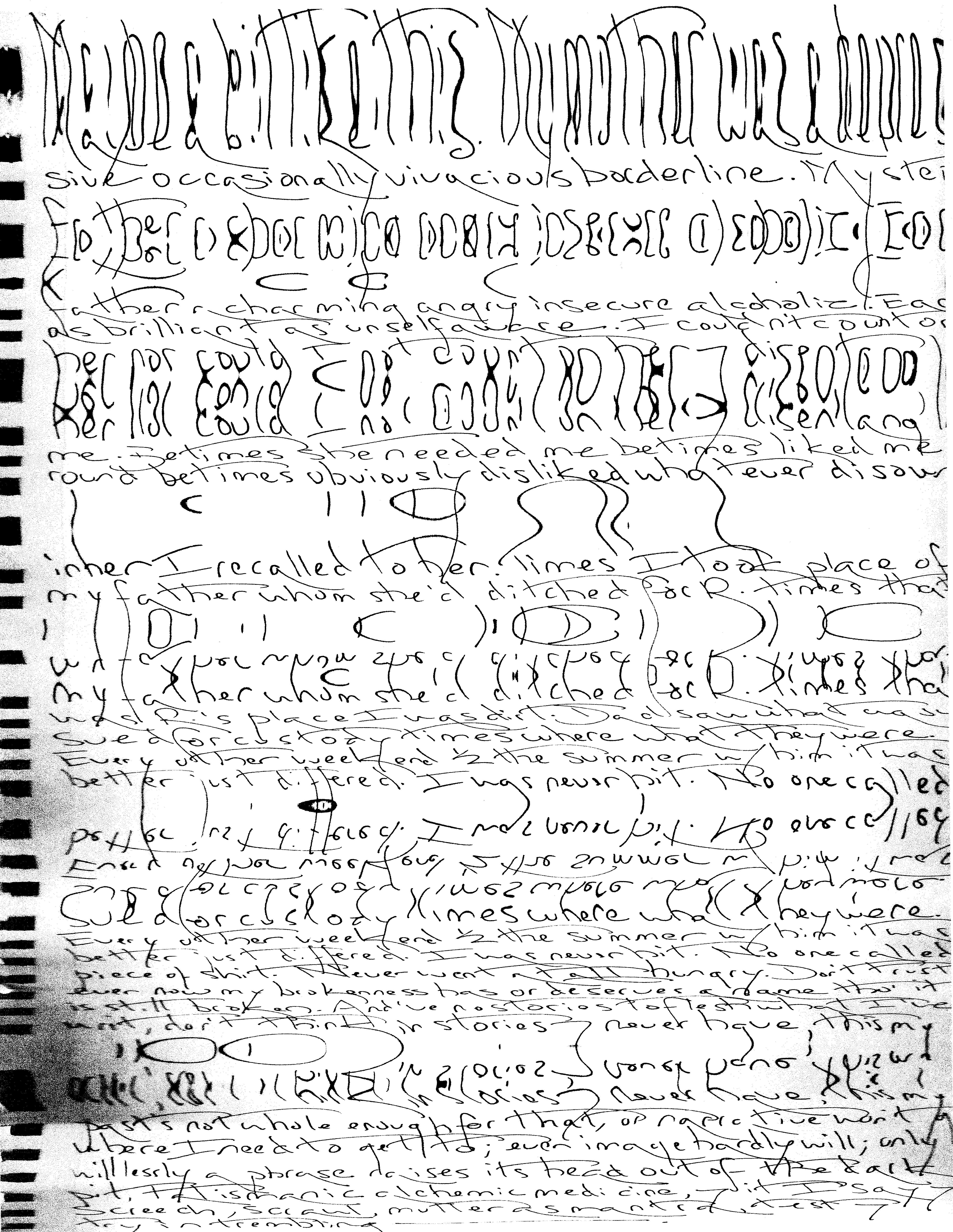
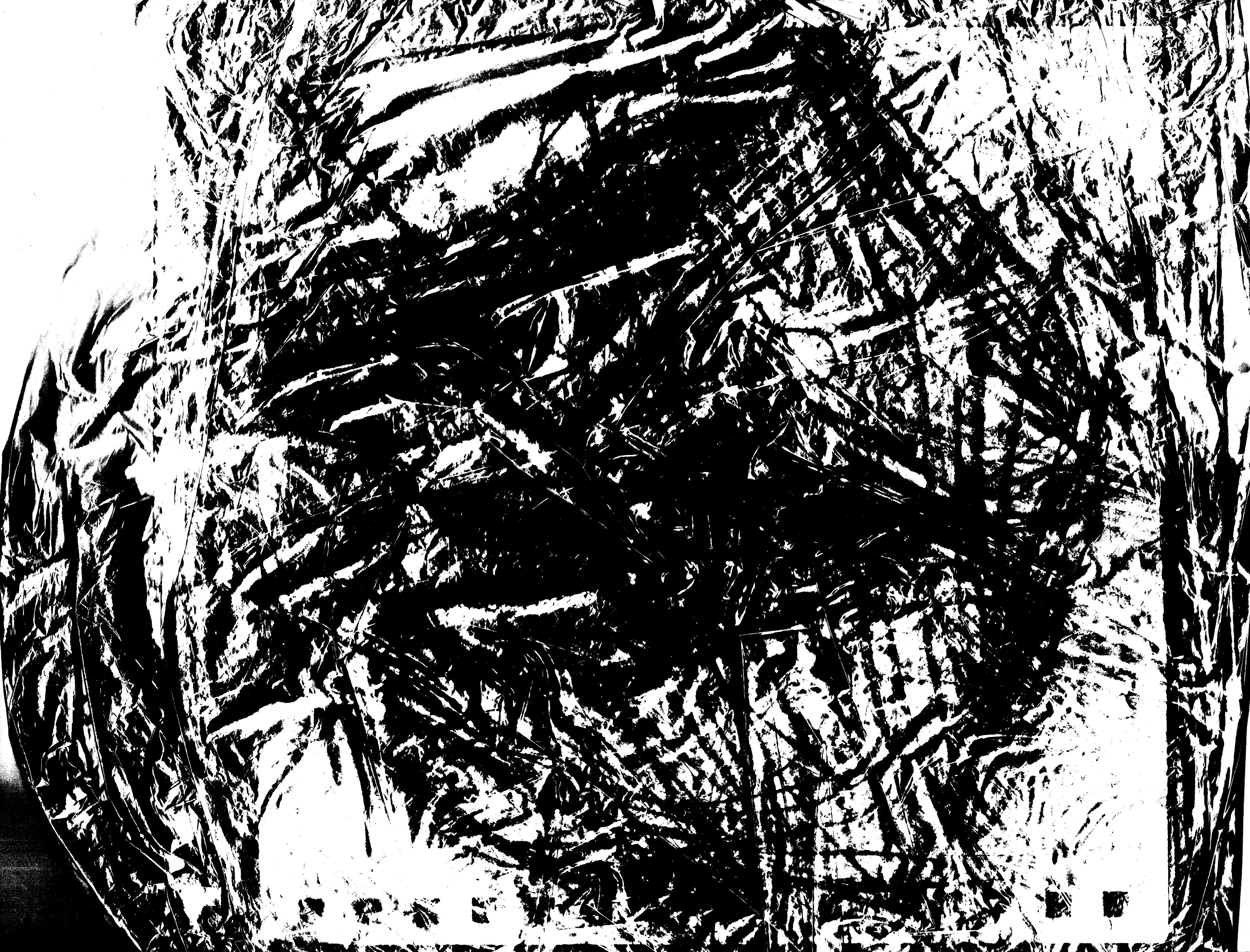
Maybe a bit like this

I was at a lovely poetry event last night, Kitchen Sessions Bellingham, very capacious in its tastes (its heart also), though the emphasis was spoken word, and I found me thinking near the end, Cool. Spoken word poets are the scops, the bards, of our time. And this form they work in, spoken word, is about the one form we’ve got that says direct intense heartfelt personal disclosure is crucial to (not an impediment to) the art.

And here you are (we in here said to me) doing “total translation” of an oral poem. Which means sometime or other you’re going to need to translate its orality. Meanwhile here you also are, wanting to draw intense heartfelt you into art, without arting it up the way your literary training says you’re supposed to.*

And so why not (we in here said to me) take these journal pages you’ve been making, and rewrite them as performance poems?

Brilliant! Didn’t work.

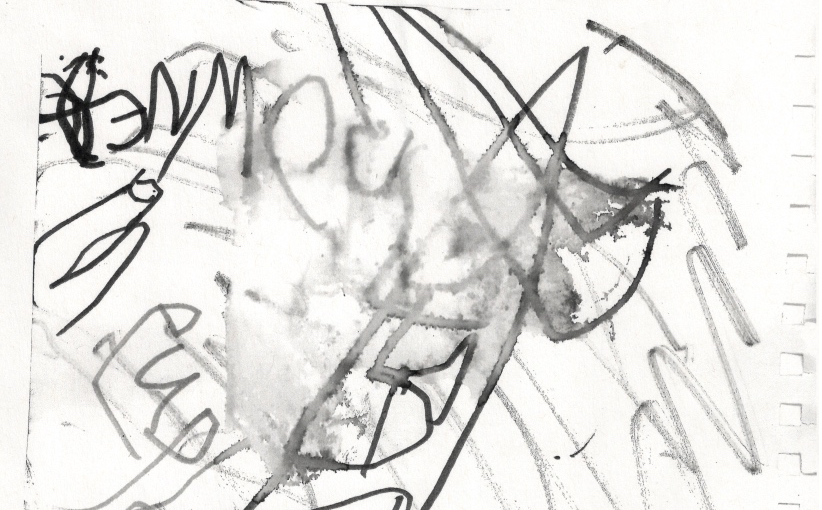
Who knows, maybe I’ll make and do a performance poem, now that I see I’m not done till I also translate the poem’s oral being, but the journal pages (here’s the one I’ve been working with tonight –


Maybe a bit

–) are wood, not plastic, have grain, can’t be remoulded into just any shape.

These thoughts come quick on the heels of an e-mail exchange with one of my most trusted readers about a draft of a bit of Overject. She expressed, not doubts, not trepidation, nor unease – astonishment, that’s the word, a mix of consternation and amazement – about the journal pages, of which the above’s one of three. And they were the three I was most concerned of, not for the personal exposure, surprisingly that don’t fret me much, but for the aesthetic risks they run, which are grave: banality, triteness.

So, the other play I’ve tried out this evening, is to rock** or wave the sheet up and down as the scanner scans. A translation of orality, I suppose, in that it makes visual the scop‘s or the slam poet’s speeds and slows. Sort of, sort of.


Maybe a bit - warped

And I think, we’ll see, that’s how it’ll look in the book.

The Martians are writing us.

Not to us – us.


* Why not? I think we’re back at “total translation = translate the translator.” The text is made of layers, some of them finished, some of them inchoate. The translator is made of layers, some of them public, some of them inchoate.


** How is rock the verb for the gentlest most restful action imaginable, the noun for the oldest hardest substance known to us? (I’m setting the music aside for the mo.)

To translate the translator

Third and last of the aleatory proposals is mine. Strikes me as dullest of the three. Buzz goes, buzz buzz. And with that ringing encomium – read on.


I’ll present on Overject, an exercise in total translation – trans­lation that holds every verbal and visual trace that can be caught of how a poem refracts as it passes through its translator. The project performs various manipulations on its source text, a minor mediocre didactic Old English poem, to investigate the role of the translator’s impurities and opacities in the activity of translation. While the project may not appear classically aleatory, it turns out to encounter and depend on accident at every turn.

SI 3 (89R) - text - newMost of the poems are hand-written, and contingency hangs on the inscription of each character. I set each one down fast, too fast for thought, and a second time just as fast. Then meticulously I ink in the spaces left open between the two passes. The gangly pseudo-graffiti that results is a gestural translation of the scribe’s stately calligraphy. The practice may not be aleatory, strictly speaking, for no random element from outside the poet has been introduced. But although the forms are laid down by my own hand, I experience them to appear from outside my will intention and control. I decide the process, as the aleatory poet decides to roll the dice, then submit to the results. And I take from the practice all the joy and constraint, freedom and burden, the aleatory is famed to offer.

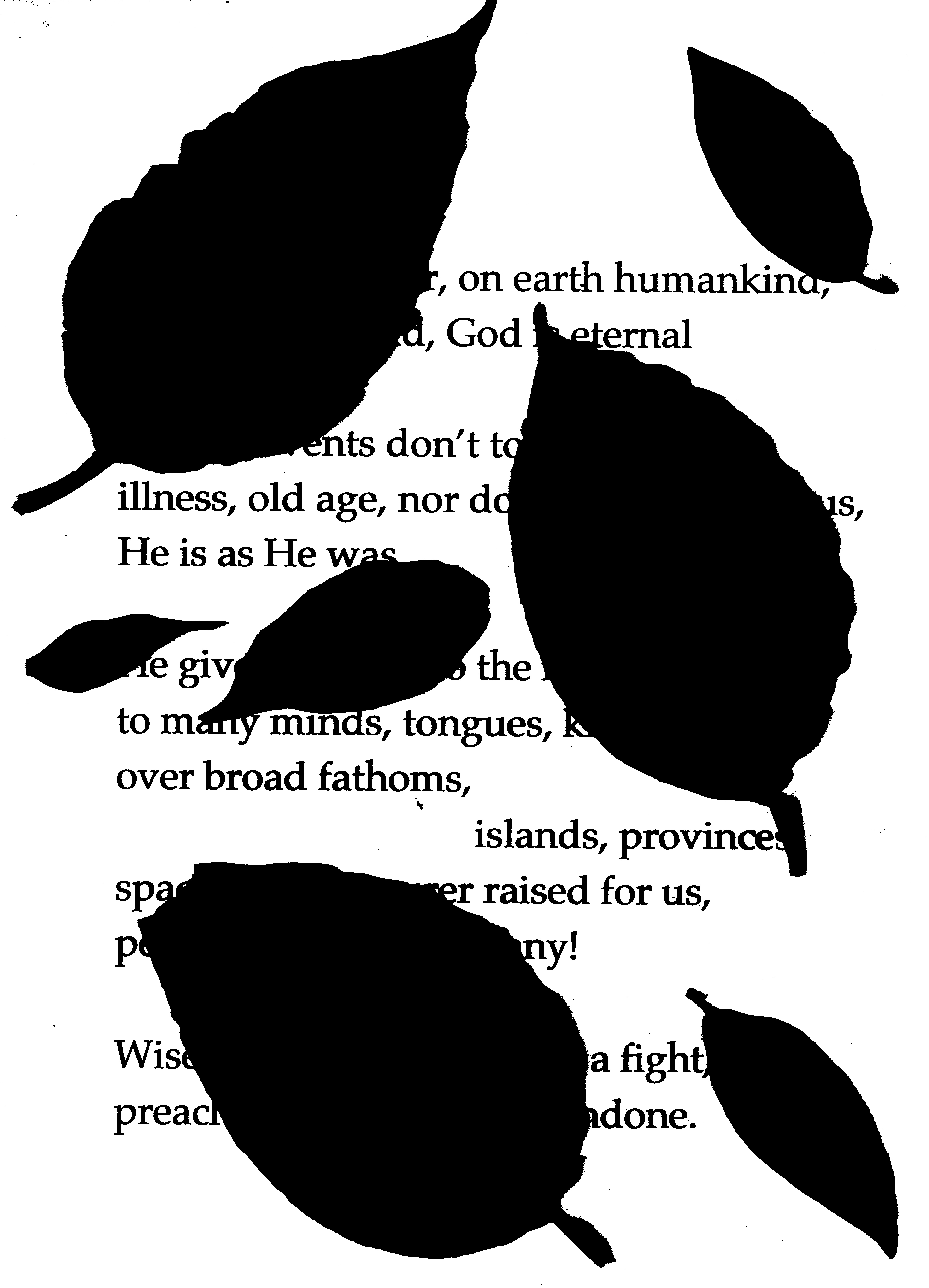
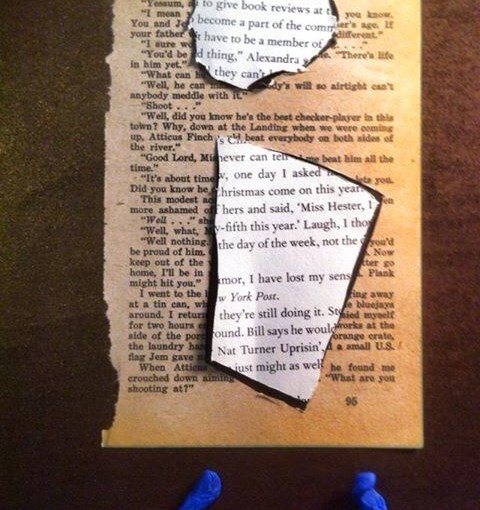
FT 3 (89V)My work with my materials – leaves paper cellophane – also has aleatory respects. Leaves first entered the poem by accident at the corner of my eye, a dogwood in the wind out my window. I picked some and dropped them on a page and that became a thing. Their placement as masks over semantic translations is a mix of chance and design: they fall as they will, then I get to nudge them around, but a little. Meanwhile, most images, after they’re drawn and before I scan them, are put at risk, torn on all sides. What course the tear takes is not altogether up to me. Nor can I say which parts of the tear line will appear, and which will stay invisible, when I take the scrap to my scanner. Lines of scanner noise that become hills and clouds, the very lay of the land.

Questions I expect to address or at least brush on: How do aleatory practices intersect with proprioceptive elements (the embodied gesture) and objectivist concerns (the thing­liness of the poem)? Burroughs said that all writing is cutups – is there a meaningful sense in which all writing is aleatory? Does a practice count as aleatory when the random factor comes from the poet herself or himself? What sympathies exist between the drive to the aleatory and longings among our poets for the organic, the spontaneous, the irrational, the impersonal?


Yeah whatevs. To come soon, student blogs. Some are striding into readiness, a few yes are trudging, a couple have fleeted there. Links to those last, anon.

that scamp’s still in the know

Some fine high play here with mockingbirds and finches. A reminder that for all that’s at stake morally and spiritually and politically in Lee’s so powerful novel and its latterly published and from all reports really pretty indifferent draft, her characters are ink on paper stirring forms in mind, there is no Atticus about whom to uncover shocking truths. Well that’s what I mean I don’t know if it’s what Theresa means. But her compositions here are provoking and provoked so check them out.

Marlise’s portfolio

Friends. (Oppen said something like, the poem that ends as it should, “ok,” the poem of the world. Tonight for me, it’s the post that begins as it should, “friends.”) I’ve meant to share with you a portfolio by one of my vis po students from this spring. She rides a badass wheelchair and her work is images of and round and beyond her condition, Friedreich’s Ataxia, a truly shitty degenerative neuro-muscular disorder.

I don’t mean to be sentimental here. That’s cheap to those who live with a disability. From here it seems, there are some who live with such visible cruelties, I’m using Marlise’s so apt word here, and others who bear cruelties invisible to all until they flame out horrible, and some who have the bad luck to be lucky till they’re not, and then they know not what the fuck to do.

Even all that considered though. This young woman has moved me no small measure with her guts and her mischievous gleam. So, here are, with her permission and a bit of anonymizing, some words and images of hers.


“One of my passions, my goals, and perhaps my purposes, is to help arts by and/or about the physically-disabled population to gain at least culturally standard recognition. This course has made me see visual poetry as a wonderful and effective forum to achieve this.
Portfolio-3“In creating my pieces, I was most inspired by our course text Nox, by Anne Carson. She delivers poignant messages about grief through photocopies of memorabilia about or featuring her late brother, while still leaving the concepts of familial love and loss open-ended and undefined.
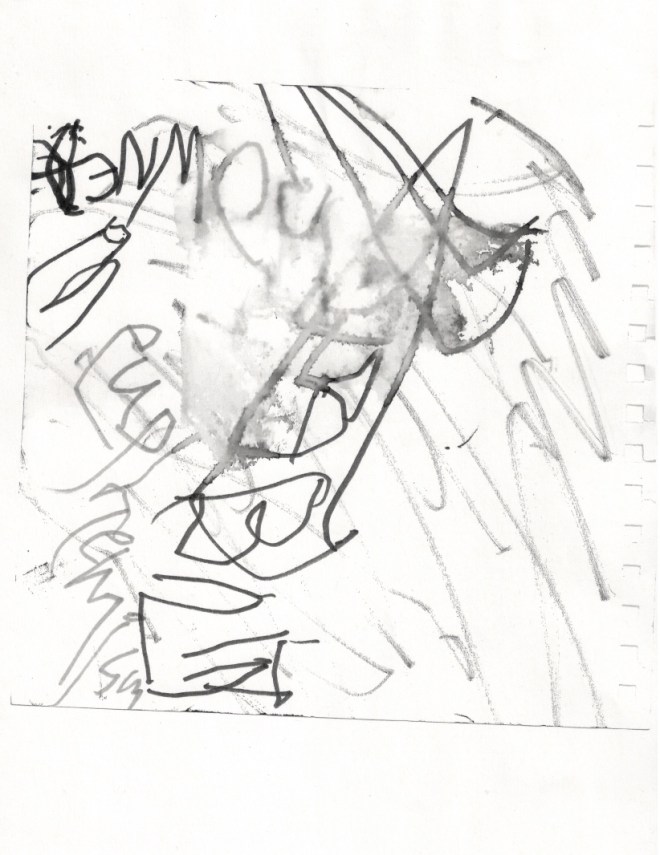
Portfolio-5“Being physically disabled myself, I often think of myself and my as audience members, just insignificant observers of my disease’s progression, effects, and affects. This ‘outsider’ perspective is what I interpret as Carson’s purpose and message behind Nox, and it’s what I have striven to elicit for disability in this project.

Portfolio-2“I’ve explored the photocopy technique, implementing forms of handwritten pieces and material objects. Attempting to play with my method of choice in new ways, I photocopied in the ‘negative’ setting a couple of times to convey the stark labels put in visibly-disabled people, Another way I twisted the work via the photocopier was selection of reflective objects to photocopy.

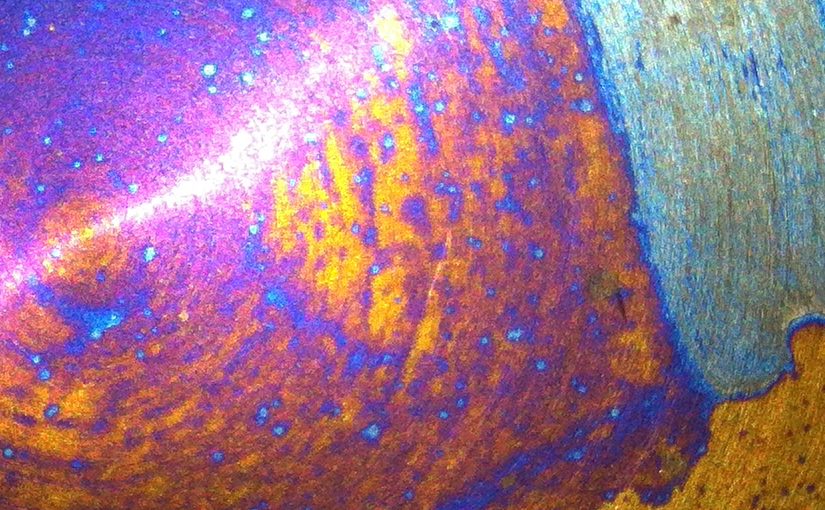
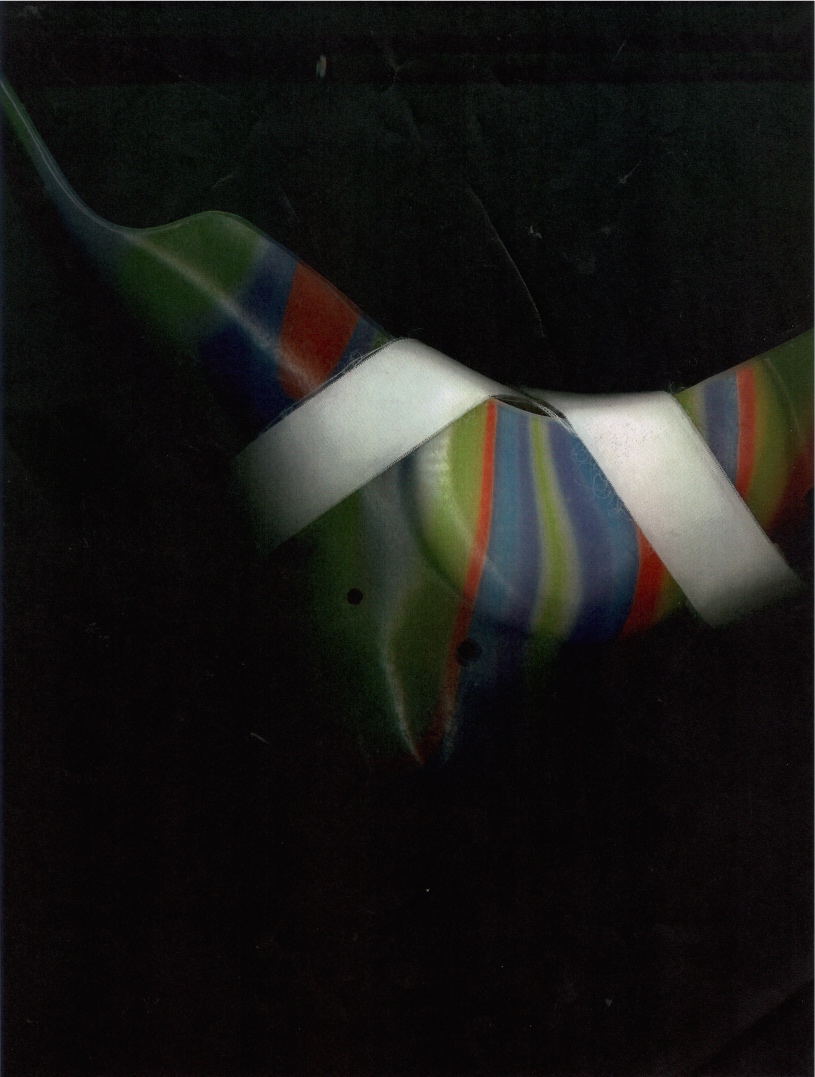
“The first artifact displays the title of my disorder, Friedreich’s Ataxia (FA), through a bag that has one transparent side and one opaque, turquoise side. I chose this to hold the piece because I knew the photocopier because I knew the photocopier would reflect off the bag, and the resulting glare I wanted to evoke the unapologetic cruelty of my handicap.
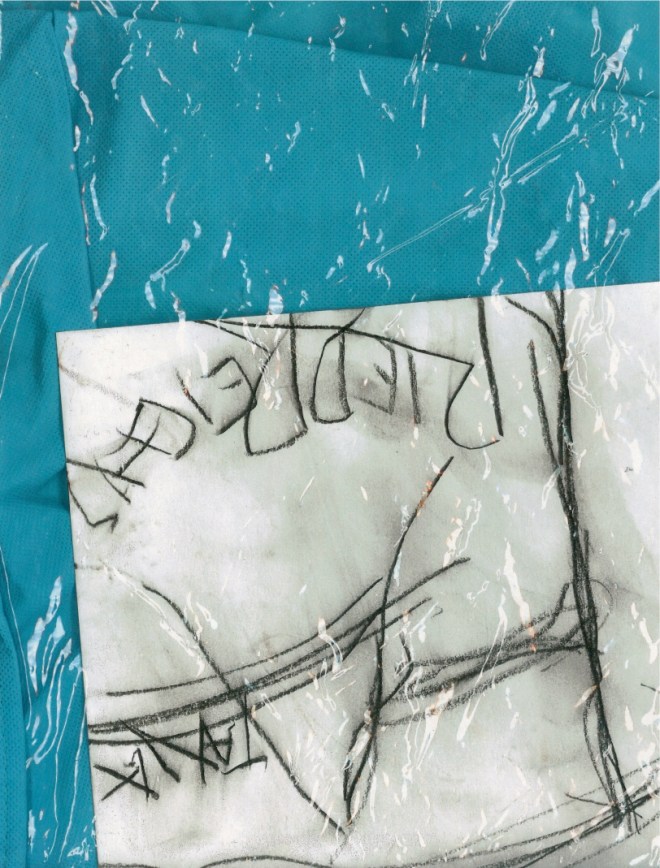
Portfolio-1“Also, I thought the bright turquoise backing worked as representation of the crippling sadness or unashamed joy underlying nearly every part of disabled life. The writing is done in charcoal, and then smudged, translated to be the destruction of effort. Where I placed the artifact in the photocopier cut off the top fails-at-drawing-a-straight-line of th F, leaving a single, straggling line reminiscent of lives cut short by means of physical disability, including mine. Finally, I inserted the page into its sleeve upside-down to distance and simultaneously inconvenience the viewer, like disability effects everyone involved in the victim’s life.
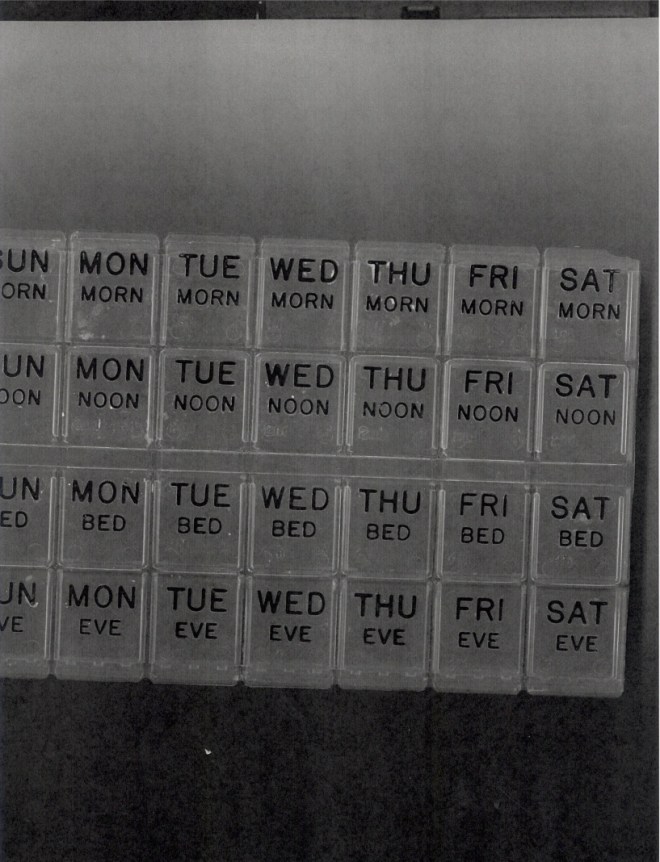
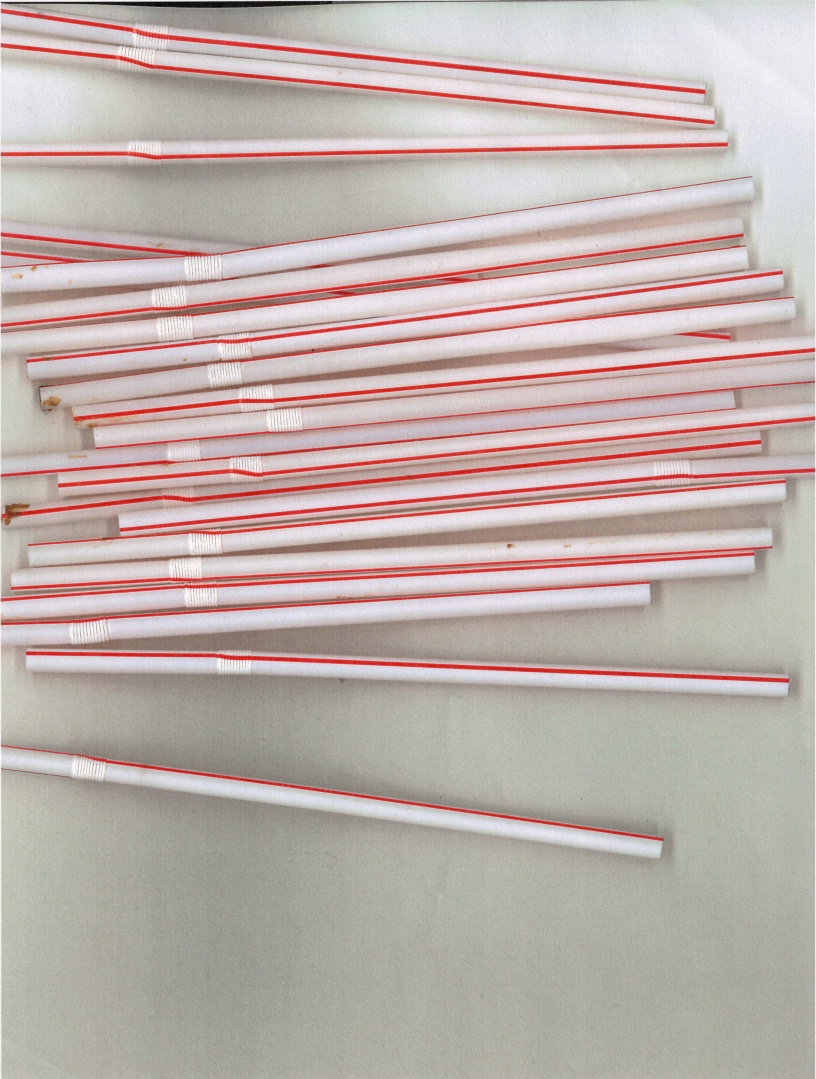
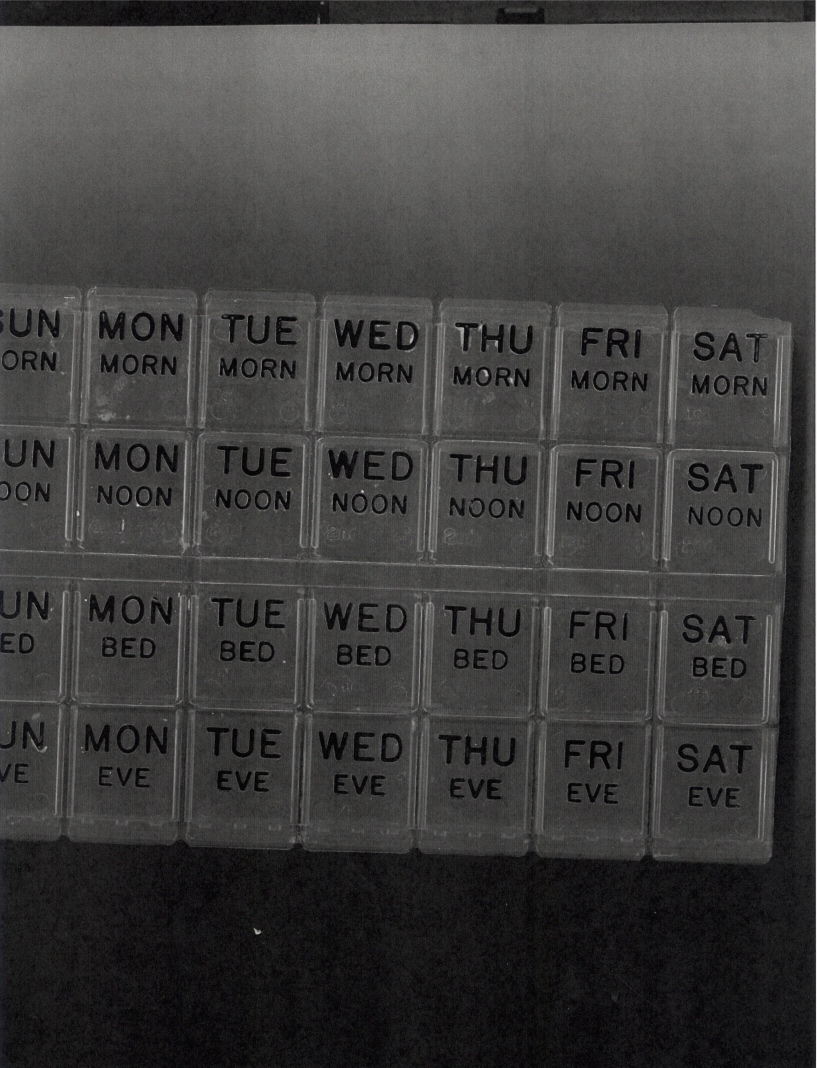
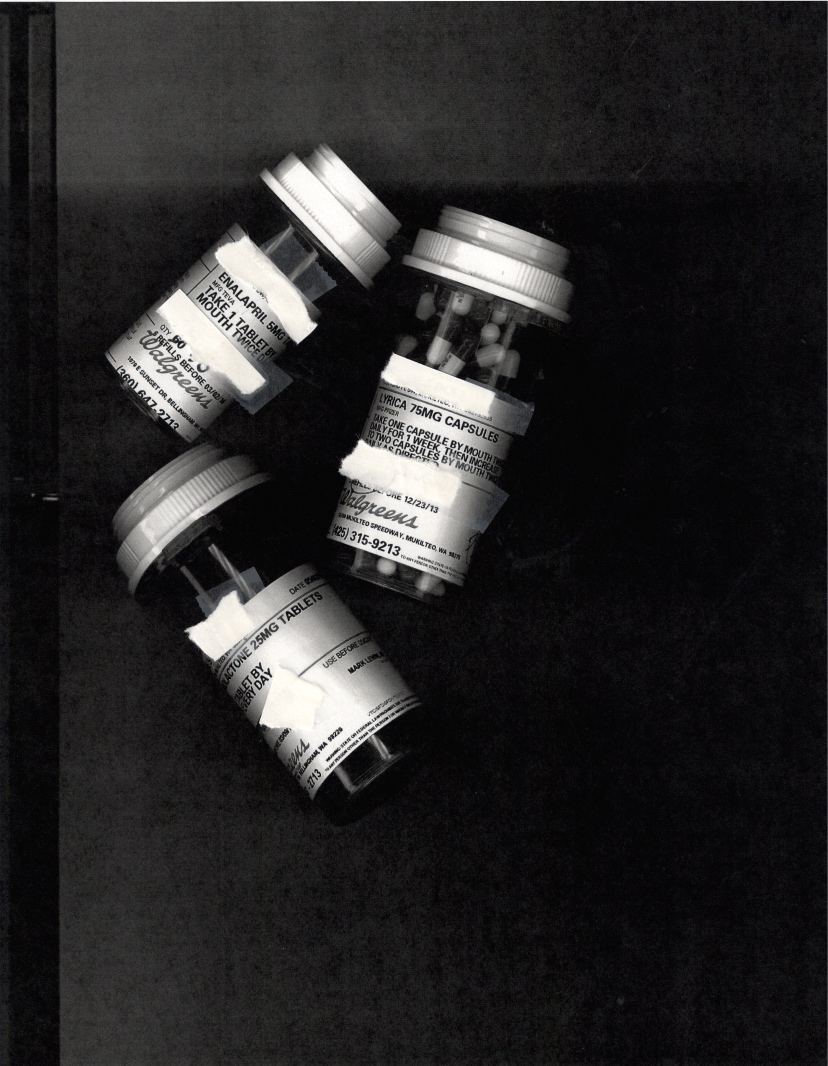
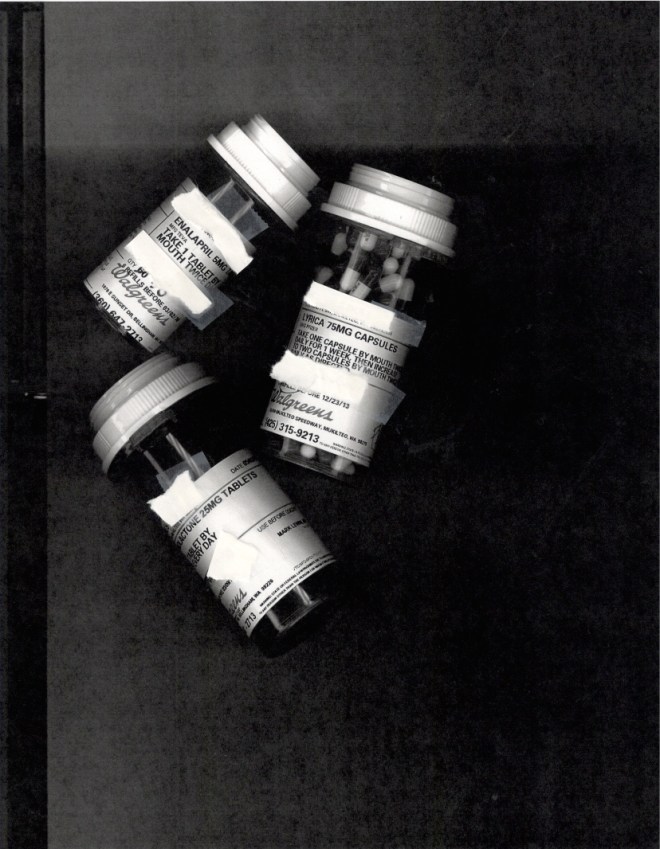
Portfolio-4“As a visual element, I will steer the viewer’s attention to the cover art. There I have my prescription-medication bottles, showcasing the nameplate-labels. Not only do I associate paid-for treatment with disability, but I see this photocopy of personal and yet widely recognizable objects as the prime subject to introduce this portfolio, too. It compartmentalizes disability, and also starts the project’s accessible journey of disabled interpretation.”
Portfolio-0


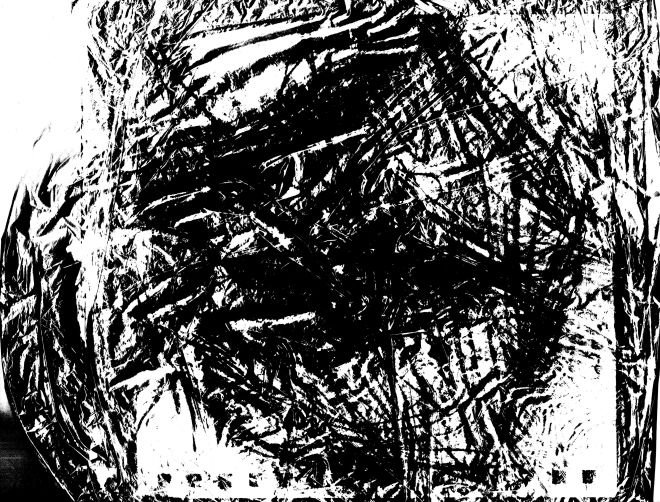
POSTSCRIPT. The cellophane technique I’ve been playing with BTW is thanks to Marlise, who on a handwritten poem assignment took my encouragement to view her handwriting as differently beautiful and handed this in –

Handwriting 3a

– but because the charcoal was bleary handed it in, considerately, in a plastic bag, which gave me an idea, so when I scanned it I scanned it in said plastic, with all those unanticipable opacities –
Handwriting 3b

Whoever says teaching creative writing sucks from their creative work needs to check what they’re teaching.

One more for Elise Partridge

Hello friends. A three-way conversation between Barbara Nickel, Stephanie Bolster, and myself on the life and work of our loved friend Elise Partridge has now gone live at the Winnipeg Review. It’s to be found here.

And, if you’re curious, I wrote a bit about the challenge and wonderment of the conversation itself here. You can read some more about Elise herself here. And Barb’s wonderful blog is here. Steph doesn’t have a blog but here’s her publisher’s page here. Enjoy, please, do.


I hope Elise’s spirit won’t mind me appending this.

I was invited to a celebration of Rosh Hashanah tonight and we were asked as part of our lovely evening to express an intention for the year to come. Mine was, to be more patient with others and myself. What’s this have to do with Elise? She wasn’t especially patient with herself or others. In fact I loved her impatience, it was was wise, it was holy! At least when she was skewering someone’s pretensions it was, very.

But my impatience is most often crap. (And that, that’s impatience with impatience. Yeah baby gotcha.) And I’ve just now started sitting zazen again, after years off the cushion, and I’m feeling what a difference it makes to be okay with not getting it exactly right all the time. And a little bit more patient with me, I’m a little more so with some other, too. Does seem to go that way.

Came as this a few ago

TD 90V - imageKshanti paramita = the perfection of patience, or patience beyond patience. Patience so sunk in itself you might not recognize it as patience. That was Elise, too. Barb, Steph, tell me, wasn’t it?

Death’s a dog w/ dragonbreath

Okay, still working away at erasures and illuminations of that minor poem in The Exeter Book, and I think I nailed something, check these moves out, yo.

90V SI 5
Click on me & sibs for bigs.

Source text for this one, you’ve seen before (along w/ a short account of how these images get made):

 5.

Moving among the company,
everywhere always, house throughout,
greeting her lord, she pours his cup first;
in greatness gives and keeps counsel,
they make a house, two
of one mind.

Next up (I thought for a while, these could fall in any order, but they seem to want the order of their first making):

90V SI 6

You’ve seen that one before too, as well as this one:

90V SI 7

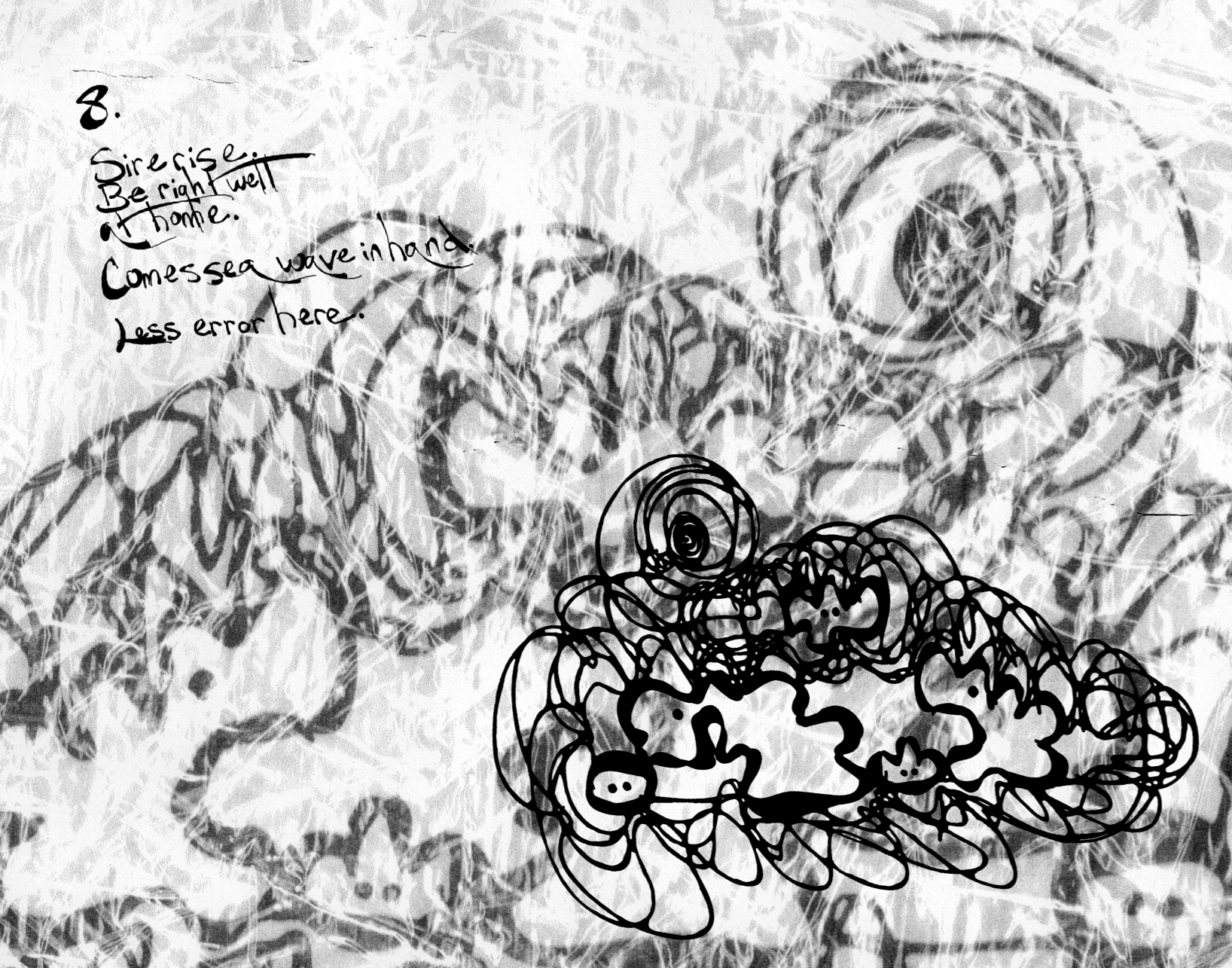
Haven’t posted this one yet tho –

90V SI 8

– for whom the source text is:

8.

When the time’s right,

he comes home whole—unless
the wave swell bears him elsewhere;
sea has him in hand, desire’s terror’s pleasure.

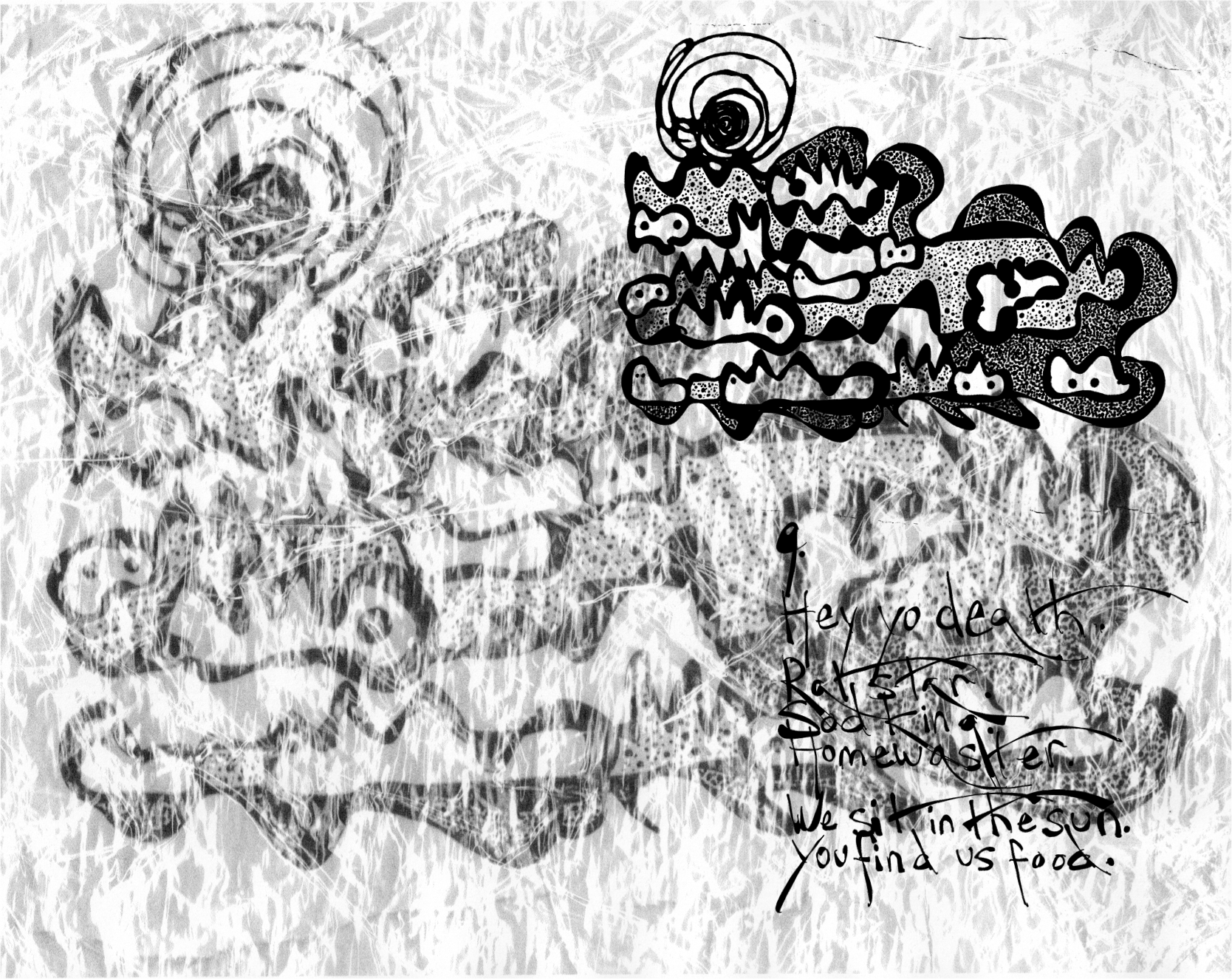
(I’m sure that last line’s a mistranslation – the Old English, very obscure, the translator, me, very shaky.) And one more also new to the blog –

90V SI 9

Source text for this one is:

9.

A man his goods, king in castle,
they both sell you crap.
                                                Summer comes,
you take to the home woods and waters offer
and find food, before you’re too weak to.

You can sit in the sun and still starve to death.

To get the streakies I photocopied the drawing on the lightest setting through four layers of cellophane.

I owe the move to one Marlise, a student in my vis po course this spring, whose portfolio made me cry and the whole of which I mean to post soon.

Till then, wishing you joys in your labours.

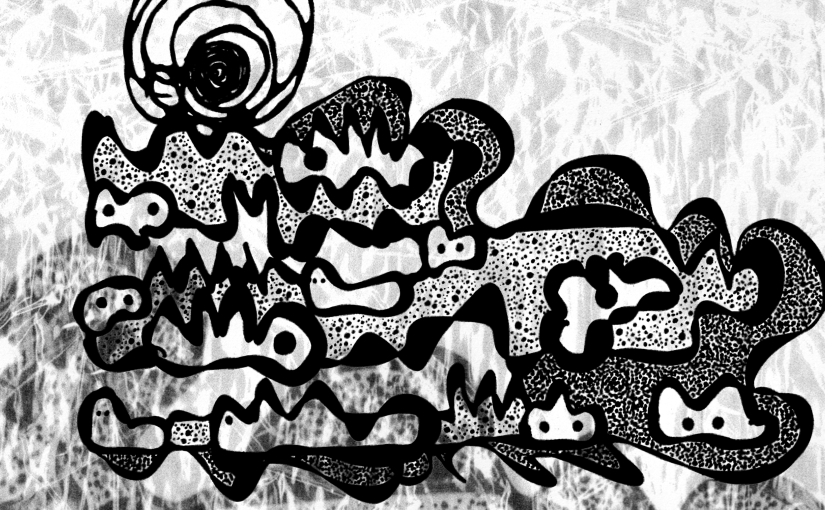
Shadow w/o the slick

Okay, trying to get that shadow effect, without the slicky quality. Good people (or bad people, I like bad people, too) tell what you think.

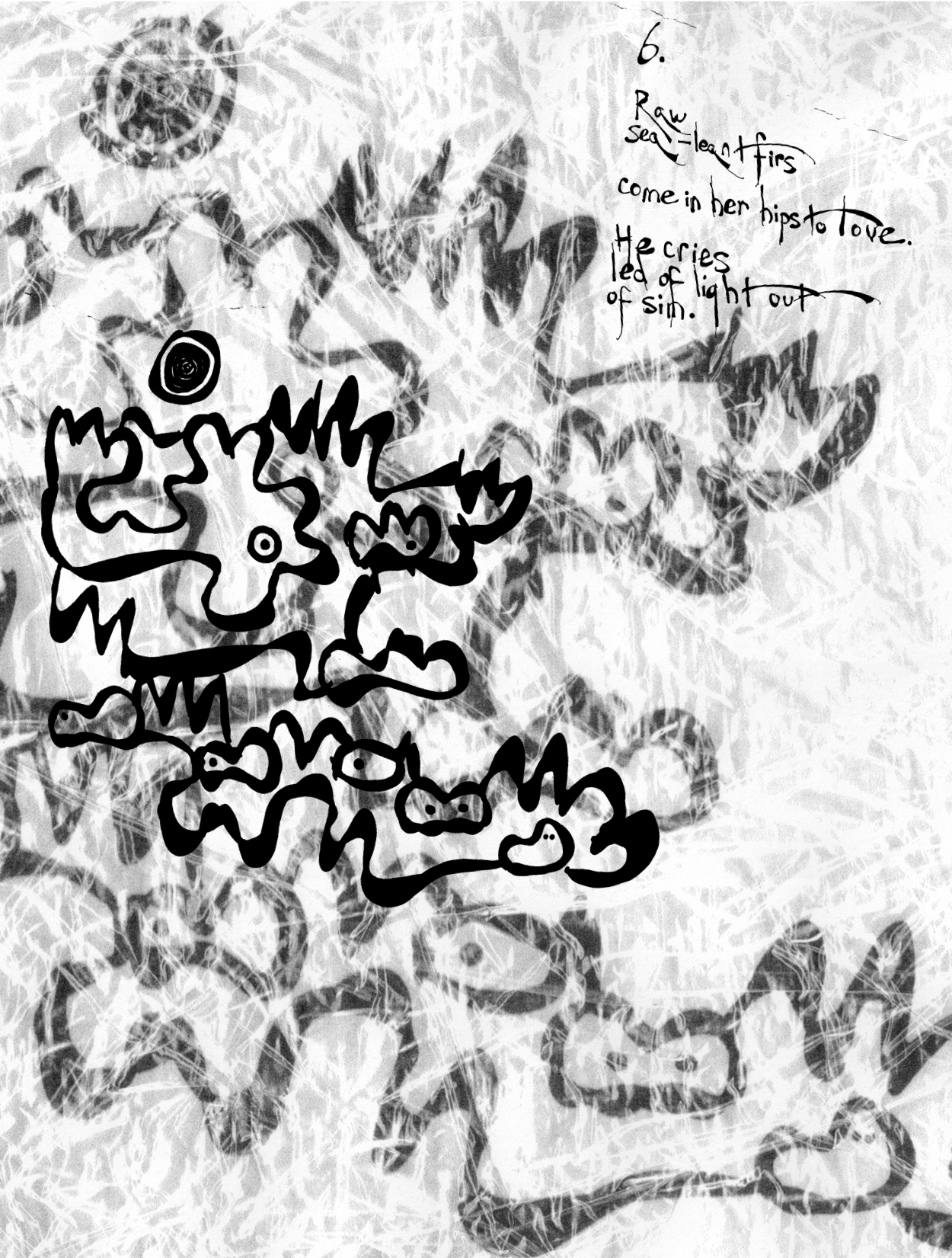
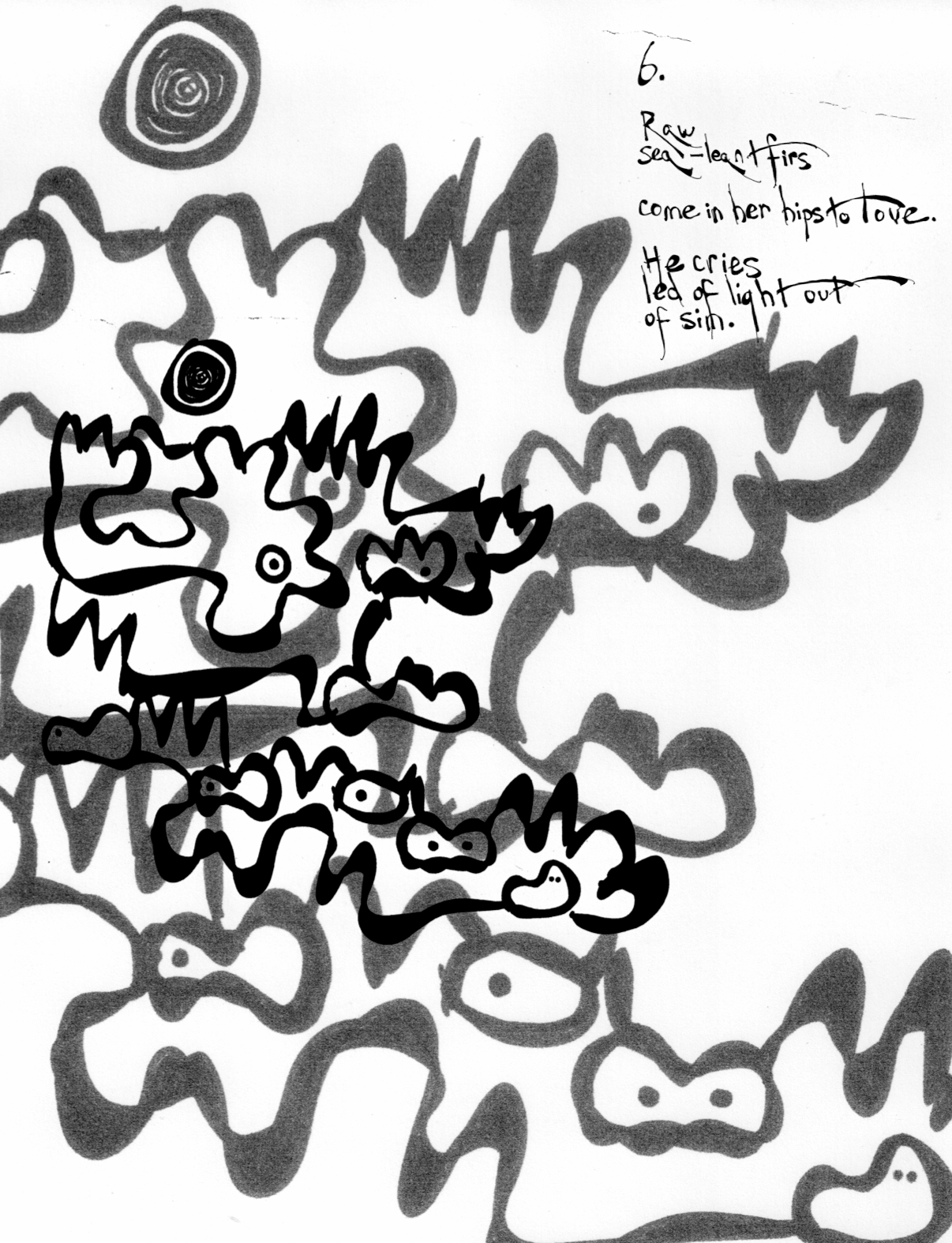
SI 6 (90V)
Clicks!

The diff? Paled it with the photocopier, instead of by MSWord’s “wash out” filter. More imprecision, gets more imperfection, gets more texture. Mistah Plato, he dead.

Why the poem’s so affirming, the main face so scary, I dunno. Am not in charge of the contradictions. Source text, for those to whom such matters:

6.

Ship is nailed, shield bound
in staves of light linden wood –
her love comes to the Frisian
wife, keel draws near,
breadwinner home
                                        she cries
out to him
                       rinses the sea
from his shirt, finds him clean clothes,
offers on land what his love asks of her.

Have not, as yet, taken up Theresa’s totally solid suggestion to free the shadow man (or free the shadow, man?) and am curious as to my resistance. Am I yet beholden to M. Plateau after all?

But there’s something persistent in this project about doublings. All the characters are made, e.g., by filling in the gap between a letterform and an imperfect iteration of it. And something compels me about one of these glyphs, broadcast large and pale, being the landscape the mind that thought it gets to wander a while.

Maybe the shadow ain’t ready to be quite that free just yet. Interesting. As I believe Wile E. Coyote said to the air rushing up below him.

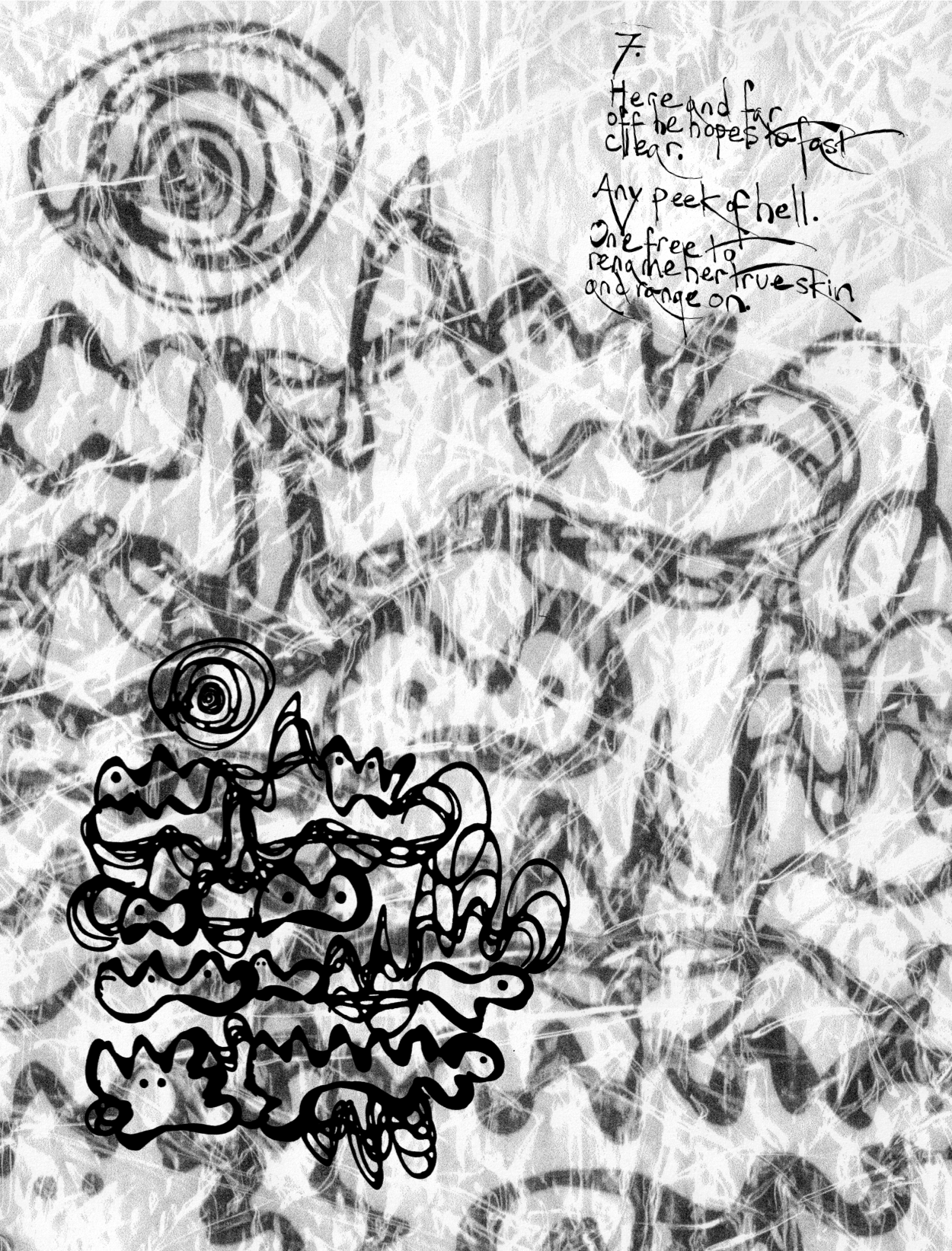
Here and far / off

Another made by the erasure & illumination practice I been telling you about.

Click on me, and again, for some close-up time.

The source text for this one (that same minor poem late in the Exeter Book):

              7.

She’ll stay true to him.
He’ll keep her name clean.

Many are steadfast,
                                           some curious
and one too free with a stranger.

Far off, he thinks of her, hopes
where he cannot compel.

The relation of source to the poem I get to – always mysterious to me. (Just as is, the relation of those two, to the image that arrives, just as much.) But I suppose I, or someone in here, wanted to get under the surface of the sexual jealousy story, ask, what makes this he and this she tick, as they surely do.

If I’ve a worry with this one, it’s that I’ve used a filter to wash out the image so I can post it, big, to the background. A sort of move I’ve mostly foresworn. I don’t want no clipart looks here, and no Photoshop tricksies. I try to get my pretty effects from low tech – Sharpies, tree leaves. When I use high tech for effects I go for fails and distortions – scanner noise, leaf stem blur.

But I just so love how the image, blown that large, makes a surreal hillscape, and it’s gotta be grey. Left black it’s too chunky and too foreground.

Have I sold out? Thoughts, any?


And just a note to self. If I do end up feeling okay about the enlarged and greyed out forms – they have real potential for the animations. Surreal backgrounds and vertiginous shifts of scale.