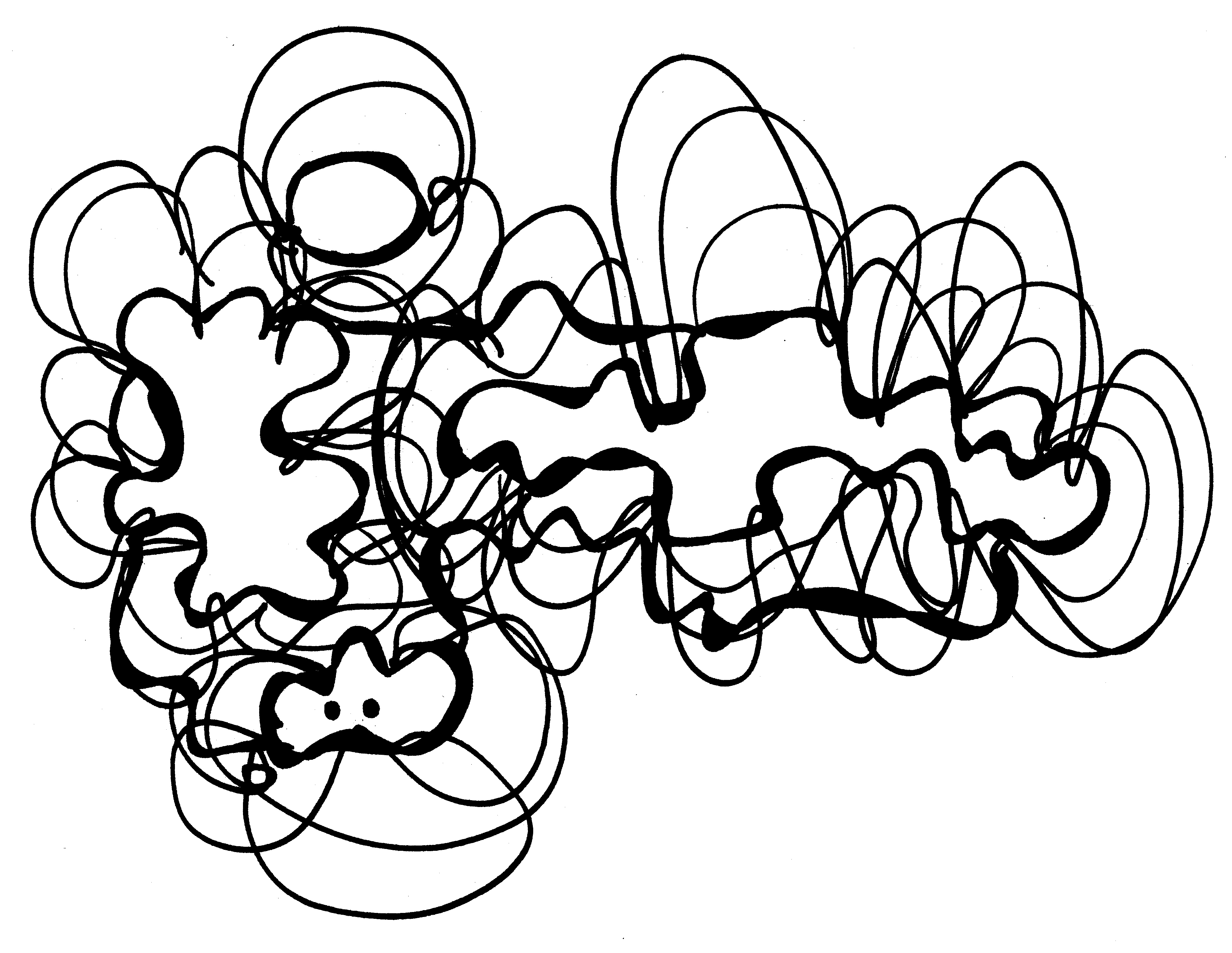
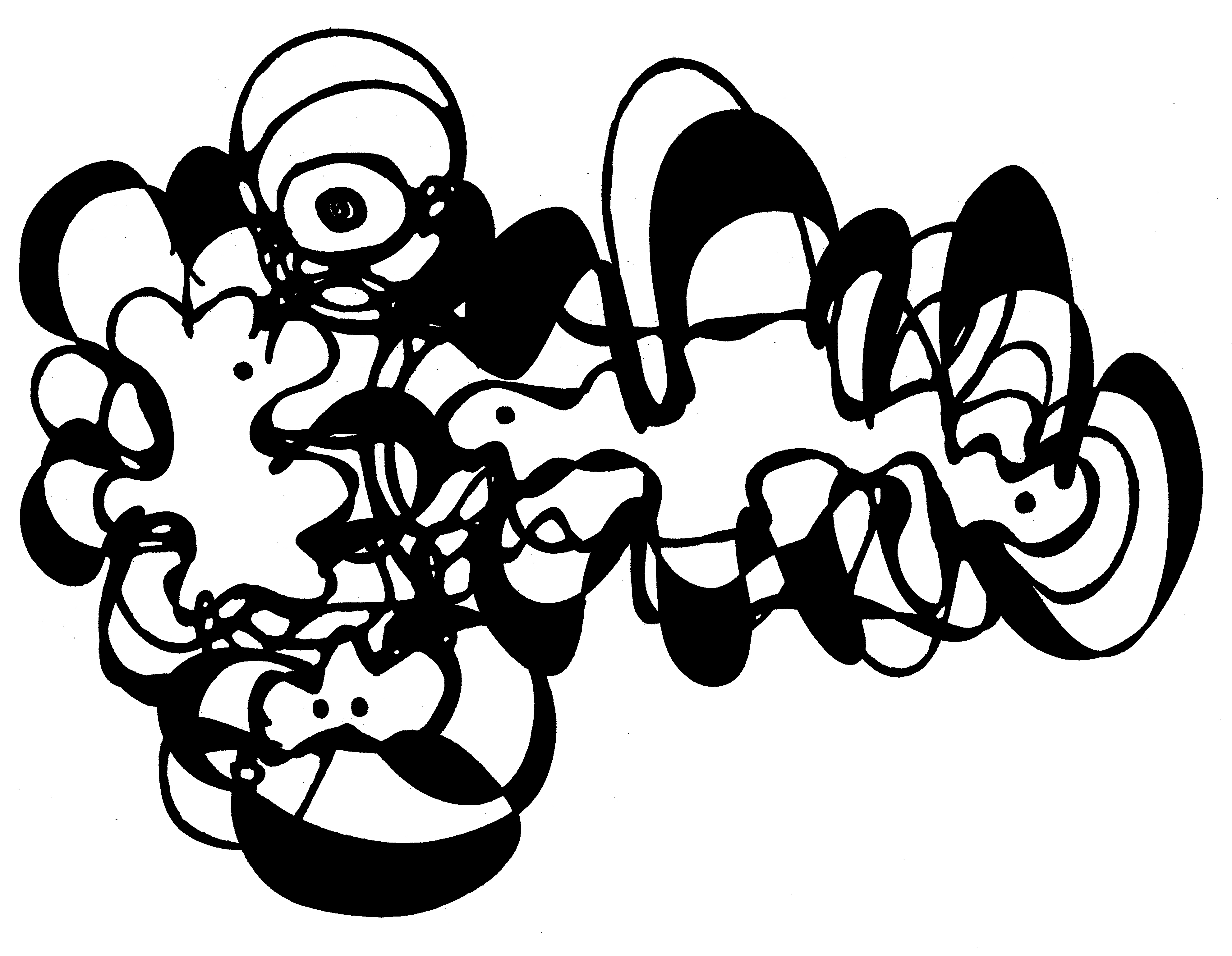
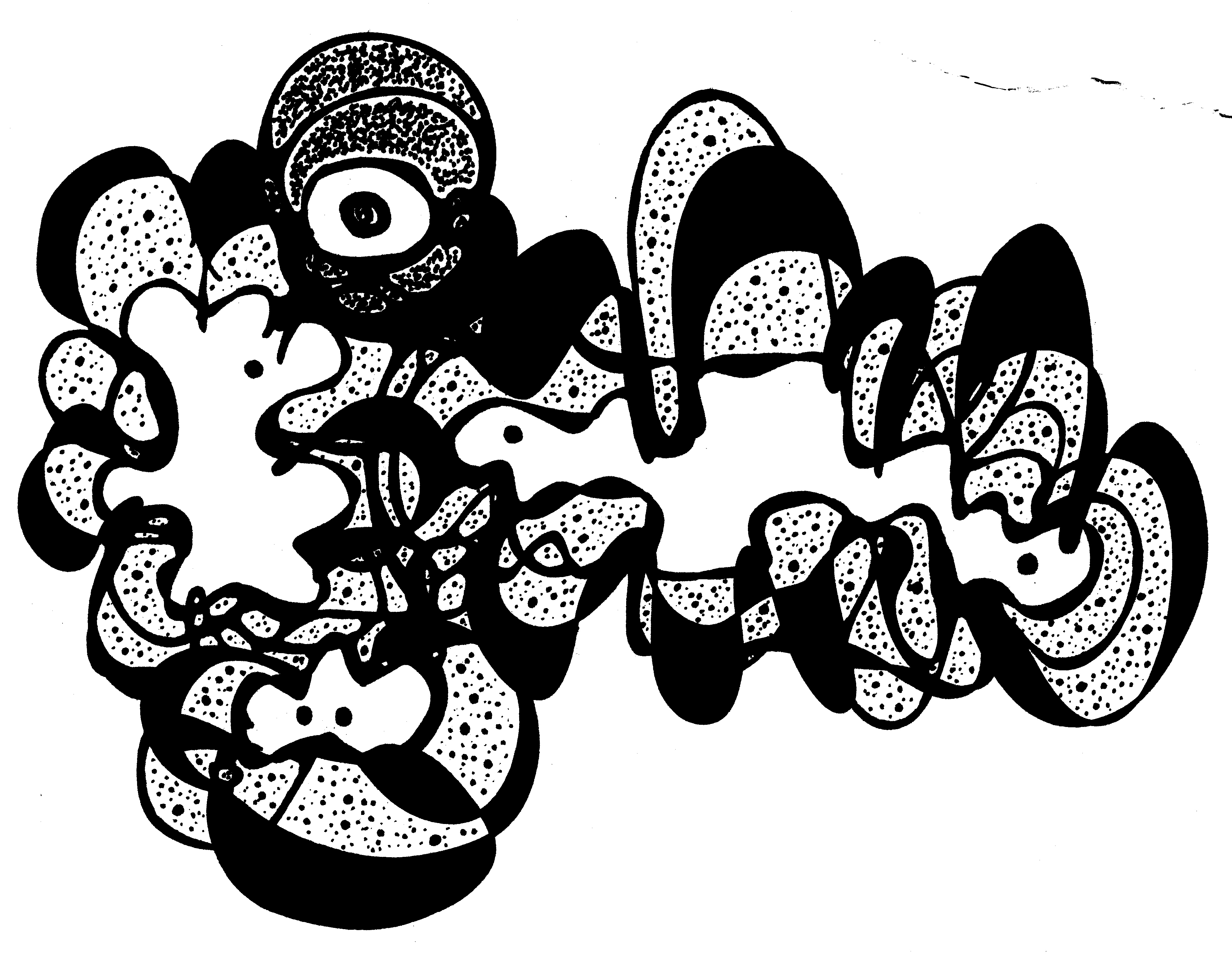
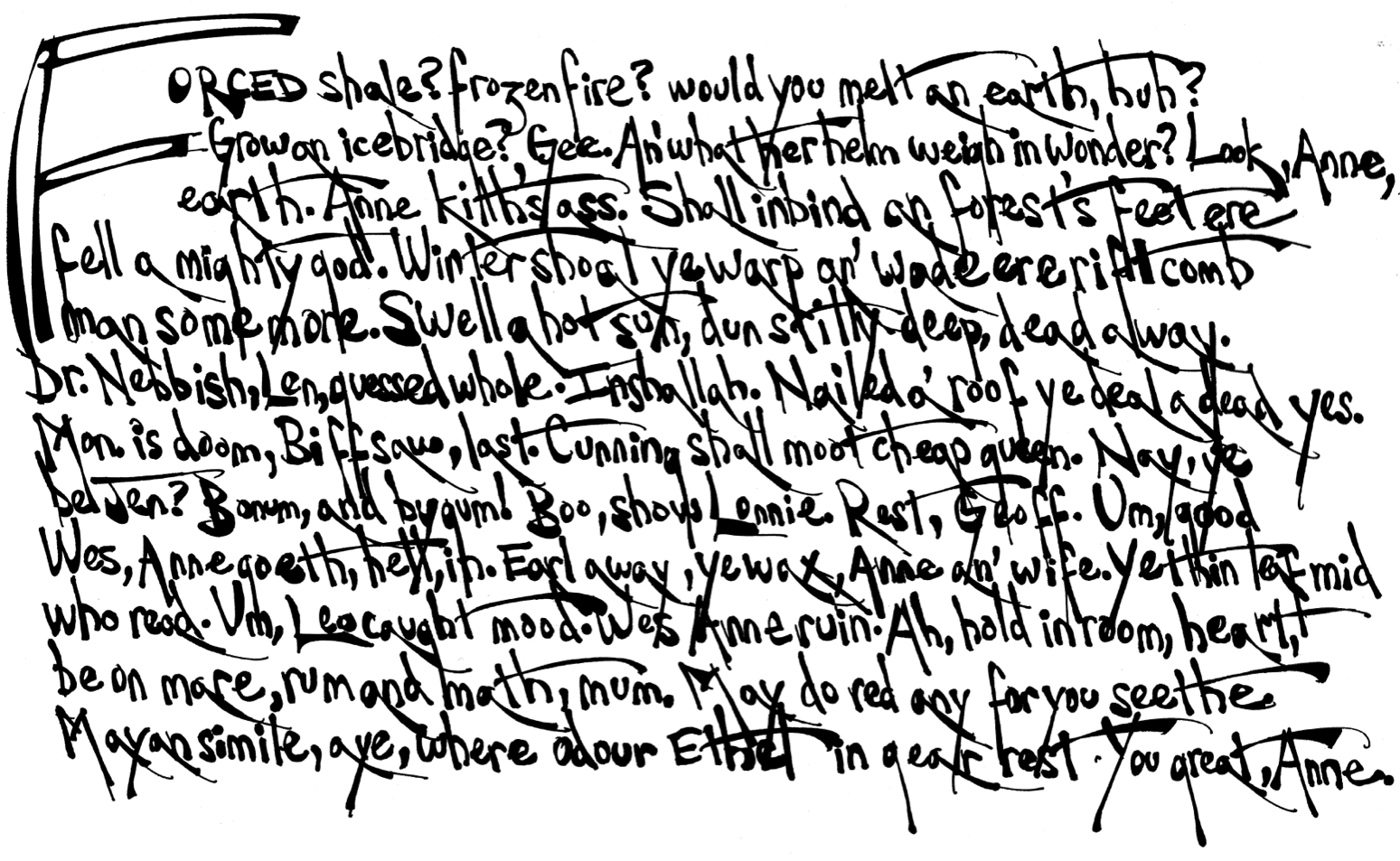
Abjected forms of a divine spark

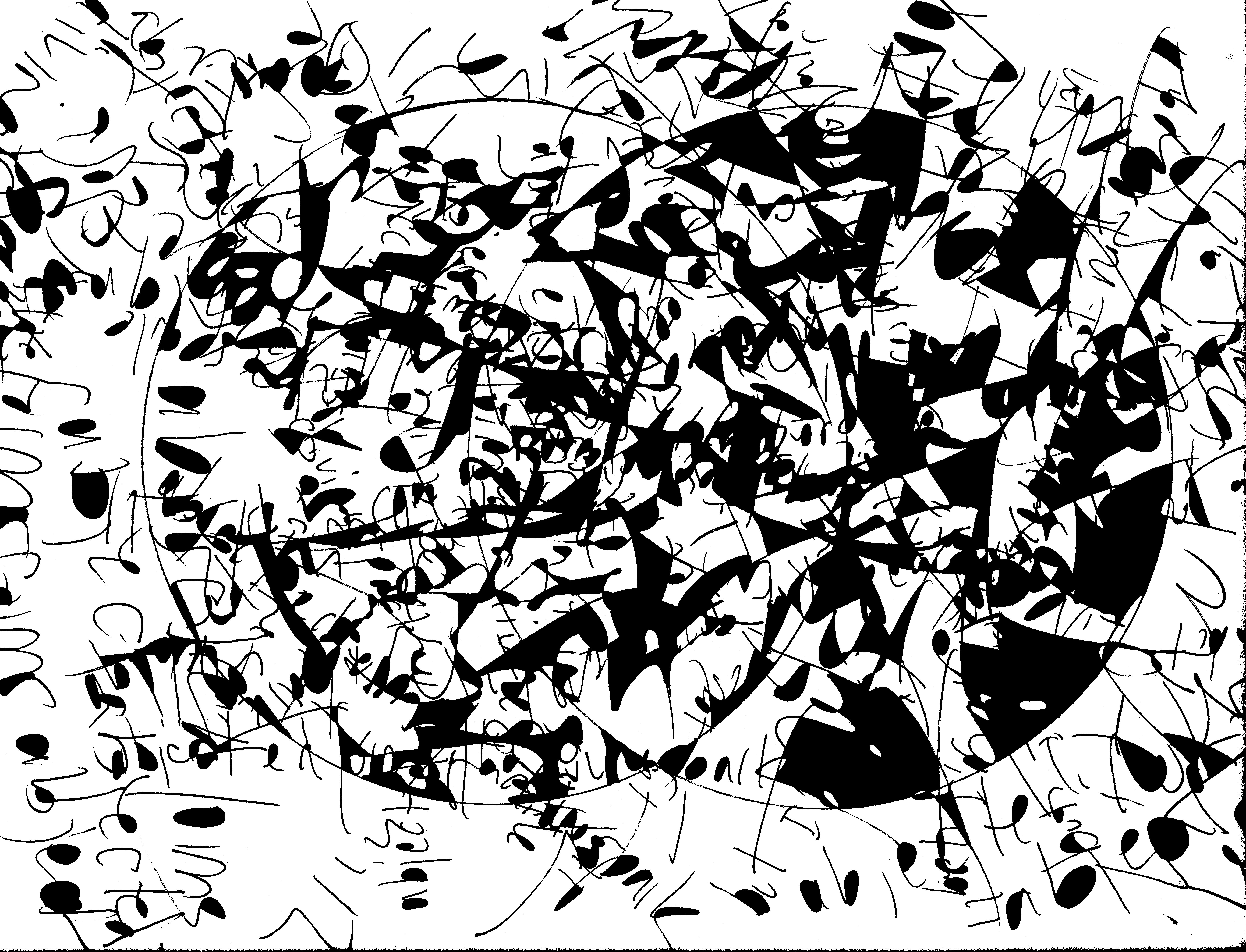
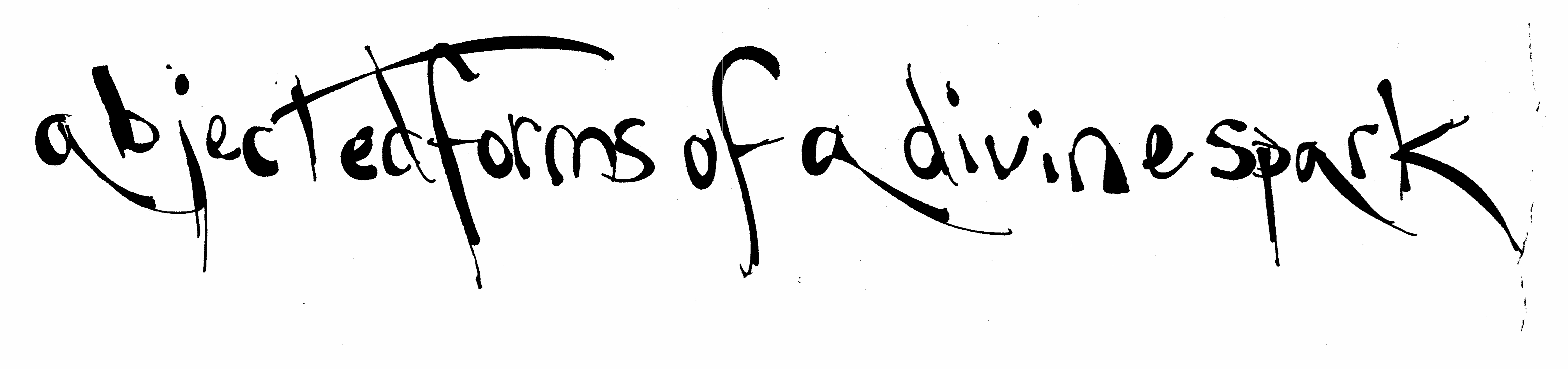
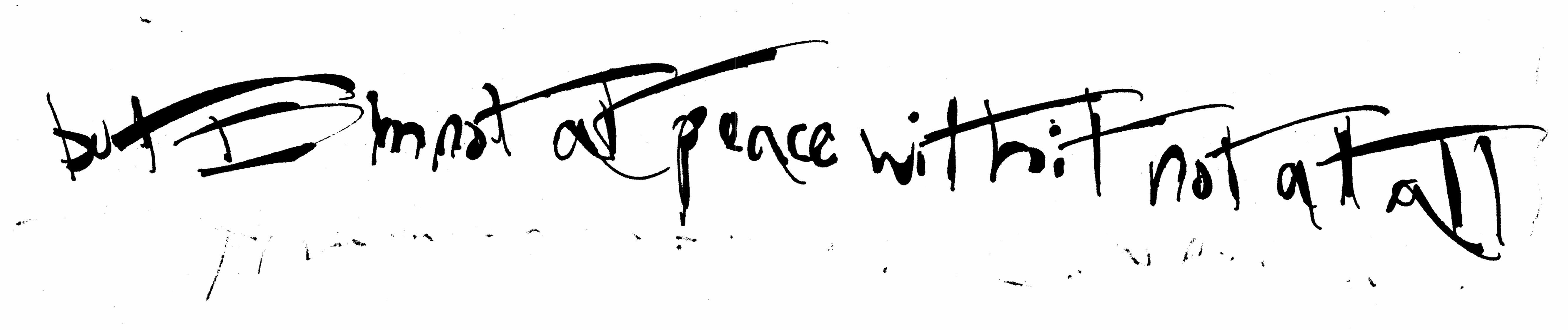
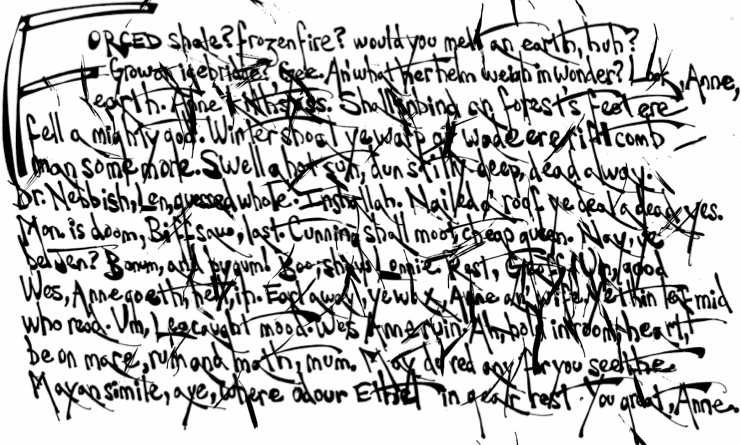
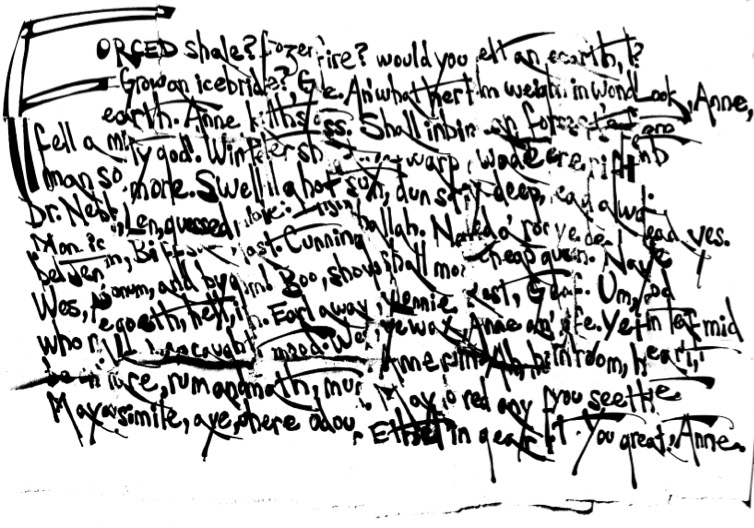
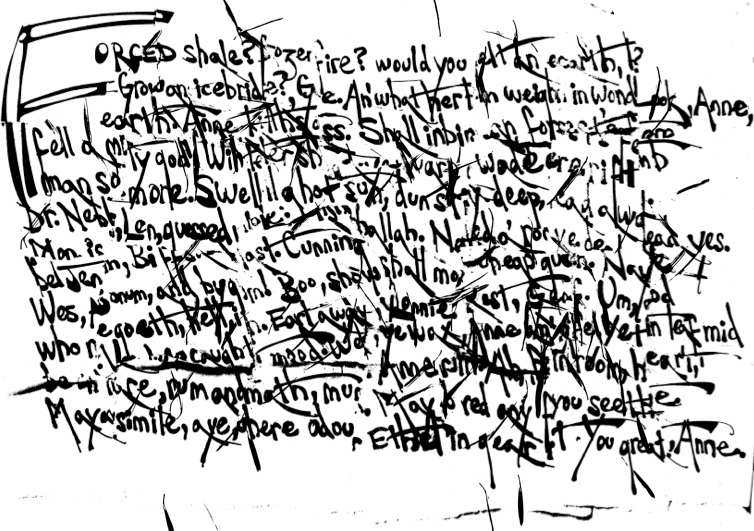
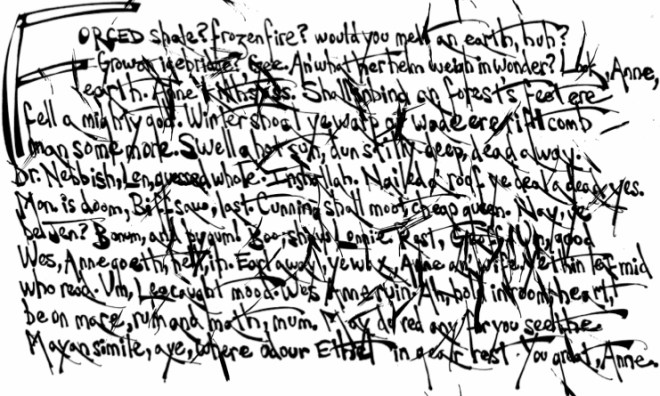
Another image from Overject. Got by inscribing, very quick, two phrases, over and over at all angles, till they become mostly unintelligible. Then beginning to complete the forms the collisions of the letter forms propose.

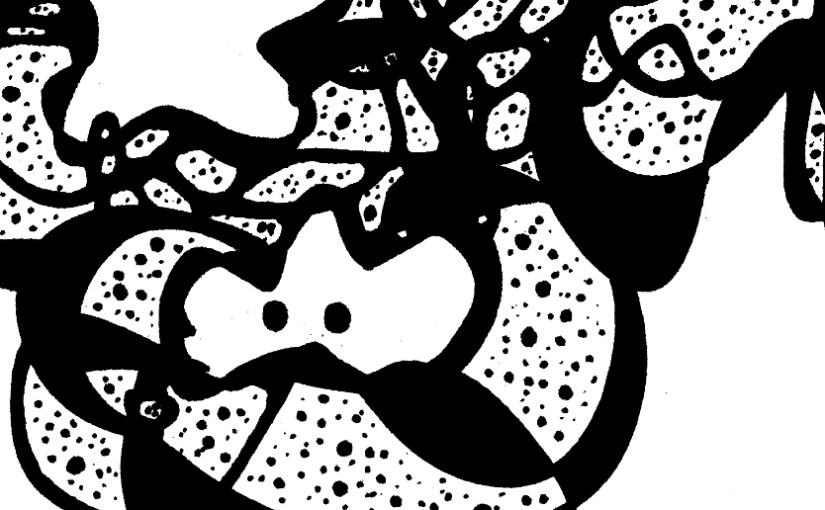
Click on me once, and again, for some up close face time.
Click on me once, and again, for some way up close face time.

The circles are outlines of kitchen saucers. The phrases:

90R tear - abjected and90R tear - but I'm notBeen thinking through, with a couple of friends, the aleatory – chance operations – and how contingency pokes out in places not usually thought of as aleatory.

In the above image, I got the base layer, the tangle of intersecting phrase noise, by inscribing so rapidly I wasn’t in charge of anything, except that one phrase cohered mostly around one circle, the other mostly around the other. I experienced the end result as a set of accidents whose conditions I needed to work among. No dice were thrown, no darts. But how different really was my procedure from a full-blooded aleatory procedure?

It’s just, maybe, that I was the dice.

And the phrases themselves, “I” didn’t “write” them, they just “came to me,” on the treadmill of all places. Where exactly is the edge where the aleatory ends and deliberate design, or however you want to label all the other poetry being made, begins?

The panel proposal we’re drafting: “Everywhere Is Aleatory.” More soon.

Beasties, animated, to be

Whereas it’s been long since a post. Whereas we’re all about repurposing here. And whereas I resist going back to work on a panel proposal. Herewith, the juicy bits from a grant proposal, wherein The Poet Asks for $$ to Learn to Flash Adobe.


I’ll begin with a passage I’ve translated from an untitled Old English poem found in the Exeter Book –

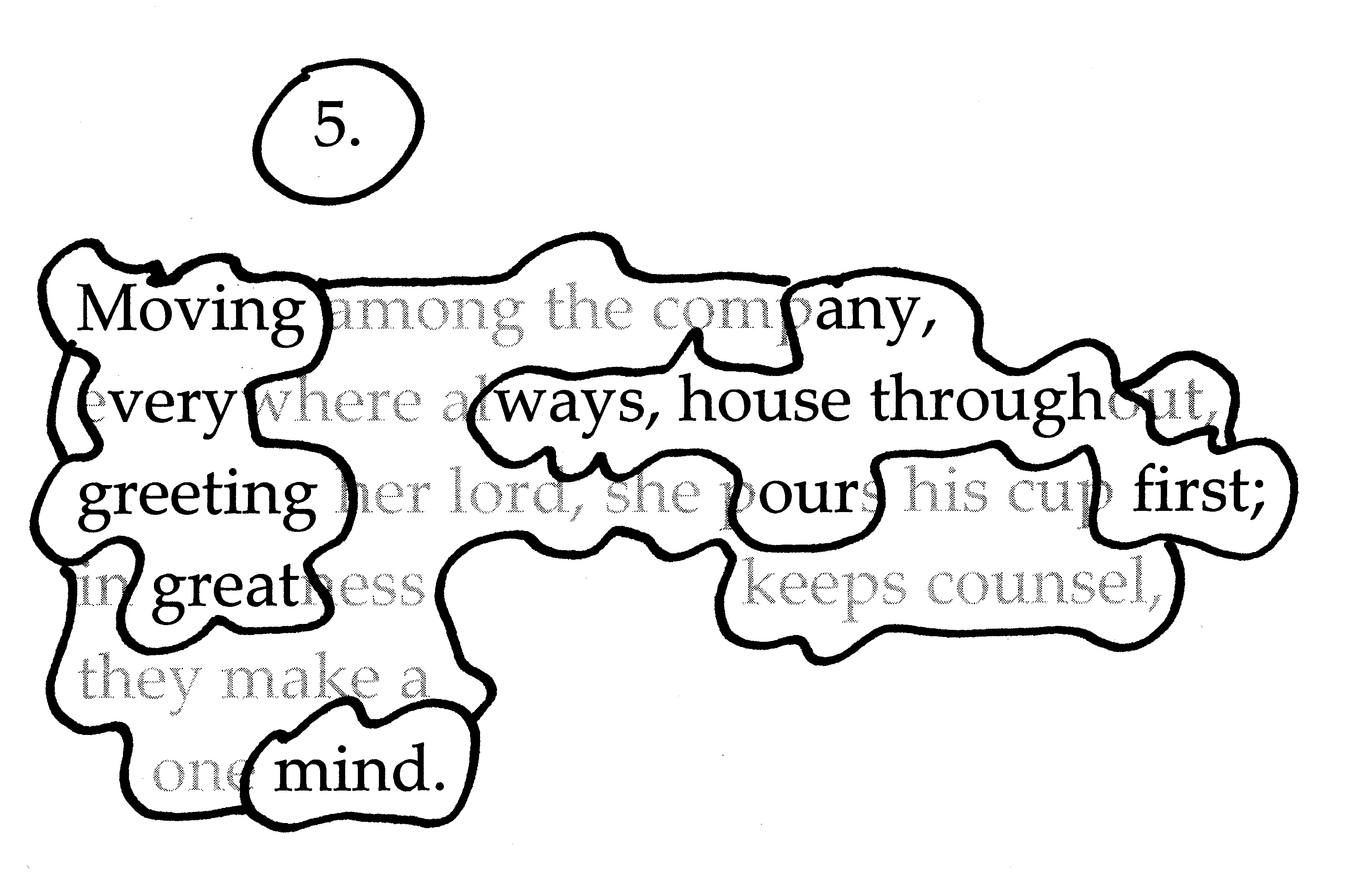
5.

Moving among the company,
everywhere always, house throughout,
greeting her lord, she pours his cup first;
in greatness gives and keeps counsel,
they make a house, two
of one mind.

A selection process, adapted from poets Ronald Johnson and Jen Bervin and now in general use among restless poets everywhere, yields a visual pattern to work with:

90V SI 5 image 1

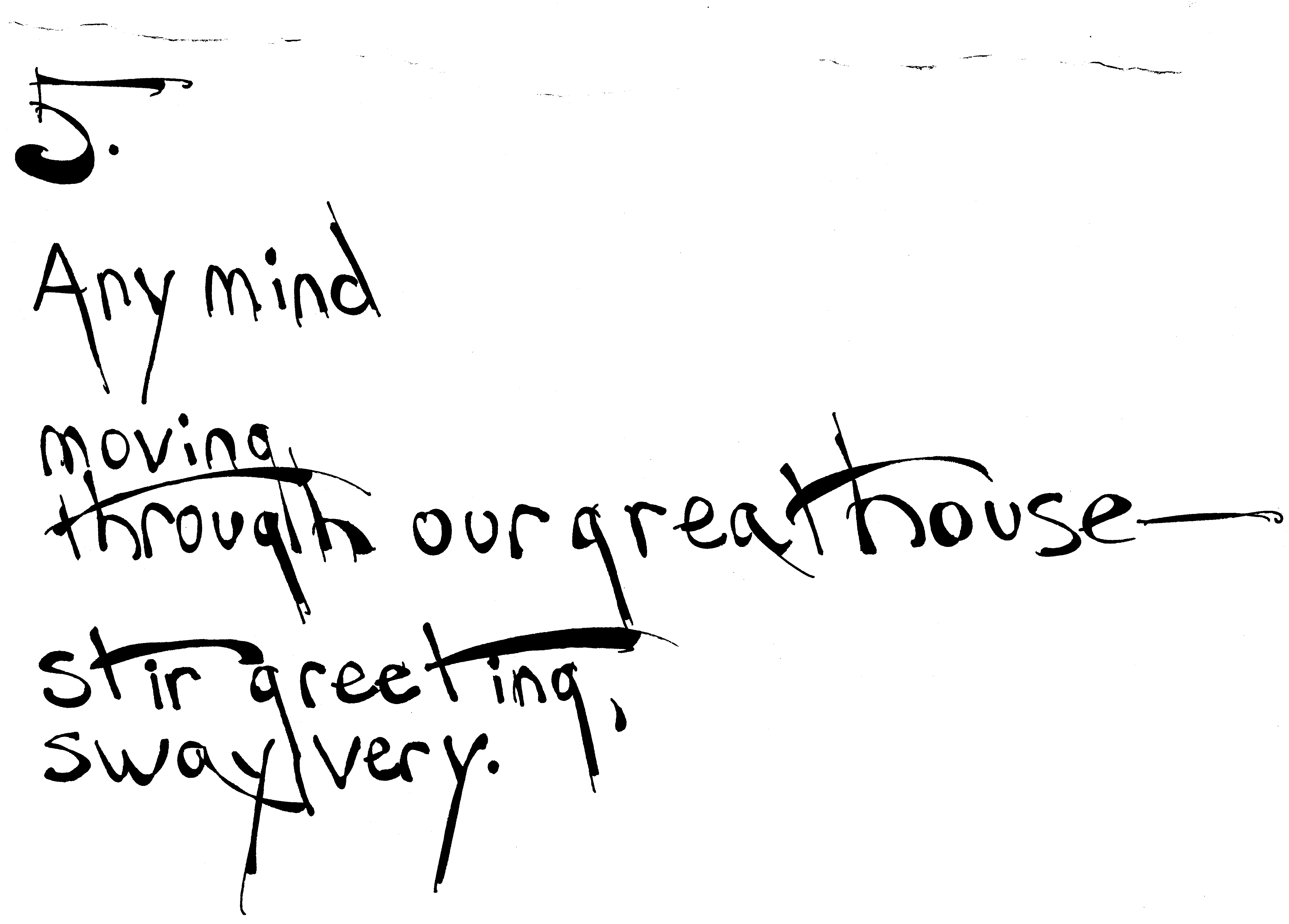
The selected text also generates, with some recombinations, a verbal poem –

SI 5 (90V) - text 2

– but I’ll focus here on my work with the selection marks, for that is where my practice, though first inspired by visual artist Tom Phillips, largely departs from other practices I know of. It’s here too that my practice points towards terrain I’d like funding to explore.

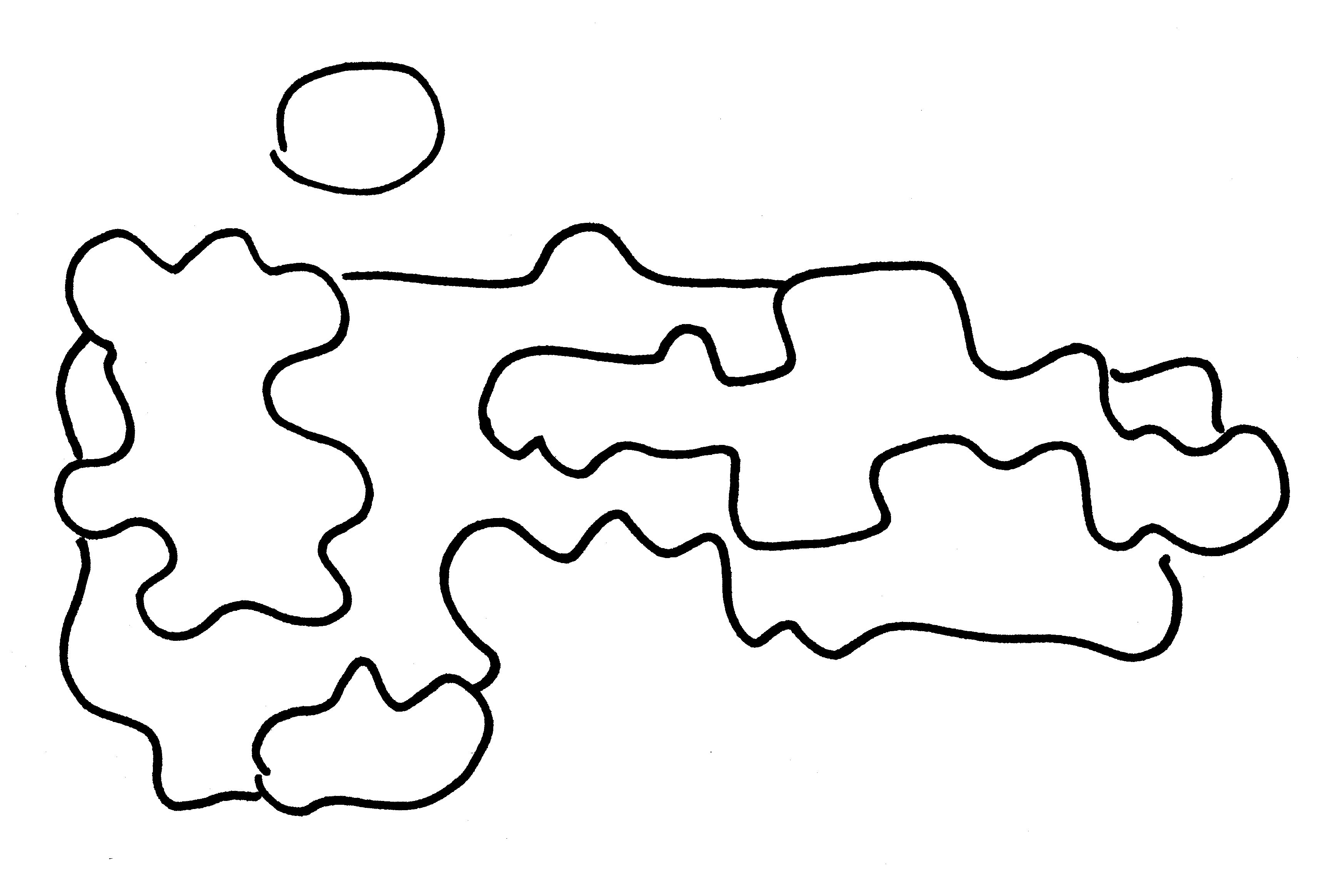
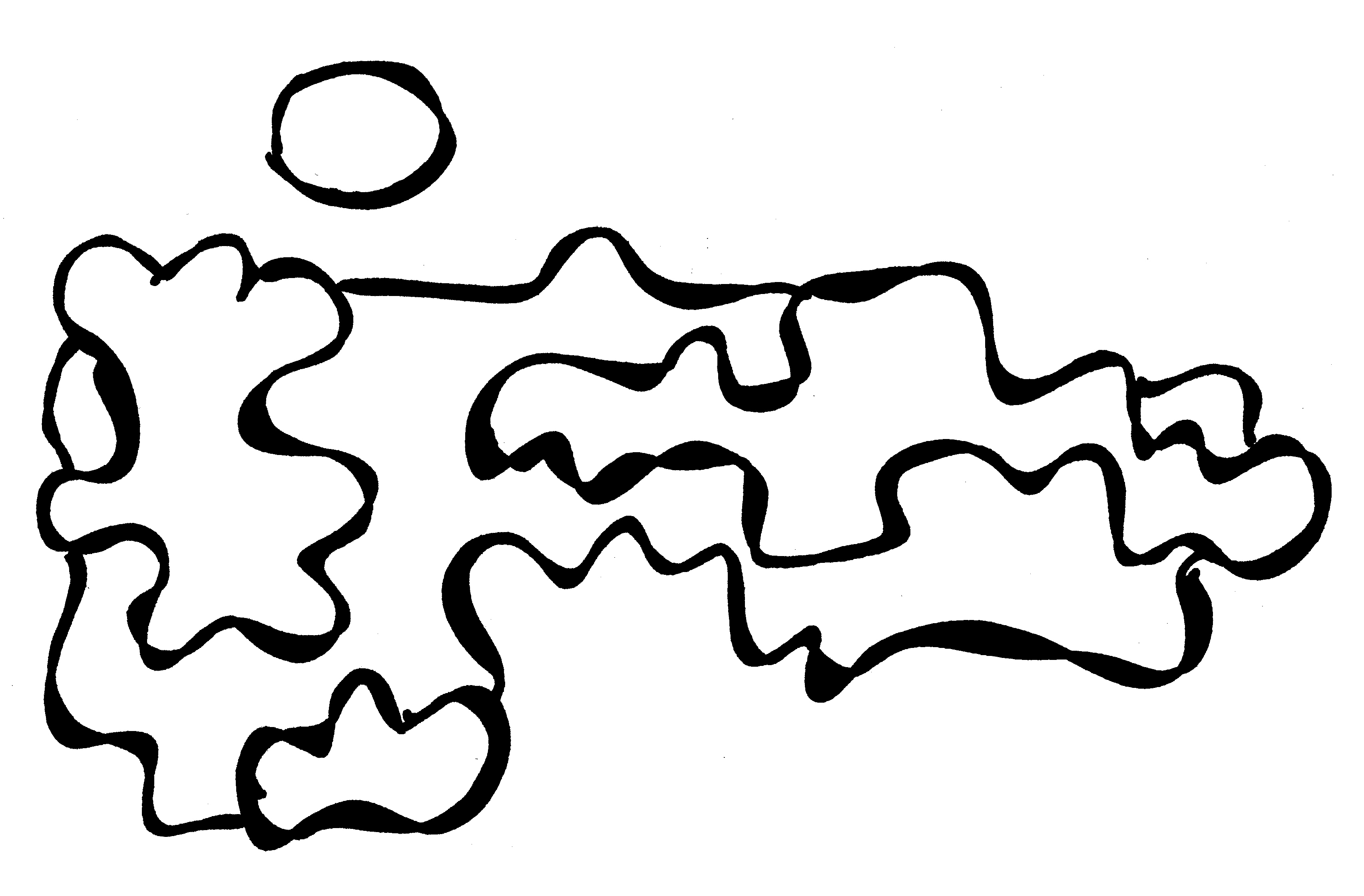
Elaboration of the selection marks goes through several stages, like so,

90V SI 5 image 2

and so,

90V SI 5 image 3

and so,

90V SI 5 image 4

and so,

90V SI 5 image 6

to produce an image

90V SI 5 image 8

somewhere in a dream terrain where Salvador Dali and Jim Henson commune with Louis Comfort Tiffany.

The images are an exploration of pareidolia, the mind’s tendency to make faces at the drop of a hat. They exhume natural and biological forms latent in the alphabet (“A” – ox; “N” – water; “O” – eye). They tap into the animism residual in the process of silent solitary reading (see David Abram, Spell of the Sensuous). And they undertake a fitful and pata­physical, i.e., seriously unserious, investigation of the mystical dimensions of the material text (see bpNichol, “Probable Systems 14: Re-Discovery of the 22 Letter Alphabet”).

Their main shortcoming, as I look at them now in Dumuzi (recently finished) and Overject (presently underway), is that they have had to sit still.

I want in my next project to animate them – to put the demonic, angelic, and zoological forms that arise through the illumination process into motion. Even more, I want to animate the illumination process itself, obviating the need for clumsy accounts like the one just finished. I envision digital publication and performance events, the latter more akin to video installations in gallery spaces than to conventional poetry readings.


Demons and angels weightless shadows across wall, floor, ceiling. Let’s see if I can stand to learn the program though. It’s that or start the search for – my collaborator.

Disruption of the text

Had thought to take a break from Overject, I really had. Bundled up 60 pages of it, handed them to my two most trusted readers, and I told me, This would be the time to take a breather, get some distance, reapproach in a little while with some new perspective.

Not.

What’s to tell? I just couldn’t get happy till I was back at it with the Sharpies.

So here I am, embarked on part II, and am at a perilous juncture, because I can’t just keep doing what I done, that would be dull and dumb, but my sense of what’s next and vital is dim as yet.

The danger – making it new, not out of a sense of fresh energy, but just for to be newfangled. Oldest tiredest play in the book. (Old as books themselves are, and maybe, I’m not sure, not much older.)

So this is where I maybe ask for help. (Oh my recent students, I know a few of you are reading, here’s your chance to have at it.) This morning I wrote out a homophonic translation of the lower half of folio 90V of the Exeter Book. Here’s what it looks like unaltered.

90R HT unaltered

Same approach as I took in the first section of the ms. How to make it new? As I did the scripting I found me thinking about the place of violence in the text at hand. The violence of the patriarchal warrior culture it arose in. The violence time did to the work as it made its way from anciency to now. (Dude. Can you believe anciency really is a word?) The violence of my disruptive translation, me carrying on as if sound itself bore sense across intact.

Meanwhile asters in my back yard, recently in bloom, were blowing this way and that. On a whim I went and cut five or six and scattered the petals on my scanner. That image, overlaid on the first, got me this.
90R HT astered

Asters, named for stars, whose fallen petals look like sword gashes. While the most common masculine case ending in Old English, -an, has become the work’s heroine, Anne.


I teach, by the way, a course called Poetics of Peace and War, because I’m very interested in this question, how acts that look destructive when brought to bear on language, may be nourishing when the results are offered to persons.


Also a redtailed hawk just perched in the pine tree outside my study window.


So the petals resisted the eye but lightly. I wanted for what reason I know not something more savage-taloned. So I tore it in pieces then laid the pieces down as shingles or come to think of it feathers. (“Complicate,” from plicare, fold, layer.)

90R HT collaged

I am in love BTW with scanner noise. I could eat a whole big bowl of it.

The last one I want to show you roughs the text up most – tears and asters it both. Roughs it up most, and is least considerate of your wish for a sensible meaning. And yet it’s the one I think I’m fondest of! Am I just a big meanie?

90R HT collaged and astered

The ask for help part. What do you think? Do any of these move, please, tickle, amuse, intrigue you? Any sense what about them does? Send a comment, do!


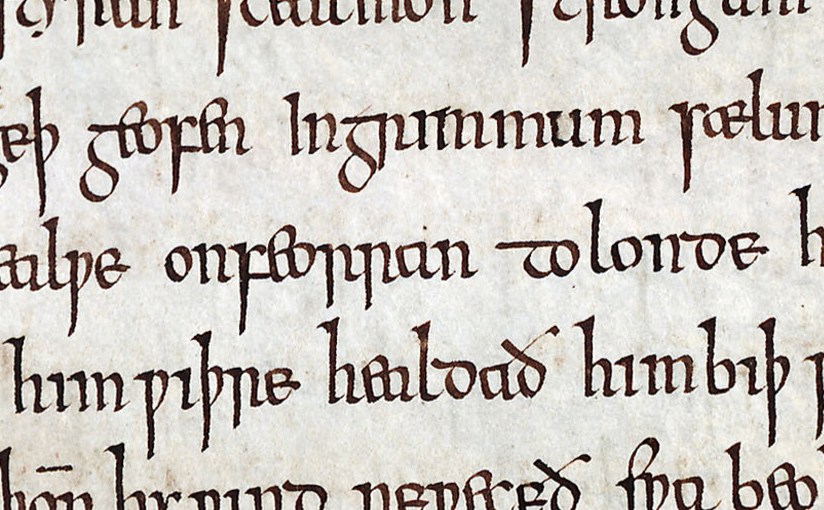
If you’re curious, here’s the actual Old English text –

Forst sceal freosan fyr wudu meltan eorþe
growan is brycgian   wæter helm wegan wundrū lucan
eorþan ciþas   ansceal inbindan forstes fetre
fela meahtig god ∙ winter sceal geweorpan   weder eft cu
man sumor swegle hat sund unstille deop d eada wæg
dyrne bið lengest holen sceal inæled ẏrfe gedæled deades
monnes dōm biþ selast ∙ Cyning sceal mid ceape cwene ge
bicgan bunum ⁊beagum bu sceolon   ærest geofum gōd
wesan ∙ guð sceal ineorle wig geweaxan ⁊wif geþeon lof mid
hyre leodum leoht mod wesan rune healdan rum heort
beon mearum ⁊maþmum ∙ meodo rædenne forge sið
mægen symle æghwær eodor æþelinge ærest gegretan

(The ⁊ is a medieval &.) And here’s what normal people would call a translation –

1.

Frost freezes, fire eats wood,
earth springs out, ice houses,
water sheathes.
                               A wonder
there’s one to snap frost’s fetters,
break seed earth, mighty God.

 2.

Winter turns, comes warm unstill
weather, summer skysound.
Deep dead ways are secret longest,
holly burning, cattle shared out.
Dead men’s laws are the best laws.

3.

A king can buy a queen with cattle.
That they give lots away is the main thing.

4.

War forces him
to be brave.
                        She grows dear
to her people, her shining mind
hoards whispers, her spacious heart
holds treasures.

            5.

Moving among the company,
everywhere always, house throughout,
greeting her lord, she pours his cup first;

 Now I can’t see the hawk but I can hear her high cries.

Privacy? What privacy?

Hey folks, coupla more student blog posts for ya, and here’s one. Angles on through round and under, as in cutting, patriarchy, by sound image erasure and general largeheartedness.

(The posted videos aren’t coming through, so go to the blog itself, here, do.)

thefeministlens's avatarThe Personal is Political

Gloria- Patti Smith

We live in an age where, for women, everything is public. As a woman I live in a society where I am a subordinate class. Men hold a majority of the power, and as women we can either except that, or say: “Oh, hell no!”

Bury Our Friends- ‪Sleater-Kinney

This is an erasure pome from a history book. I feel like it goes with this idea, but I’m not entirely sure exactly how yet. What do you think?

Public

The first was statues.

________

For every piece

of public art, at one point,

has predicted a Plaza of Memories.

________

The Plaza’s final attraction

was donated by

a publishers editorial fury.

________

It was a title against

those who thwarted.

________

It was necessary

as a “real estate man.”

________

The aura of power

decides what’s best.

________

One by one, all these

breaks came though,

tottering…

View original post 3 more words

Domestic Metal

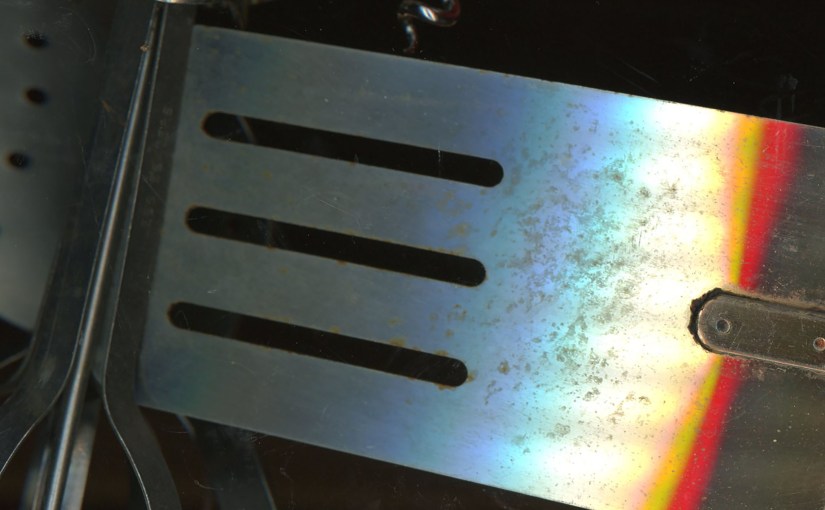
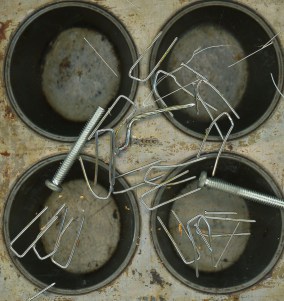
And another, kitchen metal collaged.

Emma Jane Van Dinter's avatarCopy Cat

A few nights ago I was taking apart my box spring and a bunch of cool staples, as long as vampire teeth, were wedged into the wood. I started to realize how many things are made from metal in my room and around my house.

I of course went to the kitchen and found spoons, knives, and so on.

That’s when it clicked: photocopy collage of domestic metals. Metals that stay around the house but are distinct and specific tools for living.

metals

I wanted to combine the two cohorts (building tools and kitchen tools) not so much that they clashed together, not so they would battle for the attention of the owners hands, but that they would coexist.

If usual domestic metals had feelings, I think the kitchen items would be happiest and the tool box metals would be depressed. The kitchen metals get to be played with daily, the…

View original post 13 more words

Dirt

So as I go through the student blogs for The Art of Compost (the course not the blog) grading (cuz one has to) I think I’ll repost some posts that strike me as particularly apropos or sharp or just effin funny. (They’ve come together lovelyly, even the ones, AHEM, kind of assembled in the final 48 hours.) Here’s the first.

kenvilh's avatarPiles of Distinct Pieces.

The assignment was simple.

“Paint.”

Very simple,

if you have paint.

If you don’t have paint, you find some pretty dirt around campus and mix it with some water in your coffee mug and you use it to paint on a sheet of paper you snuck from the drawer of the copy machine in Haggard Hall.

I adore the micro flecks of brown that gave me my pigment.

View original post

Overdraft

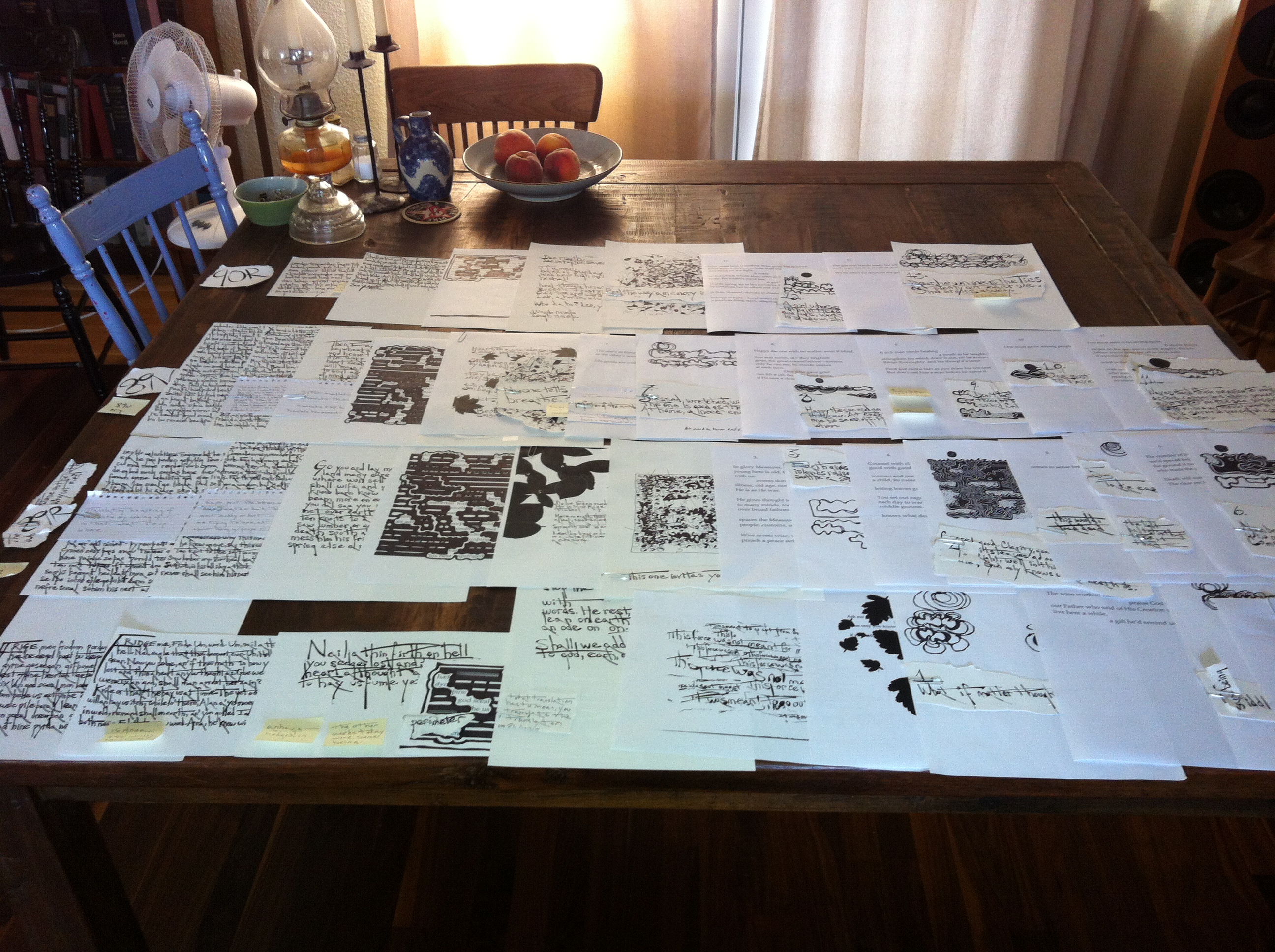
First of three sections of Overject, very roughed out, on my dining room table.
Overject draftFifty pages give or take. This baby’s going to be a monster. Next is to feed it some foliage. The little leaf impresses you can see there are oceanspray red osier dogwood and vine maple from my back garden. Quaking aspen to come (for some scary bits).

Student blog: Copy Cat

Another student blog for you this fine summery morning: photocopier collages of various and sundries. Laundry unfolded or undone, mix tapes unspooled, unstrung. Like the blog just before this, a sort of love song to the overlooked, our detritus.

Brief my remarks, this time round, as I’ve to go teach in a few. Just go check it out, you’ll have a blast.

Oh but I can’t help connecting to Oppen, his “Of Being Numerous“:

1.

There are things
We live among ‘and to see them
Is to know ourselves’.

Occurrence, a part
Of an infinite series,
The sad marvels;

Of this was told
A tale of our wickedness.
It is not our wickedness.

‘You remember that old town we went to, and we sat in the ruined window, and we tried to imagine that we belonged to those times—It is dead and it is not dead, and you cannot imagine either its life or its death; the earth speaks and the salamander speaks, the Spring comes and only obscures it—’

I’d speak for the connections but why speak for connections that speak of themselves.

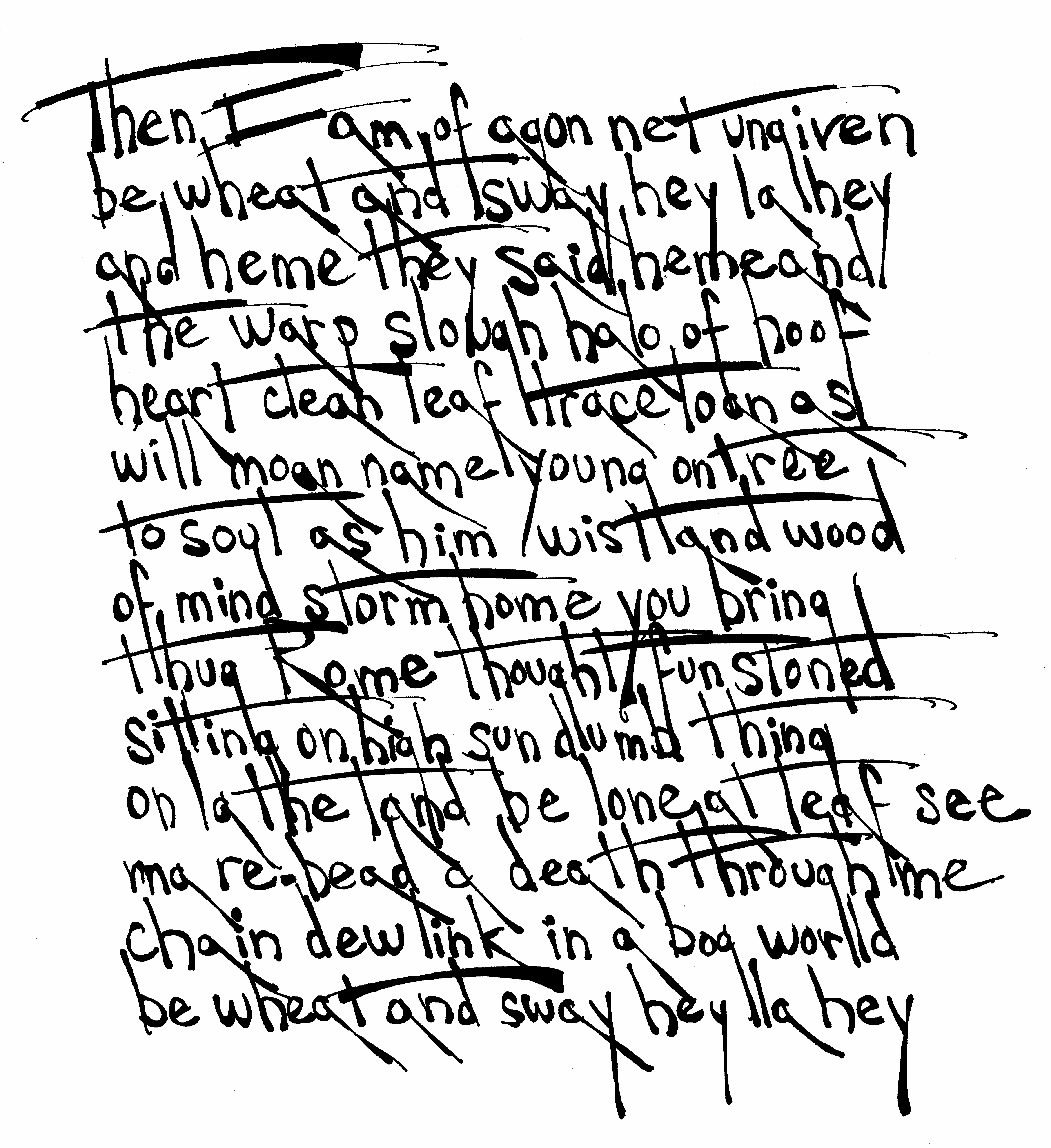
Be wheat and sway hey la hey

This one composted from a homophonic translation of folio 89V of The Exeter Book.

89V ED
Click once and twice for a zoom happening.

Been a long teaching stretch. They’re working hard and tired, I’m working hard and tired, these compressed summer courses, hmm. Well, we’re halfway there. They’ve spent the week getting blogs up and running, and are making some interesting forays. Latte art, penny textures, Vonnegut on where the sun don’t shine. Over the next while I mean to post ties (ligatures, holdfasts) to their adventures.

Something rhizomatic about blog world. Someone should write something about that sometime.

Mm, quick check says, rhizome’s got co-opted by some digitalists and some corporatists, so nevermind maybe. But here’s a picture from/of the origin. Fans of Deleuze and Guattari will know that’s a bad joke.

From Deleuze and Guattari, A Thousand Plateaus