Dumuzi at an end

I finished Dumuzi this morning. There are tweaks to come, but he’s ready to start going out, muddy face sheepish grin and all.

The first poem in the book is

At Leaf

A son of my
first mind, was
at leaf, wind on
raw skin, fist
of one thirst
upthrust.
                      Roars
snowmelt where
hemlocks over-
hanging shiver
motherlove.
                             Sur-
round of what
no one had
made, made
of what no
surround
had.

The title poem is

Dumuzi

Let no state be
enemy. Wet, dry, agon.
Work an inmost first
flower mutedly.

Wind blows light about
the life (hemlocks) from
which art is not apart

nor of a part. What a
rock thought to do
was rain and it
rained.

Deer come
out of th
hill.

The oldest lines date back to Nov. 1999. A conversation I mis-overheard on the M.V. Quinsam, a ferry plying the route from Gabriola, an island pinched between Vancouver Island and the BC mainland, where I lived in a summer cottage in the off-season

—they thought they had it all but they didn’t
—oh, once you have that you don’t get rid of it
—Monday she goes, an ontologist,
                     that’s the specialist

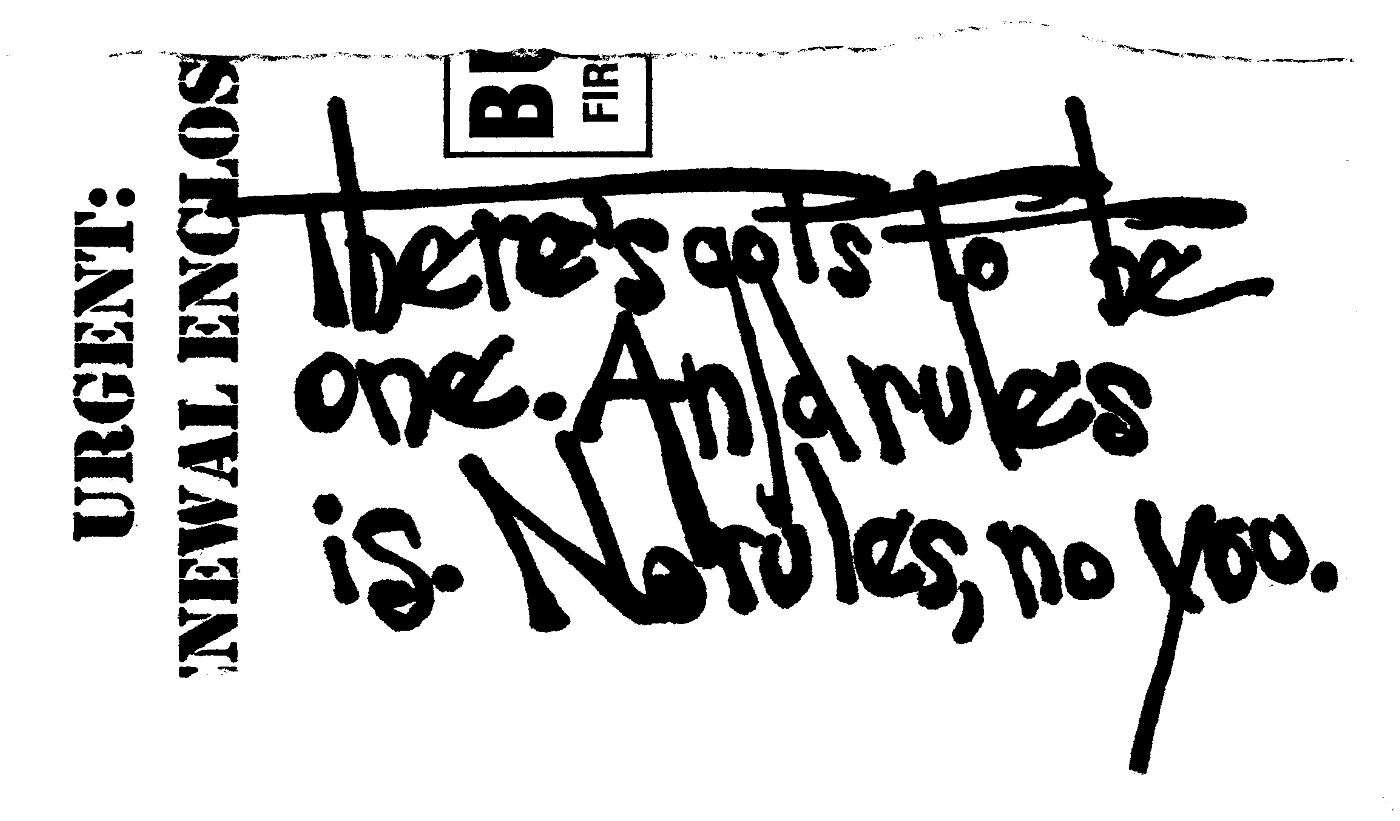
The newest lines date back to last night. An uptight but not incorrect galla reminds Inanna of the terms of her release from the underworld.There's gots The last poem in the book is elegy.
paperwhites

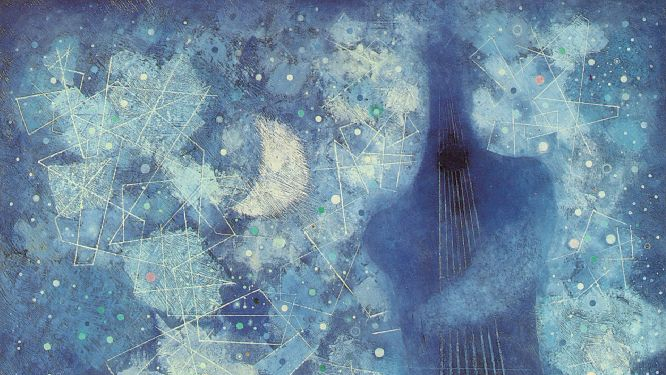
And the image atop is Tammuz by Ardon Mordecai. Sent me years ago by fellow poet and University of Utah alum Timothy O’Keefe. Thank you Tim. I aspire to it as a cover.

And now it’s time to start catching up on what seem years, though are just days, of dishes, laundry, bills. Oh and I believe I have two new courses to teach starting Tuesday. (Really I’m about to start compiling a list of contest deadlines and open reading periods . . . ) Thanks, all, for the kindness of your words, those who have sent some, or of your attending upon these words, which somehow I have felt you doing, I have, and it sustains me, it does.
We’re going live

So this is The Art of Compost and it’s a blog. Because what the world really needs is another blog. It began with my prep for a course of the same name and soon took on a life of its own at plural intersections of my reading thinking teaching writing speaking feeling looking wondering.

Pretty sure to go in the bin are my thoughts on and misunderstandings of

  • 20th and 21st C. poetry and poetics in North America, esp. objectivist and Black Mountain traditions — what Stephen Burt has called The New Thing.
  • A mostly subterranean lineage connecting us to Very Old Things — busted up clay tablets, cave paintings, the intelligence of stones (sitting still).
  • Whatever collapses, rots, blends, merges, fosters, nourishes.
  • Stray thoughts on teaching, writing, reading, appearing, disappearing.

The impetus comes from Jed Rasula’s This Compost but he has neither reviewed nor approved this usage. Time for a picture of a nurse blog.

image

I hope you’ll check it out. If you like what you see, you can follow on by clicking the “Follow me …” button. Or watch for new posts on Facebook. (If you Like the Facebook page you’ll hear about new posts. I think. Pretty sure.)

And let me know what you think! Leave a comment in the comment box …

Faithfully,
Chris

On origins, variously

Gone meta

This is a big fat post because wordpress doesn’t wish to import my very first early tumblr posts. So I’m piling ’em in here. Maybe I should just let it go but I’m not good at that. This blog, and rotting things generally, cuz I’m not, here come to teach me.


On tablets

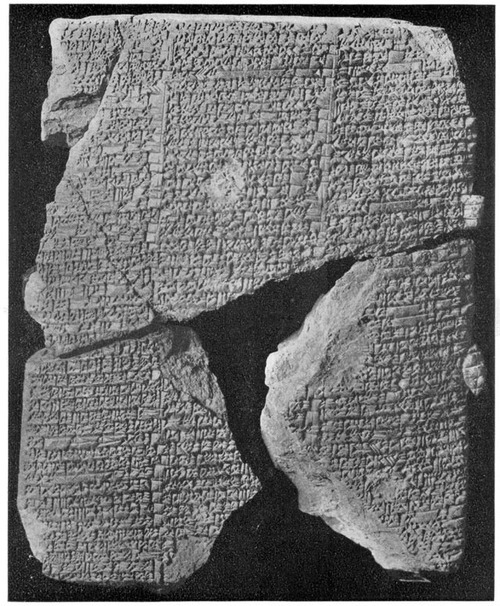
Archaeologists unearthing clay tablets (Gilgamesh) and mummies wrapped in strips of recycled papyrus (Sappho) have developed a robust minor vocabulary for what’s gone missing.

Ellipses. Italics. Round brackets, square brackets, curly brackets, angle brackets, half square brackets. Each to mark a different sort of goneness.

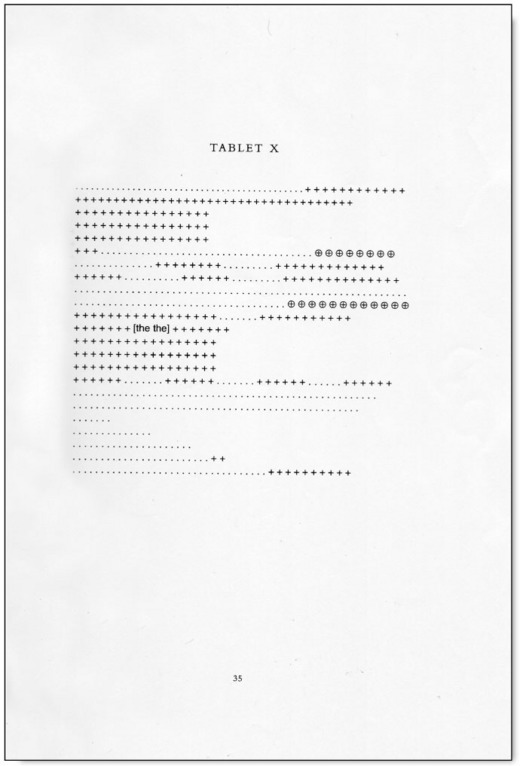
Armand Schwerner had some fun with that vocabulary and in the process turned marks of absences to presences in their own right. This page from his Tablets takes it to one extreme.

Schwerner - Tablet X

And, at that extreme, beyond the last palm of the mind, something winks at Stevens, his “Man on the Dump”: “The the.” Hee hee. Schwerner probably also had in mind Pound’s “Papyrus”:

Spring .  .  .  .  .  .  .
Too long .  .  .  .  .  .
Gongula .  .  .  .  .  .

What I’ve been reading here. Armand Schwerner, The Tablets. Sappho, If Not, Winter (Anne Carson trans.). James B. Pritchard (ed.), The Ancient Near East: An Anthology of Texts and Pictures.

Here’s a bit of Gilgamesh for ya. G’night.

image


Biblical

The Bible is a huge gorgeous reeking compost pile. Take Genesis. Three or more authors have their hands in it. The earliest is known as J, the Yahwist, and his God is fierce, dangerous, fallible, embodied. He likes to walk in the shade on a hot day. Then there’s P, the Priestly writer, his God’s detached and magisterial, his words are pure act, no dirtying of the hands, just let there be light. And E, the Elohist, his name for God Elohim, inconveniently plural.

Drawing it all together, somewhat skilled and somewhat hapless, R, the Redactor, trying to get a coherent account out of it all. He could cut and paste but couldn’t alter much the texts he received as sacred.

He succeeded insofar as we have a single thing called “The Bible.” He failed gorgeously insofar as we have two overlapping Creation accounts, glaring contradictions in the story of the Flood, and not one, not two, but three iterations of the “Hey, Pharaoh, that’s no sister, that’s my wife” gag.

Writings are readings. Readings are restlessly multiple. Thank God for which.

What I’ve been reading here. R. Crumb, The Book of Genesis Illustrated. David Rosenberg and Harold Bloom, The Book of J. Stephen Mitchell, Genesis.

Lastly, the beauty, to this atheist, of two thoughts in Genesis. That the created is good. And that even omnipotent beings come to rest.


Opening

So I’m starting to think about a course called “The Art of Compost” I’m set to teach this summer. And I thought, why not a blog, work out some ideas there.


Root quote

The recovery of the compost library extends in all directions.

– Jed Rasula, This Compost