Maggie Nelson, The Argonauts

Can’t tell you how moved I am by this book. Opens my head and heart and spirit and helps me to love the great bawling mess of meat and lust and loss and peace all at once I am. I hope it speaks to my students also. Assigned it because they are, as a body, far more engaged with and alert to questions of gender, identity, fluidity, than I, and I wanted a book that would meet and maybe challenge us all there.

We’ll see how it goes next week. I’m guessing it will. Here are the assignments I put together for my creative nonfiction students this morning.

Journal no. 1

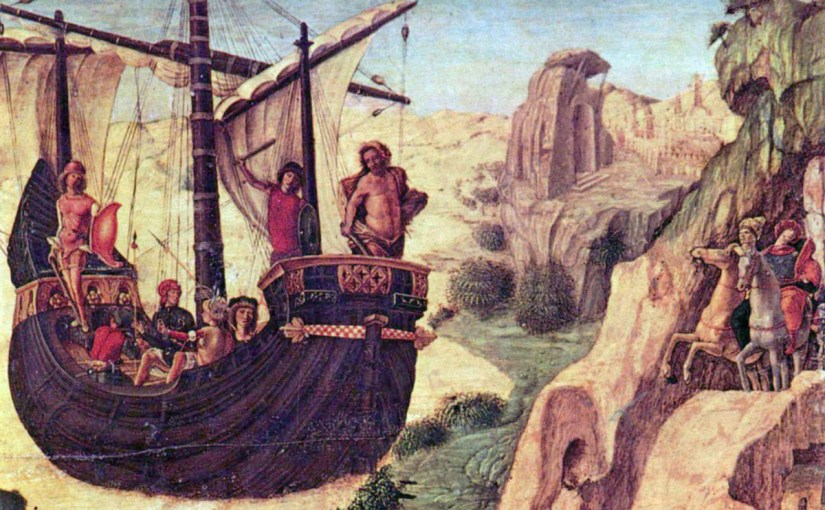
On page 5 Nelson makes the first reference to her book’s title. “Just as the Argo’s parts may be replaced over time but the boat is still called the Argo, whenever the lover utters the phrase ‘I love you,’ its meaning must be renewed by each use.” So we have an image of a voyaging entity that changes in all its parts and yet persists under a single name. And Nelson has named her book, not for the boat, but for those who voyage on it. What is she saying (proposing, hazarding, trying out) about love here? Is the image of the Argo, the Argonaut, applicable to anything else in or about the book?

Journal no. 2

The content of The Argonauts affirms fluidity over binaries and rigid categories – continuities. Gender is fluid. Eros itself is fluid, bonding lover to lover, parent to child, human to animal. Meanwhile the form of the book is full of discontinuities. Every time we move from one collage element to another, we leap across a gap. (Often even within a collage element, there are gaps to be leapt.) What do you make of this difference between the book’s content and its form? How might it serve Nelson’s purposes?

Writing no. 1

Begin a collage essay by writing two discrete (they need not be discreet) collage elements. Each can be about whatever you like, but they should be substantively different from each other, in content, technique, tone, theme, and/or diction. The differences between them should be alive – you, we, should feel a pulse of curiosity or excitement or WTF as we move from the one to the other. If you don’t feel that excitement, start over, because you’re not going to want to keep working with this material.  ¶ Other pointers. Remember the distinction between scene and exposition. When you’re doing scene, use your arsenal of fiction-writing techniques; rely on concrete significant details; embody your meanings in acts and events. When you’re doing exposition, avoid banal generalities, make your thinking interesting, fresh, alive, your own. Feel free to tear a page from Nelson and incorporate found materials – Deleuze, Irigaray, Plato, Lady Gaga.

teaching portfolio

An answer to a killing

Writ by my dear friend Barbara Nickel:

Sometimes I have loved the peacefulness of an ordinary Sunday. It is like standing in a newly planted garden after a warm rain. You can feel the silent and invisible life. All it needs from you is that you take care not to trample it.  

That’s John Ames, Congregationalist minister, narrator of Marilynne Robinson’s novel Gilead.

I love John Ames as I’ve never loved a fictional character; I sat at his feet and listened to his gentle voice. Not one to push himself to the front of a crowd and trumpet his views, John Ames; approaching death, he wants his sermons burned. (“The deacons could arrange it. There are enough to make a good fire. I’m thinking here of hot dogs and marshmallows, something to celebrate the first snow.”) I wish his voice haunting the ear of the gunman in Quebec before he fired at the praying men. You take care not to trample. The silent and invisible life of prayer, care not to trample, the three-year-old with his father at prayer.

Care is not to trample. Her whole post here.

Trump and the Diamond Sutra (I)

Worst case seems to be our case. Men of great sudden power – worldly power, outer power, power a manifestly decrepit political process has bestowed on them – are telling the media they are enemy and should just shut up. Are reinstituting torture at secret sites overseas. Are abhorring abortion abroad to placate a domestic audience though that jacks up illegal unsafe abortions in the Third World, and deaths by. Are waving threats of no-more-money at cities havening immigrants doing work few else want to and their DACA children, some my own very students. Oh if I keep listing I’ll never be done. The Constitution, frail bulwark, cries to think what comes next.

I’m not a marcher. Don’t like slogans, crowds, group thought. Guess I could suspend that, and may, for the import of opposing. Cuz this is real real bad.

Want to know what inner power is. Have started reading the Diamond Sutra again, Red Pine’s translation, thought I touched something in these lines:

After crossing his legs and adjusting his body, he turned his awareness to what was before him.

At the start of the sutra. Don’t feel qualified to comment on them, but what I hear is, the Buddha is in a body. And wholly in it. He needs to attend to it and knows it. Maybe his knee hurts, so he adjusts. He was out in the city begging for his one meal, walking barefoot, he’s an old guy by now, maybe his knee or his insole hurts. He adjusts his body. Doesn’t blame anyone for his discomfort, just does what he can to lessen it, and moves along. No arrogance.

No blame. Turns his care to what needs looking after – what was before him. Is human, not a god, not omniscient, it takes a choice and a turn to locate his mind here, in mindfulness. But he can, and because he’s love, he does.

What answer does this offer to Trump, at the apparent dawn of proto-fascism in a capital empty of competent political opposition? I think maybe none.

Nor am I helping the petitioners, demonstrators, agitators, and such, whom I admire lots and am glad for greatly but find I am not one of, much.

The only answer I know to the sickness of outer power is cultivation of inner power. I have not heard a resonant response to the ill spreading among us anywhere except in buddhadharma. Which I don’t understand, and tells me nothing specific about how to act.

And, too, I reject quietism.

Thus astray, as I dive into the Diamond Sutra, I may post a few of my misprisions here. Will share by tweet in case lonely sleepless sad POTUS eavesdrops.


NEXT DAY. This post started to turn to crap. Had I had a beer too many? (Been through a breakup, second time round with the same o so lovely heartful hurted beloved, some beers is cheery to me.) Maybe I just lost the bead.

“Group thought,” that’s out, everything I’ve heard about the Women’s Marches, they were astonishing harmonious various, true response, right action.

“I have not heard …,” that out. Soon as I said it, started hearing fierce meaningful responses all over. L. in Portland sent this from HuffPo on ethnographic blogging, its quilting of irreducibly multiple voices, as resistance to the One Voice of the State. Adam Gopnik’s annoying fondness for the sleek epigram has transmuted under a new pressure to become a majestic voice of true opposition. He wrote this in the New Yorker, from which a taste:

Whenever there is an authoritarian coup rooted in an irrational ideology, well-meaning people insist that it can’t persist because the results are going to be so obviously bad for the people who believe in it, whether it’s the theocratic revolution in Iran or the first truly autocratic Administration in America. Tragically, terribly, this is never the way it works. There is no political cost for Trump in being seen to be incompetent, impulsive, shallow, inconsistent, and contemptuous of truth and reason. Those are his politics. This is how he achieved power. His base loves craziness, incompetence, and contempt for reason because sanity, competence, and the patient accumulation of evidence are things that allow educated people to pretend that they are superior. Resentment comes before reason.

And this in the Sun, which arrived today, its dawn offering

Let America Be America Again
Langston Hughes

Let America be America again.
Let it be the dream it used to be.
Let it be the pioneer on the plain
Seeking a home where he himself is free.

(America was never America to me.)

Let America be the dream the dreamers dreamed –
Let it be that great strong land of love
Where never kings connive nor tyrants scheme
That any man be crushed by one above.

(It was never America to me.)

Ironies multiply and compound. The whole poem here.

Could be said, these are buddhadharma, yo? A sutra‘s what stitches you up.

I just – I just – I don’t know how to turn acts of mind, poems and posts, to act acts. I want to knock a government down. What use, following my breath?

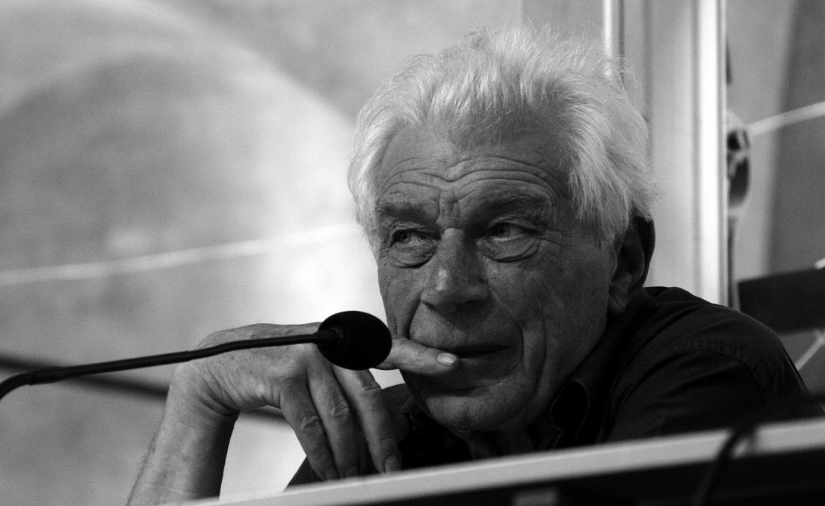
John Berger, 1927-2017

And now John Berger gone. Who’s had more power and sway over my grown mind than any other. A whole man, upstanding.

This from his essay on the Chauvet Cave:

We have no word for this darkness. It is not night and it is not ignorance. From time to time we all cross this darkness, seeing everything: so much everything that we can distinguish nothing. You know it, Marisa, better than I. It’s the interior from which everything came.

The meaning there is, nothing is lost. And yet what a loss.

His love for the world shone in the care of the balance of each syllable.

Not a word he wrote was not about, in, and of, intimacy.


Exercise: Mythtime, mythworld

Their writing exercise for this week, and it’s a tough one:

Write a poem that taps into myth consciousness. Pointers. Not literary myth consciousness, Hera, Zeus, Leda and the swan, that sentimental crap. The myth consciousness of Ghandl’s poems, all the world potentially sentient, stuffed with spirit beings. Awe, wonder, the sacred breaking down the door. To help that happen – no names of any gods or goddesses.

That would be Ghandl of the Qayahl Llaanas, classical Haida mythteller, in Robert Bringhurst’s translation.1 

Tough for students for whom Thor is a Marvel Superhero. I try to get across that the Greek and Norse gods of popular imagination are attenuated forms – you have to go back to Sappho at least, the Homeric hymns, to get a whiff of the sacred those forms were to their makers. Don’t know if I get my point across very well.

I say, when we talk about mythtime in Ghandl, that’s not only a distant past – it’s also just under the skin of this moment. Other cultures call it dreamtime. It’s what people take hallucinogenic drugs to get to. When you wake from a dream supercharged with with meaning – that’s myth consciousness.

Write a poem from that place.

How I put it in an e-mail to a student wanting to retell an Arthurian story:

The key to the assignment is to tap into myth consciousness. The state of mind that finds an enlarged significance in anything it pays close attention to. In Ghandl’s stories that enlarged significance is expressed as spirit beings and metamorphoses – how a bird skin can turn out to be weather, or a wife can be revealed as a cloud. In Greek myths, originally, that enlarged significance got expressed as “Zeus,” or “Aphrodite,” divine beings that embodied something awesome and terrifying – sacred – about being in the world.

But those myths have long since been attenuated, turned to literature, pretty stories. So I think have the Arthurian legends (which are legends, not myths, there’s a difference, though also some overlap). So it might be hard for you to tap into myth consciousness retelling one of those stories, whether or not you use the names.

I’m not going to tell you not to do it though; I’d sort of rather you didn’t retell anyone else’s story, but if you’re keen on this one, it’s not my business to stop you. Do apply this test to your poem though: Does it express wonderment? Not second-hand wonderment, coopted from the story you’re retelling, but your own, discovered in your encounter with the material.

The trick? The emoji on our iPhones, the Pokemon chars they spent a while chasing after, they too’s attenuated forms of that. We’re still after scraps of awe. Some of them are called metaphors.

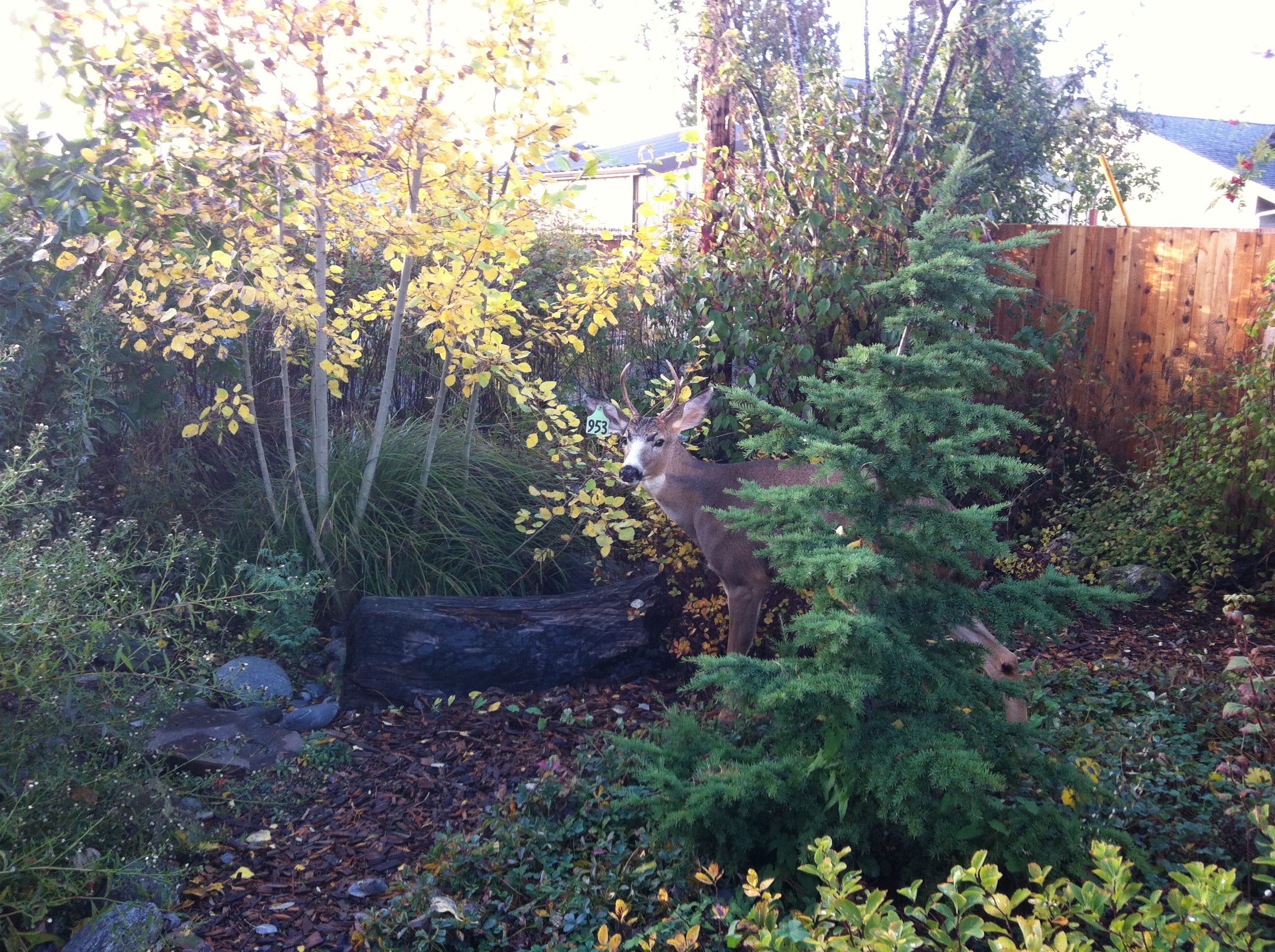
A sorry nostalgic chase, I say, when leaves, wind, rain, sun, deer 953.

photo-23


1. Around which controversy skirled awhile. Whether Bringhurst had the right to. Whether those who said he didn’t spoke for the whole Haida people or no. I feel tender, tentative, around it all, but from what I can tell, Ghandl knew what he were up to, when he sold and told his stories to John Swanton, an anthropologist committed (unlike most – astonishing) to transcribing the stories he heard word for word. Was Ghandl coerced just the same? His culture was in grave peril. He could have had his stories die with him – perhaps let many to. He also, for reasons we can’t ask him, chose to sow this killing culture with seeds that flourish even today. Though the book‘s out of print.

Rape culture / Peace on earth

When the truth comes it comes to the body. My limbs go tense suddenly, electric. Arms ready to punch or flail but there’s no one to punch or flail so they stay still. Thighs and calves tight, prepped, coiled, but what to run from? I’m leaning back on the couch, cat on my lap as I read the news on my laptop, what threat? Why has my attention gone taut? But it has – everything at the periphery has grown larger, brighter. Word for it is hypervigilance. Tears leak from my eye holes.

The trigger is the opening of an article in the NYT:

“Women: tweet me your first assaults,” [Kelly Oxford] wrote on Twitter at 7:48 p.m. “They aren’t just stats. I’ll go first: Old man on city bus grabs my ‘pussy’ and smiles at me, I’m 12.”

Why does this break through me when DT’s own words, I could, with SNL, hold at a distance, laugh off? Because I thought I heard in them his death knell? Because no victim was audible in them? Because here there’s a child?

What’s empathy anyway? Where are its edges?

There’d been signs my empathy was blocked. “Oh, this is good, he’s bound to lose now.” “Yeah but guys just talk like that.” (Do we? really?) “How is this worse that all the other shit he’s said?” (Okay, fair question – incitement to assassination?!) Happens when I don’t want to feel something through, till it breaks through.

Here’s it breaking through:

“I won’t give details, but I was 12, and he went to jail,” Emily Willingham, a writer, posted on Twitter.

and

Sasha Stone, an entertainment journalist, told of being forced to perform oral sex on a man “after he offered me a ride home and then threatened me. I was 14.”

and

Wendy Luxenburg, 45, a hospital administrator in Chicago, recalled being in a Florida department store with her mother: “She was an aisle away. Man walks by me, rubbed by crotch. I was 11.”

and

And the actress Amber Tamblyn wrote on Instagram of being accosted at a nightclub by an ex-boyfriend who grabbed her by the hair and, with his other hand, lifted her by her vagina, bruising her badly, and “carried me, like something he owned, like a piece of trash, out of the club.”

and

“Grabbed from behind on the street. Thought it was my fault because I was wearing a dress,” Lynne Boschee, 50, of Phoenix, wrote on Twitter. “Never told anyone. I was 14.”

I hope this would break my heart and inflame my fury even if nothing such had happened to me. But it did also happen to me, and so I want also to say, it happens to men and boys, too. That’s where the taut limbs and the tears come from. Trauma is an equal-opportunity demon. Gail Sheehy has a good piece in Politico about how Trump is rousing terror and post-traumatic stress in ethnic minorities and vets and LGBTQ folks and their therapists alike.

I’ve been listening tonight, because curative, to Arvo Pärt’s Fratres, and reading John Taggart’s “Peace on Earth”:

To lift to lift up to lift without
effort to sing tene
to relax the circling rays to
stand still that the citizens of my city
may be drawn as with visible
chains to this splendor splendor of coronation
that they may see the shape of
the dance that they may see the lily-flower.

Carol heart’s ease ring of flower’s thought.

To lift up bones in the lily-flower dance
in the flower’s leaf ranged around
leaf splendid
bones and leaves as petals curled around each other.

Peace to you, brother, sister.

Heather for president

I find this paragraph beautiful:

Whenever Heather entered a patient’s home for the first time, she knew that she was walking into a long, long, complicated story that she understood nothing about, a story that was just then reaching its final crisis. She was extra alert on those first visits, extra careful, trying to figure out what was going on – the conflicts and rivalries between members of the family, tension over who wasn’t doing enough, who was doing too much, unresolved bitterness, and nearly always grief and anxiety and fretting about how to take care of the patient and what to do.

–Larissa MacFarquhar, “The Threshold”

It’s about being a hospice nurse, but dial down the stakes some, and it’s what it feels like to enter a classroom, not knowing what the nexus of needs is, but knowing there is one, feeling the strands of the web of it stretch against you, each step you take. Binding you into it and yielding to you its intelligences.

Broaden the scope of it some, and it’s just the alertness evidently massively lacking at the helm of a certain rightish party, even more than uge.

See these two beautiful women –

New Yorker - MacFarquhar
Heather Meyerend examining Mary, 92, at her home in Brooklyn, Sept. 2015. The article.

I’m afraid of dying alone. Oh yes I am. Has nothing to do with this, except a presidential candidate unable to self-inquire? has no right to ask the time of us.

Maybe I’m a sucker for charisma. But I’d vote for Heather Meyerend over any of the fools who’ve been on parade this dismal season, yes Sanderistas even yours, on the basis of what I’ve read about her so far, and seen in her eyes. Which I can’t see, but her body’s eyes, Avalokitesvara’s.


Envelope poems

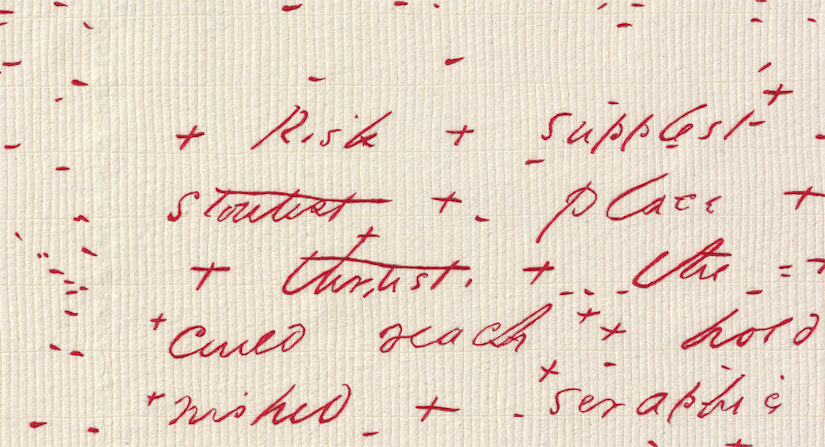
Yeah been weeks. And nothing now much to say of my own. Goes that way. But saw this on my friend Barbara Nickel’s blog and wanted to share. She’s been perusing Bervin & Werner’s compilation of Dickinson’s envelope poems, and a lovely blog post’s the fruit borne –

The Yarrow Graces – magnolia, forsythia, peach, even the bleeding heart – have been serviced lately. Town abloom on the first day of Poetry Month; thank you Emily Dickinson for getting it right – spring always seems – at least in this part of the world, not on the prairies where I grew up – somehow too gorgeous, masking the inevitable sting; the other day a violist died.

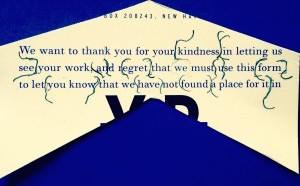
Read the all of it here, with vis poem, rejection slip made projective,

Barb's arrow

and regrets into egress.


Not much to say, except, don’t eat foraged morels and drink wine, or not much anyway. Lost a coupla days there. Viz. Probably should have sautéed them longer, too. But hells they was tasty.


Spring and All encore

Today planted, from Cloud Mountain Farm, a frost peach, settler apple, self-fertile plum. Here’s in which spirit – a recovered letter writ to my old teacher on WCW’s Spring and All. Maybe the most important text to me ever. Sprawly and incomprehensible though it yeah be.


Dear Don,

First, do no harm. The thing itself suffices. Nothing one says or does should injure it

patches of standing water
the scattering of small trees

Spring and All as articulated innocence. Second, to cleanse perception and return to innocence, the spring of the mind, essential simplicity –

One by one objects are defined –
It quickens: clarity, outline of leaf

– sharp & rough acts of imagination may be called for, the rending & renewal of the earth even –

The imagination, intoxicated by prohibitions, rises to drunken heights to destroy the world. Let it rage, let it kill…. None to remain; nothing but the lower vertebrates, the molluscs, insects and plants. Then at last will the world be made anew.

Third, against, or alongside, Pound’s “day by day make it new,” the thought that moment by moment it is new –

But the thing he never knows and never dares to know is what he is at the exact moment that he is. And this moment is the only thing in which I am at all interested …

In fact now, for the first time, everything IS new.

It was, is, always new, & now at long last perception, cleansed by the divine flood imagination has unstoppered, catches up with reality –

It is spring. That is to say, it is approaching THE BEGINNING.

Spring and all. Spring in all. Fourth, the poem is not about reality, it is of reality. This might seem a poem about a painting of a pot of flowers –

red where in whorls
petal lays its glow upon petal
round flamegreen throats

– but it’s not actually about anything, it just is … being, disclosed, its unconcealedness. (Right, that is to say, under your nose.)

Fifth, being real, being of what is real, it’s natural, one of the forms of nature –

The work will be in the realm of the imagination as plain as the sky is to a fisherman – A very clouded sentence. The word must be put down for itself, not as a symbol of nature but a part, cognizant of the whole – aware – civilized.

– linking Williams to Coleridge:

it shapes as it develops itself from within, and the fullness of its development is one and the same with the perfection of its outward form.

Organic form. The poem may take the shape of

the reddish
purplish, forked, upstanding, twiggy
stuff of bushes and small trees
with dead, brown leaves under them
leafless vines –

or that of a crowd

moved uniformly
by a spirit of uselessness
which delights them –

but it is organic. (And is not always pretty. Pretty is the road to a beautiful illusion, i.e., a divorce from experience. Whatever it is, rose petal, jaundiced eyeball, let it be unvarnished.) As long as it sees clearly and mimics naught and has no truck with the representational delusion, it is, of necessity, organic. Which brings to mind Robert Bringhurst, whose book The Tree of Meaning I do mean to bring you –

Trees grow in and on the earth. Where do stories grow? They grow in and on storytelling creatures. Stories are epiphytes: organisms that grow on other organisms, in much the same way staghorn ferns and tree-dwelling lichens … grow on trees.

I have a hunch that from a lichen’s point of view, the basic function of a tree is to provide a habitat for lichens. I have a hunch that from a story’s point of view, the function of storytelling creatures – humans for example – is to provide a habitat for stories. I think the stories might be right. That’s what you and I are really for: to make it possible for certain kinds of stories to exist.

– or Weil, whom he quotes:

Il leur appartient de témoigner à la manière d’un pommier en fleurs, à la manière des étoiles.

Sixth, more continuity with Coleridge, his sense of the imagination as what

reveals itself in the balance or reconciliation of opposite or discordant qualities: of sameness, with difference; of the general, with the concrete; the idea, with the image; the individual, with the representative; the sense of novelty and freshness, with old and familiar objects (etc.)


You see I was doing rhizome mind here right?


For Williams too imagination takes disparate parts of experience (“the sight of the sky through a dusty window, birds and clouds and bits of paper flying through the sky, the sound of music from his radio, feelings of anger and love and amusement roused by a letter just received” – Levertov) and joins them into wholes that reveal – what? – that experience was whole to begin with, a small quibbling mind made it seem broken & partial. Poem VIII seems a conscious illustration of just how many & disparate the elements are that can be united: a rhombus of sunlight on a wood floor, song, tires, anemones, Persephone spirited away, an industrial magnate (J. Pluto Morgan), how much & how many it is impossible

to say, impossible
to underestimate –
wind, earthquakes in

Manchuria, a
partridge
from dry leaves

Each stanza here, each plaque of mind-light, seems a place from which one can move in any and all directions. The freedom of the imagination detoxed of prohibition.

This is not “fit” but a unification of experience

The oneness of experience is the oneness of a rose with the space that surrounds it

The fragility of the flower
unbruised
penetrates space

nor does it bruise space

each petal ends in
an edge, the double facet
cementing the grooved

columns of air –

It ends, is edged. Also, pervades, is edgeless. It is at the edge where petal meets air that love moves and lives. Which, seventh, is why “The Red Wheelbarrow” is about its prepositions – about, that is, stationing, edges, points of contact –

So much depends
upon                                                    (and this sort of stationing is on a par with

a red wheel
barrow

glazed with rain                               this sort
water

beside the white                               and this)
chickens

Finally, given all this, how then does one proceed? One moment

a boy of eight who was
looking at the middle of

the man’s belly
at a watchchain –

and then the next

I saw a girl with one leg
over the rail of a balcony

of all of which it is unseemly to speak

It is the presence of a

&

The imagination is a –

Love,
Chris

teaching portfolio