
And this find—audio recordings by a number of Black Mountain poets—made while checking the spelling of processual.
Category: reading
Monoskop archive
This just in from a student — an online archive of avant-garde and Modernist journals. Looks like a treasure trove.
Blast, Little Review, Apollon, Der Dada, Poesia … enjoy!

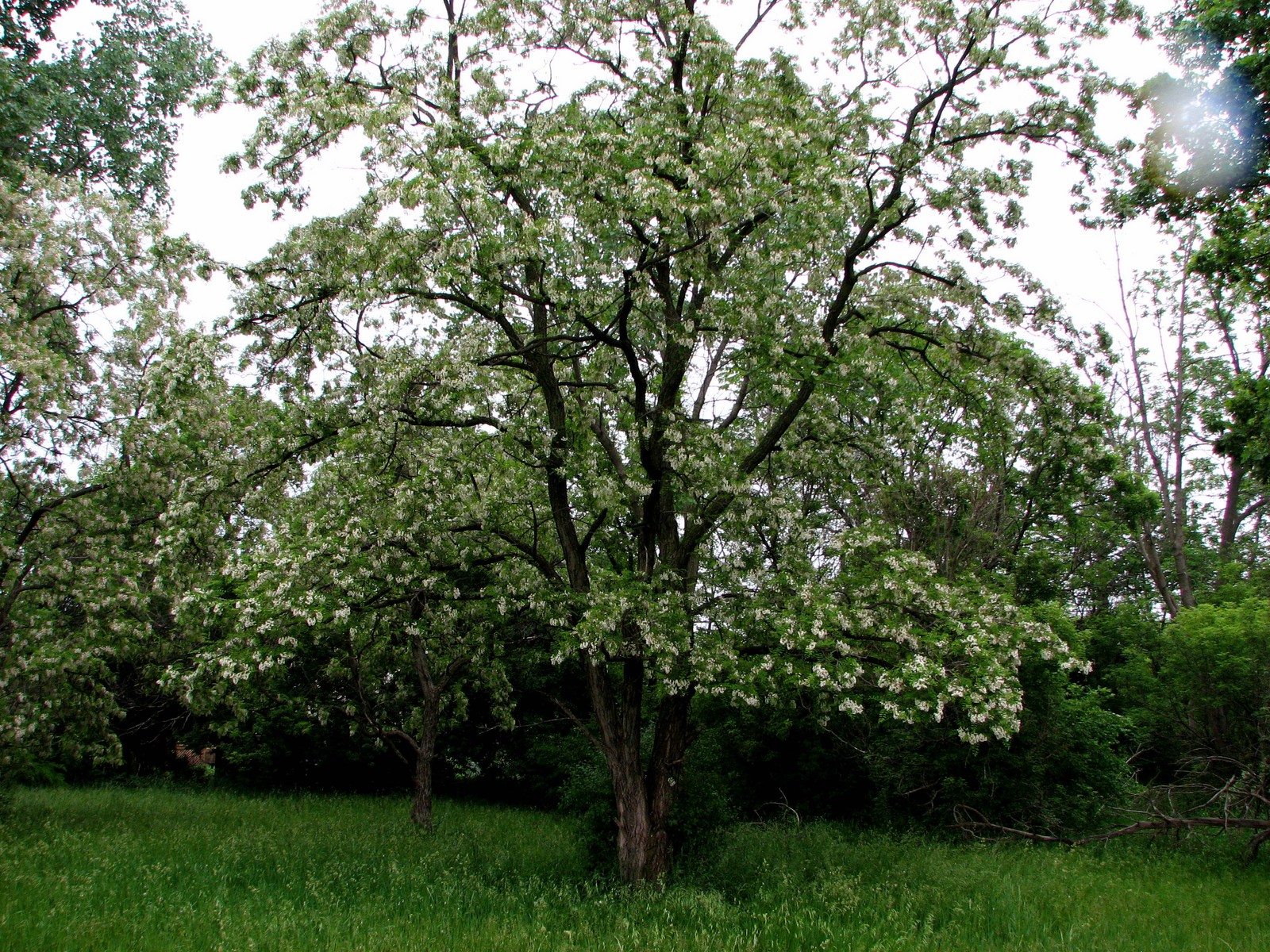
Two locust trees
To broaden our discussion of parts of speech, their places and powers, we read two versions of a poem by William Carlos Williams, “The Locust Tree in Flower.” One goes this way.
Among
the leaves
bright
green
of wrist-thick
tree
and old
stiff broken
branch
ferncool
swaying
loosely strung —
come May
again
white blossom
clusters
hide
to spill
their sweets
almost
unnoticed
down
and quickly
fall
A very pretty poem about a pretty old tree. A lovely coined word, “ferncool,” whose extravagance only starts to look off in the light of the renunciations of the later version. Which goes this way.
Among
of
green
stiff
old
bright
broken
branch
come
white
sweet
May
again
This poem never fails to stun me. Ten Thirteen words on ten thirteen lines. (Oops. One line short of a sonnet.) All but three are monosyllables. The thing’s almost entirely empty. And out of that great narrow strait the poem blossoms endlessly.
And not a metaphor to be found here. All the power comes from metonymic resonance and a powerful torque applied to syntax.
For instance the strange construction
Among
of
green
How can we be both among and of? Among means in the midst of but distinct from. Of means belonging to and identified with.
Are we thrown to a green we remain apart from? Or do we belong to a green we can’t get out of? Spring is the swell and swirl of the new it is and does. And so the poem dizzies, endizzes, lucky us.
Master Dogen said to his monks:
When you paint spring, don’t paint willows, plums, peaches, or apricots — just paint spring. Painting willows, plums, peaches, or apricots is painting willows, plums, peaches, or apricots. It’s not yet painting spring.
The longer poem paints a pretty picture of a locust tree. The shorter invites us to be spring in the tree.
These thoughts, by the way, formed in collaboration with my students, who saw deep and well into this one.
POSTSCRIPT. Want a master class in revision? Track how the first version becomes the second. What words go, what words stay, how the words that stay drift into new places. The depth of the letting go here is astonishing. Nothing less than total.
Word.
We had a good chat, our first class on the word, about parts of speech and their different powers. I laid a trap by asking, Which part of speech has the most bang for the buck? Adjectives, I was waiting to hear, adverbs. They didn’t fall for it. Verbs, they said, nouns. Yup.
Acts and actors are the meat of it. Things and what they do. Acts and the things they act through. (That one is easy to say, one a bit contorted, says something about the bias of our language.)
But I was headed for the lowly preposition. To get there I told a story. I had been backpacking a couple weeks earlier in the North Cascades. The first day we were sunriddled.
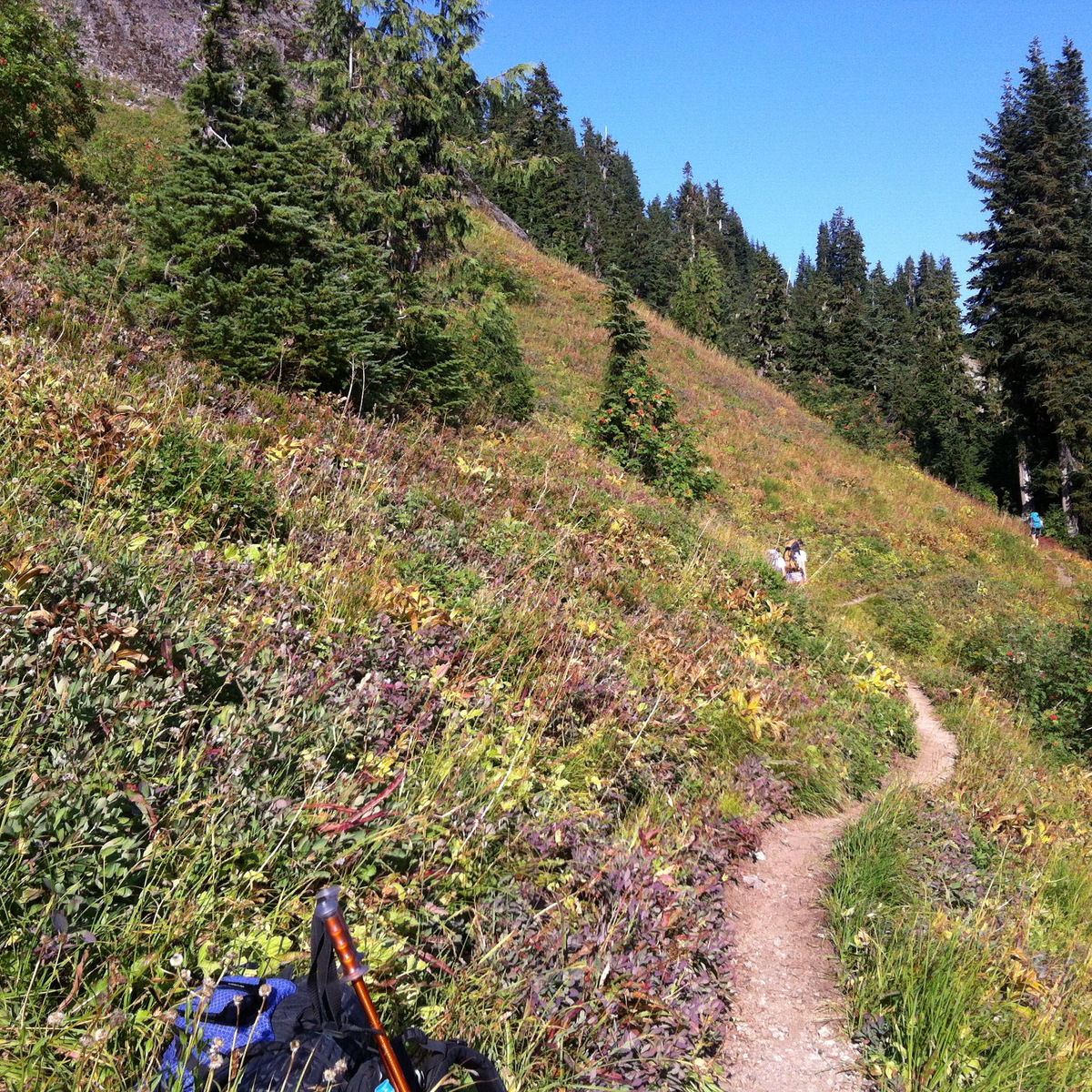
The next day some clouds came in.
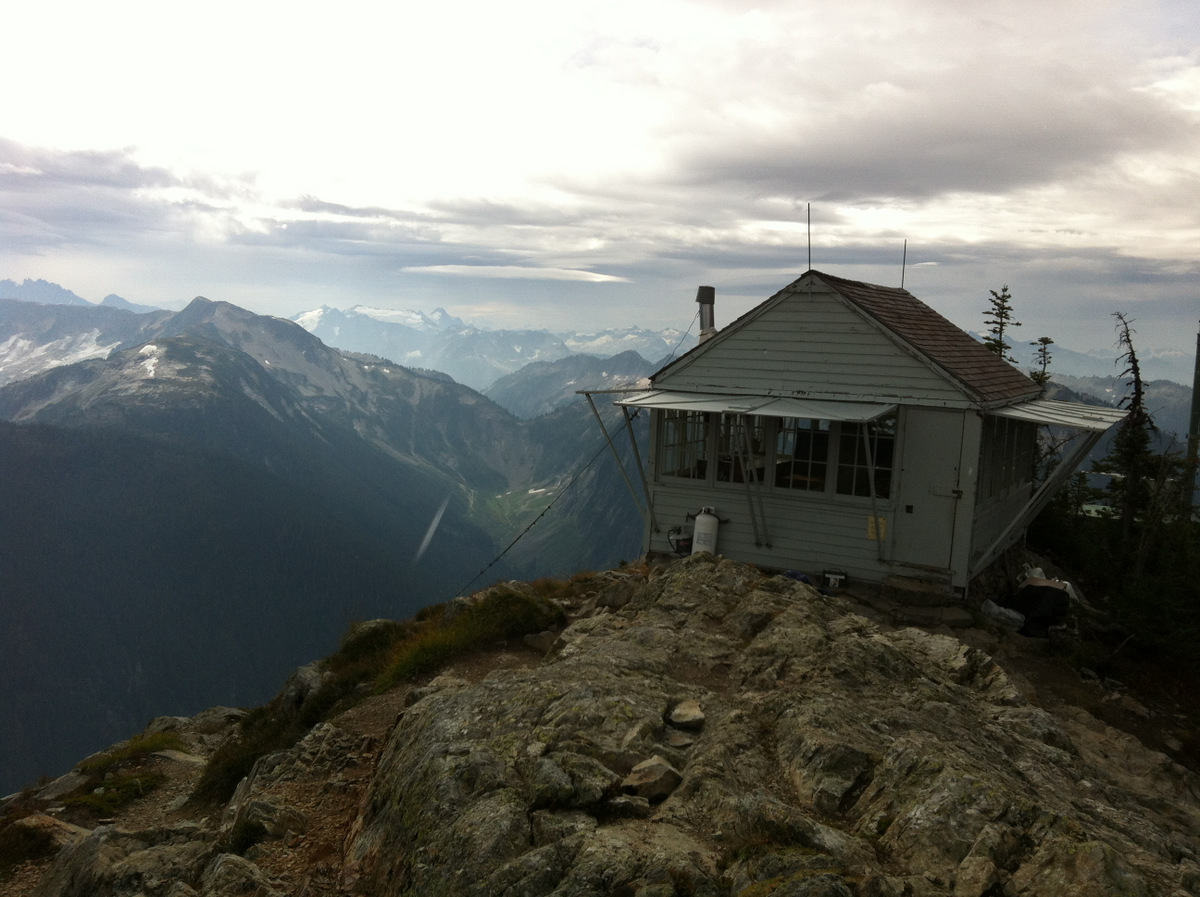
Through the afternoon they kept on coming.

The two peaks are Shuksan and Baker. It was spitting rain by the time we set up camp 4000 feet lower by the Chilliwack River.
All the next day was rain. Sorry no pictures. Had to keep moving. We climbed back into the subalpine and set up camp in the pouring rain.
And there we were, huddled under a little tarp stretched between two mountain hemlocks, soaked to the bone, heating water for our freeze-dried soup. And I thought to myself
I’m under a tarp, but it’s raining on me.
And it struck me how much I would give to be able to say instead
It’s raining near me.
Small little word. Big huge diff. And then I thought, pissily,
It’s raining at me.
And thus was a lesson plan born.
We (I’m back in the classroom now) sounded out the changes. What other prepositions can we sub in? How does that one change change the meaning, the feeling?
It’s raining in me (metaphor for sad)
It’s raining for me (God complex)
It’s raining above me (virga)
It’s raining through me (a diffuse or dissolved body)
It’s raining from me (God complex squared)
The nouns and verbs stay the same. The pronouns stay the same. Only the lowly preposition changes. And yet with each change the whole carnival picks up stakes and shifts in a flash to a different world. The word for it is proprioceptive. I take the word from Olson and the image from Dickinson.
I’ve known a Heaven, like a Tent
To wrap its shining Yards
Pluck up its stakes, and disappear
Without the sound of Boards
Or Rip of Nail—Or Carpenter
But just the miles of Stare
That signalize a Show’s Retreat
In North America
No Trace—no Figment of the Thing
That dazzled, Yesterday
No Ring—no Marvel
Men, and Feats
Dissolved as utterly
As Bird’s far Navigation
Discloses just a Hue
A plash of Oars, a Gaiety
Then swallowed up, of View
Check out those nouns, those verbs, those preps. (I count one adjective.) And the feel of being in a mountainous vastness she can never have seen with her physical eye.
On sound (I)
When semantic meaning is eclipsed all sorts of other meaning come out of hiding. In our first class I wanted to get students thinking with their ears about vocables — oral sounds — apart from the meanings we like to grant certain of the shapes they take (words). It’s hard to explain but easy to experience.
I started them off with scat singing (always defined in terms of “nonsense” vocables — slanderous) by Louis Armstrong —
and Ella Fitzgerald:
Only a brute would deny there’s meaning there. Not the sort of meaning we mean when we say “I understand what that means.” Much closer to the meaning we mean when we say “you mean a lot to me.” When someone reaches out to someone and makes contact — that’s a meaning.
We moved on to Christian Bok’s performance of Hugo Ball’s Karawane (a more gravelly doing than the one I played in class):
In some spots it’s a little referential and a lot mimetic — jolifanto calling to mind swaying circus elephants. But at the core it’s what the Russian Futurists called zaum or beyonsense — expression released from reference so its sensuous and esoteric possibilities can unfold. Sometimes comically, as here, and sometimes not.
Some meaning is had. Some meaning is been. And some meaning is done. Our focus here is sound, but I can’t resist a bit of vision, how Ball’s poem steps out to the eye:

Anyway, my students did great with this weird trio, pointing out connections to the proto-articulations of infants (which mean nothing communicable but everything to mom and dad) and the science in non-Western cultures of the spiritual efficacy of sound.
And, less esoteric, the noises we make to get something immediate, embodied, across. Ahhhhhhhh. Oh! Hmmmm.
11 11 16

OMG that’s beautiful. Just checking links on my CV and came to it. Splash Image © Lenguarayada (Tongue Twisted). Blanka Amezkua, 2009. And here’s their very fine journal.
Howl, phonetical

From bombmagazine:
Seven posters from The Singing Posters: Allen Ginsberg’s Howl by Allen Ruppersberg (Part I), 2003, 14 × 22 inches.
These are pretty. Got nothing much more to say than that right now. Oh and they bring bill bissett’s hypercool phonemes to mind. Oh and they confirm that each line of “Howl” really is a page —
One more torn page
One more from Barb (she’s on a tear).
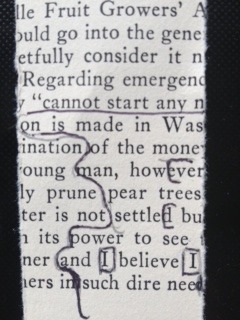
And transcription:
(old men)no books (3)
on is made in Was—
of the Mone.
Man how pear trees
settle power
to see and believe.
(such
dire
need)
I think I mentioned I came up with this exercise 10 minutes before the first meeting of my Art of Compost class this summer when I saw in my notes “exercise: something with torn pages” and realized I hadn’t worked out what “something” was.
William Carlos Williams famously wrote, “write carelessly, that nothing that is not green survives.” Not sure the same always applies to lesson planning but here it worked okay.
The pages we tore in class were from a battered second copy I had of his Imaginations.
Another torn page
by Barbara Nickel:

Which transcribes to:
(old men)no books (2)
to River
all—
congregation of al:
the ren, her
child
consecrate;
the tabl, her,
a cat, its way
Torn Page
This just in from my dear friend Barbara Nickel. A torn page poem along lines I suggested however many aeons ago (~ seven weeks give or take).
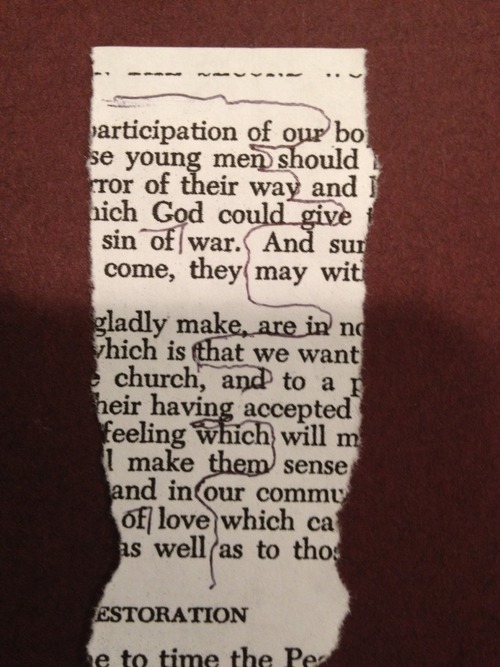
Which she transcribes as:
(old men)no books (1)
participation of our
young men
ror of their way
ich God
could give sin-war
come, they gladly
make, are in
which is church
and eir,
having feeling
which make them
and in love
well
 The Art of Compost