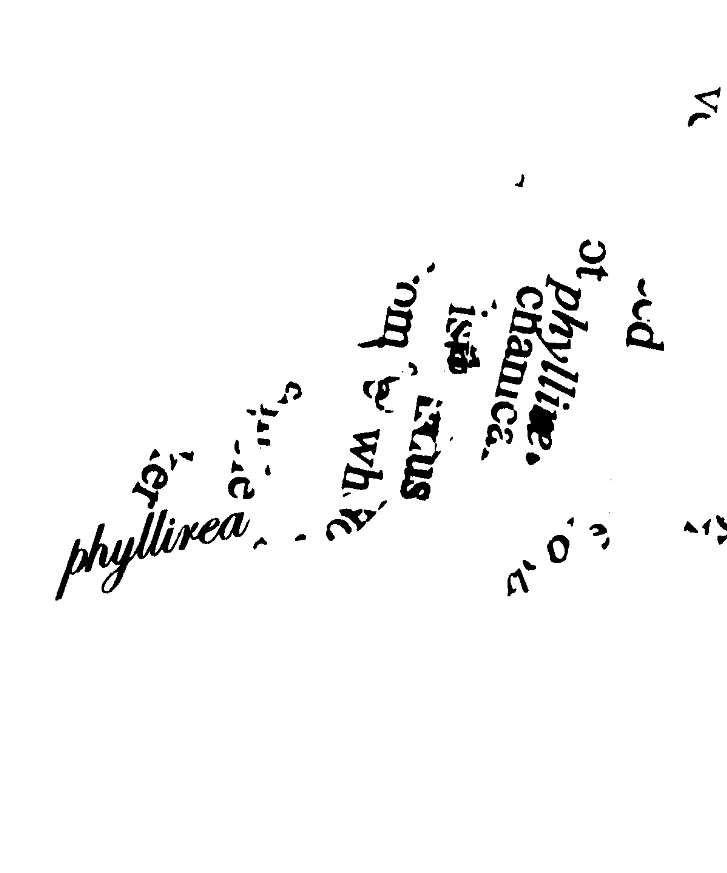
Exercises – Working it (out) (of order)

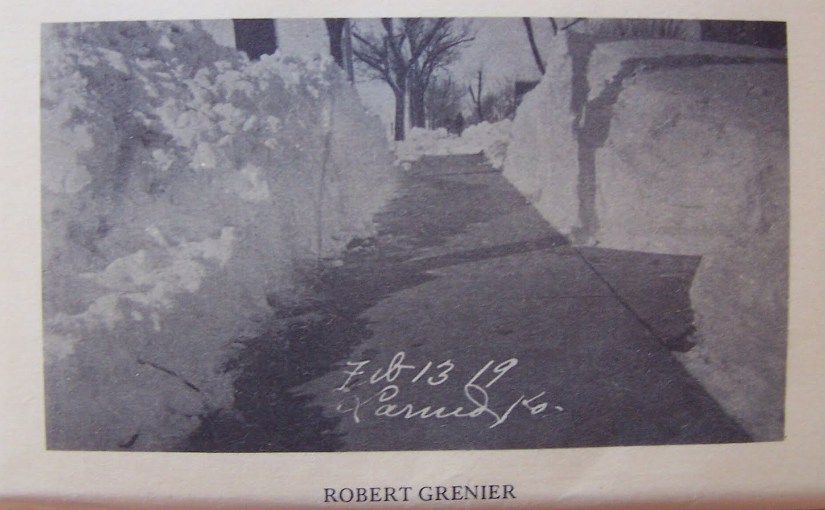
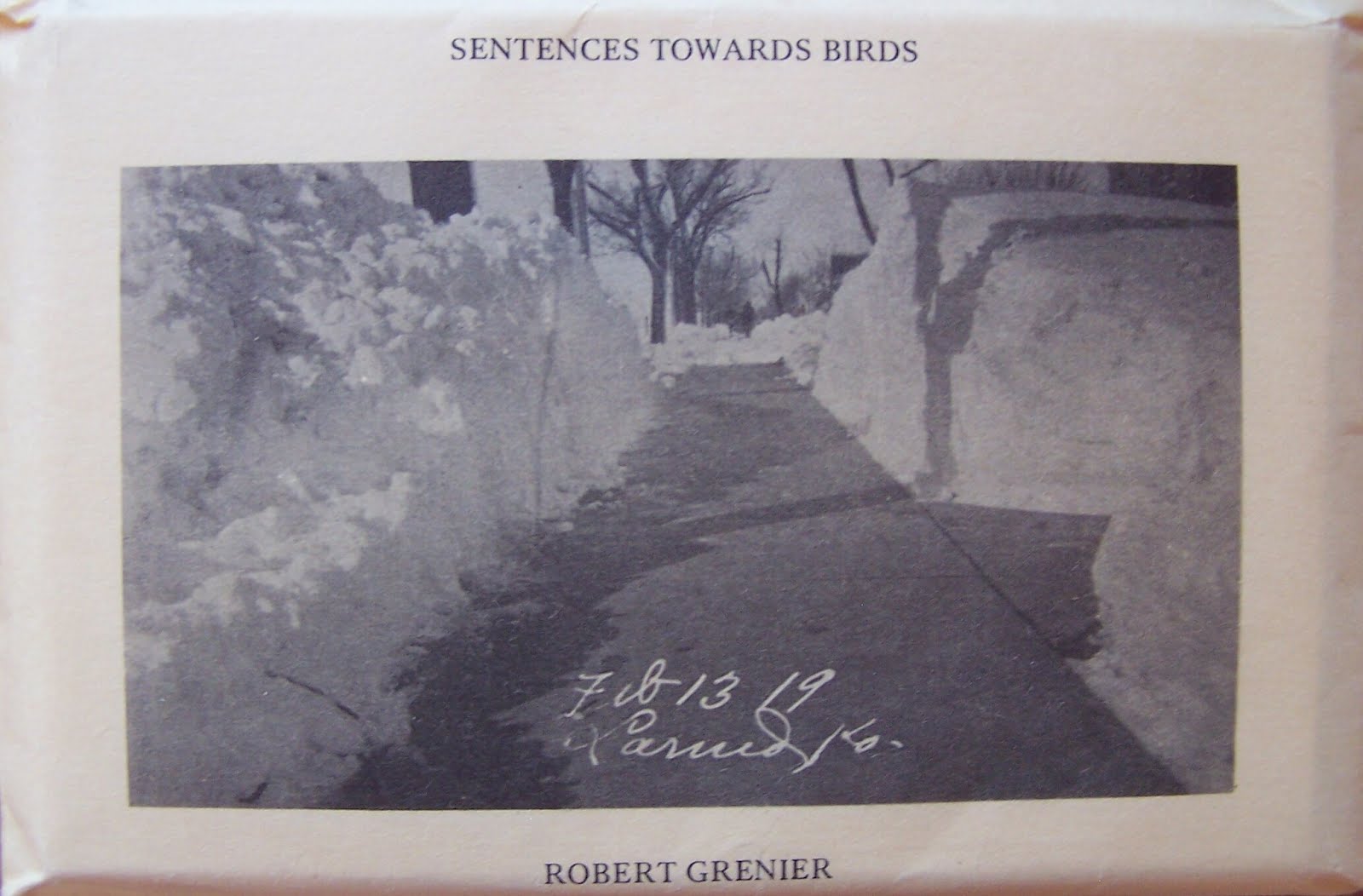
A pair of exercises that come right of our encounter with Robert Grenier’s Sentences, which I’ve written about elsewhere.

A first –

Write five micro-poems on five 3 x 5 index cards. No longer than the longer poems in Sentences. Take note – this exercise is easy to do and hard to do well.

And a second –

Compose a text that can be read in several different orders. Web-based texts are welcome. If you can write HTML – awesome, go to work. Or you can sign up for an account at wikispaces.com and create a small network of wiki pages, interestingly linked to each other. Alternatively, a bag full of scraps of paper can work nicely.


My vis po kids did some way cool work in answer to the second. Not, unfortunately, easily reproducible on this blog, mostly, so I made a bullet list. Then I made the list a paragraph. Then, in the spirit of compost, I took out most of the punctuation, and got this prose po.

An orange construction paper buckyball inscribed with US states and states of feeling they induced a prescription bottle on each of whose curled up paper slips (pills, slips) was writ a glaring bit of clickbaitery a shirt box made proscenium in whose shallows cards hung mystical amid thin thick strips of pink tissue paper oh so many scraps of different size thickness mode of inscription containment scrapitude an assemblage that altogether beat my meagre imagination down and included, let’s see, a CD case a rubik’s cube a tape measure an invented alphabet and other various and sundry also a monkey I think but amn’t sure he was hero.


One only admits of posting, an homage to Grenier hisself, and you might check them out side by side, compare. As Pliny the Elder said to the fire eating his air – Interesting!

It’s here.


Grenier - STB

On playing well w/ others (II)

The other live collaboration is teaching. My vis po group delights me yet with their attention and good cheer. I love spending time with them; they’re a twenty-one-person friend; I’m going to miss her him them when we’re done.

One thing happening, new for me, is what I’ve been calling co-teaching. Instead of breaking up the class period – student presents then I teach – I’ve let the presentations go long and tried to weave my teaching into their teaching. That’s made for challenges. I can’t wholly recede into the role of just-one-more-student. There are lines of inquiry I’m best positioned as teacher to introduce. If I just chill and let the conversation go wherever it wants to then I’m not really doing my job.

How to do my work then? My best work has always been done Socratically. But it’s been hard to work Socratically in this new context. Turns out there may be space for only one Socrates in the room. Is that what Athens meant by the hemlock?


Gist of my last post was, look how strong these friendships are, that they can withstand some sore tension, be hardly shaken. Here my gist is, look how strong this class is, its esprit de corps, that they can let me learn along with them, so exposedly.

No question I feel exposed – they see me fuck up half a dozen times a day – but some mix of apology teasing and good cheer keeps me persistent. The fabric feels not injured by my error.


Half a dozen times a class, I need to make a call, do I step in here, redirect our line of inquiry, and if so, by two degrees, or twenty? (How does anyone teach who’s not OMG a martial artist of the mind? What all factors are in play that moment? My sense of the presenter’s confidence level. Of her command of the material. Of the chances she was headed there anyway. Of the class’s interest and engagement. Of who does and doesn’t have the text. Of X’s irritation at not being called on five minutes ago. Mirror neuron overload. Also I need to pee.)

Let’s say I do, I step in. I want several things at once. I want to model, for the presenter, the Socratic method – how to use questioning to lead your charges down a path of inquiry. (Coupla troubles with that I see now. One’s time frame – I’m wanting to deliver in seconds a lesson that may need weeks months years to offer. Another’s ego – why should my given method be template for another?) I also want the class to taste the fruits of Socratic method in action – if we can get there that way then someone has been actively making connections. And I want maybe also to sustain the arc momentum substance of the class.

I wonder why I’m tired after a two-hour class and ravenous? Surely my brain has burned a burrito’s worth of blood sugar.

In practice, as often as not, stepping in, I knock the presenter off his game. He feels interrupted, disrupted, not I hope corrupted. And I do my Socratic thing, pursue a line of questioning, maybe get to an answer, maybe also model the process in the way I’ve meant to. Then awkwardly hand the presentation back, perhaps with apologies, and we laugh, but it’s awkward.


I often don’t know where I’m headed with a blog post when I start one. That’s what makes these worth writing – what makes them live, long I, the way poems are live. The reason I’ve spent hours on this one (yeah, believe it, hours) is that I’ve slowly come to see, in my own internalized Socratic process, that I’ve been headed for something all along. It’s this.

It’s this. Though it’s been awkward, though students have felt off-put, though I’ve felt sorely mixed about the move I’ve made, these may have been the most important moments in our time together.

I’ll say it again. It may be that exactly in these most awkward moments we’ve done our best learning and our best teaching.

One thing that happens in such a moment – I’m exposed as not in charge and not not in charge. That’s not nothing. Another thing that happens – the presenter’s been challenged without being told she’s doing it right or told she’s doing it wrong. That’s huge. (She’s doing it a perfect that’s other than right or wrong.) Another – everyone in the room has been witness to these aporias, these insoluble knots, and that’s gotta shake your head.

Any of this can only be done, sorry to go all dharma on y’all, this can only be done in a context of perfect and complete, one bright pearl. That is to say, the joy I’m feeling in this company is the joy of sangha, like minds gathered in.

Most focally, sangha means, community of fellow practitioners, meditators, followers of the eight-fold path. Most widely it means all sentient beings, and maybe some mosses too, rocks and stones, broke girders. Somewhere between those two it means hanging out with some folk who get some sides of you as they are.

I fell out of formal Buddhist practice a while ago but seem to keep stumbling into it informally and here I see’s been one way.


Have I gone on long enough? I think so! Wanted last to say though, these have been good teaching days, both classes. My intro to Brit Lit, we hung out with Billy Blakefish today, I don’t know why I call him by that. They seemed to get quite quickly that this prodding

mhh.h.p7.100

is invite to wander out of the lockbox of the senses, enter a life of imagination, of Imagination, the world-making faculty of mind, which for Blake was undifferentiable from God. Before we were done one offered, prompted by nought but irritation & consequent inquiry, that this Proverb of Hell

Where man is not, nature is barren

(which pissed me the hell off, too, when I first read it, and it still can) made sense in that light. Nature is made to be nature by human mind. Not anthropocentrism – phenomenology in embryo.

Student work – Inscription

A few responses to the inscription exercise I gave my students last week. They didn’t go quite so well as the first (erasure à la A Humument) and I have a few guesses why.

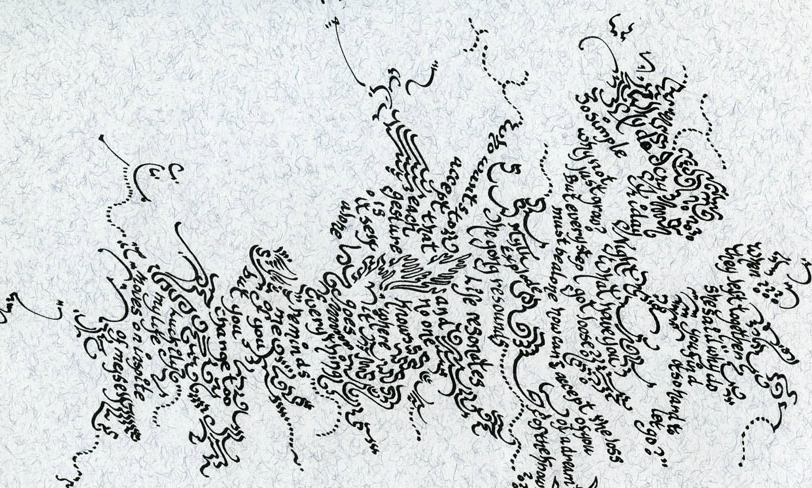
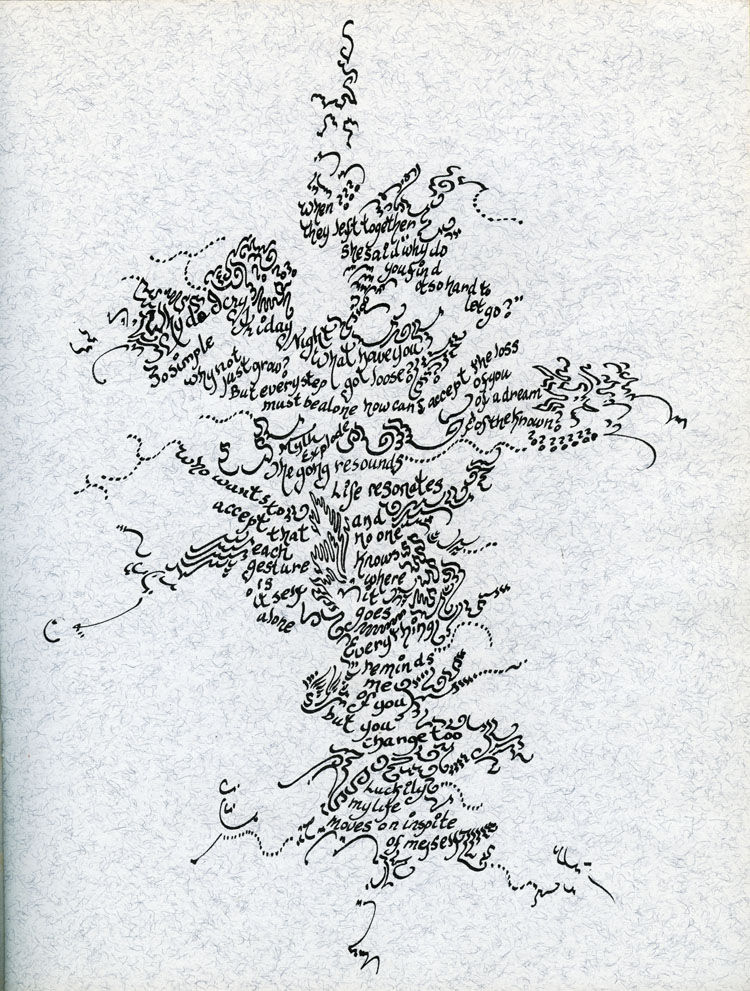
One is, the model Phillips offers is so accessibly bountiful, it’s hard not to find some practice in there to spring forward oneself from. In comparison, Copithorne proposes a terrifying dexterity, such fluidity with which line becomes letter becomes line, how could I do anything remotely like it, I ain’t an artist like that.

(Admittedly this is one of her most astonishingly ornate ones.)

‘Nother is, the myriad possible inflections to ordinary inscription – Moorish calligraphy, graffiti in sodium-lit underpasses, Chinese wild grass cursive – weren’t immediately present to them. There as links on our course site but those don’t seem to have been touched, not much. Whose slip up that is, mine, theirs, I amn’t sure, and no big deal.

And a third, simplest and maybe mostest is, handwriting is deep habit, hard to break out of without contrivance. To convey your usual script to an altered script, one not just transferred but translated, is to translate yourself, your hand, your character – two metonyms for “script” never more telling.

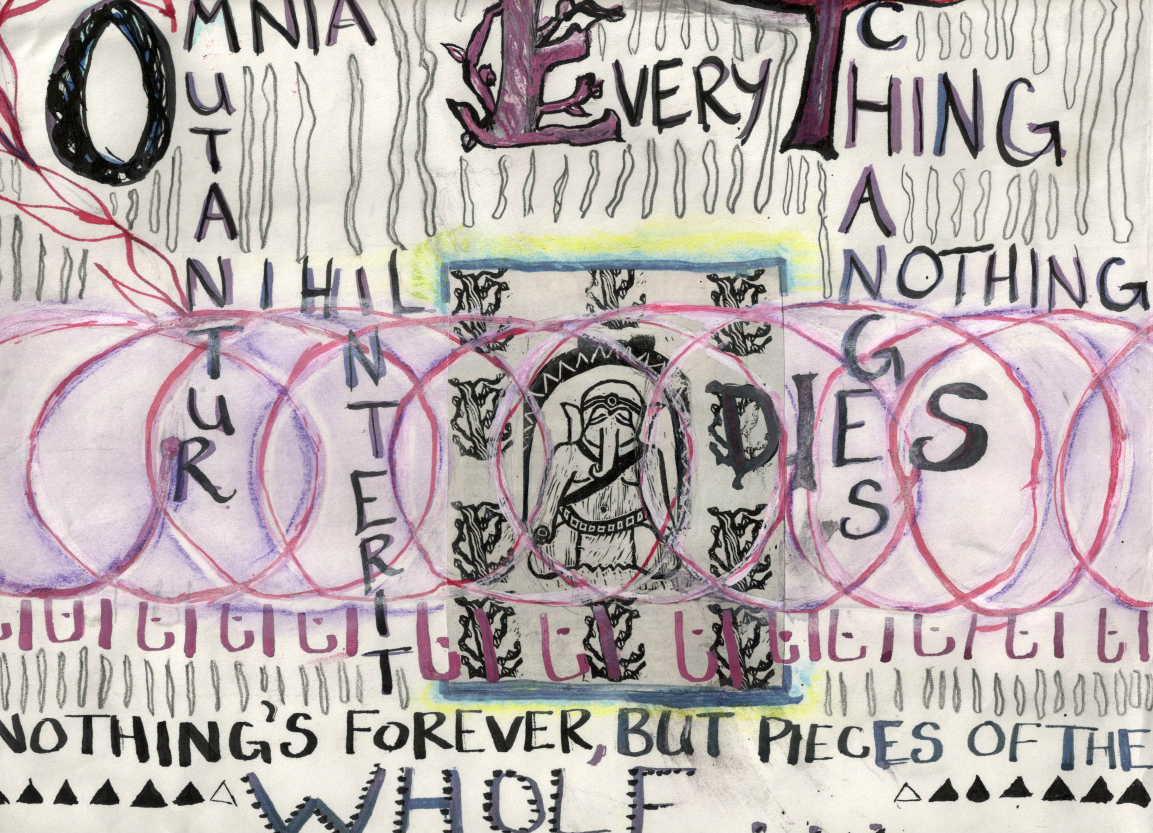
Well without further ado here are a few that struck me. One, polylingual, showing the influence of its maker’s explorations in medieval practices of manuscript illumination. As well as, in the errant vegetal forms, maybe a visitation from Wm. Blake.

Handwriting 1

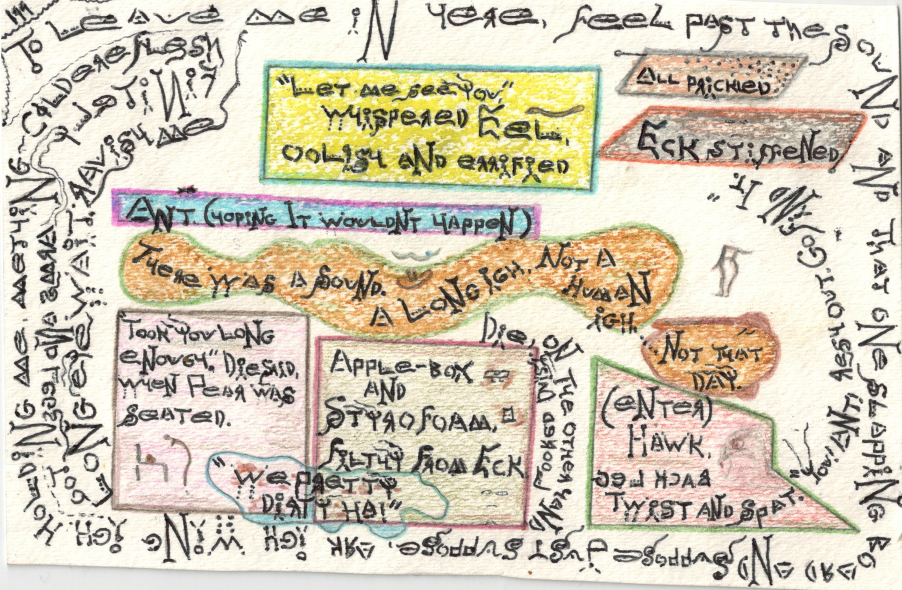
One in which charactery seems to have seen itself in sequin mirrors, doubled and distorted and half disintegrated, seeding a landscape of chimeric forms part Euclid part pencil crayon dream.

Handwriting 2

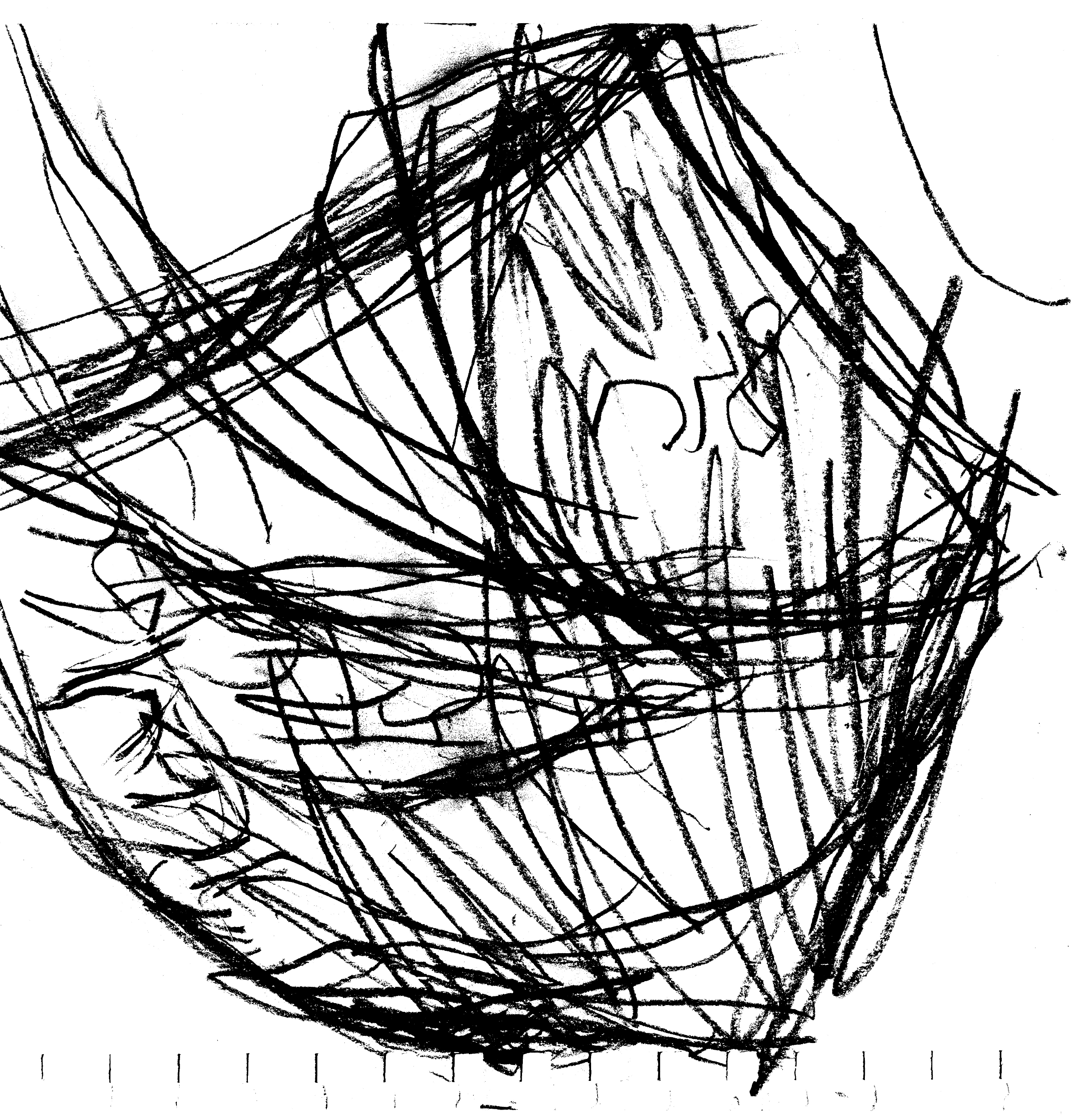
And this, crowblack lines perfect arcs and rudiments of script.

Handwriting 3a

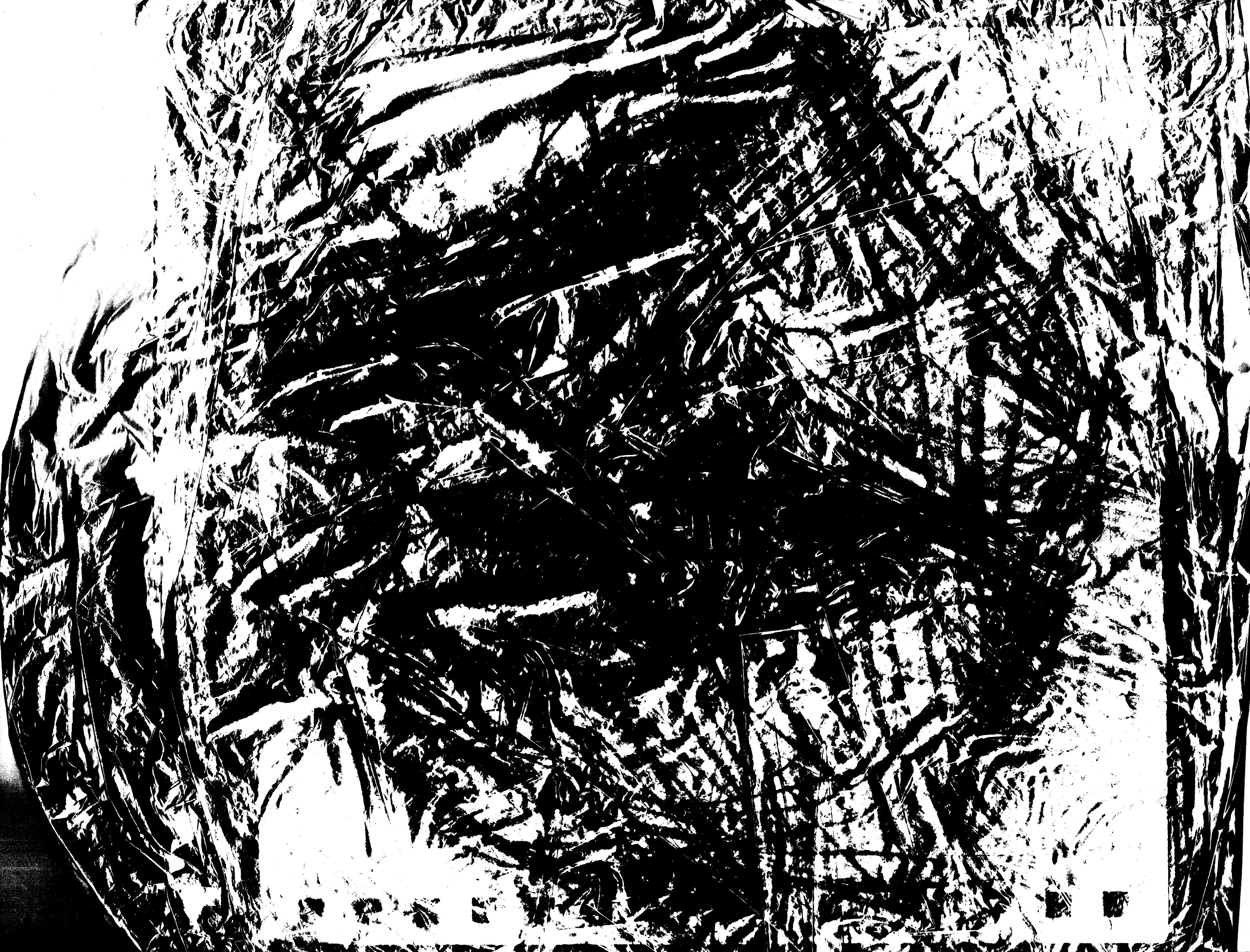
I scanned it in two versions. One, as above, and one with the plastic bag the student wrapped it in so the charcoal wouldn’t smudge its neighbouring papers. It came out pretty cool.

Handwriting 3b

Nothing like a little distortion to see you through – chance, directed. (Click on it, and again, see it big, the textures. Do!)

Said I was going to fold in a bit of talk about my own work. Doesn’t seem like much beside what these guys are doing. But I will. Tomorrow, I think, as the battery’s fading, and the light, and my mind, and din calls.

Teaching note

Just went through the annual contortion of preparing my teaching evaluation portfolio. No one wants this, not the teacher who preps it, not the committee that reads it, not the dean who signs off on it. (Theme of evening seems to be, Too Honest For Own Good.) Only the system wants it. To the system it’s Pure Sugar.

Had this time to thread the needle — accounting (without seeming defensive) for a weaker batch of evals (don’t get me started on evals) than usual while attesting (without seeming boastful) that I am teaching (as I do think I am) at the live edge of my game.

Thought I’d paste in the last para as a sleep aid for you.

I’ve stretched myself in several ways as a teacher this past year. Posting my students’ work on the blog where I feel through live questions about writing, reading, teaching, being. Showing my own work, including drafts and failures, to my students. Sharing strong feelings with them — grief at the loss of a friend, or anger about discovering cheating, or the sheer pleasure I so often feel working with them — in a more raw and open way than I usually have. What these shifts have in common, I think, is that they rub away at the the wall between my role as a teacher and my being as a person. I’m not sure all have been successful but all have been intentional and all — even those decided in an instant — carefully considered. Nor am I sure I’m a better teacher this year than I was last year when I played it safer. I do feel I’m a truer one.

Some time I’m feeling braver I’ll write about the art of cussing in the presence of students. It’s a knife’s edge. What’s not? G’night.

Exercise – Inscription

The second exercise to my visual poetry group. Who keep doing wonderfully – our conversations together, their serious play, astound me. I wish I had leisure to write how much fun it was to talk with them today about Grenier’s Sentences and Cage’s 4:33 and Olson’s “high-energy construct” and Duchamp’s readymades.

Back. On. Track. An exercise cued by Judith Copithorne’s Runes, rather more obscure than A Humument, but very delicious, and in its way more luscious, an investigation of the threshold where grapheme becomes idly wandering line.

The prompt. Write a poem by hand in which the character of the writing is central to the experience of the poem.

Pointers. Again, by all means, take Copithorne as your model, but avoid slavish imitation. You might start by exploring ways of stylizing your usual handwriting. What happens when the cross-strokes on your t’s, the loops on your g’s, are allowed to run riot?

I’ll post a few of their soon. Till then, a bit from Copithorne (what, BTW, a lovely Norsish name).

Copithorne

Full text of her Runes and some others on UbuWeb.

Trust yr boredom

Well isn’t that interesting. I said I’d post some stuff about my adventures in erasure and now I find I just don’t feel like it. I tell my students over and over – trust your boredom – it’s some of the best guidance you’re going to get. Bored with a line? Cut it. Bored with a poem? Throw it away.

A sour and maybe cranky wakefulness but wakeful just the same. Could I ask of them something I won’t of myself?

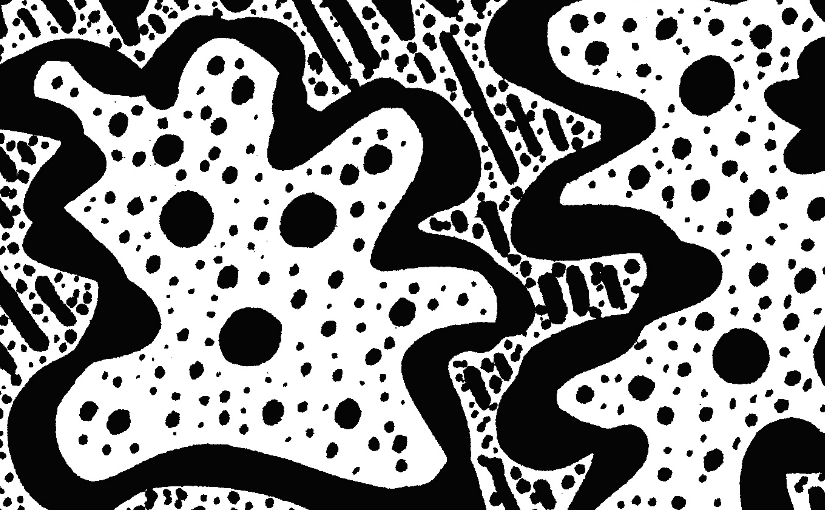
face 2The deal I made with me when I started this blog was – write when I feel a wish to and write what I feel a wish to and not otherwise. Lots of duties and such elsewhere. Here I’ll see if what I’ve heard about whim is so, its fructiveness and sufficiency. So far it’s borne out well. Some fallow periods, some heavy fertile swells, an amiable rhythm.

So, having erased erasure, what do I mean to write about? I sat down without knowing. That’s the scary or even terrifying thing about trusting your boredom wholeheartedly. It might tell you what not without telling you what to.

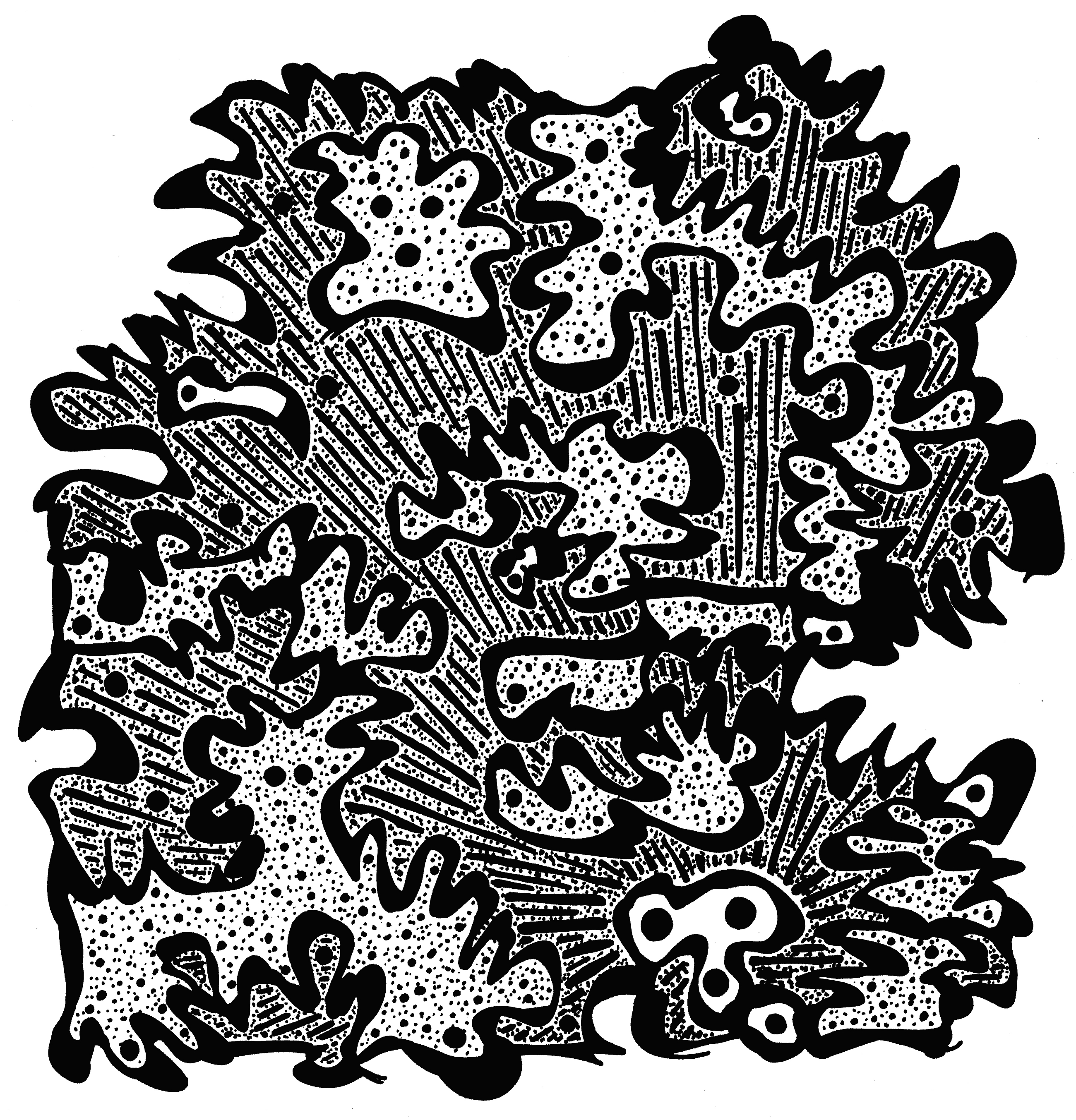
face 3One thing I do, when in this place, and I mean to offer this to my students wherever you are, is just shine an inquisitive light over all the terrain of my mind open at that time, and see what gleams back, even tinily. That might be the place where whatever the counter to boredom is, is waiting.
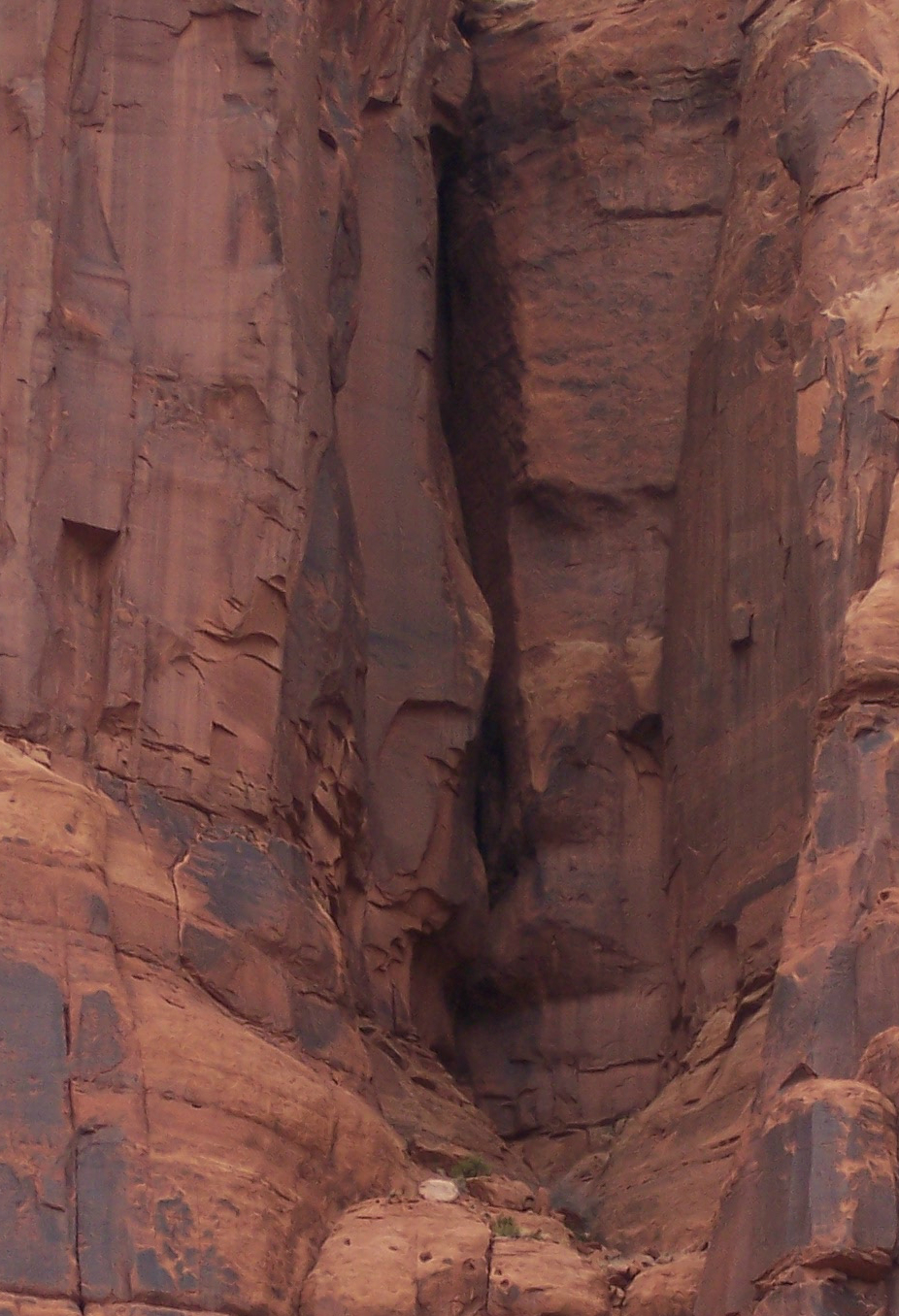
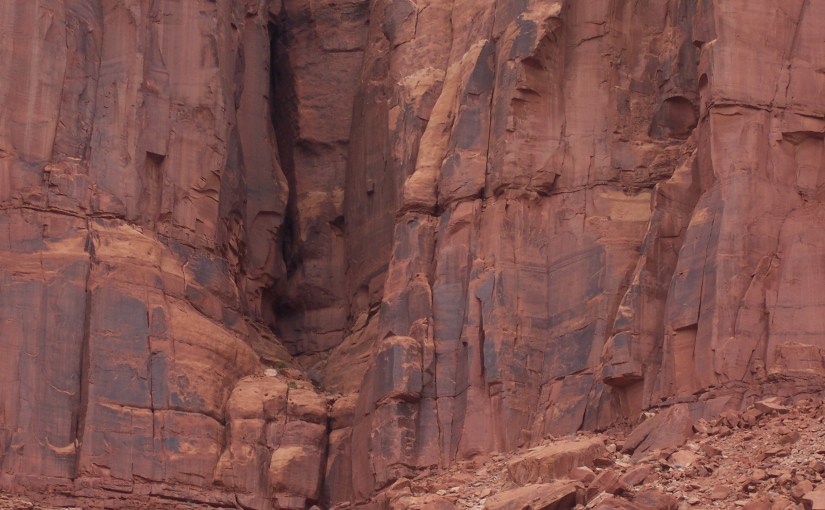
Here what shone back in mind was an image of a red rock cliff in an essay I’d run my eyes over a few minutes earlier, looking for something on erasure I might want to use.

My thought was a propensity for seeing faces where they ain’t, and then my thought was, that’s where I want to go, that’s where the living interest is, the way inert matter makes faces at us, or the way we make it into faces.

face 1

Project onto it a sentience it doesn’t have, if you’re the sort of materialist most people today are, or acknowledge the sentience we intuit it to have, if you’re the sort of postmodern animist I’m coming to give myself permission to be.

Gleaming in mind, I think, because I spent some of yesterday, and today, turning a portion of Dumuzi into a chapbook ms, title Junk Inanna Down, which will go off to a contest tomorrow. The final image, built out of junk mail, is this

10. Eyes

Those eyes move me some. They’re a mother’s looking down at an infant in her arms. They’re Kuanyin coming to poor lowered noble Ezra in that Pisan tent. They’re the trademark stamp on the Bank of America logo blown up about 1600%. Sacred just bitch-slapped profane, ’bout time. Her earrings are the rest of the same logo disassembled. Her headdress is one of those scan codes you see on the front of an envelope a machine reads to shunt its news unwanted to you more speedily.

This one’s for Don, with love.

Student work – Treated page

A few responses to the treated page exercise I gave my students as we met and read and viewed and wrestled with Tom Phillips’s A Humument. All struck me. Each differs from the others plenty. None imitates Phillips servilely. All take care with their erasural gestures, understand them to be, as they are, presences in their own right.

One that foreswears mimesis almost entirely and uses abstract form pattern and colour to expose the ickiness of its source text’s speaker. (A lot depends with this exercise on the right kind of friction with one’s source text.)

Treated page 4

One that goes maximal, takes erasure as a baroque occasion. (I neglected to note the source text here, oops.) It actually has texture under your fingertips. Glitter that bites back.

Treated page 2

And one that goes minimal, erases erasure, or proposes that we omit omission, or something like that, its ironies tangle my head. The source text is Strunk & White’s Elements of Style and it mucks with their most famous pro-imposition, “Omit needless words.”

Treated page 3

A dismantlement of text that can’t help but call to mind Susan Howe’s, as this from “Fragment of the Wedding Dress of Sarah Pierpont Edwards” in Souls of the Labadie Tract:

Howe - wedding dress (A poet I’ve never had the guts to try to teach.) There were others good, wonderful even, or that didn’t in themselves transcend but were important explorations for their fashioners. There’s in fact no knowing what will beget what. That’s why I don’t grade these, they should be done in great spirited freedom.


In a few I’ll hope to write a bit about my own muckings about with treated pages. Nothing so colourful as these. Also want to write about really good discussions we had today on qualities of line (actual and implied, that’s from Taylor) and the non-blankness of the blank page. First though dinner – steak!

Teaching note

Wrestling a bit with the question, in my visual poetry course, whether and how to involve my own creative efforts. My thought has always been, a teacher should keep his work to his own damn self, none of that preening, thanks much to yehs. And yet I’m a living working maker and maybe that could be of help to my students. Esp. since almost every prompt I give them emerges from some struggle I’ve found myself in and found a way at least partway through. Abnegation of ego is more ego.

(Too, I’ve already stretched the envelope, posting their work on this blog. All kinds of sound reasons not to do such a thing. And the effects seem to have been good, benign, affirming, from the signs I’ve been given to see.)

So well my thought is to post, among the prompts I give my students, and some of the works they do in response, a few of my own efforts, recent or distant, with maybe a few comments. Maybe they’ll come see them maybe no.

E.g., recently posted a treated page exercise, soon will post a few of their lovely answers, and might be – helpful?? amusing? cause for benign condescending laughter 106 years hence among as yet unmade inhabitants of star system X93 in galaxy P1945Q? – watch that self-abnegation engine whirr into action – for me to post as well some of my efforts on the same terrain. And so I think I will.

I was cleaning the house, sorting papers, and the itch came to post to my blog, and so here we are.

The treated page I will write about when and if I do:

Laces

(That took me, guys, so you know, months. More, more than a decade, if you go back to the date of the source text – a dream I had of wandering as a child at ease in a marketplace.)

They are such a kind group. I was observed by a tenured colleague on Tuesday, no reason to be nervous, but of course I was, and they did beautifully, bore me up wonderfully, just by being themselves. Mean to tell them tomorrow how grateful I am.

all things bear one up
robins in the high meadow

Exercise — Treated page

So here’s the first exercise of the quarter for my visual poetry class. Cued by our wandering through Tom Phillips’s well known widely loved yet not for all that at all worn out A Humument.

The book’s an object lesson in the power of powering forward not knowing where the sweet bloody fuck you’re going. Glory of the aleatory. Here’s he in his Blakean vein —

The exercise. Treat a page of a prose work as Phillips has treated the pages of A Human Document.

Pointers. Be inspired by A Humument, by all means, steal moves from Phillips, but don’t imitate slavishly. The composition should feel to you like your process. Do take care with your erasure marks. They should do more than just cross out. They should express, manifest, draw eye and mind.


They’re doing beautifully by the way. What lovely conversations we have. We seem already friends in the free and easy wandering in mind I remember reading of in the Chuang Tzu … lessee if I can find it … nope. But this is as good, Chuang Tzu to Hui Tzu, who’s just told him his words are big clunky useless, like a gnarled and lumpy tree, so everyone ignores it, carpenters, painters.

Now you have this big tree and you’re distressed because it’s useless. Why don’t you plant it in Not-Even-Anything Village, or in the field of Broad-and-Boundless, relax and do nothing by its side, or lie down for a free and easy sleep under it?

The sleep I want for my students when they make their poems.


P.S. Speaking of Cezanne, and Mont St. Victoire, saw a pretty indifferent one in Vancouver, apparently the only one he composed in a portrait orientation, and I saw why. But what blew me away, and made me excited about in and for the VAG for the first time in my admittedly little life, was an exhibit I wandered into mostly accidentally of contemporary Chinese art that poked and prodded and nursed and scowled at the long awesomely durable tradition of Chinese landscape painting.

I’ll hope to write more soon on what I saw there and what it seemed to see in me. For now a link to the curator’s intro for you.

Into the visual wild

Cometh spring, a new quarter, and our entry, I with 20 brave souls, to the wilderness of visual poetry. Typographic cows at leap over sans-serif moons. Overflowering word gardens. Poems with no words in them.

I’ll post some exercises, and I hope some student work, in weeks to come. Inly the shift from intense poem-making to what may be intense poet-teaching is feeling a bit rocky. But I think once I’m at one with the rocks it’ll be smooth going.


Living Writers: Word and/as Image

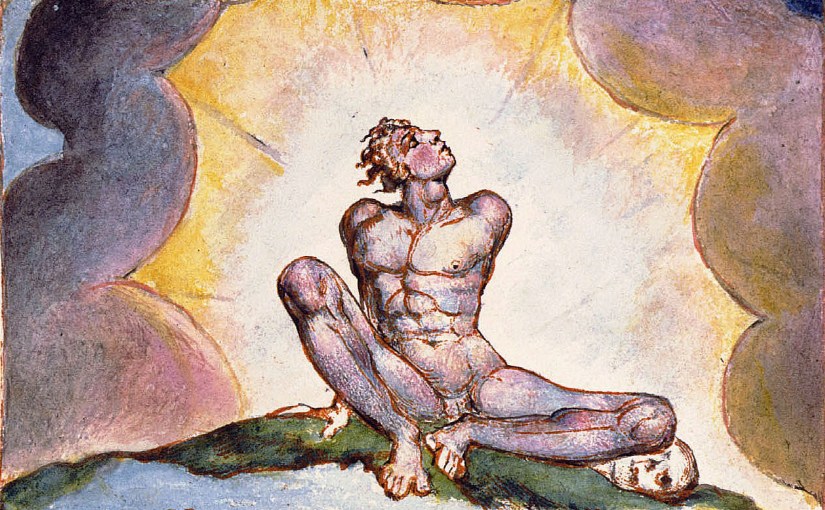
The written word is always embodied, on paper or in stone, on bone, among electrons. That means it is both visible and tangible. In addition to writing or reading it, we can trace it, paint on it, rough it up, sand it smooth, stretch it, shrink it, erase or deface it. Meanwhile, the visual image often reaches for the sort of meaning words have, asking us to treat it as legible. No one knows what these figures in Blake’s Marriage of Heaven and Hell mean—

Blake strip - MHH

—but most will feel that they mean. In the word-image nexus, meaning is often fugitive in this way, just beyond the reach of your eyes’ fingertips. In this course, we’ll study poems in which signs keep sliding toward picture, and pictures keep morphing into signs. Our primary texts will be those of living writers, many of them Canadian, but we’ll also dip into earlier works, from Egyptian rebuses to Anglican concrete poems to early Romantic prophetic watercolours. Get ready for a wild ride.