Now goth Inanna under wode

There’s an old quatrain from out the middle ages I first met as epigraph to Robert Hass’s Sun Under Wood.

Now goth sonne under wode —
Me reweth, Marie, thi faire rode.
Now goth sonne under tre —
Me reweth, Marie, thi sonne and thee.

A book and a poet that’ve always resounded for me for how tenderly they assay the harms to which the mother-son bond is prone. Terrain I work in too as uncrampedly as I can.


What sat me down to write though were a father and a daughter. Watched Interstellar a second time last night and was moved (again) by all it did well and dismayed (again) at all it did poorly. And what I felt most (again) wasn’t the admittedly spectacular black hole wrung with light, or the rungs of sooty frozen clouds the astronauts clamber among, but the intimate distance of father and daughter the astonishing otherness of those sights makes visual.

It kinda broke me. I suddenly got I’m almost for sure not going to have that in my life. I’m a bit too broken to have a kid or have taken a bit too long to get me whole enough to do it. I’d probably do okay at it now but the window’s closing or closed.

A bit later the okay-voices came to say there’s plenty else to make a life meaningful, and they’re right, but for a bit it broke me.


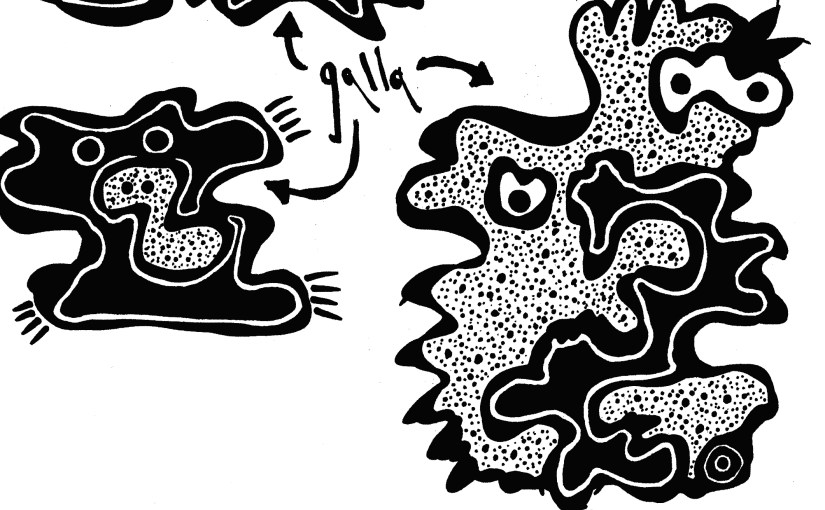
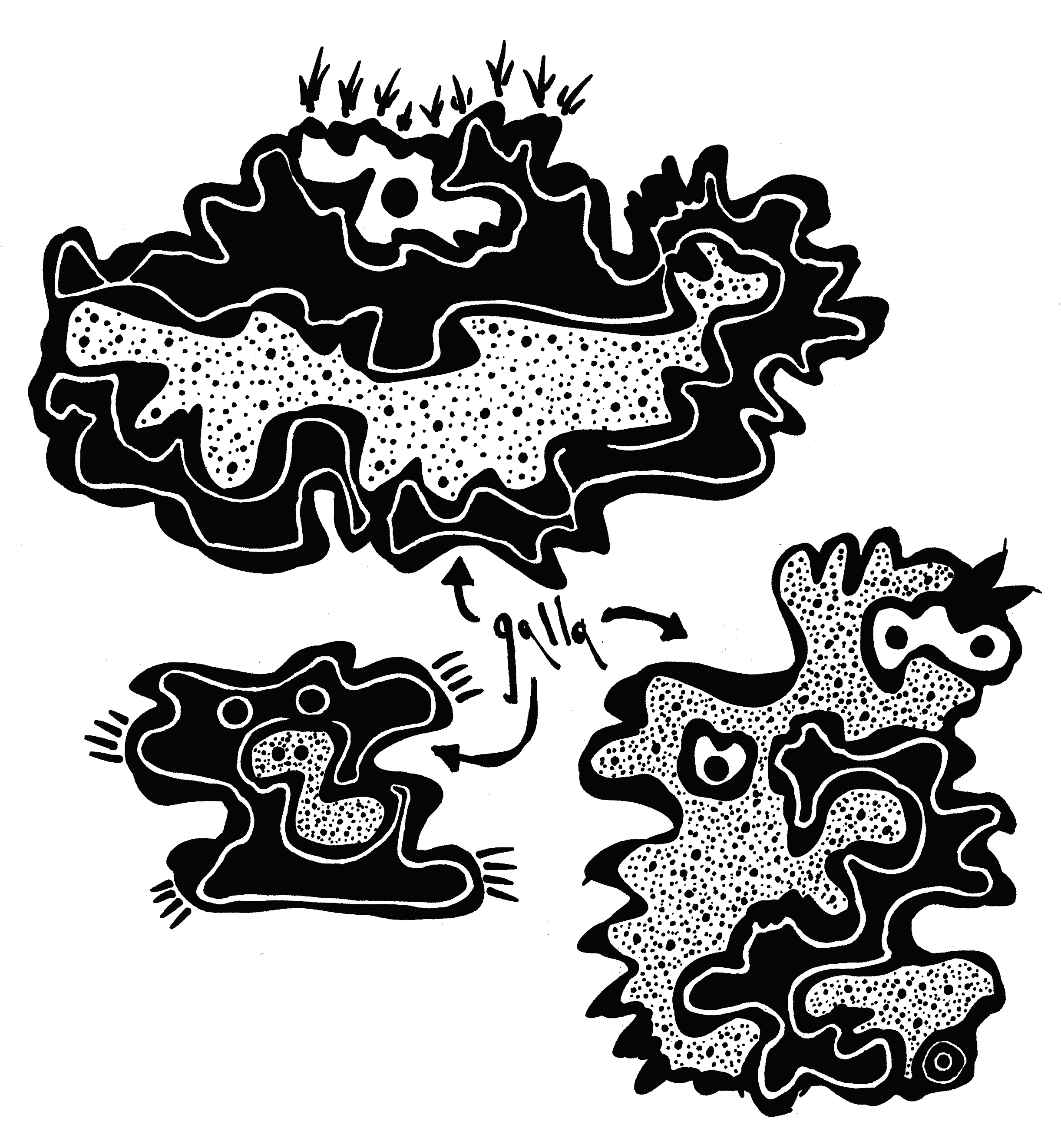
You see why I go to junk mail. It gets dark fast around here sometimes. A few galla for you — one’s trying to hide behind a bit of beachwrack. (Goeth galla under driftwood.)At Troy

If I’m more open here than I’ve been, I thank Hass a little, my students a lot, who’ve braved to write about trials and disorders known by name but not plumbed for real in the halls of DSM V. To write and make beautiful and indeed sublime sentences out of. (Therapy prose: the more honest it is the more you cringe. Transformative prose: the more honest the more you soar.)

I do have to say, a joy of teaching is, the wish in me to father is met, not as it would be by a child, I know, but still, it is, and meaningfully. That’s for a different post — maybe a different blog — but it’s probably the most meaningful thing about teaching for me, equalled maybe only by the creative incitement the most happy arrangements have had to offer me.

Thought on the way to the grocery store yesterday evening: if at the end of my life I’ve touched more people as a teacher than as a poet, that’ll be okay, I guess.


So, Inanna goth under wode, and I’ve had to go with her, goddammher. No point putting it off, let’s get this road trip started.
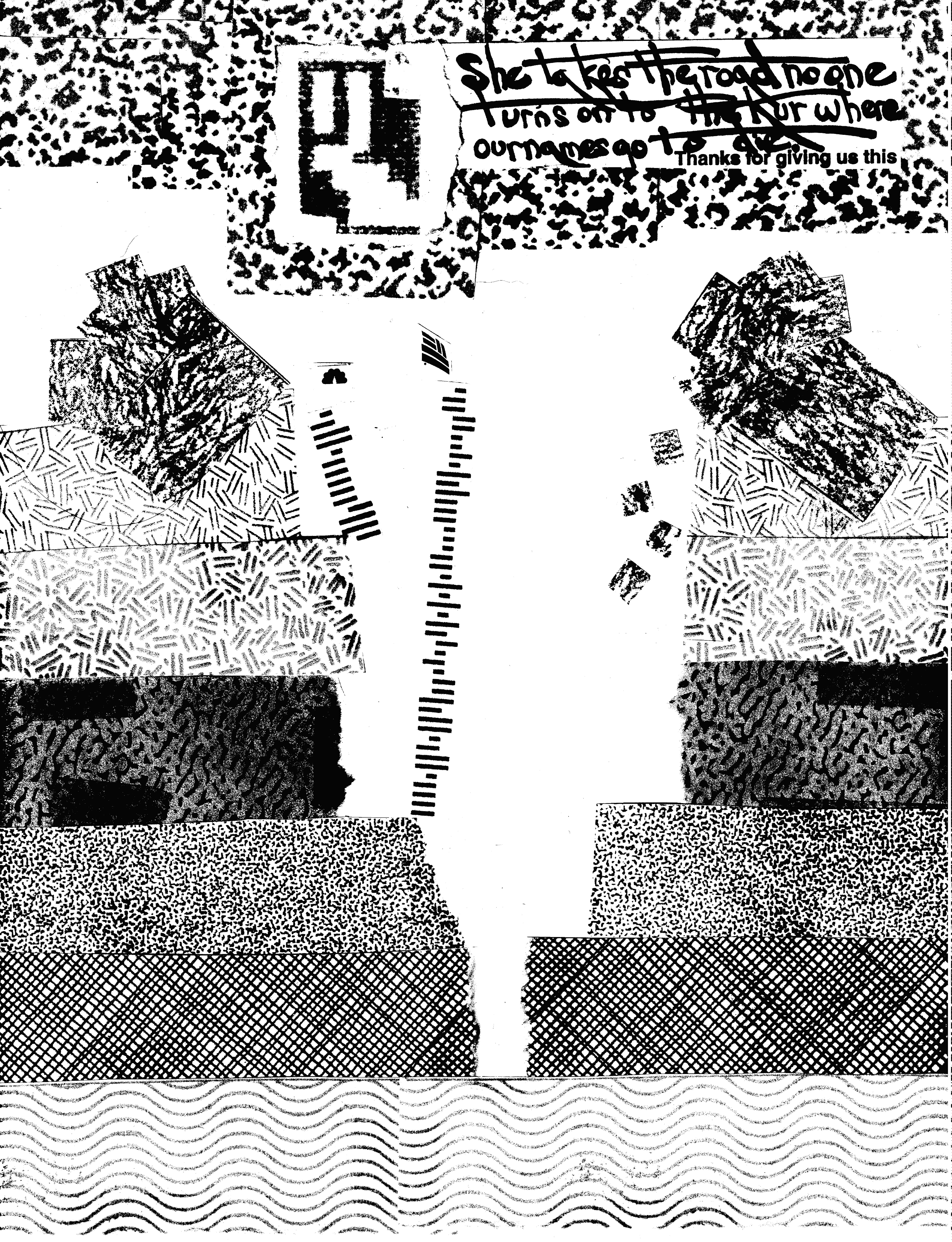
She takes

The text’s a bit hard to read (working on that) so —

She takes the road no one turns on to the kur where our names go to die.

The kur is the Sumerian underworld — ruled by her sad sister Ereshkigal. Her snazzy feather is the Bank of America logo. The terrain she and her trusty friend navigate at some peril is a treacherous assemblage of security envelope linings.

From a later (Akkadian) text, “The Descent of Ishtar to the Nether World” (just for funs):

To the Land of no Return, the realm of [Ereshkigal],
Ishtar, the daughter of Sin, [set] her mind.
Yea, the daughter of Sin set [her] mind
To the dark house, the abode of Irkal[la],
To the house from which none leave who have entered it,
To the road from which there is no way back,
To the house wherein the entrants are bereft of li[ght],
Where dust is their fare and clay their food …

Don’t make too much of the pun on Sin. But think about it — a road you can only go one way on. Really, there’s no such thing as a one-way street, you can always go the other way when no one’s looking. Anyway, this passage has always been striking to me, for how through its stiffness it still haunts and shudders.


In my version anyway Inanna grows smaller as the scope of her task dawns on her.
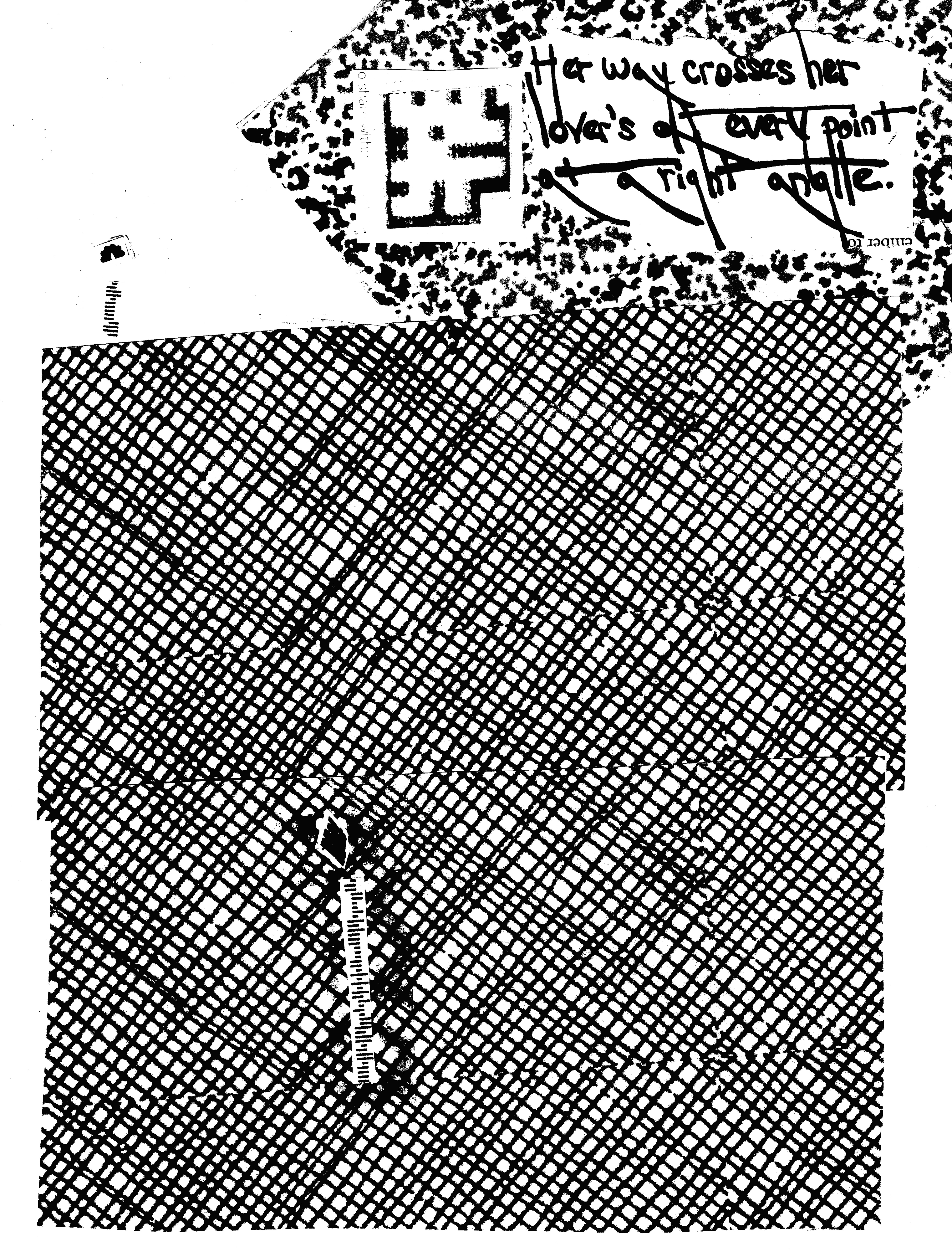
Her way crosses

Her faithful friend at a remove now, unable to follow any further, Inanna’s entered the weave of one of the earth’s textures, her feather guttering smokily, some sort of torch.
One more for Elise

I thought I would post here, with her husband Steve’s most kind permission, the remarks I made at the memorial this weekend for Elise Partridge. It was a beautiful occasion, the afternoon. Our seats arranged such that our seeing went out the frames of the windows and frames of wood and frames of stone and frames of shore pine and out over ocean into the frameless mountains. (I have it in mind because two days later Stephen Burt spoke in that same space, differently em-placed, on the poetry and poetics of place.) One might almost feel one was a spirit passing through bodily frames, one, another. The words I said were about these.


In the weeks around Elise’s death I’ve been talking with some of my students about animism. The thought — to be a bit simple about it — that the world is alive. Every part of it and the whole of it. Which I think might mean, if it’s true, that when you go, you’re not really gone, you’re just differently here.

I start with that because I haven’t been able to get my head around it very well. Elise — here. Elise — gone. It’s the most elemental thing. We get to live so we’ve got to die. And, as Elise leaves the tangible world, I am finding it makes almost no sense to me at all. I keep looking for ways to find her not gone but instead differently here. And so maybe all I’ve got for you is four and a half more minutes of magical thinking.

It’s a sort of thinking Whitman was fond of. And Steve’s asked me to read a late poem of his. And so I guess through him Elise is asking me to read a late poem of his. It’s called “The Last Invocation” and it goes like this.

1.

At the last, tenderly,
From the walls of the powerful, fortress’d house,
From the clasp of the knitted locks — from the keep of the well-closed doors,
Let me be wafted.

2.

Let me glide noiselessly forth;
With the key of softness unlock the locks — with a whisper,
Set ope the doors, O Soul!

3.

Tenderly! be not impatient!
(Strong is your hold, O mortal flesh!
Strong is your hold, O love.)

Whitman, who said we could find him underfoot. I don’t think of Elise as under our boot soles — I think she’d find the notion undignified — so much as behind our eyes. Entering our vision to sharpen it with us. Forgive me for going back to my class but they’re on my mind because they had to bear with a teacher thrown off his game for a while by grief. I might put it to my class this way. If the proposition of animism is, oh, when you go, you’re not really gone, the problem for us moderns is, yeah, we’re here, but we’re not really here.

That’s a problem Elise concerned herself with. In her work, in her life. Maybe the problem though I don’t want to presume. What, every one of her poems asks, stands in the way of seeing more clearly, hearing more kindly, touching more tenderly, feeling more feelingly. And go — the poems say, to whatever that what is — go stand somewhere else, there’s a life to be lived, fully, lived well, lived lovingly. The first lines of the first poem of her first book —

Nothing fled when we walked up to it,
nor did we flinch.

What a note to start a life in poetry on. “Everglades” is the poem. It has a vision of that swamp as a wild and wildering democracy —

Tropical, temperate, each constituency spoke —
the sunburned-looking gumbo-limbo trees
nodded side by side with sedate, northern pines.

“Gumbo-limbo trees”! What better evidence of a life well lived? (The phrase, I mean.) The line following —

Even the darkness gave its blessing

A darkness from which I’d like to think Elise blesses or raises an eyebrow at us.

I wanted to touch on her e-mails, how they quivered with joy on one’s behalf, and with outrage at banality, idiocy, herd mind, also how they made the exclamation point safe for human perception again — there may have been seventeen of them but you knew each was uniquely meant — but I’m about out of time.

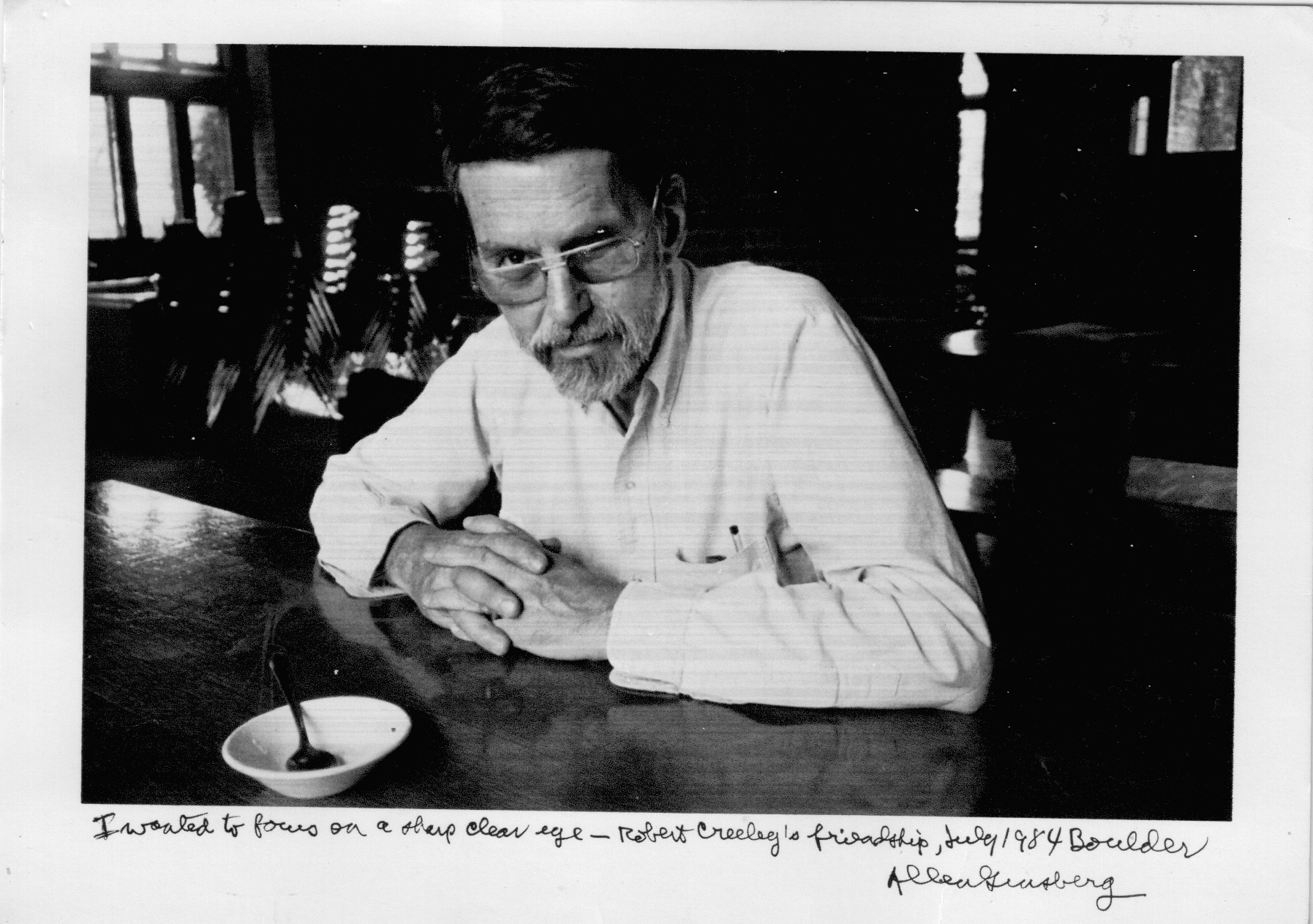
Just this — a postcard from years back, after Steve and Elise had looked after my house and cat on Salt Spring, one of many times. I still have it on my fridge. It’s a photograph of Robert Creeley taken by Allen Ginsberg at a diner in Boulder, CO.

Postcard - front (cropped)

Ginsberg’s inscription: “I wanted to focus on a sharp clear eye — Robert Creeley’s friendship.” Elise’s inscription on the back begins: “Hello Chris! I admire your poetry! —Robert Creeley.”

Postcard - back (cropped)

Elise and I had gone down different paths aesthetically, and at this point in our friendship, she was feeling really kind of pretty unsure what the hell I was up to. And yet she found a way to express, with grace and class and decency, and without dishonouring her own instincts, encouragement and faith in me.

That’s love. That’s the love of a friend for another. It’s a rare thing and it doesn’t die. I don’t think it does, I really don’t.

Dougal Fraser, 1944 – 2014

Tomorrow is the memorial for a favourite teacher, Dougal Fraser, up in Vancouver, and I’m not going to make it, having been laid low with bronchitis and a slipped disk (yes one can cough that hard), so I’ll post here the remarks I’d thought to make there.


Mostly I want to say that Dougal helped instil in me a love of poetry that will last me my life long. And that’s a comfort I thank him for. And so I thought I’d read a few bits of poetry that came to mind when the invitation came to speak today.

One speaks to my sense of something dark or even tragic in his seeing. Because it’s hard being a person, it just is, and he knew it, and he wanted us to enter the world not ignorant of the fact.

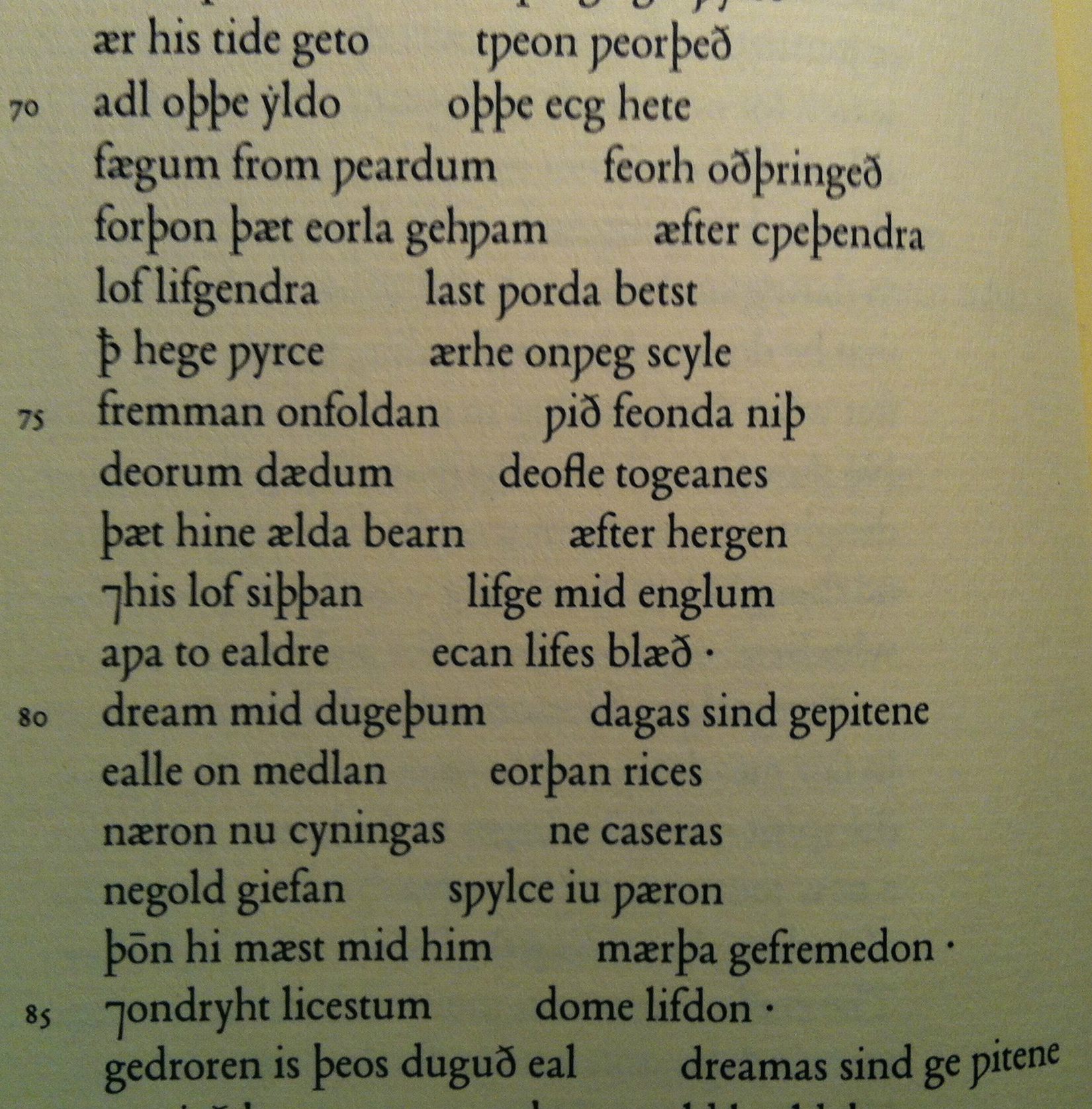
This is from the Old English poem “The Seafarer.” The speaker is saying why he prefers a life of restless wandering at sea to one of easy complacency on land. And today I hear in his words a case for a life of restless wandering in mind.

The Old English poem, the bit I have in mind, looks like this

Seafarer

and sounds

a little like this

and translated goes a bit like this

Always, for each, one of three things
near the end has thrown all in doubt:
illness, old age, or rage of the sword
wrests life from all who must, fated
to die, go forth. The best word-trace
a man may leave is the praise of those
who live to speak afterward: how he
brought to pass, before he went on,
good works on earth against evil,
daring acts to confound the devil,
the children of men praise him after,
that praise resounds forever and ever
among angels, the glory of eternal life,
joy in the host of heaven. Those days
of majesty on earth have passed now
though, there are no kings or caesars
or goldgivers like there once were,
performing the most glorious deeds
and living in lordly renown. Fallen
that company and past those joys.


Dougal was also, as all who knew him know, a reservoir of joy, and irreverent unto high iconoclasm, by which I mean a great clown, a clown of greatness. So Shakespeare’s Falstaff comes too to mind — the one whose wit’s so sharp it might skewer not just kings but kingship. Here he is on the verge of undoing the whole code of manhood and warmongering.

How then? Can honour set to a leg? No. Or an arm? No. Or take away the grief of a wound? No. Honour hath no skill in surgery, then? No. What is honour? A word. What is in that word ‘honour’? What is that ‘honour’? Air. A trim reckoning. Who hath it? He that died o’Wednesday. Doth he feel it? No. Doth he hear it? No. ‘Tis insensible then? Yea, to the dead. But it will not live with the living? No. Why? Detraction will not suffer it. Therefore I’ll none of it. Honour is a mere scutcheon. And so ends my catechism.

Scutcheon: decorative heraldic panel. That his agenda’s mostly selfish just sweetens the dish.


I didn’t come to either of these works in my studies with Dougal — only later. As a last taste, one bit from something we did read together in Brit Lit 12, whose magnificent rhythms made it through my thick intemperate skin somehow. This from 1 Corinthians 13:

When I was a child, I spake as a child, I understood as a child, I thought as a child: but when I became a man, I put away childish things. For now we see through a glass, darkly; but then face to face: now I know in part; but then shall I know even as also I am known.

Dougal, I don’t know who you are seeing face to face right now — maybe a heavenly host, maybe a diet of worms — but I hope you are having a good laugh together. You were brilliant and fickle and kind and mean in the best imaginable way and one of the most fully human beings it has been my good fortune to know.

Urgent Note for My Son Langston

A poem by Theresa Williams, one of the students in my recently done Intro to Creative Writing courses. Of all the many moving documents to come out of Ferguson and its crisis and the web of crises it belongs to this one’s moved me most. It’s so good it about annihilates the distinction between “personal” and “political.” And seems freeform but has an astonishingly clear ear — give a listen.


Urgent Note For My Son Langston

to be pinned to his collar upon age eleven

This is Langston.
He likes mutant turtles and the ghost grey
power ranger please
do not
shoot him he
is your new friend he
will jump in your arms
and ask
to be swung
in circles not
in news spin

please he
is scared of very loud
noises and he would not
respond to a shot he
might just fall in dirt
infra red and not move at

all like when we play ninjas and he is the blackest
because he say that’s the baddest

and I say no but
he say yes so
I’m the blackest

so how to make easy
topic better get meta
and none of this race shit really matters so
low I talk hawking but he waffles
and I don’t give a
fuck bout machines
stretched in time
I just need Langston man boy
demon home
in time please don’t

kill him he likes pancakes not waffles
like on Sundays when he asks for extra syrup
I pour on so much syrup
yes please
don’t fire we hymn strange hold
hands I put him on hips even
altars big
ger black
er and scary

arms scare
crow my neck brow clammy
while he mouths the words mom and god
round his tongue, spun like a fat marble.

And I know this note is a little long, but I just thought you should know that
this is Langston
and I love him he absorbs all the light
and so can you I mean yes
he’s not an angel stole once maybe twice
you learned his lesson well he

is or might be volatile please
return home safe so I can see the blue white
light from top peaks of his covers pulled tight
round his door bends blackbodies soft
sweet pulse a blue night

Exercise: Eavesdropping

Last writing exercise of the quarter. In earlier carnations of this course I’ve given it early on and it’s never gone as well as I thought it maybe should. Was ready to give up on it as a pedagogical near miss.

This time though, with some tweaking, a different timing, and some reminders of what else we’ve talked about, something new has kept happening. I get to get glad all over again seeing what they’ve done. I’ll ask one last time for their okays to post some.


Go somewhere people talk. Listen in on their conversations. Try to spend at least an hour there, scavenging for interesting bits of speech or interaction. Do your best to write them down just as you hear them. Don’t use a tape recorder — mis-hearings are as interesting as hearings.

At home, look through the material you’ve gathered. Underline the bits that excite your interest or curiosity (listen to those antennae). Write them out on a new page. You might choose only a single phrase, or a single exchange, or bits and pieces from all through your notes, depending on the material, and what in it moves you.

Working with those seed materials, and making up as little or as much as you want, create a scene half a page long. It should have a beginning, middle, and end, but it doesn’t need to be a complete short story — you can, and probably should, imagine it as a scene in a longer story.

All scene. No exposition. Objective point of view. Most of the words should be spoken by a character. Keep dialogue tags (“she said,” “he said”) to a minimum. Avoid ponderous verbs (“declared,” “stated,” “hinted,” etc.) and adverbs (“wittily,” “angrily,” etc.).

A few reminders advisements provocations —

  • Remember the iceberg. Ninety percent of the story is not in the words but in what the words suggest or imply. Tune those antennae to subtext.
  • Dialogue gets interesting when characters talk at cross-purposes (e.g., answering a question with another question, changing topic, ignoring the other person’s change of topic.) Also interesting are unusual expressions that reveal a personality, and leaps or gaps that hint at unspoken emotion. (These are all ways of creating subtext.)
  • Every phrase should contribute something new to the scene (e.g., developing character, establishing conflict, moving plot forward).
  • As writers we try to avoid clichés. But people often talk in clichés. For this exercise, avoid the clichés you hear, and stick to the curious, the strange, the interesting.
  • If you’re having trouble getting your scene to resonate, try writing it twice as long — a full page — and then make cuts to create interesting dynamics or juxtapositions.

Finally. Go somewhere unusual people have unusual conversations. Try to make it a place you’ve never been before. Try to listen in on people who are unlike you and the people you hang around with.

Student work: 80 Flowers poems

The danger on all sides with this exercise was Staying On Topic. Some of the ones below manage to get gorgeously off-topic once and again. Others stick to a putative topic but the texture and resonance of the language exceeds all topicality. In several you can see a hesitant limbering-up in the first line or two then a far more confident soar. I’m really struck, once more, typing these up, how good they are at what they do.


POTATO

The dull dust-bowl craggy-exterior couch
rotten kitchen five-pound-bag wrinkly-skin grocery
Ireland-famine Idaho-farming scarecrow rolling dry
yellow dirt ground roots economy
thin-sliced thanksgiving mashed boring lazy
cook-it boil-it bake-it fry-it mash-it
vegetable grimes lumens old-man harvest
french-fries electrical-currents round brown gun
suds buds crud grudge spud


SIPS OF WHISKEY

Carefree ciaos binding sinners dawn
hairless in feature gruesome quenched
disease be sweet with June
a cloud full as cups
streaking glasses wiggled off noses
revenge useless teeth rotted sunflower
quick slandered years opium swander
easiness night wish us eve


PLUMB

Jump man castle princess save
brick gold life die pit
plant tube bite pants small
underground black greenness gone warp
spring cloud shell wing lift
ghost browning night gap stairs
air fish bridge leap straightaway
fire spin axe fall finish


TEA

Eyeballs until milky bubbling wave
Spiced wet sun sugar thumb
Porcelain Ukraine melts heated eve
Ancient opaque petals stir temple
Black steam with heavy blink
Soothed pinky stains marriage peel
Waking garden hearth quiet pour
Tea-leaf enjoys museum whisper sip


IF NOT, WINTER

white knife winter’s home again
green blade red between lips
ardor-arbor again wet as knife
shoots green movement legs-in-ground come
bouqueted breath mist kneads moon
like-I-scent foxlog winter breathing hoarfrost
tendrils fungi frankly disputing sparrows
youth-blood sapling lusts sorrows spring


Eat coffee grounds running morning
downwind wine orchards grapes making
beans process tea leaves scatter
summer flowers foating dirty water
fallen babes hotchocolate system milk
crash liquid brakes warm throat
stove appliances cats meow food
sleepy timer Nyquil roses out


HERMIT THRUSH

Winter parks ground cup nests
Forests breed westward rare vagrants
Stock speckled dark low wings
Underwing reddish releases nature song
Well known high melody altered
Unassuming harmonic ethereal modern media
Descending spiral pitches uniquely simple
Delicate earth tailed feathered hermit


SIREN

Pearls of wisdom sea salt
green blue glass sand shimmering
wet sting bare feet black-and-brown
aimless below thirty hot disappearing
sails tossed-up stones cuts grins
angel-kisses your game gulls aquamarine
ocean push-and-pull drops chilled out
in cycles shore between toes


WIND TURBINES

Pinwheel wheat fields spinning desert
hotel room hills slow hands
discovery channel children turning sun
energy lights dry crisp miles
telephone wires tattoo distance golden
white semis rise and fall
old highway birds spinning dusk
Columbia Gorge asphalt passengers flicker.


CARTOONS

blue plum slits skin ink
clotted pulled clocks push death
tidy pray box shine we
kneel love spin wheeled wilt
eggs crumble each star reels
breaks brew dolls plotted temples
glum lots drew sticks mud
castes loamed castle knots giggle


Finally some individual lines I really admired:

bone saw reek red cross

stub cylinder opiate lounge chair

Large not purple fat water

treasure wild paper golden by

Lives green in room mountainside

roof yellow circle entrance tree

Spring-bent sprung-scent love

Split-infinity slips toes tips

teaching portfolio

Exercise: Zukofsky’s word-flowers

This one came in three parts — a reading assignment, a journal assignment, a writing assignment. The first two meant as robust prep for the third. And I was right they would find it a hard exercise! Maybe the hardest of the quarter. It did ask them to set aside things they’d spent years learning to do well, e.g., staying on topic, making proper sentences.

The exercise (with some of their work to follow) —

1. Reading

A few pages from Louis Zukofsky’s late word-flower sequence 80 Flowers. Like that one and this one:

STARGLOW

Starglow dwarf china rose shrubthorn
lantern fashion-fare airing car-tire crushed
young’s churning old rambler’s flown
to sky can cut back
a crown transplanted patient of
drought sun’s gold firerimmed branched
greeting thyme’s autumn sprig head
happier winter sculpt white rose

MOUNTAIN LAUREL

Known color grown mountain laurel
broadleaf of acid earth margin
entire green winter years hoarfrost
mooned pod honesty open unvoiced
May-grown acute 5-petal calicoflower cluster
10-slender rods spring seed sway
trefoil birds throat Not thyme’s
spur-flower calico clusters laurelled well


2. Journal exercise

Metonymy is calling one thing to mind by naming another that’s habitually associated with it. For instance, the phrase “red wheel barrow” calls to mind a barnyard, and perhaps a pile of dirt, or hay bales. Pick two individual words in 80 Flowers and describe the metonymic resonance of each — the things it calls to mind by habitual association. NOTE: Some metonymic associations are personal and idiosyncratic — associat­ing a red wheelbarrow with Indians, say, because there’s a mural with the poem on Indian Street. Try to steer away from those associations, and towards associations you can trust would be shared by a typical reader.

(In a class soon after we looked at how context, a word’s neighbour words, draw some metonymic associations into the foreground, and let others recede into the background.)


3. Writing exercise

Each of Zukofsky’s poems consists of eight five-word lines. Instead of coming together into sentences, the words make a sort of kaleidoscopic image of the flower — fragmentary, unparaphraseable. In fact, you might say that the relationship between any two adjacent words is not syntactic but metonymic, interested not in making a statement, but in drawing out habitual associations. Write a poem that uses the same form: eight five-word lines, compound words as you please, words next to each other not to make sentence sense, but to make richly textured juxtapositions.

teaching portfolio

Student work: 101 word short story

I was struck by how well many of these came out. Their work with formal or procedural constraints in verse (anagram poem, phone number poem, found poem) seems to be paying off in their work in prose. Or that’s one way anyway of accounting for the leanness of these.

A lot of work to comment on tonight so I’ll post just a couple here. Two I find especially attentive to the shapes of their sentences. And while they are stories — they propose event — they also draw many of their flavours from the prose poem and the flash essay.


GREEN ON YELLOW

The yellow coat is missing a button — it has been for a while now. It just hangs on the rack over muddy rain boots.

Her father sews a new button back on but it doesn’t match the others. He pricks his finger; she plays doctor and dresses the wound in a pink Band-aid.

Arms slide into sleeves and she spins around in the coat like it’s brand new, save for the green button that breaks the yellow. (She picked the button out herself.)

Tugging on boots, she dashes into the rain. He’s in her footsteps, chasing her shadow.


MY NEW HOME

In the woods, around a creek, down a gravel road. I walk in to music, vibrations, occupied air.

I live with four boys. They throw apples at deer.

One is king of the trash fires. He stays up late with the trees.

One is a recluse gamer. With the deepest mind.

Another just shaved his beard and dreads. What a shame.

And then there is one that plays with his hair, while he smiles at me. Such a dangerous combination.

I think of how close I want to get, tension thickens the room. I spend my nights cold.

Exercise: 101 word short story

Read the short short story “Frontiers” by John Daniel, and write a story that has exactly 101 words — including the title. The story:

Frontiers

I’ve never been this far from home. I’ve never stayed up this late. I’m out west.

We rode the train. I slept upstairs. You put your clothes in a hammock. They have Dixie cups.

The world has mountains on the edge, where the sun sets, big black things, and that’s where we’re going.

I’m in the front seat with my mother. I’m five. We’re going to a dude ranch. There will be cowboys.

There’s a soft green glow on the dash board. My mother wears perfume.

I’m traveling. I’ve never been this old.

“The stars are ablaze,” I tell my mother.

Student work: Fall haiku

I propose to students, in this exercise, that haiku as form (three lines of 5 7 5 syllables) is less helpful to us than haiku as genre (quick bright trace of an instant of perception), and invite them to let their poems be absolutely simple.

They work gamely at it but often the temptation of complication maintains its hold. So when their haiku come in, I pick one by each student and pare it back to the bare bones of perception I sense in it. Not to edit their poems but to model a process.

Then I ask them to do likewise with the other four. Doubled up on a verb? Pick the one right one. Added texture with an adjective or an adverb? Try getting rid of it. Straining somewhere for effect? Lighten your touch. Be absolutely simple. Tap into everything a word is and does.

Here are some of the results, which I think are quite lovely, with their edits retained, when they made some.


          An apple
rots from rain,
          never picked.


          This field —
six feet high, dizzy
          dried and dead.


Gray fur coats
the carpet, as the cat
sheds away the summer.


BIRCH LEAF

black dirt speckles
cell blocks in knotted veins
an alligator‘s skin


          Wind eats silence
with whistle and whimper
          debris takes flight.


          Dew crowns blades of grass —
Regal autumn mornings rise,
          No one is awake.


One hour,
stowed away,
for what?


Crop burning fills
lungs with harvest air.
I am displaced.


Rain, rain,
go away —
or don’t.


In the old, blue, houses
          the moisture pleads,
“Can I borrow your coat?”


Even on the sea
leaves of fall
          find me


Black pavement
littered with gold,
trees shed their skin.


Downtown,
moon at its fullest,
leaves float.


          squirrel cracks open
an acorn on the floor
          Basho’s head rolls out


          Rich gravy runs
over white mountains
          on to burnt tongues.


A crow
from the rotting pumpkin
raises a cry.


          Golds litter wet ground,
The bronze moment of the year
          For which I was named.


The day the dead rise,
one night of freedom.
They want candy.


One pumpkin
half dead from of frost
earth eager for earth.


          Inside the bus —
under boots,
          the painful heat wrenches my skin.

          The bus stop —
wet leaves
          on toes.


scents of green
hollowed out skies
rain is falling


The leaves recorded
Eyes are video cameras
switched to on standby


The wind
pushes against the walls
house creaks


Raindrops onto
A red bridge over
Blue waves.


Gravity pulls
Leaves succumb
Trees bare all


Dried roots
Rotten Memories
Snaps of ginger


Uprising mushrooms
Puddles gathering round
Fall mornings


The crunch of leaves
gives way to the coming rain
and soak filled groans.

Crunching
leaves the rain
soaks.


Plants
block my view
of plants.