Student work: Phone number poems

Some phone number poems by my students. Tinkered to keep their actual phone numbers private! Again I’m struck by how good these are, how dynamic the line breaks, and compact the thought of them.


A clock,

Four chimes until sun
Hung lonely on a barroom wall
Tick tock.
Hank,
Red eyes, crooked spine
Twelve drinks until the night shift starts,
It’s only cycles
Tick tock.


What did you
do to make them so mad?

Insult their baking skills?
Or was it something worse? You
can tell me.

Well,
I said their baby was handsome.
Turns out, it’s a girl.


To be
just what I wanted
in the past, then
here
and now

falling down
getting up
just how I
wanted.


Hello there
I first saw you last night

Your face was set by moon light
Salty misty
Air
On the beach a glimpse of your
Red hair.
Hello there, if I may
I am in love with a silhouette.


Where is
my cat?
Is she hiding?
She hides in cupboards
sometimes.
She is an elusive ghosty.
Consistently
floats around my
house
like a spook.


Well well well,
Lookie what we have here.

An ambassador from my
hometown. You thought I’d left?

Negatory.
Still here.
I called finders keepers on
steering a bike with just one finger.


Melody
She sings as if it were life

She sighs soft songs
as if it were sad-
ness her
voice silences
the audience that
comes for her sweet sighing
of song


Can’t sleep.

I guess I rarely do.
I’m trying to keep my promise.
Hope.
I wish I could call,
I need your help.
He needs brothers.
The rain comes more often than it did.
They tore down the place you saved me.


I saw

no I have not seen it
I dreamt it sleeping sideways
on route to somewhere white
I had not yet an understanding
of what pictures could mean
I just felt you through the glass door
say nothing of truth
I know

teaching portfolio

Exercise: Phone number poem

From our unit on the line.

Write a poem using your own phone number, with area code, as the template. Specifically, the number of syllables in each line should match the corresponding number in your phone number. If your area code is 360, the first line has three syllables, the second line has six, and the third line is blank (a stanza break).

The poem should read naturally—as if it just took this shape of its own accord. Don’t worry about the subject, let the form lead you where it will. An example:

360-650-6354

How did you                                         3
find your way to this place?                   6
                                                                                     0
Oh, I was just thinking                          6
one day about toads,                          5
                                                                                    0
toads that look like stones, stones     6
that are toads                                                  3
when no one’s looking                          5
at them at all.                                    4

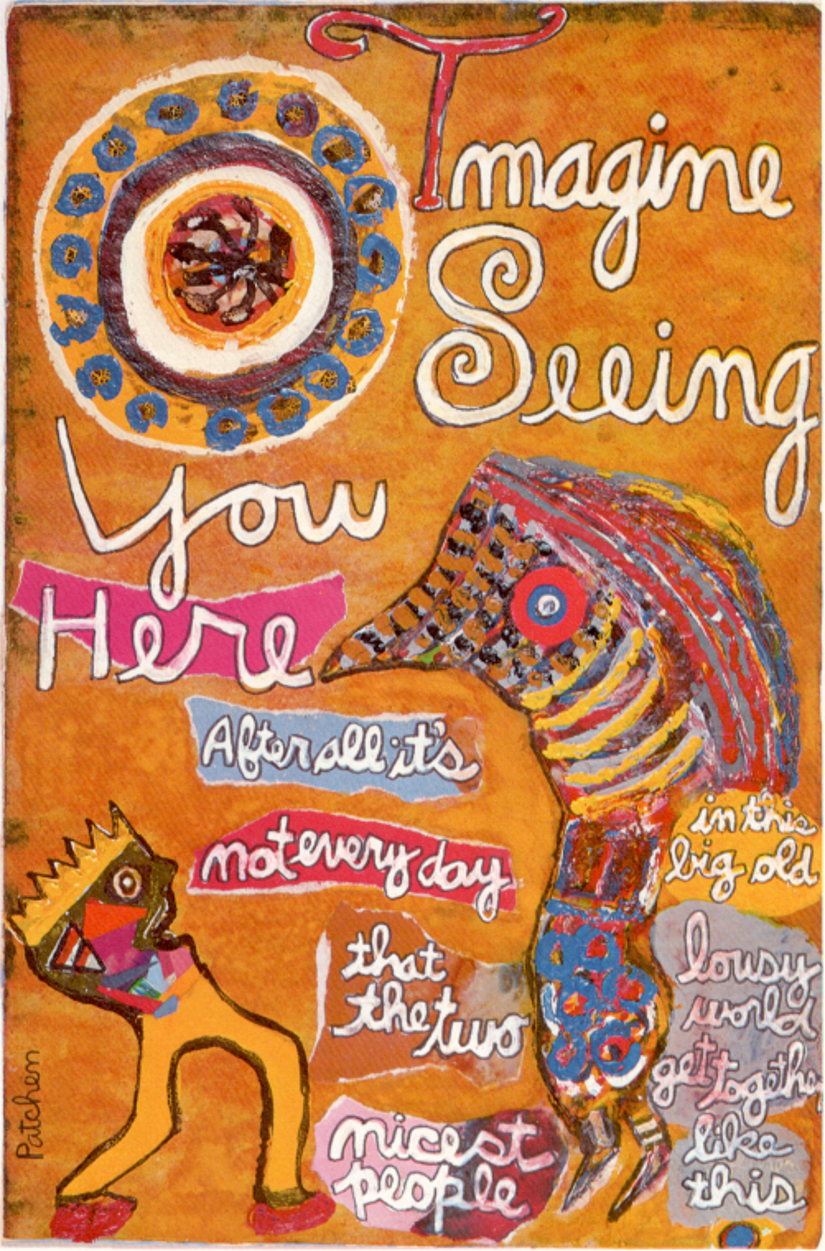
Not anyone’s actual number. Exercise adapted from Janet Burroway’s Imaginative Writing. Image up top is cropped from Kenneth Patchen’s “Imagine Seeing.”

Patchen – Imagine
In “The Argument of Innocence” (1976)

Imagine a rotary phone with 16 digits to range among. A computer dreams in hexadecimal . . .

teaching portfolio

Student work: Found poems

From my students’ found poems (posted with permission). I’m stunned by how good these are. I sense in some a little imitation of the Ashbery I gave as example—but a little imitation’s no sin.


YOU ALWAYS

Every little bone
Lost and found

Some sickness
Coming home
Stretching you

Still I have to wait
Giving you a chance to go on

Source: bits of overheard conversation on local buses.


BUST TALK

Bring it to the boid. Where people do.
Moment of your. Ladies . . . ? Put antlers on my.
Can’t do it without. Don’t want kids.
Girls had to be escorted through the. Tilting it in besides using.
Fairly difficult to. Friends who couldn’t boil.
I can just carry. I lied I said I was.

Sources: the bus, roommates making dinner, the grocery store, a girl talking on the phone in the library, some girls in a parking lot.


(UNTITLED)

My life in the garden. A professional creep.
Measuring mortality. Underestimated desperation.
The God of eggs. Drops hundreds on stupidity.
Leeching souls. Rotting citrus. Raining hedgehogs.
A glottal stop. The crazy’s back.
Can’t trust delusion. In a house of stray cats.

Sources [this list makes a companion poem to the first] [some names changed to preserve anonymity]:

1. Meghan working in our yard
2. Kayla liking to explore attics
3. Liz, population issues
4. Dr. C., on human tendencies
5. Evelyn making snack
6. Me, on calling a lock smith
7. Sam’s dramatic description of a professor
8. Brandin, on the rotting fruit in our fridge
9. Kayla’s friend got a hedgehog, misheard “training hedgehogs”
10. Kayla, it’s a sound in Arabic
11. Meghan, on Arianna’s return to our house
12. Marylin, warning us about Arianna
13. Boston, describing our housemates as kitties.


FOR NEW ZEALAND

For New Zealand and
in Iceland over yonder
a bottle of wine . . . or two
so superficial
off the light like you.

Freaking cute!
My Hawks and future cowboy
perfect comment
so much ass
three times the national rate.

In your prayers, but
years from now
in the dark
a moment at the Texaco
tis the season to fawcking love this.

An Autumnal mood
Monday, like crazy
and outnumbered benefits
yummy Mexican, oh so texty
but fly as shit.

Source: Facebook statuses of friends.


(UNTITLED)

All of us on the road from Scotland to Silverado.
The sound and the fury as I lay dying.
Sex lives of cannibals, basic logic.
Kama Sutra, great expectations.
Two years before the mast. The poisoners. The Italians. The great pyramids.
A tale of two cities. Mumbo jumbo.
To a god unknown. Welcome to the monkey house, beat reader.

Source: a bookshelf.


(UNTITLED)

A dusty room. Deprived of sun.
Melancholy soul. Little sinks.

Against a rule. Being ignored.
The sun to night. To worlds of dark.
Of memories. With setting skies.

The patter of rain. A wound unmended.
Slept through. A candle blown.

Our sorrows in shades. Once a vessel.
And every song. A complicated knot.
About my regret. My every thought.

To never be found.

Source: Love and Misadventure by Lang Leav.


DID YOU HAVE A GOOD DAY?

Letter openers. Cardboard cutouts. Ibuprofen.
Kites everywhere. A nap midday. Chocolate chip oatmeal cookies.
His Hungarian going? Dry erase. Pink computer.

Things that actually kill us. Educated math students.
Happiness shaved off the Neverending Story.
The Hello Kitty blanket tastes like burnt meat.

Sources: The West Wing, overheard conversations at a friend’s house, class lecture.


MESSY PHRASES

Sweet Everlasting Voices. may have Blamed. Word for Word.
left on. Loose Paper. an Aged Man. the Sea swept.
He drew. says the Ghost. live in the Peeling Mansion.
with feeling older. let the Tongue slip. swap our Lies.
They made You. to fear Them. praise this Mess. the Slow Rain.

Source: poems on the Poetry Foundation website.


MEDIA OVERLOAD

Well the situation is
What’s wrong with the kids these
Staying high all the
Let’s forget these tragic
Days long ago

Hello folks
Drugs aren’t the
WRONG ANSWER!
Let’s continue on
With the sex drives of teens

Monsters aren’t
The only thing
Giving these all
Away to fairyland
Drug dealers are too

So in the end
Nothing makes me
HAPPY, HAPPY, FUN TIME
After this tragic
Floods in Florida

Sources: Listening to two or three media devices at once, tablet, desktop computer, phone, each on a different kind of media. E.g., one playing YouTube videos, one with live and old news, one streaming music.


Exercise: Found poem

A writing exercise from our unit on the phrase.

Write a poem made of found phrases. “Found” means you don’t make them up yourself—you see or hear them around you. “Phrase” means more than a single word, less than a full sentence. Choose one kind of source to take your materials from. A few possibilities:

  • bits of overheard (or misheard) conversation
  • first phrases of poems in an anthology
  • phrases seen in print ads (magazines, posters, billboards)

Avoid song titles and song lyrics—they tend to be clichéd and to make clichéd poems. Find a source that offers bits of language you feel eager to mess around with.

It’s okay to make small changes (e.g., removing a verb to turn a sentence into a phrase, or changing verb tense to make two phrases line up) but avoid introducing any words of your own.

You may not be able to make the sort of sense you wish to. Let the material lead and you follow. Instead of worrying about making sense—focus on setting up resonances.

An example, from John Ashbery’s “Title Search” (though not in fact a found poem it reads like one):

The Little Red Church. The Hotel District.
I’ll Eat a Mexican. The Heritage of Froth.
The Trojan Comedy. Water to the Fountain. Memoirs of a Hermit Crab.
The Ostrich Succession. Exit Pursued by a Turkey.
In the Pound. The Artist’s Life. On the Beautiful Blue Danube.
Less Is Roar. The Bicyclist. The Father.

(Most of these are phrases. Which ones aren’t?)

Creeley’s Pieces

Had a brief (5 min) but good (very) discussion in my afternoon section of this bit from Robert Creeley’s Pieces.

Cup.
Bowl.
Saucer.
Full.

We’d talked about integrity of the line, its wholeness, and I asked whether these lines, short as they are, felt complete. Do they offer an experience that satisfies and then releases you to the next experience. I expected great resistance but they so got it.

One saw a telegraphic narrative of breakfast (cereal and coffee). Another one of lunch (a cup or a bowl of soup). Another saw a formal patterning that reminded him of the buildup and falling off of a short story (three letters, four letters, six letters—over two syllables!—then down to four).

And all of the resonances metonymic. A poetry of everydayness.


I can’t hear pieces as not also peaces.

As in, the mind of pieces, is a mind of peaces.

Very different from our sense of “going to pieces,” falling apart, fragmenting, disintegrating. Here, rather, that any part, however wayward, however bereft or stranded, is its own whole.


My old teacher, Daido Roshi, said to us often, You’re perfect and complete, just as you are. He was no softy, he was a dragon, but he said that. I remember one sesshin (meditation intensive) when I was in a hard way, I went in for dokusan (face-to-face teaching) and blurted out, tearstreaky and snotfaced, Perfect and complete under all the conditioning (dumb learned damage we carry), or perfect and complete with all the conditioning? With he said and rang the bell. Creeley’s Pieces brings me back to that.


A beautiful thought of Thich Nhat Hanh. There is no way to peace, peace is the way. Do I harm it, and I hope not, by this variance, there’s no such as peace, there are only peaces.

Creeley had no patience for any zen bs or so I’ve heard. And yet the most dharmic poet I know. Here’s his take on Dogen’s “body and mind falling away”:

Here here
here. Here.

And here, the myriad ways of seeing water, Dogen says different modes of being have:

The bird
flies
out the
window. She
flies.

     .

The bird flies
out the
window. She
flies.
     .

The bird
flies. She
flies.

A variance, for sure, on Williams’s old woman, those plums.


A cup, a bowl, a saucer, all full, not in the sense of bearing up some matter, though they might that also, but in themselves, present, there.

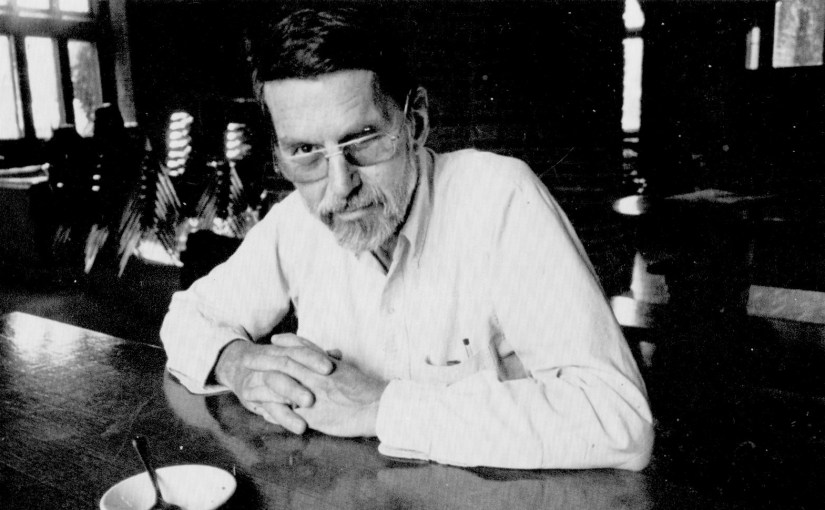
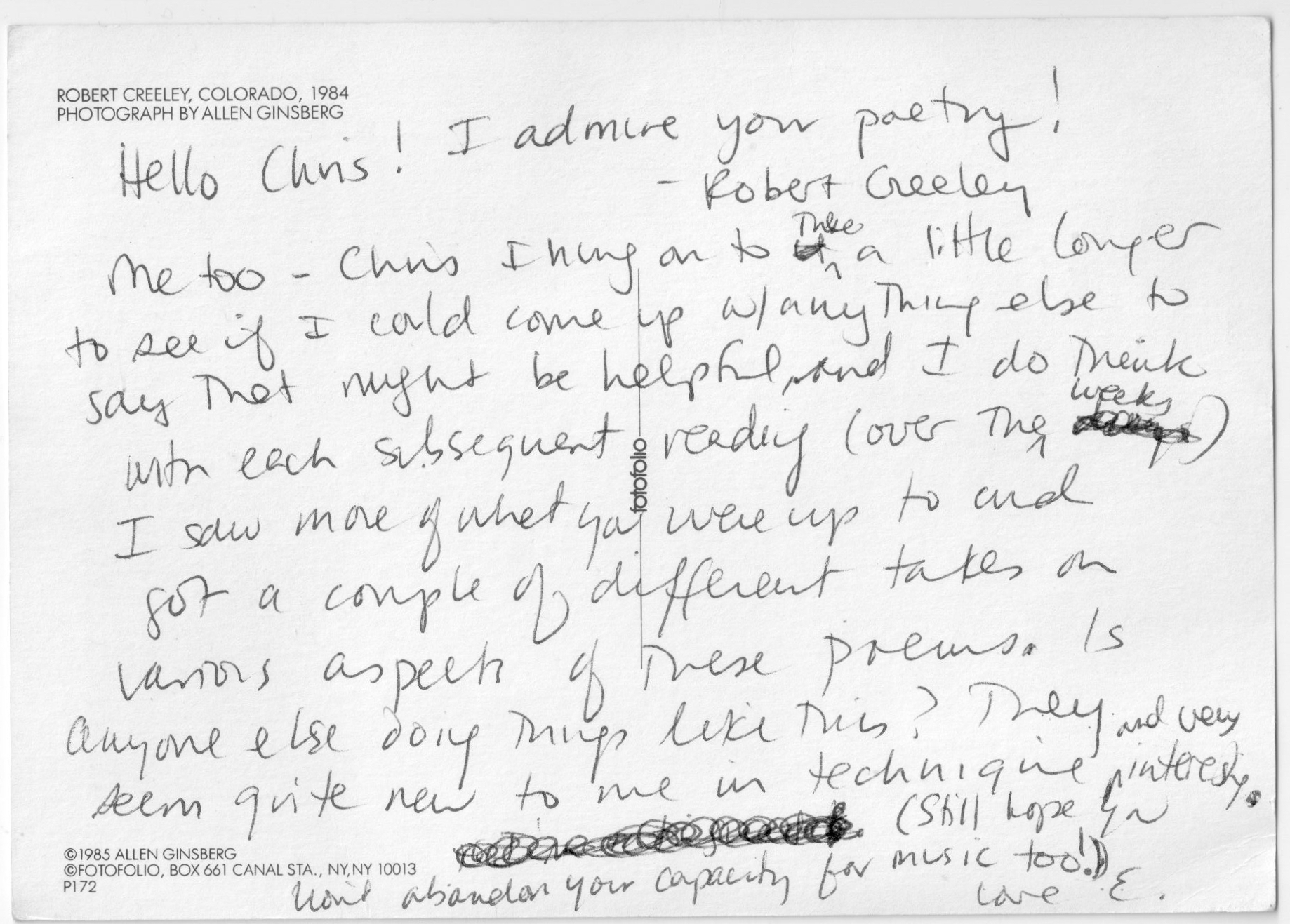
The image up top is a postcard of a photo taken by Allen Ginsberg sent to me by Elise Partridge after she’d turned her own clear quizzical eye to some poems of mine. In its entireties:

teaching portfolio

Exercise: Exquisite Corpse (variant)

A variation on the well known Exquisite Corpse exercise dreamed up by the Surrealists. Begin with the words “I went down the stairs and around.” Each contributor only sees the words written by their immediate neighbour. Each contribution is to

  • finish the previous phrase
  • begin a new phrase (not a clause)
  • keep the sentence going (no periods)

Some were shaky on the phrase/clause distinction, so we didn’t quite get to the octopus (one clause from which innumerable phrases hang) of my dreams. But here’s one we wrote (apologies to my other section, that one got lost):

I went down the stairs and around the bend, then down the womping willow they scoured in their boots and in a moment that was tense, they almost were caught so they pretended to be in the circus with a group of cowboys and cowgirls that learned to lasso these silly bulls that stampeded from the mountain shaped like a monkey’s head which made many bystanders turn their heads and fall to the ground laughing so hard their stomach had an out of body experience while digesting the chili from the diner on the corner of Wall and Broadway, it steamed as though 3 men touched each others’ swords together in a loving embrace that ended in the joining of four souls which ultimately began edging towards the end of bombs and explosions.

Word. Or, phrase. (As in, that’s the unit we were on.)

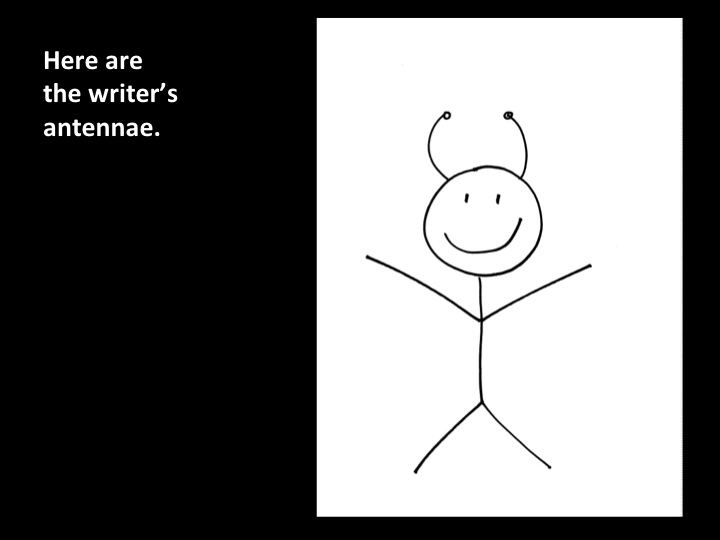
The writer’s antennae

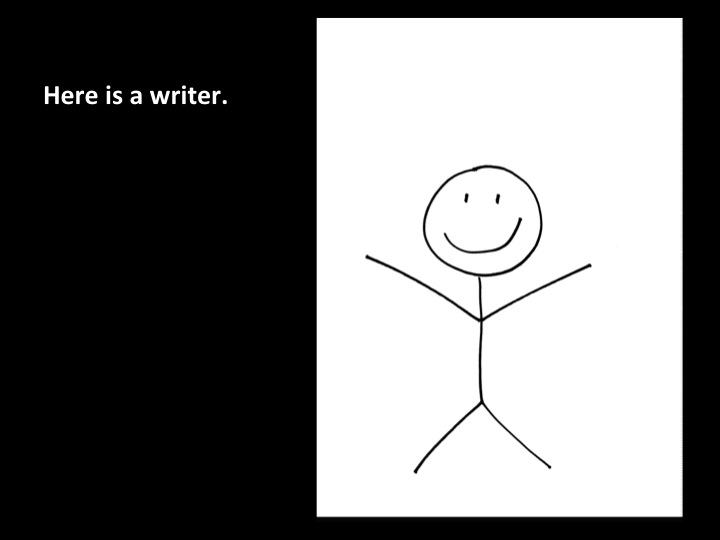
Early in the quarter I draw a stick figure on the board.

Slide1

And here, I say, are the writer’s most important tools.

Slide2

Your antennae are how you pay moment-to-moment attention to the texture of your own felt experience. The good news? Everyone in this room has antennae. (They’re not so sure it’s good news.)

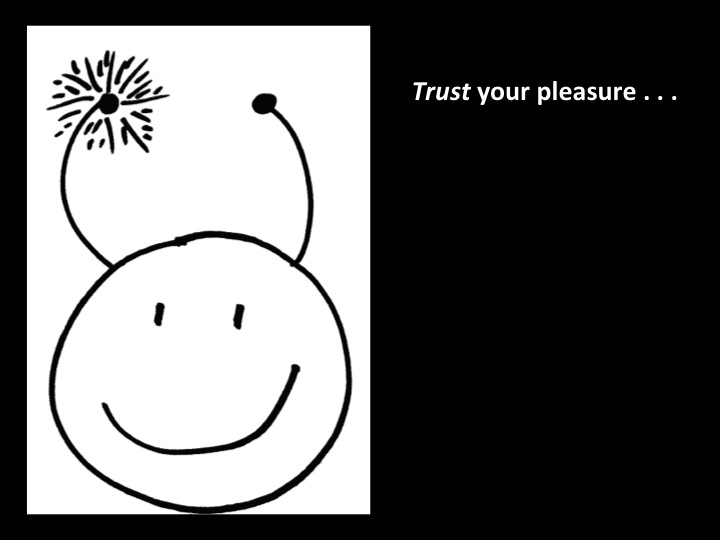
Everyone has them. But a lot of student writers don’t know they have them. Or they know but they don’t trust them. Or they would trust them but they have trouble hearing the signals.

And so one theme of the weeks to come is,

Slide3

it’s good guidance. Excitement, curiosity, expansion. Another,

Slide4

it’s just as intelligent as your pleasure is. Dismay, contraction, anger. You might not think so but it’s as great a gift.

And then I put them to work, noticing spots, in something they wrote for that day, where they feel noticeably excited or bored. Because that’s how the signals register. Not as good ideas but as immediate spontaneous intuitive perceptions.


POSTSCRIPT. Notes drawn from a presentation last spring for a panel called “Poems of Ours We Hate.” Hope, when I have time, to post the whole powerpoint thang, with animations! voice-over! For now just its title — “Dismay. Erasure. Monsterface.”

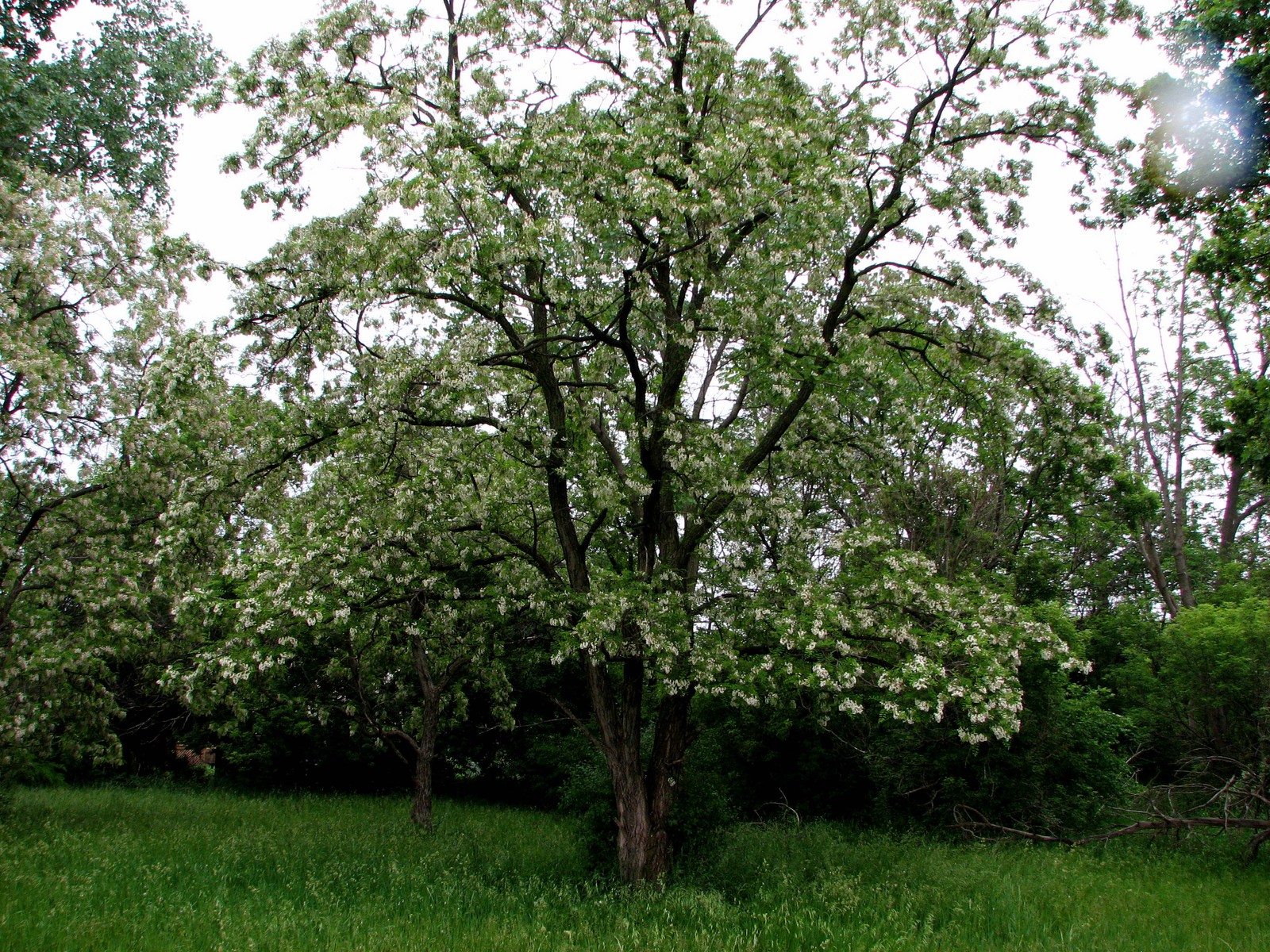
Two locust trees

To broaden our discussion of parts of speech, their places and powers, we read two versions of a poem by William Carlos Williams, “The Locust Tree in Flower.” One goes this way.

Among
the leaves
bright

green
of wrist-thick
tree

and old
stiff broken
branch

ferncool
swaying
loosely strung —

come May
again
white blossom

clusters
hide
to spill

their sweets
almost
unnoticed

down
and quickly
fall

A very pretty poem about a pretty old tree. A lovely coined word, “ferncool,” whose extravagance only starts to look off in the light of the renunciations of the later version. Which goes this way.

Among
of
green

stiff
old
bright

broken
branch
come

white
sweet
May

again

This poem never fails to stun me. Ten Thirteen words on ten thirteen lines. (Oops. One line short of a sonnet.) All but three are monosyllables. The thing’s almost entirely empty. And out of that great narrow strait the poem blossoms endlessly.

And not a metaphor to be found here. All the power comes from metonymic resonance and a powerful torque applied to syntax.

For instance the strange construction

Among
of
green

How can we be both among and of? Among means in the midst of but distinct from. Of means belonging to and identified with.

Are we thrown to a green we remain apart from? Or do we belong to a green we can’t get out of? Spring is the swell and swirl of the new it is and does. And so the poem dizzies, endizzes, lucky us.

Master Dogen said to his monks:

When you paint spring, don’t paint willows, plums, peaches, or apricots — just paint spring. Painting willows, plums, peaches, or apricots is painting willows, plums, peaches, or apricots. It’s not yet painting spring.

The longer poem paints a pretty picture of a locust tree. The shorter invites us to be spring in the tree.

These thoughts, by the way, formed in collaboration with my students, who saw deep and well into this one.


POSTSCRIPT. Want a master class in revision? Track how the first version becomes the second. What words go, what words stay, how the words that stay drift into new places. The depth of the letting go here is astonishing. Nothing less than total.


Black Locust

teaching portfolio

Exercise: A paragraph

The prompt:

Write a paragraph, on any subject, in any genre. One restriction: every word has to begin with the letter A.

Once the groans have settled down they get to work. After a few minutes I give them a break and we compile some word lists.

Nouns: aardvark, atom, alien, Amy, Ahmed, alligator …

Verbs: assert, affirm, anger, angle, aim, am, are …

Adjectives, adverbs …

Prepositions: about, after, at, above

Conjunctions: and, although

Articles: a, an

Some material to work with. And you wouldn’t believe the things Andy Aardvark gets up to as amorous aliens advance assertively.

A silly prompt I remembered from a high school English class. And a not too bad entry to parts of speech.

Word.

We had a good chat, our first class on the word, about parts of speech and their different powers. I laid a trap by asking, Which part of speech has the most bang for the buck? Adjectives, I was waiting to hear, adverbs. They didn’t fall for it. Verbs, they said, nouns. Yup.

Acts and actors are the meat of it. Things and what they do. Acts and the things they act through. (That one is easy to say, one a bit contorted, says something about the bias of our language.)

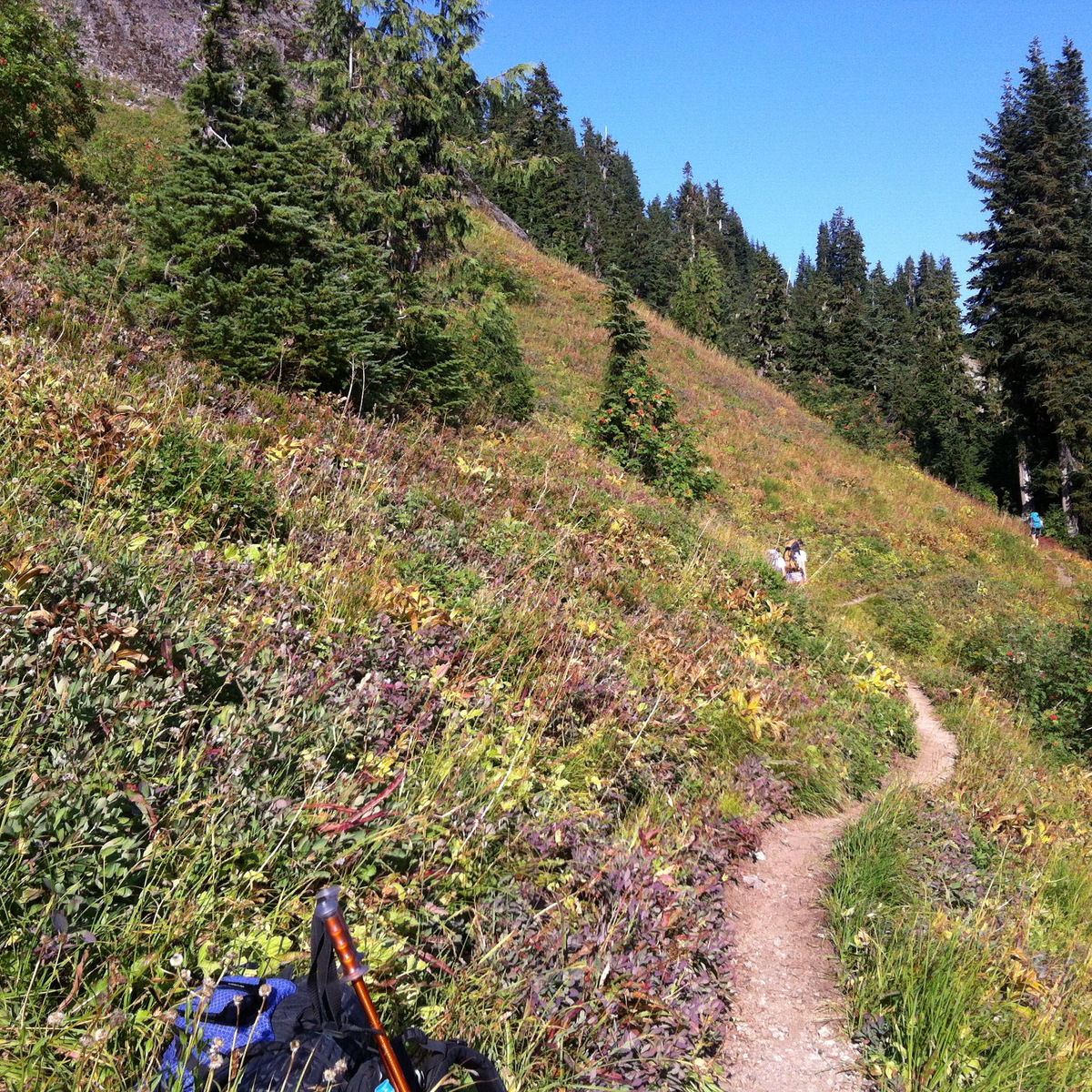
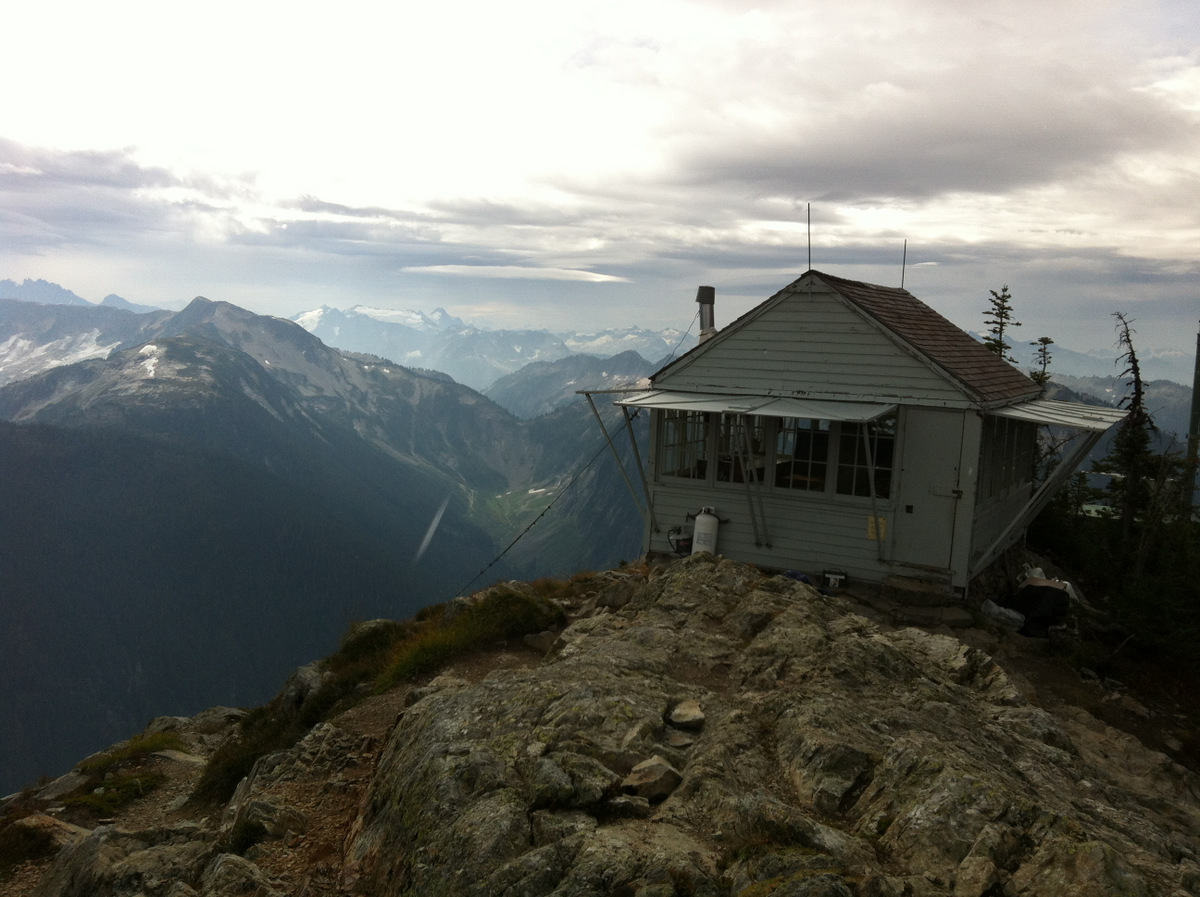
But I was headed for the lowly preposition. To get there I told a story. I had been backpacking a couple weeks earlier in the North Cascades. The first day we were sunriddled.

IMG_0337

The next day some clouds came in.

IMG_0378

Through the afternoon they kept on coming.

IMG_0379

The two peaks are Shuksan and Baker. It was spitting rain by the time we set up camp 4000 feet lower by the Chilliwack River.

All the next day was rain. Sorry no pictures. Had to keep moving. We climbed back into the subalpine and set up camp in the pouring rain.

And there we were, huddled under a little tarp stretched between two mountain hemlocks, soaked to the bone, heating water for our freeze-dried soup. And I thought to myself

I’m under a tarp, but it’s raining on me.

And it struck me how much I would give to be able to say instead

It’s raining near me.

Small little word. Big huge diff. And then I thought, pissily,

It’s raining at me.

And thus was a lesson plan born.

We (I’m back in the classroom now) sounded out the changes. What other prepositions can we sub in? How does that one change change the meaning, the feeling?

It’s raining in me (metaphor for sad)

It’s raining for me (God complex)

It’s raining above me (virga)

It’s raining through me (a diffuse or dissolved body)

It’s raining from me (God complex squared)

The nouns and verbs stay the same. The pronouns stay the same. Only the lowly preposition changes. And yet with each change the whole carnival picks up stakes and shifts in a flash to a different world. The word for it is proprioceptive. I take the word from Olson and the image from Dickinson.

I’ve known a Heaven, like a Tent
To wrap its shining Yards
Pluck up its stakes, and disappear
Without the sound of Boards
Or Rip of Nail—Or Carpenter
But just the miles of Stare
That signalize a Show’s Retreat
In North America

No Trace—no Figment of the Thing
That dazzled, Yesterday
No Ring—no Marvel
Men, and Feats
Dissolved as utterly
As Bird’s far Navigation
Discloses just a Hue
A plash of Oars, a Gaiety
Then swallowed up, of View

Check out those nouns, those verbs, those preps. (I count one adjective.) And the feel of being in a mountainous vastness she can never have seen with her physical eye.