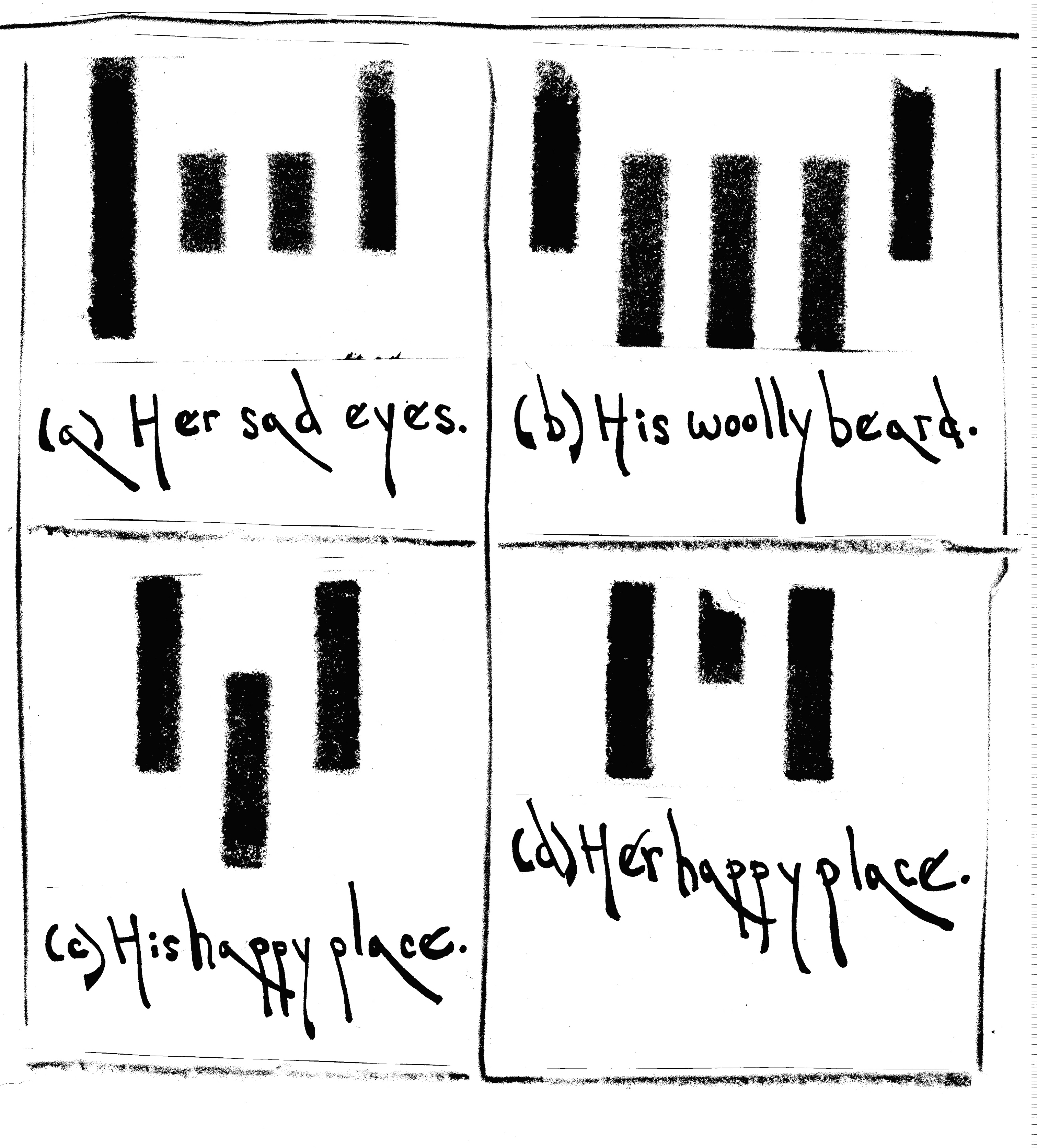
Exercise – Inscription

The second exercise to my visual poetry group. Who keep doing wonderfully – our conversations together, their serious play, astound me. I wish I had leisure to write how much fun it was to talk with them today about Grenier’s Sentences and Cage’s 4:33 and Olson’s “high-energy construct” and Duchamp’s readymades.

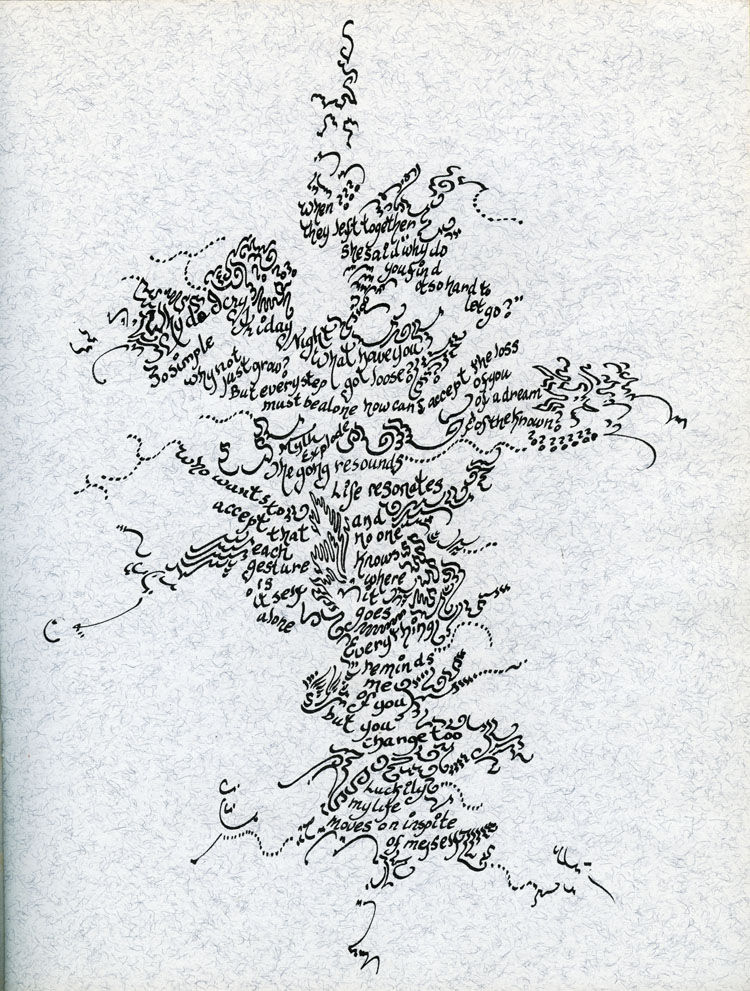
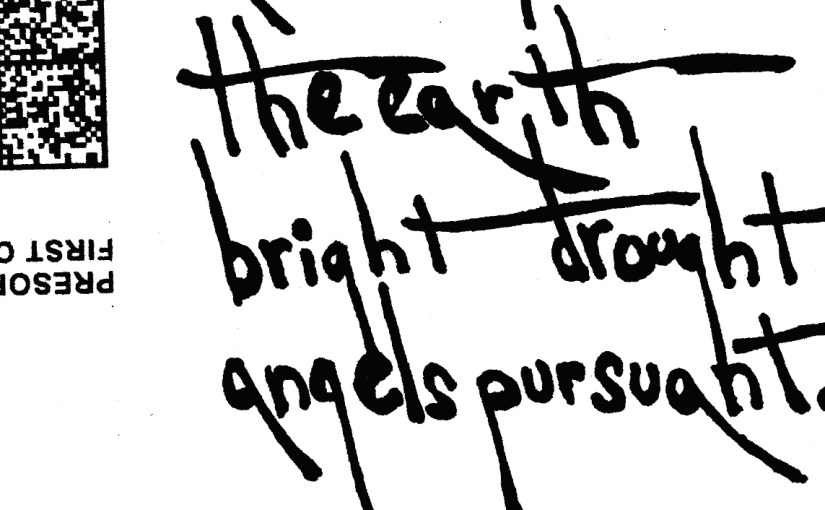
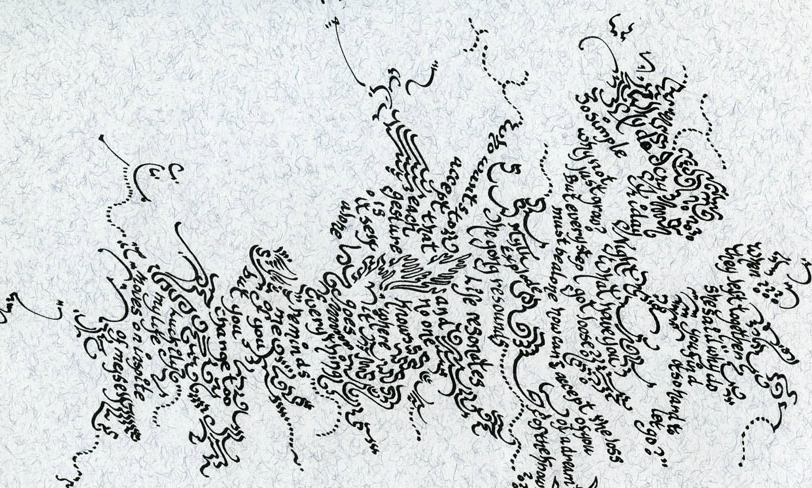
Back. On. Track. An exercise cued by Judith Copithorne’s Runes, rather more obscure than A Humument, but very delicious, and in its way more luscious, an investigation of the threshold where grapheme becomes idly wandering line.

The prompt. Write a poem by hand in which the character of the writing is central to the experience of the poem.

Pointers. Again, by all means, take Copithorne as your model, but avoid slavish imitation. You might start by exploring ways of stylizing your usual handwriting. What happens when the cross-strokes on your t’s, the loops on your g’s, are allowed to run riot?

I’ll post a few of their soon. Till then, a bit from Copithorne (what, BTW, a lovely Norsish name).

Copithorne

Full text of her Runes and some others on UbuWeb.

Erasure and treatment

Started looking round, wondering where to start a post on my own efforts in erasure and treatment, creative demolition and reformation of a source text – a loving demolition, a savage reformation. I sure am not going to subject you, nor endure myself, some blow by blow account of my misadventures. But it was interesting to see where I got started. I’d forgotten.

Salt Lake City circa 2010 and I’m finishing my diss. I’ve read into the shining spaces in Johnson’s Radi Os and been blindsided by the Blakean rainbows of Phillips’s A Humument. I’ve a stash of found matter (NYT clippings) ten years after a day I’ve not been able to write of to around or about. And I understand, post-Bervin, erasure’s growing old, as too 9/11 and poems about 9/11 have some time since grown old. Understand as well my sense of old and the currency of old are not maybe typical of the avant-garde I maybe or maybe not aspire to keep company with.

Well anyhoo. Our discourse around 9/11 seemed censorious in all sorts of ways. Repression that made it seem past in ways it was present and present in ways it was past. Repression with political beginnings and a mercantile middle and self-preening ends. And with black bars I could maybe indict the targets both obvious (war crimes of the Bush admin) and subtle (oh come let’s say it liberal friends we can be sanctimonious). Also black bars seemed easy to make even for such graphically mega-challenged as I.

So I went there with the redactors and they there with me. Made a few heaps of found material and did a selection thing derived a bit from Johnson a bit from Phillips and a bit from Bervin.

OrderI never ended up publishing these in any version or trying very hard to. A good friend, one I showed them to early on, was upset by them, and she’s a New Yorker, and that she was offended, though I didn’t get it then, I took serious, and thought best to move on. So maybe Sal you saved me from something stupid. Where Sal by the way ARE you?

WodeAnd well now I do get it. Seems kinda obvious now. Sal I didn’t mean to silence the voices of the victims. I meant that the voices of the victims had been silenced. But yeah thanks for saving me from my stupid. Still though where ARE you?

SillsPretty crude, yes? compared to what my students have been up to. Gonna skip a bunch of steps in my own progress to get to where I’m about at now. That’s the next post.

And then, after that, because onward is always, their next adventure – handwriting. The inscribed line, thick or thin, mischief or dutiful, studied or fleeting, how it expresses a moment of spirit, before and in language.

Teaching note

Wrestling a bit with the question, in my visual poetry course, whether and how to involve my own creative efforts. My thought has always been, a teacher should keep his work to his own damn self, none of that preening, thanks much to yehs. And yet I’m a living working maker and maybe that could be of help to my students. Esp. since almost every prompt I give them emerges from some struggle I’ve found myself in and found a way at least partway through. Abnegation of ego is more ego.

(Too, I’ve already stretched the envelope, posting their work on this blog. All kinds of sound reasons not to do such a thing. And the effects seem to have been good, benign, affirming, from the signs I’ve been given to see.)

So well my thought is to post, among the prompts I give my students, and some of the works they do in response, a few of my own efforts, recent or distant, with maybe a few comments. Maybe they’ll come see them maybe no.

E.g., recently posted a treated page exercise, soon will post a few of their lovely answers, and might be – helpful?? amusing? cause for benign condescending laughter 106 years hence among as yet unmade inhabitants of star system X93 in galaxy P1945Q? – watch that self-abnegation engine whirr into action – for me to post as well some of my efforts on the same terrain. And so I think I will.

I was cleaning the house, sorting papers, and the itch came to post to my blog, and so here we are.

The treated page I will write about when and if I do:

Laces

(That took me, guys, so you know, months. More, more than a decade, if you go back to the date of the source text – a dream I had of wandering as a child at ease in a marketplace.)

They are such a kind group. I was observed by a tenured colleague on Tuesday, no reason to be nervous, but of course I was, and they did beautifully, bore me up wonderfully, just by being themselves. Mean to tell them tomorrow how grateful I am.

all things bear one up
robins in the high meadow

Dumuzi at an end

I finished Dumuzi this morning. There are tweaks to come, but he’s ready to start going out, muddy face sheepish grin and all.

The first poem in the book is

At Leaf

A son of my
first mind, was
at leaf, wind on
raw skin, fist
of one thirst
upthrust.
                      Roars
snowmelt where
hemlocks over-
hanging shiver
motherlove.
                             Sur-
round of what
no one had
made, made
of what no
surround
had.

The title poem is

Dumuzi

Let no state be
enemy. Wet, dry, agon.
Work an inmost first
flower mutedly.

Wind blows light about
the life (hemlocks) from
which art is not apart

nor of a part. What a
rock thought to do
was rain and it
rained.

Deer come
out of th
hill.

The oldest lines date back to Nov. 1999. A conversation I mis-overheard on the M.V. Quinsam, a ferry plying the route from Gabriola, an island pinched between Vancouver Island and the BC mainland, where I lived in a summer cottage in the off-season

—they thought they had it all but they didn’t
—oh, once you have that you don’t get rid of it
—Monday she goes, an ontologist,
                     that’s the specialist

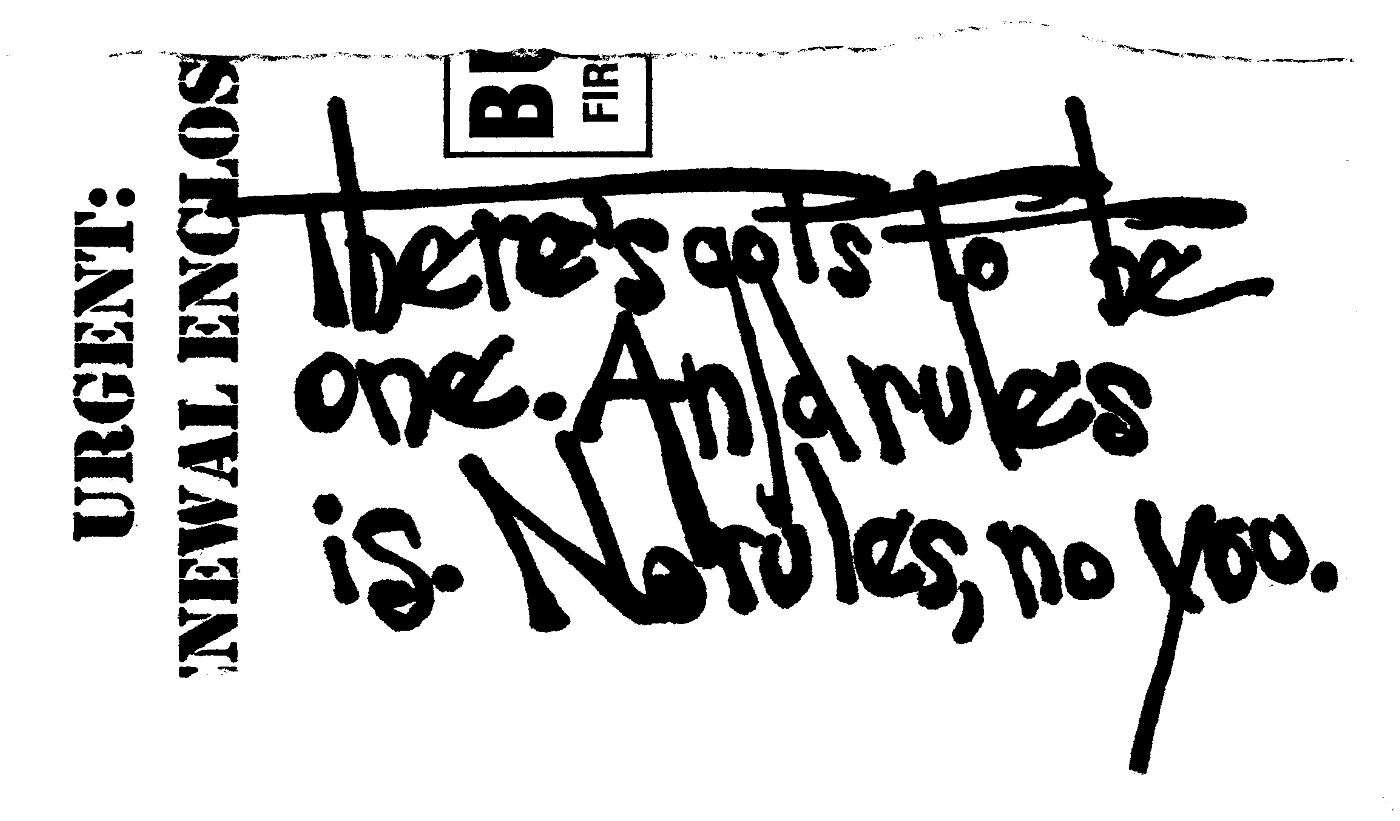
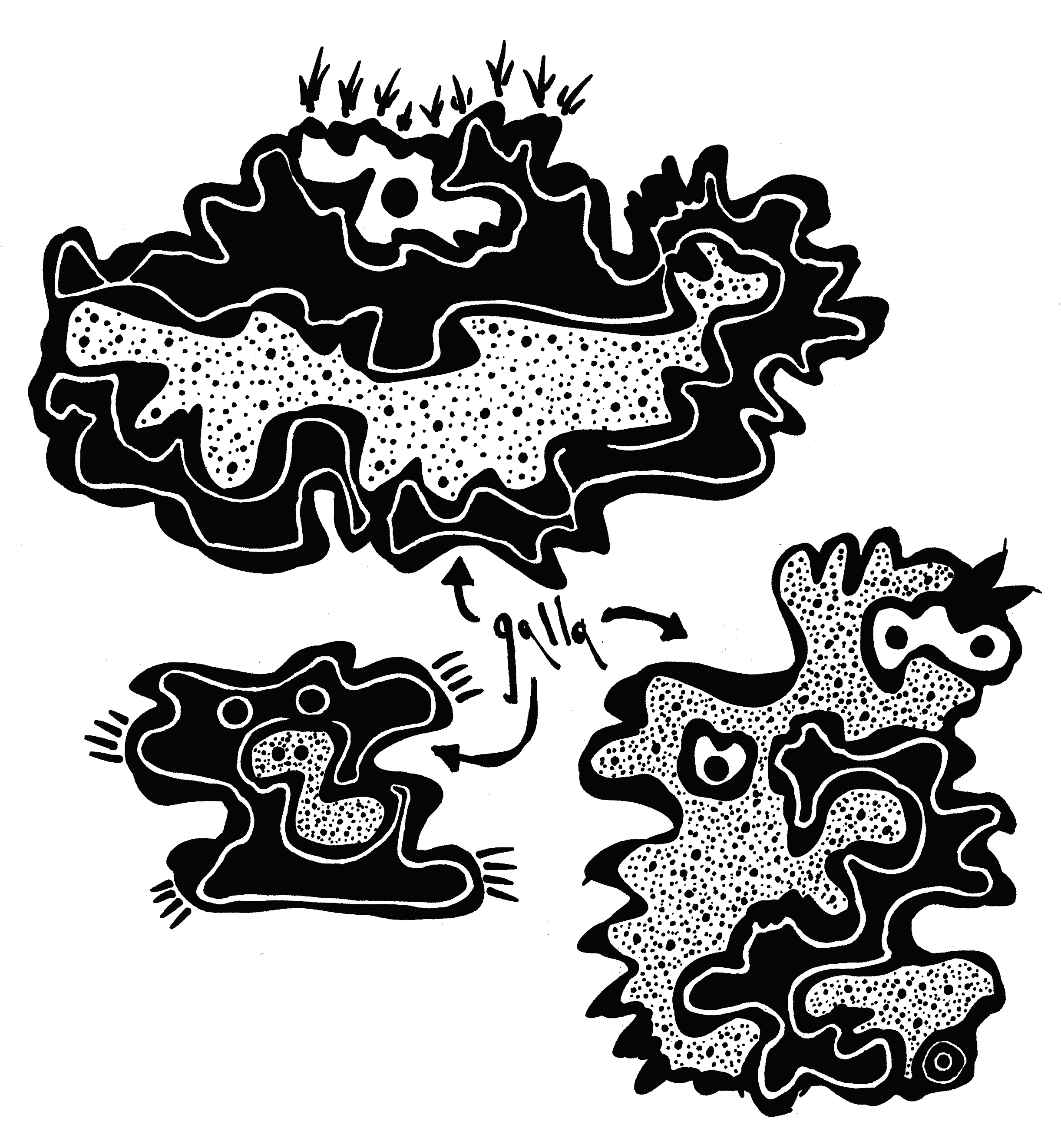
The newest lines date back to last night. An uptight but not incorrect galla reminds Inanna of the terms of her release from the underworld.There's gots The last poem in the book is elegy.

paperwhites

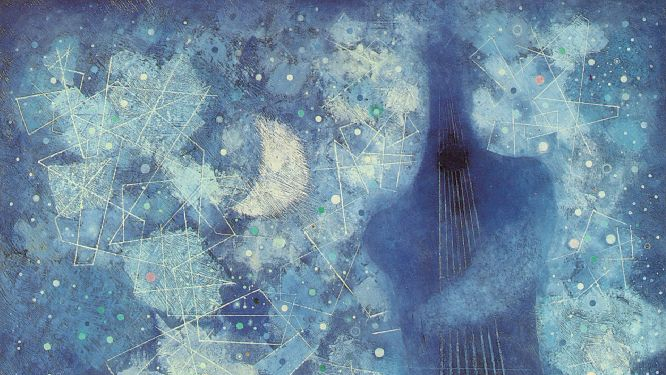
And the image atop is Tammuz by Ardon Mordecai. Sent me years ago by fellow poet and University of Utah alum Timothy O’Keefe. Thank you Tim. I aspire to it as a cover.

And now it’s time to start catching up on what seem years, though are just days, of dishes, laundry, bills. Oh and I believe I have two new courses to teach starting Tuesday. (Really I’m about to start compiling a list of contest deadlines and open reading periods . . . ) Thanks, all, for the kindness of your words, those who have sent some, or of your attending upon these words, which somehow I have felt you doing, I have, and it sustains me, it does.

Interstellar addendum

Near the end of Interstellar there’s a bit I find transcendent (when I picture it) and really kinda cheesy (when I think about it). Though in another galaxy and at the heart of a black hole qui s’appelle Gargantua our hero finds himself in his daughter’s bedroom behind the bookshelf.

A bedroom a bit altered. Imagine turning the book in your hands inside out and finding it contained a tesselated library. A still –

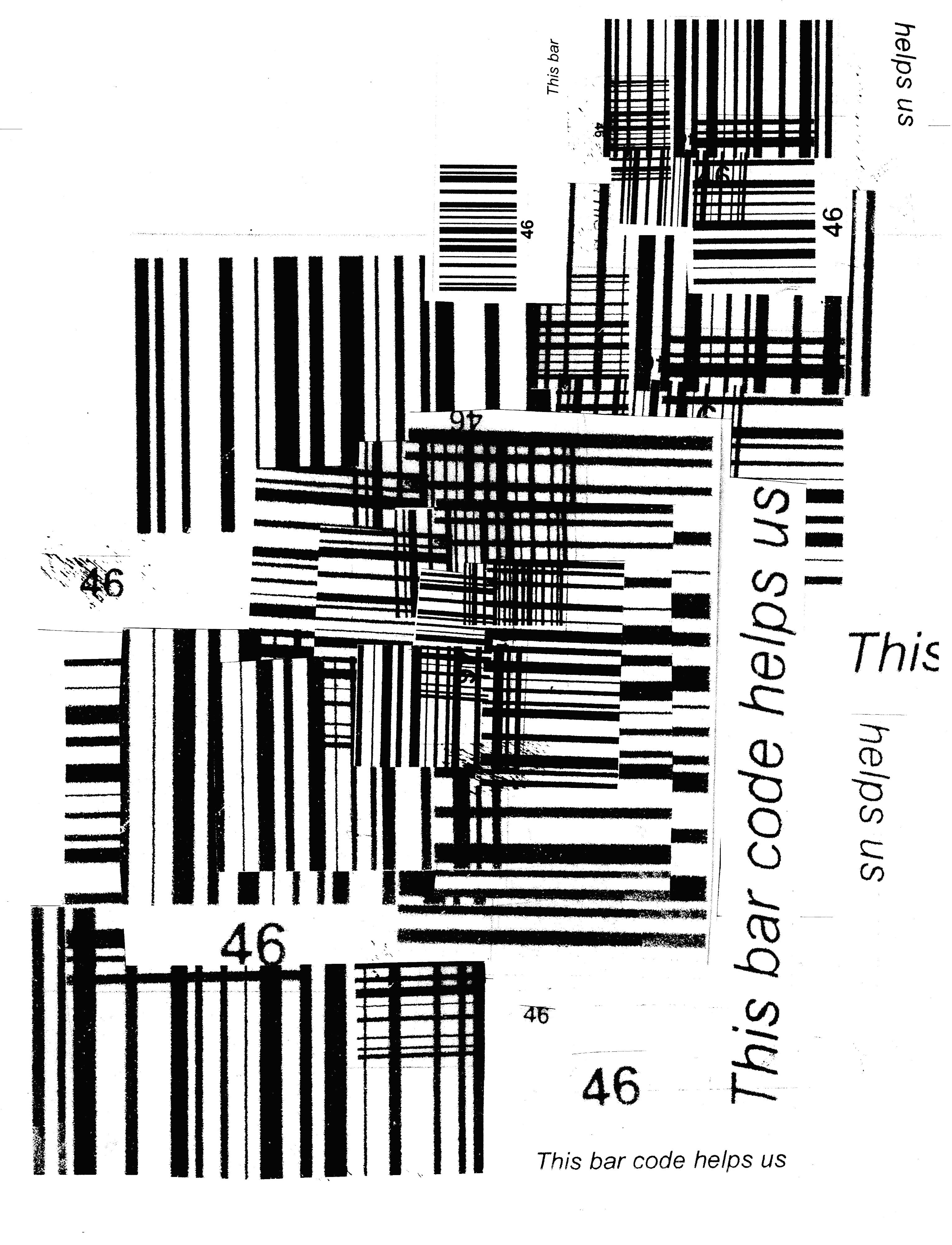
interstellarBig debt to Borges, yes, but the visual feels alive to me. And apparently it sunk in to where I could thieve from it. A bit after first seeing the movie, with no sense of debt to anyone or thing, I made this one out of bar codes, for the death and dragging under of Dumuzi –

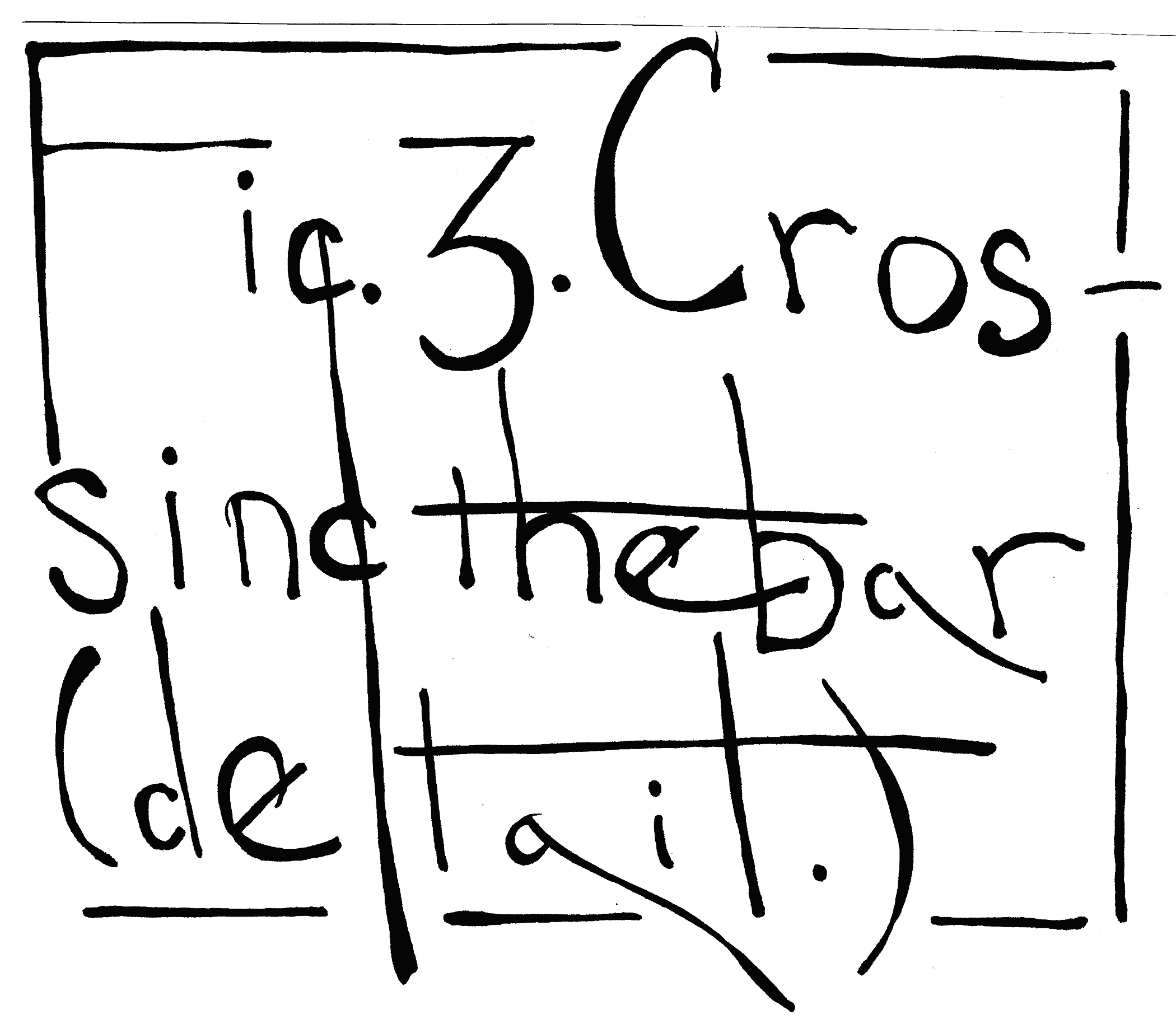
Crossing bar (detail) - figThe debt I was aware of was to Tennyson’s “Crossing the Bar,” a poem I don’t much like, but I had in mind the recent passing of a favourite English teacher, in whose company I first met the poem. And so called it,

Crossing bar (detail) - titleAnyway, all this is to say, debts to others are so many, truly new thoughts so vanishingly few. Oh Ezra. Make it new – if it isn’t already altogether new, how could I, you, we, they, make it be.


P.S. The slantwise rough strokes are bits of woodgrain from my desk picked up by scotch tape splayed there. I want to write, soon soon, about woodgrain and accident, Martians Jack Spicer and Stephen Burt, and proprioception, but the moment is not quite yet – not quite yet – .


P.P.S. The bar code is from if I remember aright the paper that came long with my flu shot. And my dismemberment of it my vengeance upon it b/c it protected me not one whit, not one.

Now goth Inanna under wode

There’s an old quatrain from out the middle ages I first met as epigraph to Robert Hass’s Sun Under Wood.

Now goth sonne under wode —
Me reweth, Marie, thi faire rode.
Now goth sonne under tre —
Me reweth, Marie, thi sonne and thee.

A book and a poet that’ve always resounded for me for how tenderly they assay the harms to which the mother-son bond is prone. Terrain I work in too as uncrampedly as I can.


What sat me down to write though were a father and a daughter. Watched Interstellar a second time last night and was moved (again) by all it did well and dismayed (again) at all it did poorly. And what I felt most (again) wasn’t the admittedly spectacular black hole wrung with light, or the rungs of sooty frozen clouds the astronauts clamber among, but the intimate distance of father and daughter the astonishing otherness of those sights makes visual.

It kinda broke me. I suddenly got I’m almost for sure not going to have that in my life. I’m a bit too broken to have a kid or have taken a bit too long to get me whole enough to do it. I’d probably do okay at it now but the window’s closing or closed.

A bit later the okay-voices came to say there’s plenty else to make a life meaningful, and they’re right, but for a bit it broke me.


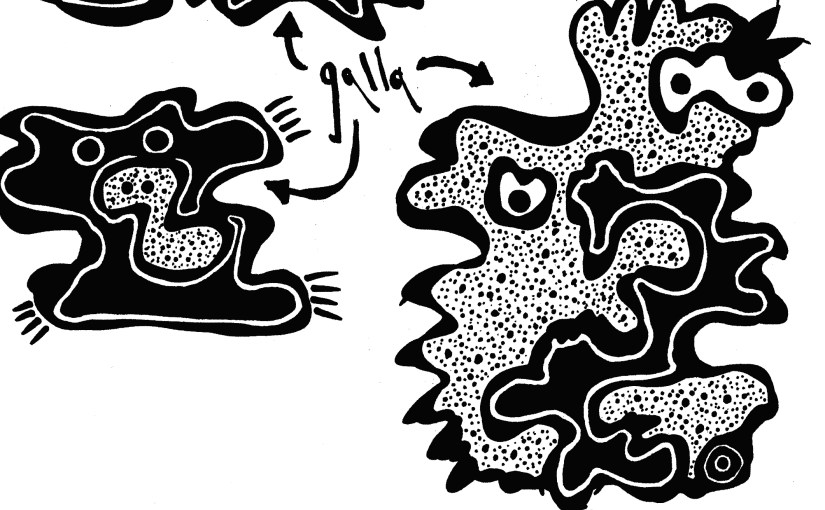
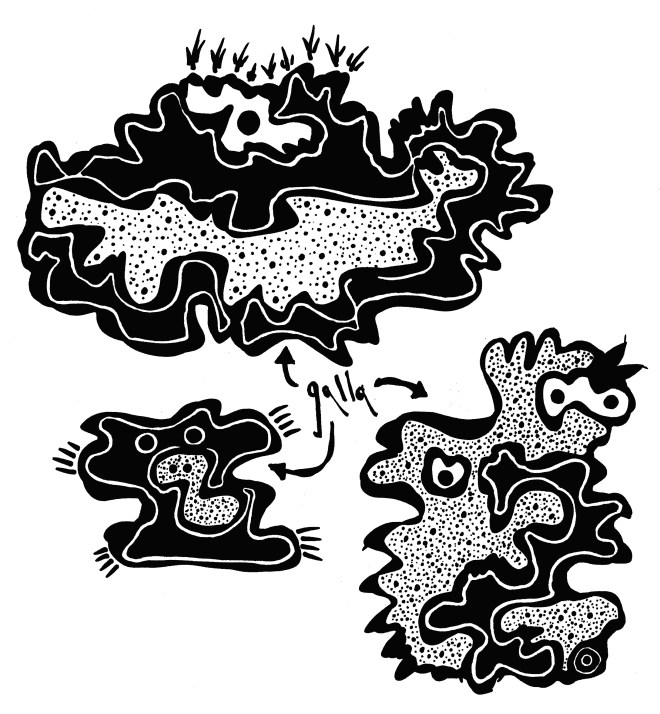
You see why I go to junk mail. It gets dark fast around here sometimes. A few galla for you — one’s trying to hide behind a bit of beachwrack. (Goeth galla under driftwood.)At Troy

If I’m more open here than I’ve been, I thank Hass a little, my students a lot, who’ve braved to write about trials and disorders known by name but not plumbed for real in the halls of DSM V. To write and make beautiful and indeed sublime sentences out of. (Therapy prose: the more honest it is the more you cringe. Transformative prose: the more honest the more you soar.)

I do have to say, a joy of teaching is, the wish in me to father is met, not as it would be by a child, I know, but still, it is, and meaningfully. That’s for a different post — maybe a different blog — but it’s probably the most meaningful thing about teaching for me, equalled maybe only by the creative incitement the most happy arrangements have had to offer me.

Thought on the way to the grocery store yesterday evening: if at the end of my life I’ve touched more people as a teacher than as a poet, that’ll be okay, I guess.


So, Inanna goth under wode, and I’ve had to go with her, goddammher. No point putting it off, let’s get this road trip started.
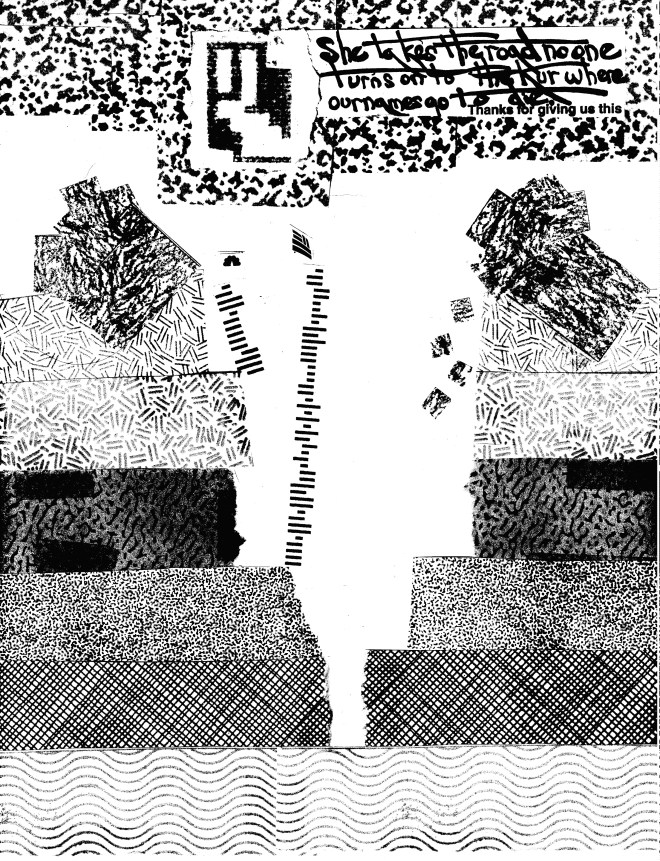
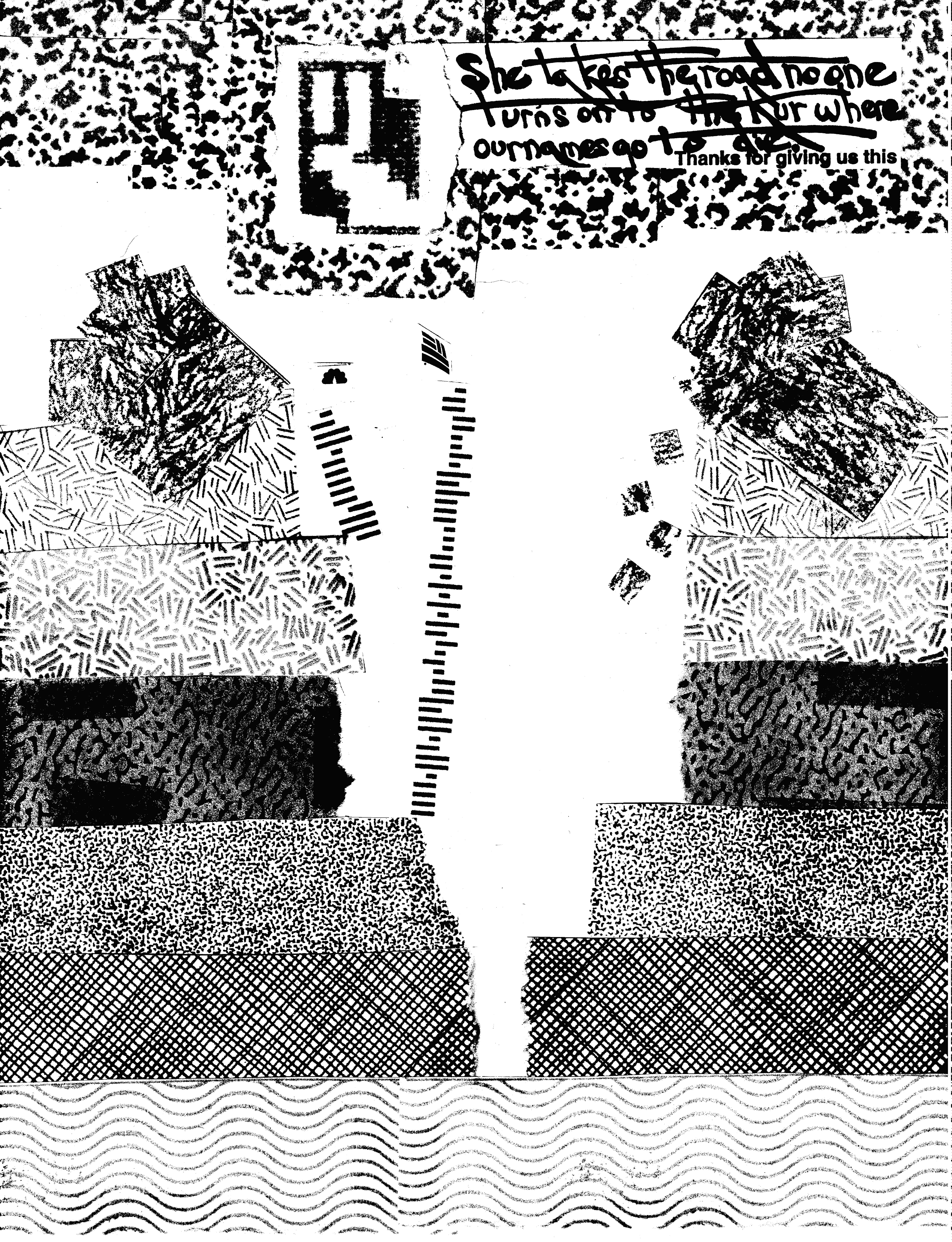
She takes

The text’s a bit hard to read (working on that) so —

She takes the road no one turns on to the kur where our names go to die.

The kur is the Sumerian underworld — ruled by her sad sister Ereshkigal. Her snazzy feather is the Bank of America logo. The terrain she and her trusty friend navigate at some peril is a treacherous assemblage of security envelope linings.

From a later (Akkadian) text, “The Descent of Ishtar to the Nether World” (just for funs):

To the Land of no Return, the realm of [Ereshkigal],
Ishtar, the daughter of Sin, [set] her mind.
Yea, the daughter of Sin set [her] mind
To the dark house, the abode of Irkal[la],
To the house from which none leave who have entered it,
To the road from which there is no way back,
To the house wherein the entrants are bereft of li[ght],
Where dust is their fare and clay their food …

Don’t make too much of the pun on Sin. But think about it — a road you can only go one way on. Really, there’s no such thing as a one-way street, you can always go the other way when no one’s looking. Anyway, this passage has always been striking to me, for how through its stiffness it still haunts and shudders.


In my version anyway Inanna grows smaller as the scope of her task dawns on her.

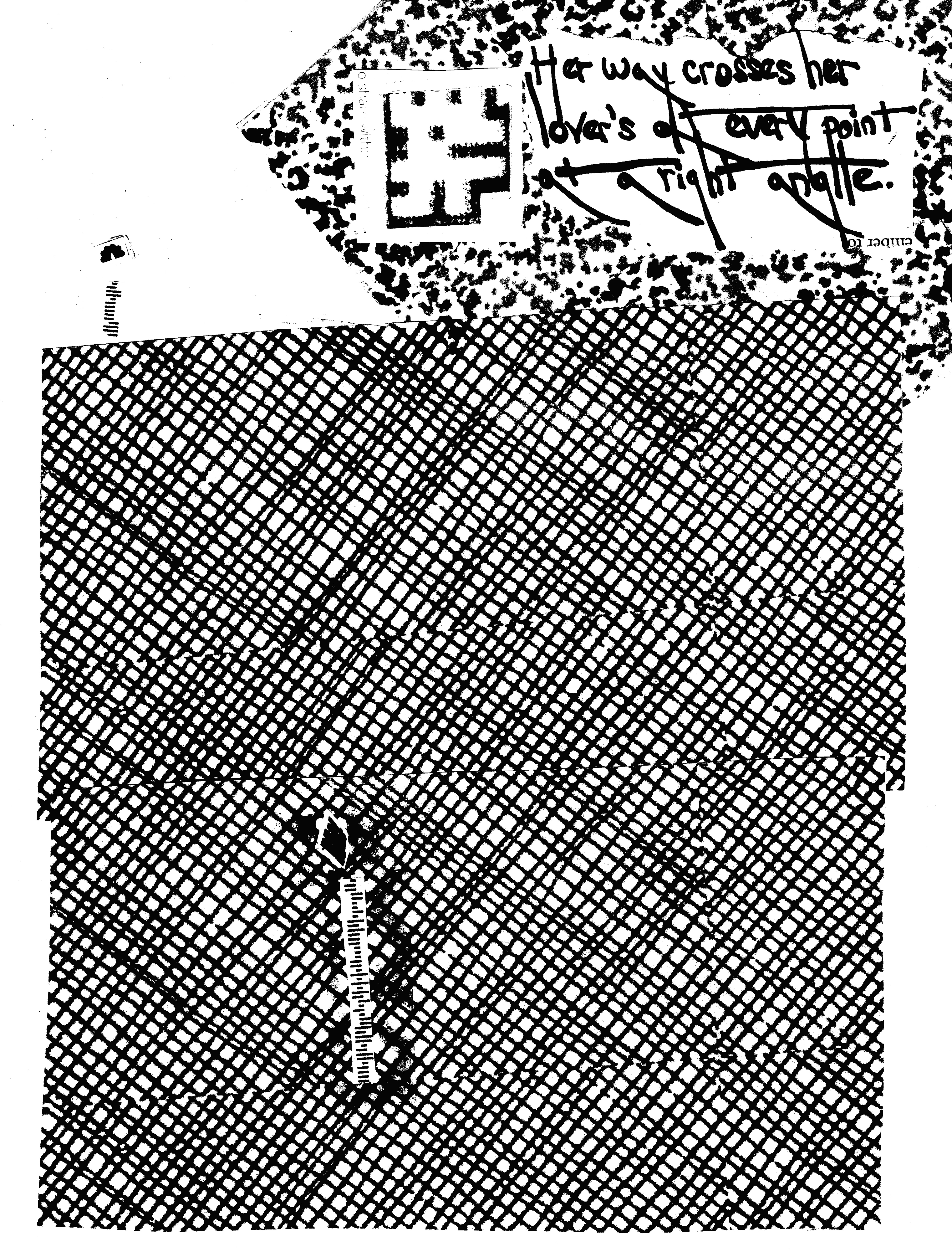
Her way crosses

Her faithful friend at a remove now, unable to follow any further, Inanna’s entered the weave of one of the earth’s textures, her feather guttering smokily, some sort of torch.

Inanna, her powers

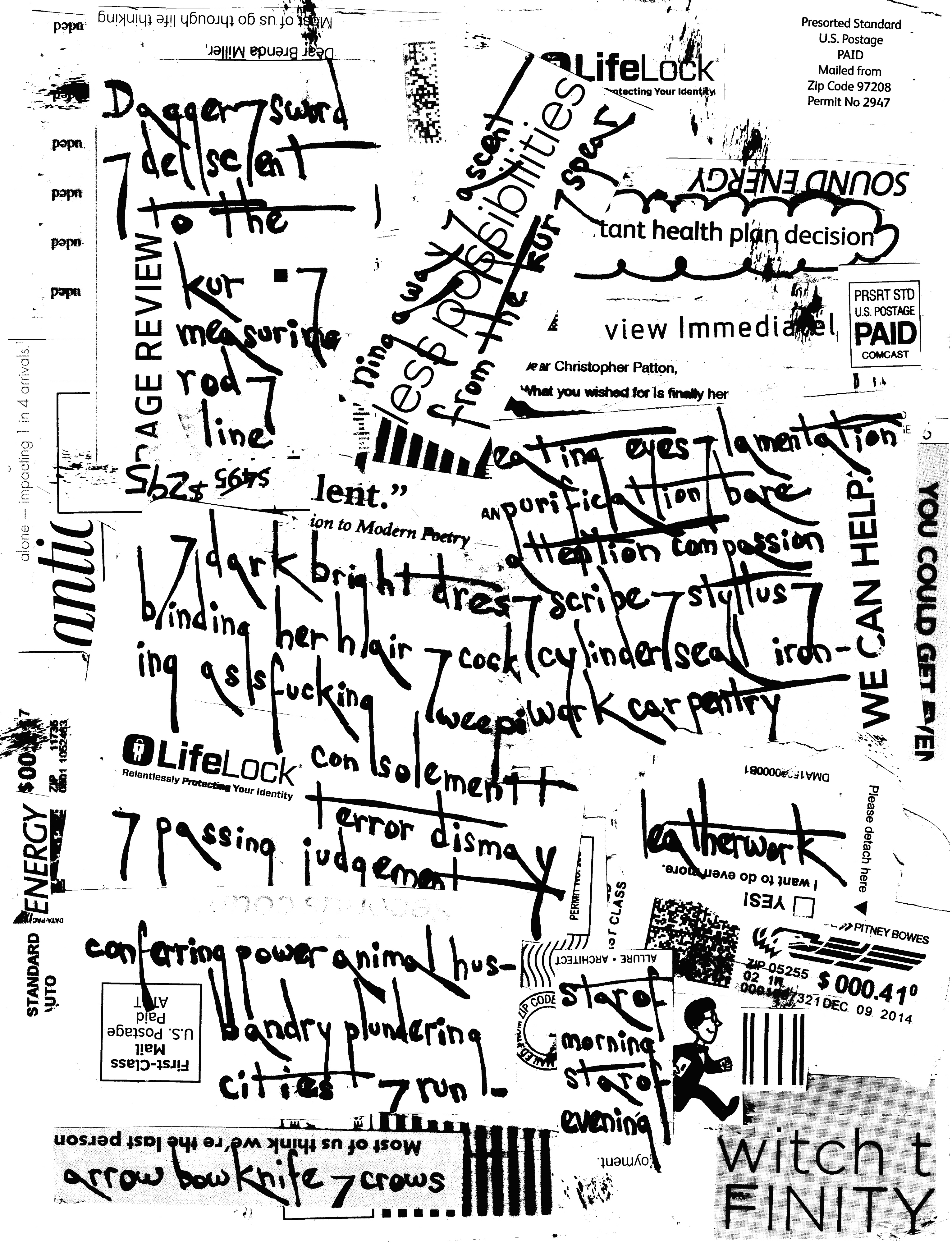
Inanna is that we are here together at all. Among the powers she connived from her father early in her life in a drinking game and stole away with by boat and brought to the docks of the great Sumerian cities were —

dagger and sword
black garment
colourful garment
loosening of the hair
binding of the hair

art of the hero
art of power
art of treachery
art of straightforwardness
plundering of cities
setting up of lamentations
rejoicing of the heart

She’s how a meal is more than feeding a hole and sex more than rutting and shelter more than reeds against the wind. She’s all the powers of civilization including the power to pull down a civilization. Not good or bad but bigger and smaller than that. The voice from the whirlwind when the voice is in roughly equal measures Leviathan and Coyote and they who made them.

As she readies for her trip the underworld she gathers the powers (me) drawn to the fore of her by good times with her shepherd king Dumuzi. An array likely to make her nether sister Ereshkigal (sexually voracious apparently and intensely lonely) more rageful than welcoming.

She placed the shugurra, the crown of the steppe, on her head.
She arranged the locks of hair across her forehead.
She tied the small lapis beads around her neck,
Let the double strand of beads fall to her breast,
And wrapped the royal robe around her body.
She daubed her eyes with ointment called “Let him come, Let him come,”
Bound the breastplate called “Come, man, come!” around her chest,
Slipped the gold ring over her wrist,
And took the lapis measuring rod and line in her hand.

Archaic but still kind of hot. I picture her with a hardhat and an orange safety vest carrying a surveyor’s tripod.

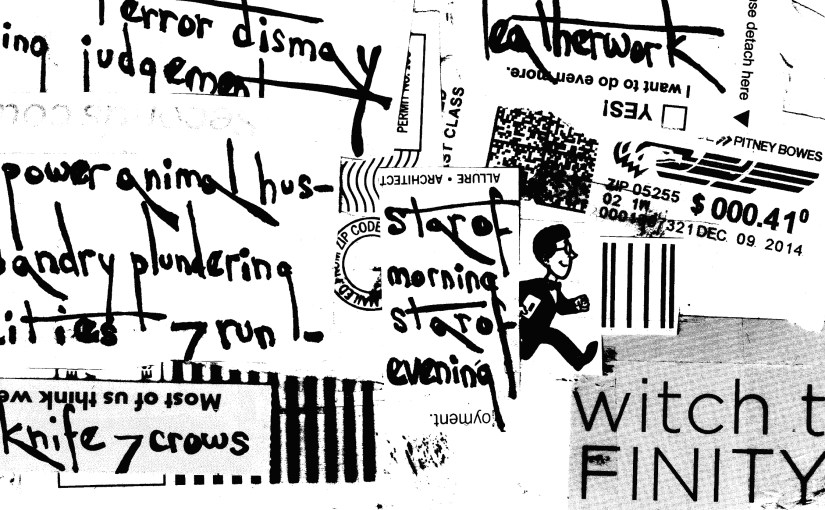
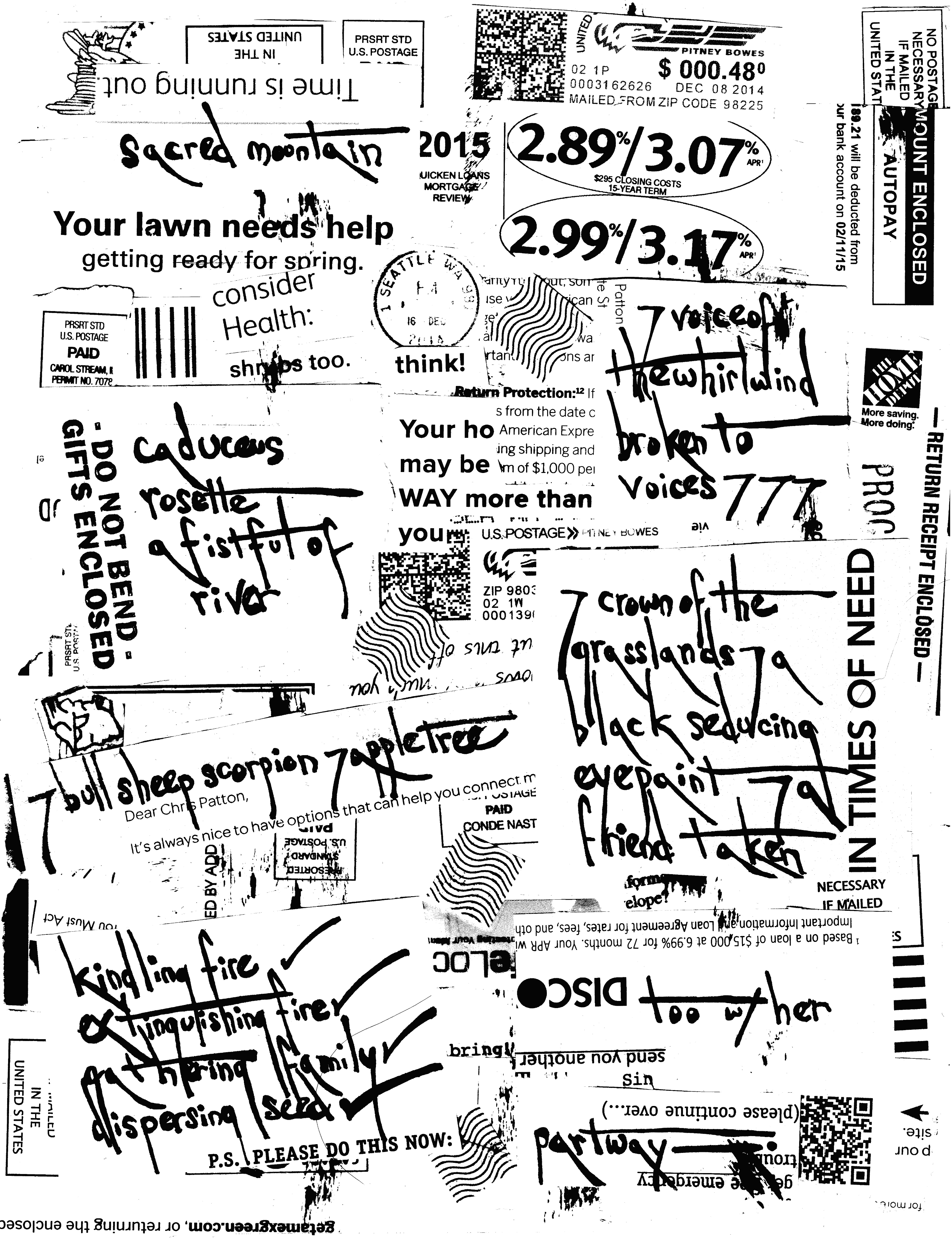
For this point in the book I need a broader account of her powers — need to say how great a disaster her departure is — so I’ve gone back to the survey of her me in her drinking game with her father. I’ve posted this once before but here it is again, somewhat improved. The first page —

7. Her me (1)

And the second —

8. Her me (2)

Why junk mail. A fertility myth tells how grain gets from the ground to your table to your belly. At some point it invokes sex (and not metaphorically, what those grasses are doing in the wind is fucking) and at some point it acknowledges the marketplace — grain’s not going to get from the ground to your gut without being bought and sold as a commodity, not anymore, not by the time such a myth as this comes about.

Junk mail is one mark of the marketplace in our day. It is somehow all at once ephemeral (who stops to read this shit before tossing it in the recycling?) and archaic (print? in envelopes? in my mailbox? really?) and omniscient (how on earth did they find me?) and omnipresent (day in, day out, my lord). So, that, and, too, if I can comedically resacralize the peacock by turning the Comcast logo into a funny hat, well, that’s a small whee for me.

Inanna hellbound

No saying why Inanna heads to hell. She’s queen of 2/3 of the universe — the whole of the known universe. What’s the call of the third third to her? Her ejected other? a secret melancholy? just a lust to acquire more turf? The “measuring rod and line” she takes as one of her me, her powers, suggests she means to chart and apportion the unapportionable. Or maybe she goes to rescue the lover she sent there a little while earlier.

Whyever she goes, she hears the call, and goes.

From the Great Above she opened her ear to the Great Below.
From the Great Above the goddess opened her ear to the Great Below.
From the Great Above Inanna opened her ear to the Great Below.

Why 3X? Because liturgy. An altered state we’re invited to enter the goddess through. And ear if I remember right is metonym for wisdom. Well anyway she abandons heaven and earth and holy office and all her earthly temples to fall to the underworld. If you got abandonment issues this is the goddess for you.
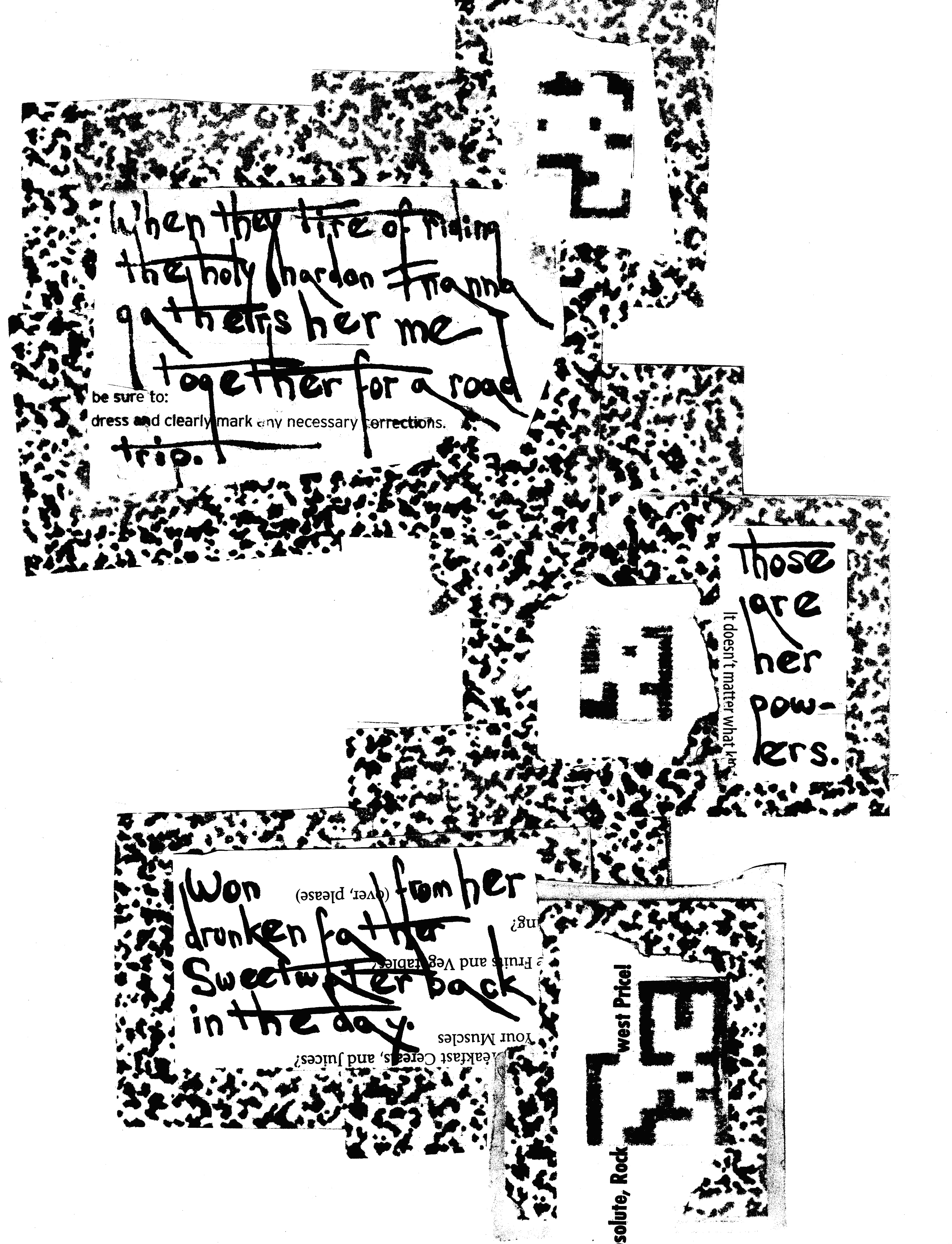
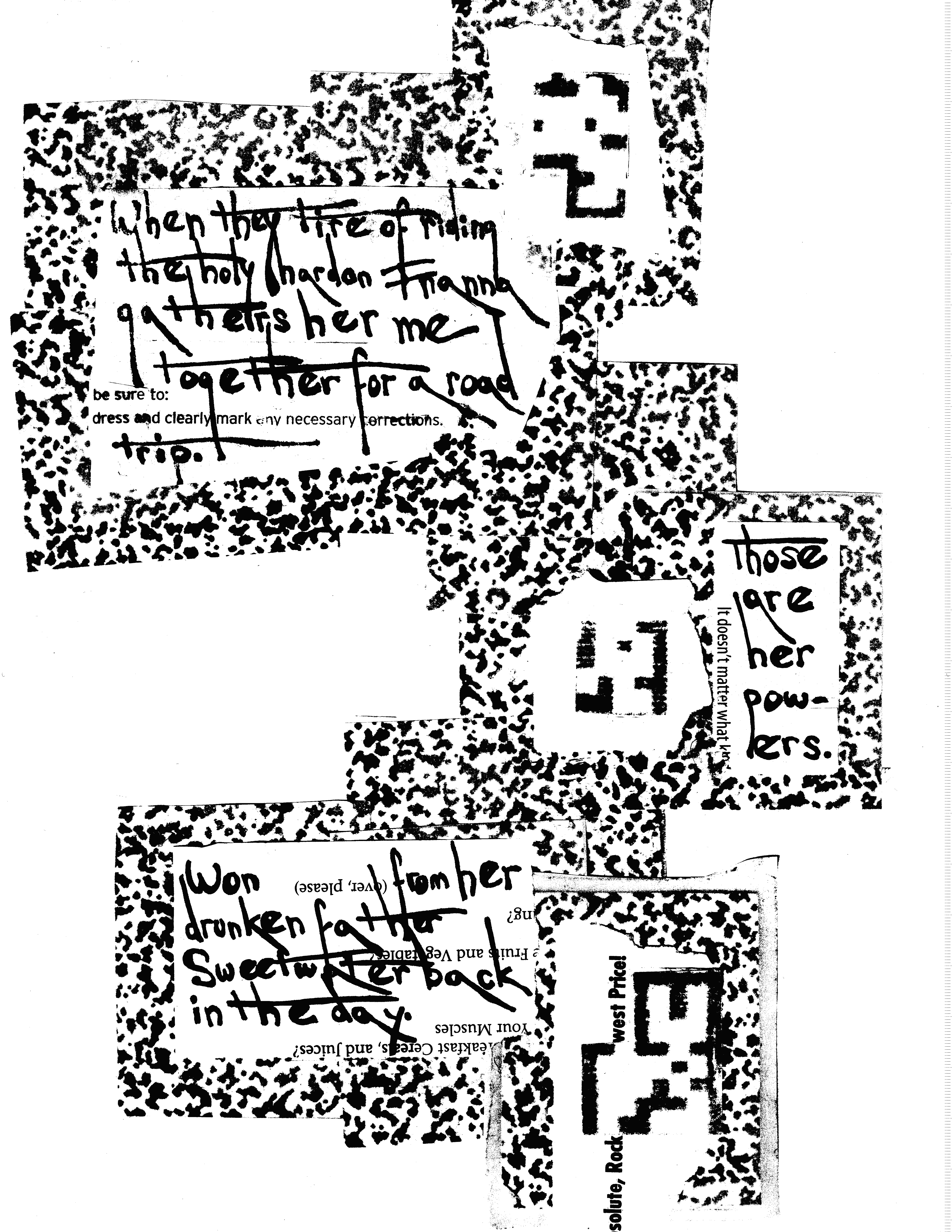
When they tire

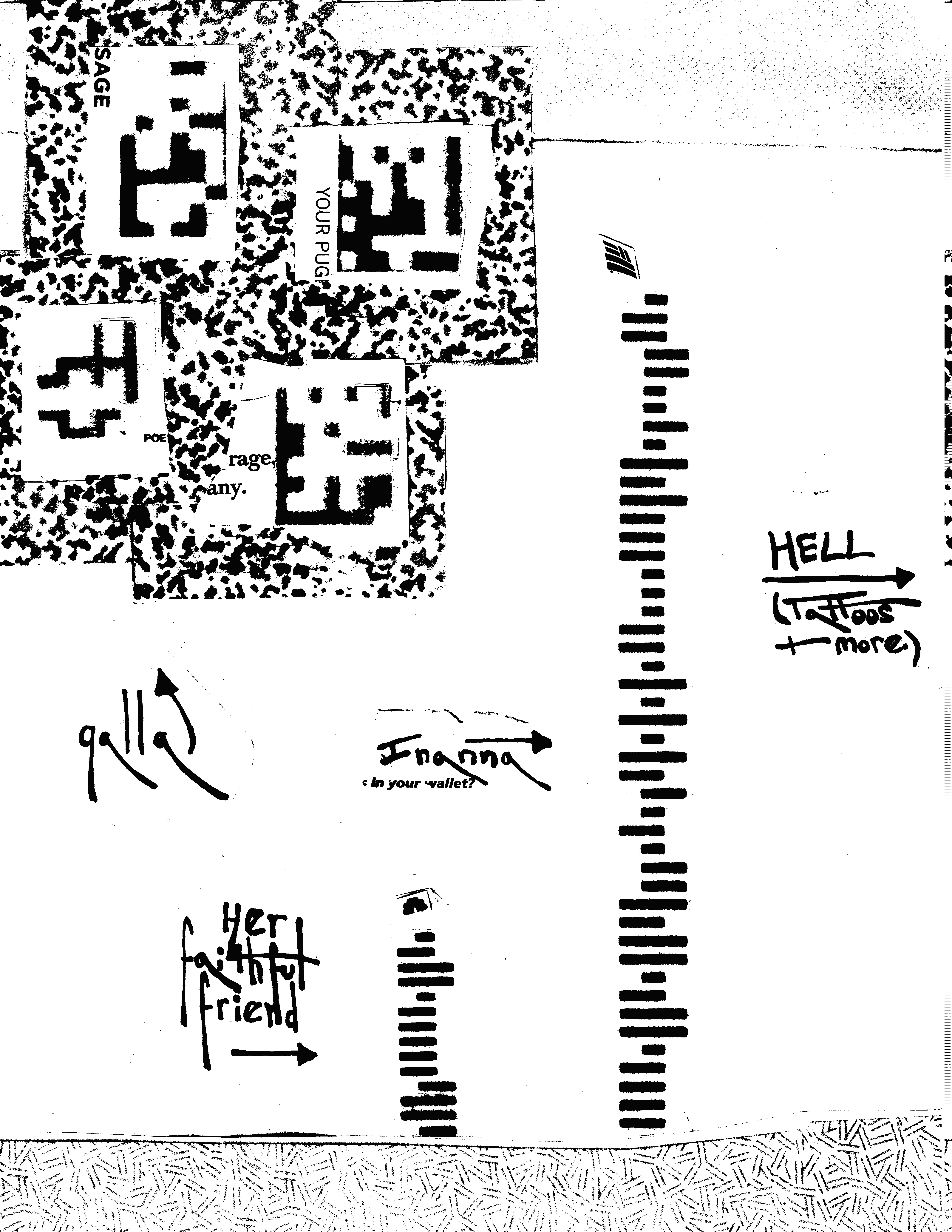
Hard to read on this scale so the text goes:

When they tire of riding the holy hardon Inanna gathers her me together for a road trip.

Those are her powers.

Won from her drunken father Sweetwater back in the day.

I’ve crassed it up some, sorry. But I wanted to bind it to their apex, when all is going lovelyly for both Dumuzi and Inanna, lettuce sprouting in its furrow, black boat quickened with cream, etc. The faces are harvested from scan codes on envelopes like this one.

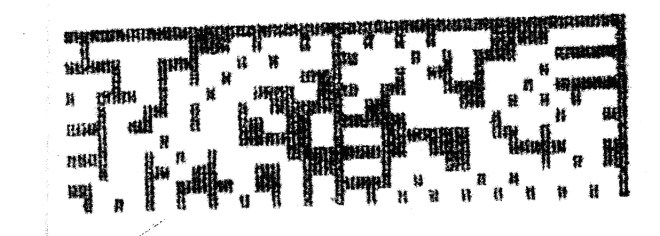
scan code

Riding the pareidolia wave again. They’ve become for me the galla, the demons come from the underworld to claim their own. They’re neither inner nor outer and terrify me. The whole book’s my effort to make a peace with them. That’s why they get to narrate this whole sequence — thought being, give them some say, they might quiet down some?

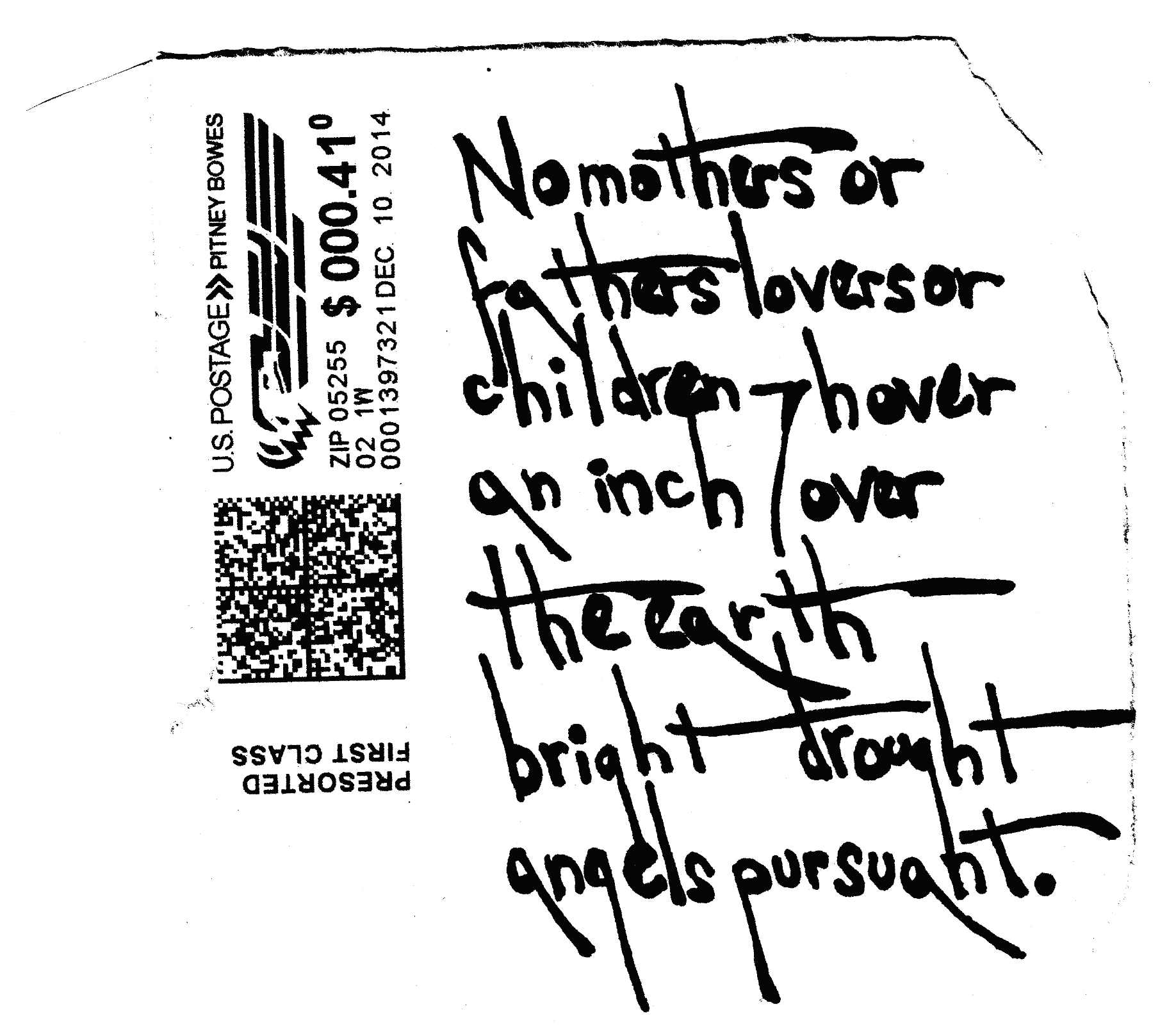
I’ll hope to remember to write of Milarepa and his demons sometime, that tale, what I think it taught me. In the meantime we know this about the galla they have

No mothers

Oooh scary right? Anyway I want to get brave Inanna, sad Inanna, maddening Inanna, on the road so I can go have some dinner, so here she is, with her galla attendant, and her faithful sidekick, cut from the same barcode as she. Thanks for your indulgences, many.

Hell (tattoos

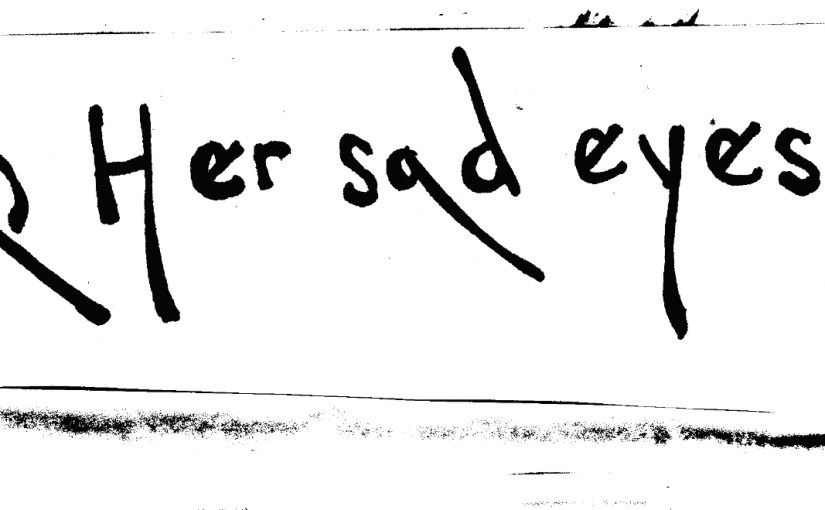
Sad Inanna

I’ve been posting scattershot this and that from Dumuzi and am feeling moved now to be a bit more steady and thoroughgoing at it. So I think I’ll post, as they come into their final framing, the picture poems I’ve made to tell the descent to hell and rescue and apotheosis of Inanna.

She’s the one who drew me into this biz in the first place many years ago. Before my true north turned out to be her rather less empowered but dearer to me now shepherd lover. She for me has been every woman, starting with the first of me, I have wanted to save or hold or leave or be safe with or from. “Devastatrix of the Lands.” O she’s a terror. And too she’s those eyes in the tent with Pound at Pisa not scornful. Kuanyin, what gentles.

So that got heavy. Also this is a comic book built out of junk mail. Anyway I’m thinking here at blog to intersperse the images with the source texts – in a way I won’t be able to in Dumuzi itself. If anyone’s ever fool enough to publish the damn fool thing.


The sequence begins with a word poem I hope gets the hapless awe one feels in the face of powers orders of magnitude huger than anything one could imagine mustering.

Reft

Tears
off a face
in bad

weather
at an altar
torn in

weather of
another
order.

Holy
sweet being
shining

gone
and the mountain
ashes in

flower.

The title came from Pound’s “What thou lov’st well shall not be reft from thee.”

Next, a picture poem.

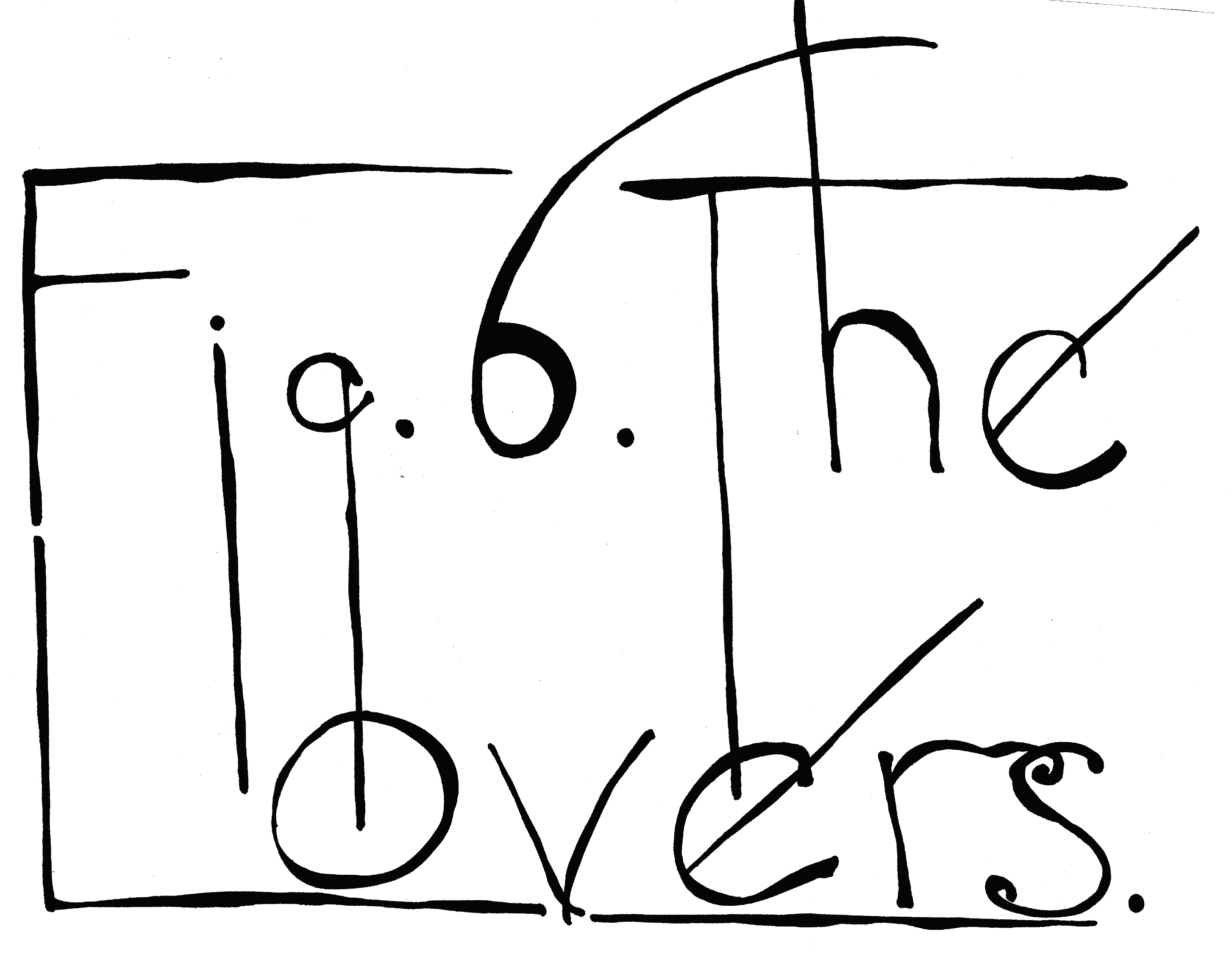
6. The lovers - fig

Kinda porny, I know, sorry. Goes with the territory (fertility myth). Intertitle, to tuck in at lower right, looks like this.

6. The lovers - title

The ground for it, the coitus and the tristesse, looks like this in the source where I first found them (The Ancient Near East: A New Anthology of Texts and Pictures, Vol. II, ed. James B. Pritchard).

The “honey-man,” the “honey-man” sweetens me ever,
My lord, the “honey-man” of the gods, my favored of the womb,
Whose hand is honey, whose foot is honey, sweetens me ever.
Whose limbs are honey sweet, sweetens me ever.

My sweetener of the . . . navel, [my favored of the womb],
My . . . of the fair thighs, he is lettuce [planted by the water].
It is a balbale of Inanna.

Somewhat more felicitous, and just for that more blushful, is Diane Wolkstein and Samuel Noah Kramer’s translation in Inanna: Queen of Heaven and Earth:

He shaped my loins with his fair hands,
The shepherd Dumuzi filled my lap with cream and milk,
He stroked my pubic hair,
He watered my womb.
He laid his hands on my holy vulva,
He smoothed my black boat with cream,
He quickened my narrow boat with milk,
He caressed me on the bed.

I prefer the anatomically more precise term “happy place.” Anyway, as all things must, this comes to dust. Says Inanna:

Now, my sweet love is sated.
Now he says:
“Set me free, my sister, set me free.
You will be a little daughter to my father.
Come, my beloved sister, I would go to the palace.
Set me free . . .”

I gave the restless to her cuz she’s the one to go awandering. That’s up soon. Thanks for scanning.

Intertitles

Funny how one thing connects to another. The mind’s a rhizome. In the mix right now for me so many. My friend Elise’s memorial yesterday. (What’s that you ask. Drafted this the day after never finished and come back to it now.) Voices of twins I woke to on NPR a few mornings ago and couldn’t shake from my head and bought the CD on iTunes (I never do that) and now listen to twice daily entracedly. The intertitles of a sweet fond symbolist early silent filmic confection called The Blue Bird by Maurice Tourneur.

A phrase underlined won’t suffice. Must embed them. My friend:

Read this poet's poems! Click to get to some.
Elise Partridge (click and go to her website)

And these amazing haunting singers, somehow right at the core of a cross where sensual & spiritual & naive & old soul meet (okay little crush):

Ibeyi (click and go to their river)

And the only intertitle I can find online from The Blue Bird:

(The sentiment — gah. But — the elegance with which the H curls to encase the quotation mark and the terminal r stretches out to offer shelter to the ellipses. Decadence, sure, but guileless.)


All linking and clicking and clinking in unexpected ways. I have, e.g., and am sure of it, been trying to rescue Elise from the grave by making Inanna of her and bearing her through hell and out the other side. I spoke at the memorial about my propensity for magical thinking but didn’t get into the thick and gristle of it.

I don’t think it’s going to work, I think she’s gone from matter, already metamorphic-indestructible otherwise, but it’s a rite I seem to need to go through. So when I post, in weeks to come, comic book panels collaged out of junk mail depicting Inanna’s trip underearth and back, you can know it’s her, too, my friend, too.


Here are the first two. A bit of opening narration:

1. When they tire

And her setting out:

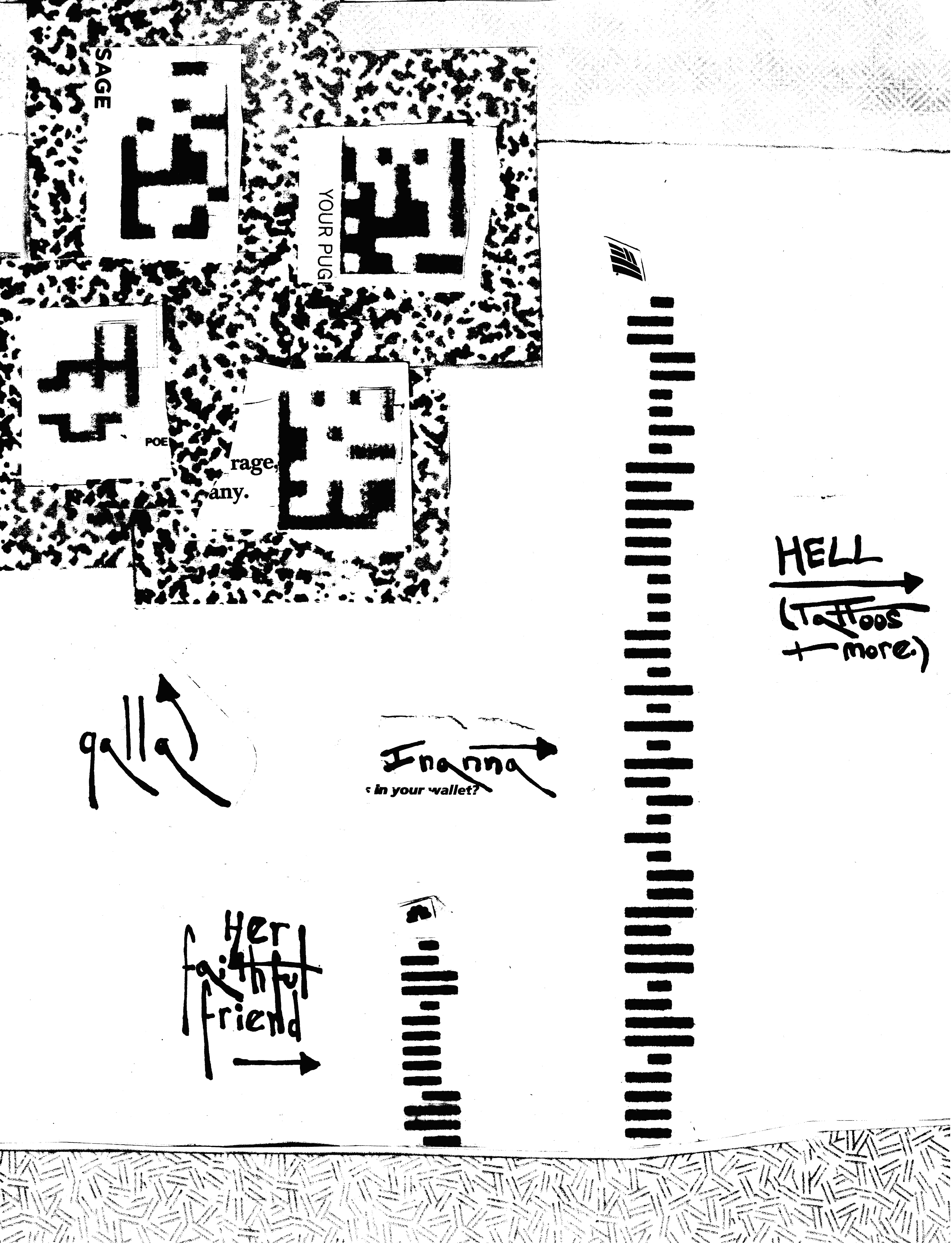
2. Hell (tattoos)

All the visual elements, script aside, are derived from junk mail, mine or friends’. (Sorry about the crud on the right side, my damn scanner.) Galla: demons come to claim their due.

Going in the script for something a bit like cuneiform and a bit like the scribal hand in medieval Old English manuscripts and a bit like graffiti and with a bit of the energy moving my hand through ascenders and descenders and cross-strokes in the moment of marking. A bit of embodiment that’s been a long time coming and I find me greedy for it increasingly.


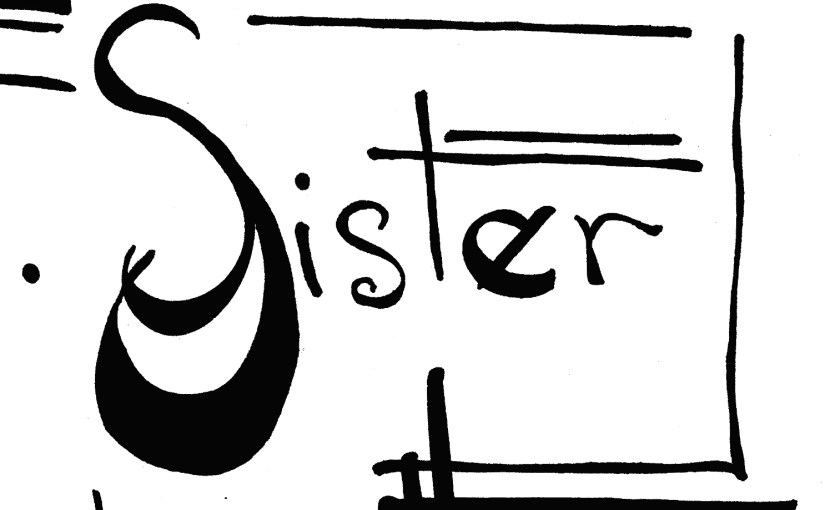
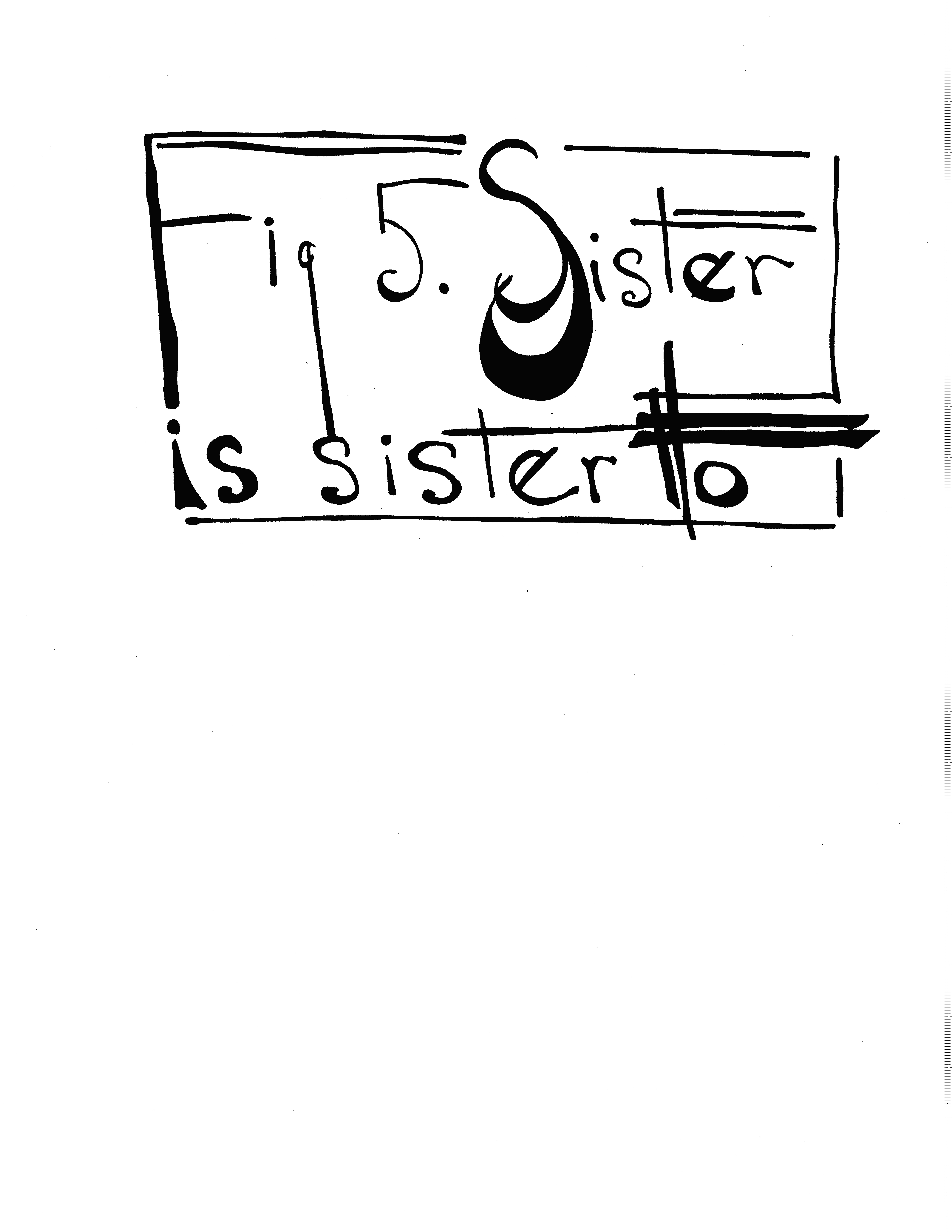
So that’s what Elise has been up to in here. The intertitles? Ibeyi? Together they suggested a possible elegance —

5. Sister is - title

— about which I’ll hope to have more to say later. For now a link to my friend Kaveh Askari’s book on early cinema including Tourneau’s The Blue Bird:

BFI
Read this book!