
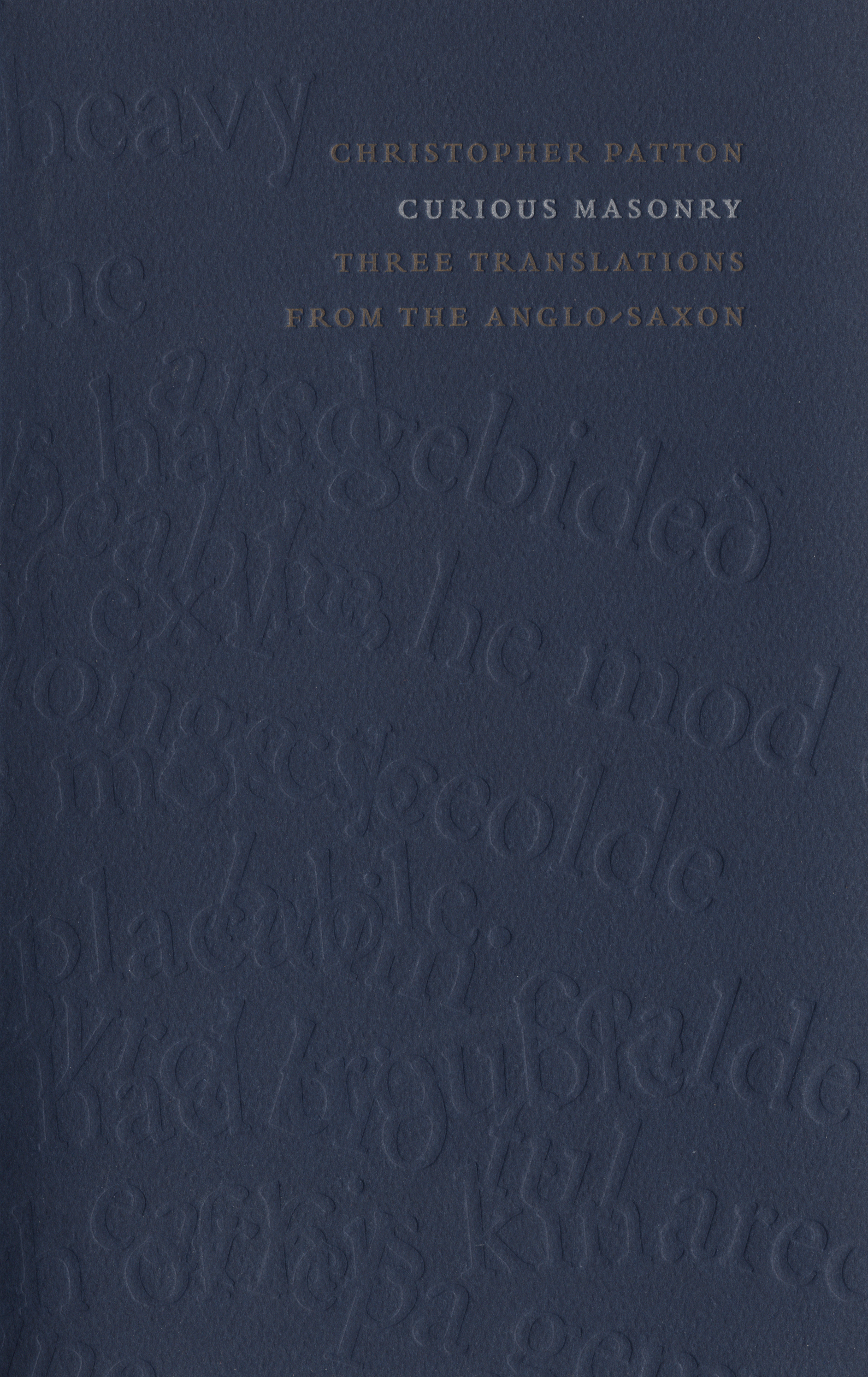
My first book with Gaspereau Press sets three poems from the Exeter Book – “The Seafarer,” “The Wanderer,” and “The Ruin” – in facing-page translation. The title is an off-kilter take on the first half-line of “The Ruin”: Wrætlic is þes wealstan – more literally, “This wall-stone is well set.”
Back of the book it says
Christopher Patton’s translations from the Exeter Book – a volume of Old English poetry used, over centuries, to store gold foil for illumination of texts thought more meaningful – draw the poems into a modern idiom without quieting their unearthly strangeness. His sense of their passage through time also yields Hearth, a take on The Earthwalker that uses type and white space, speech and silence, to embody the “play of duration and flux” consuming both the physical manuscript, and the worried, reflective speakers of its poems.
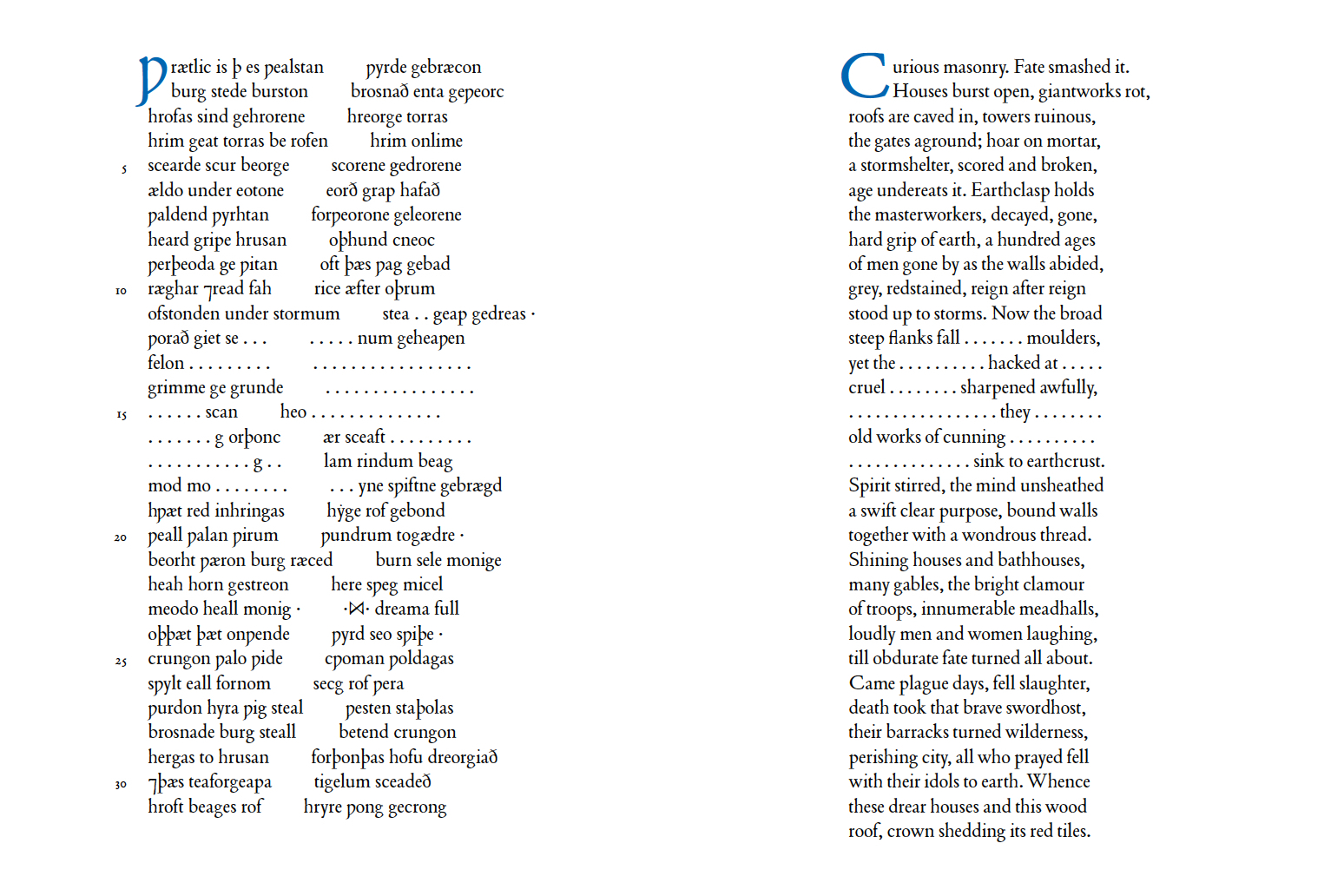
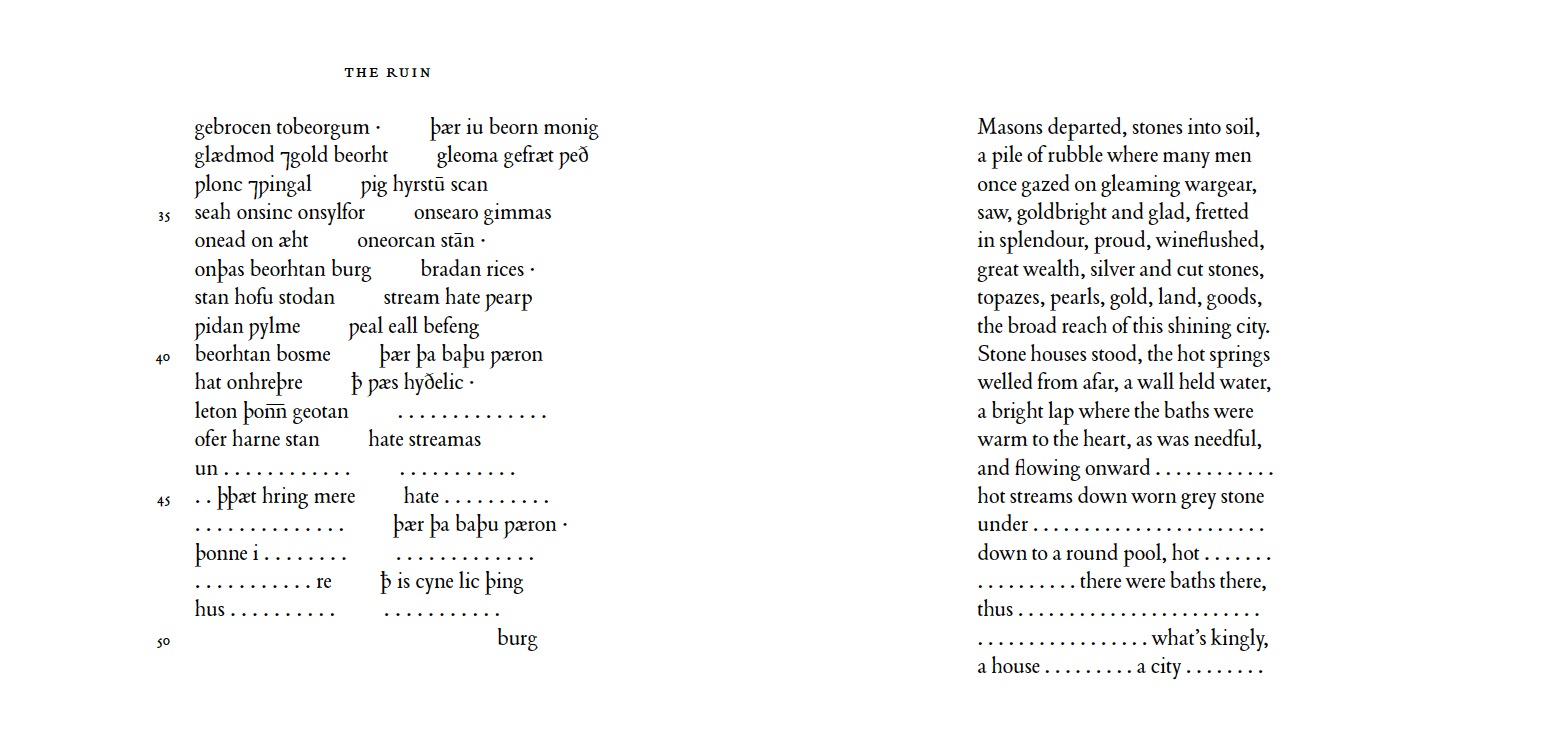
Here’s a poem in it (click to enlarge).
And a few things that were said:
He has achieved something similar to Lattimore’s translations of Greek, a voice that manages to sound epic and dignified like the original without sounding archaic or stilted. Patton’s translations leave the pathos intact. They make us feel that these speakers are us. I think they have the potential to become the definitive modern translations of these poems. ☚ Fogged Clarity
Going deeply into the heart of these magnificent texts, Patton provides us with durable poems for our own troubled times. ☚ 49th Shelf
Done well in every way. ☚ Brooklyn Rail
 The Art of Compost