
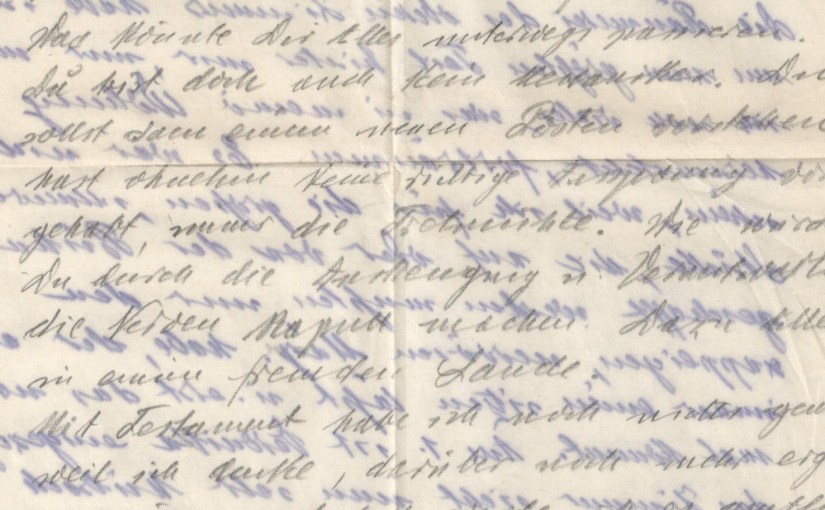
In 2020, on a visit to my father & stepmother in Guerneville, California, I learned of a trove of letters & ephemera in my stepmother’s care: the papers of Bernhard Blume & Carola Rosenberg-Blume, a German playwright & an educational reformer who fled Nazi Germany in 1936. With the help of my stepmother – their daughter-in-law by her first marriage – I got the OK from their descendants to curate an exhibition of the materials. In 2025, after the re-election of Donald Trump to the Presidency of the United States, I saw how they might serve as a timely warning & set to work.
¶ Project concept
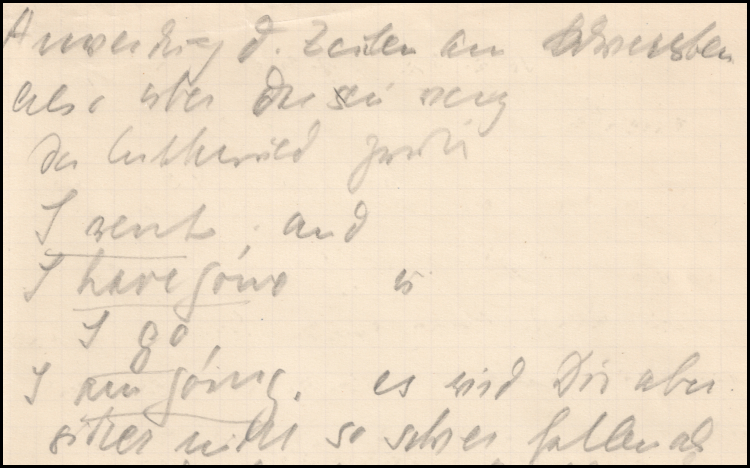
I Have Gone & I Am Going will be an online exhibition drawn from the correspondence of Bernhard Blume & Carola Rosenberg-Blume. As a young adult in Weimar Germany, Bernhard was an up-and-coming playwright, hailed alongside Bertholt Brecht as one of “the five B’s.” Carola was an actor, vanguard feminist & educational reformer. Their lives were overturned when the Nazis came to power & Carola was dismissed from her teaching position because of her political activity & her Jewish ancestry. Their letters offer informal glimpses of the daily lives of two young artists thriving in Weimar Germany & surviving the accession of a fascist movement to totalitarian power. Each letter will be paired with a newspaper account of an event occurring on the day the letter was written – illuminating the social & political setting Bernard & Carola moved in, one of economic hardship, political polarization, democratic collapse & fascist takeover.
¶ The materials
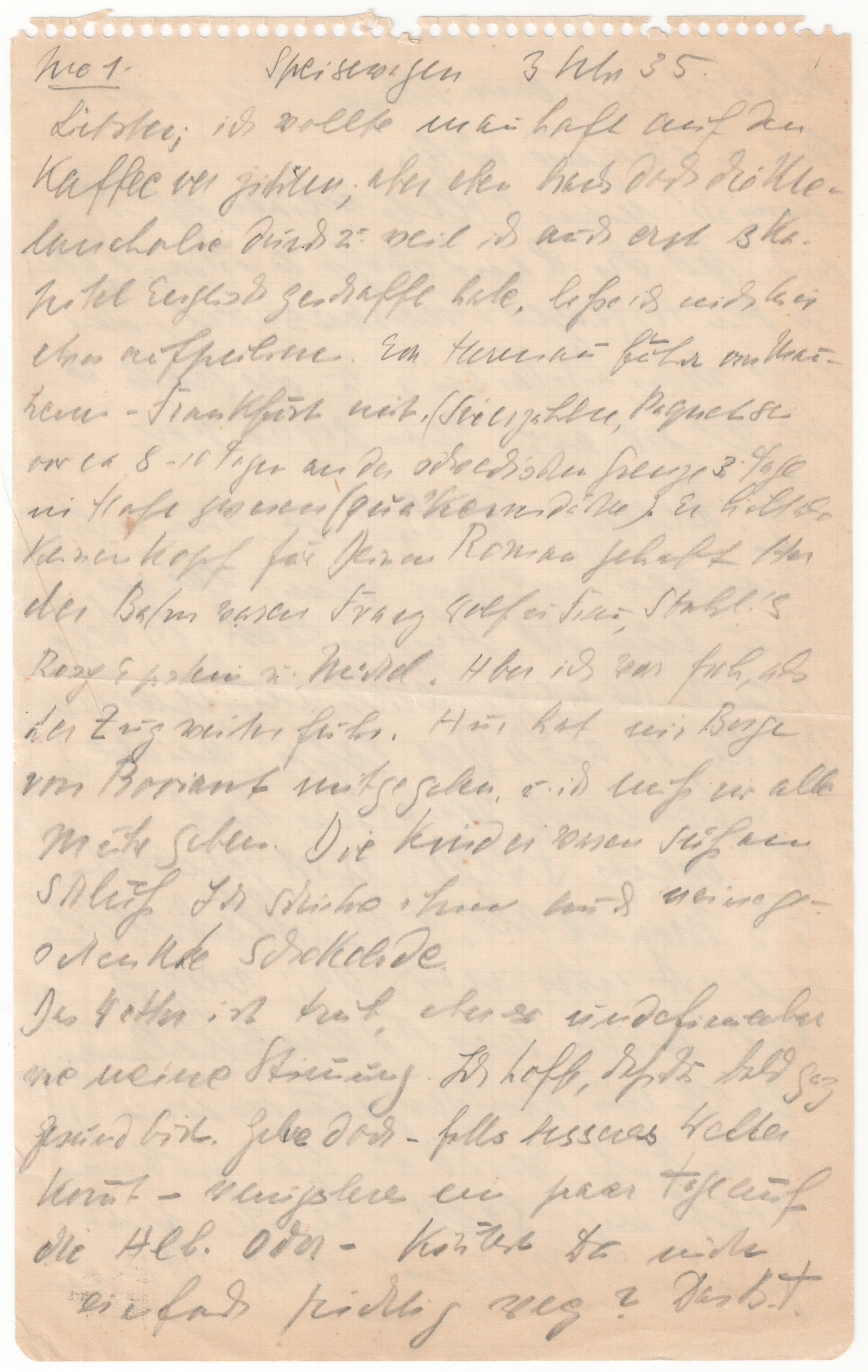
In the fall of 1935, seeking employment that would allow them to emigrate, Carola sailed on her own, knowing little English, to New York City. Her letters home to Bernhard, written in pencil on notebook paper & ocean-liner stationery, are quick-witted, passionate, endlessly curious. Her mission succeeded & a year later they emigrated with two young children to the US. Most of Carola’s immediate family remained in Europe & were murdered by the Nazi regime.
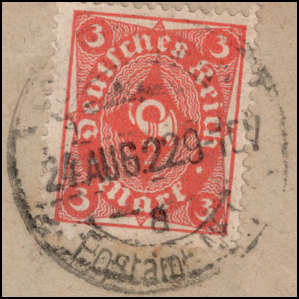
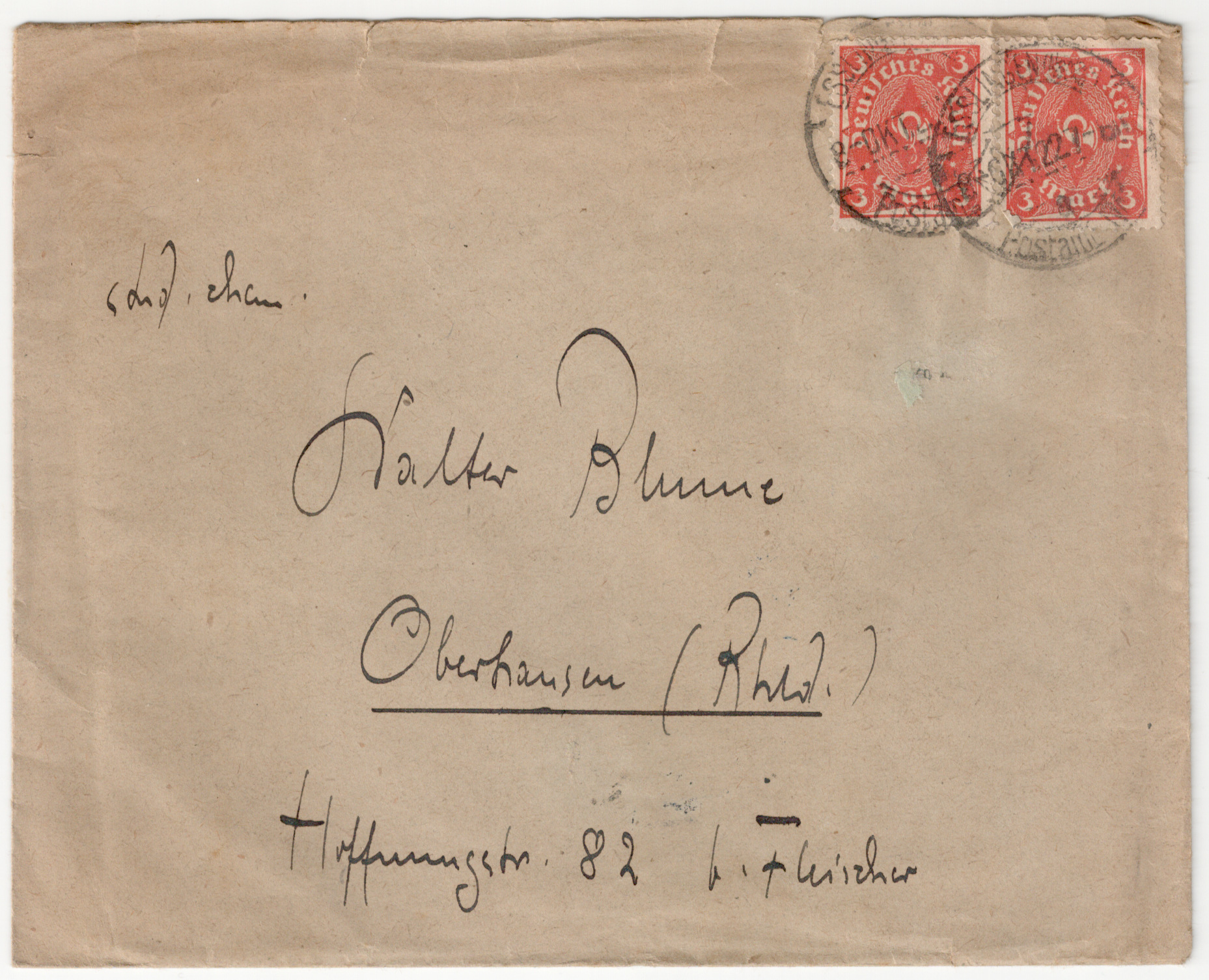
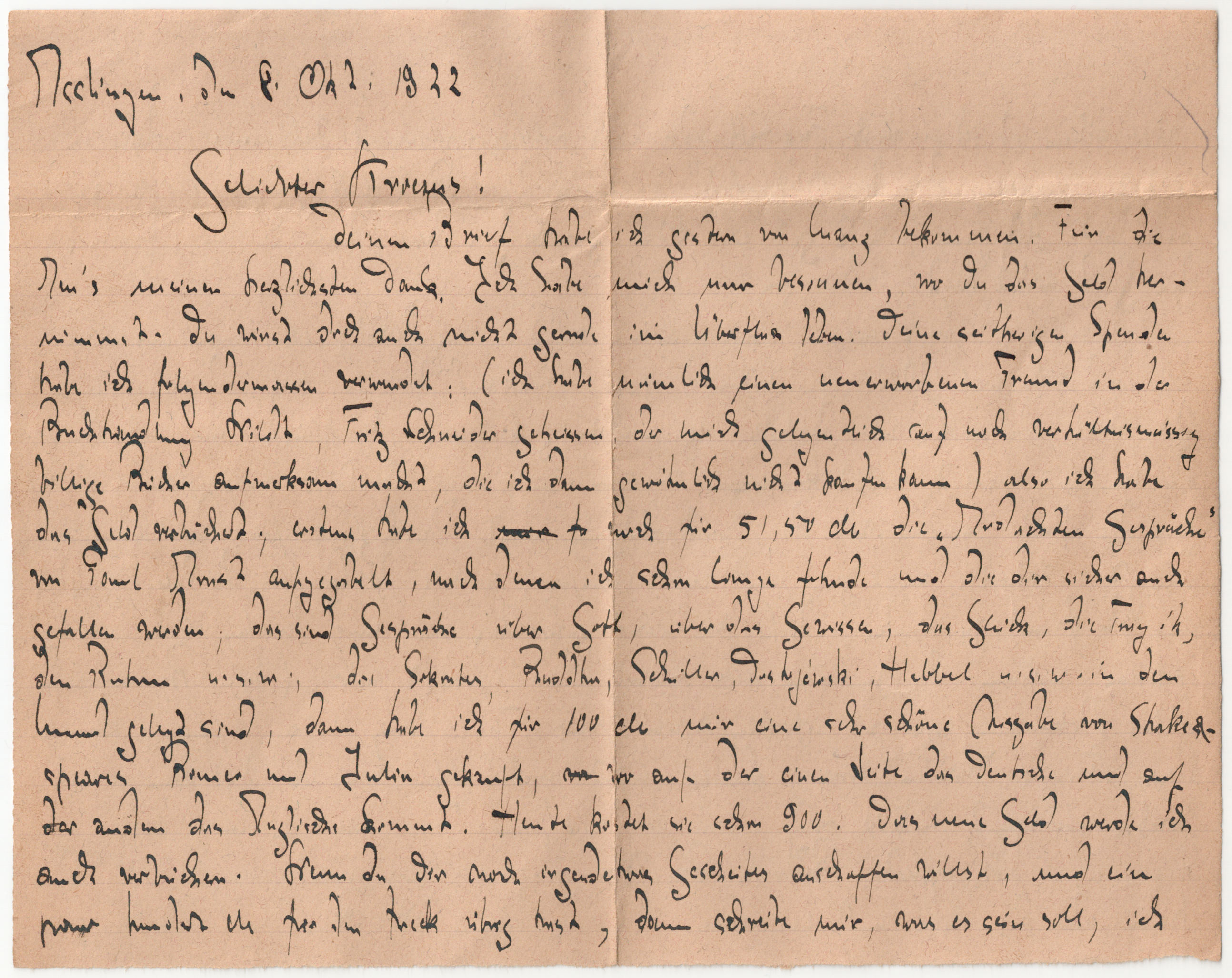
Also valuable as a window on life in interwar Europe are Bernhard’s letters to his brother Walter, who died of leukemia in 1925 in a Stuttgart hospital. Their markings hint at the realities of hyperinflation, German postal sorting methods, variant scripts & the pressures bearing down on the fragile Weimar democracy. They also capture a pedantic aspect to Bernhard’s character that would enable his transformation, in America, to an eminent scholar of German literature.
¶ The work ahead
I’m developing a site on the crowdsourcing platform Zooniverse where volunteers can contribute their knowledge & expertise to the project. A work in progress, but at this moment, it’s laid out like this.
transcription
Volunteers skilled in reading handwriting, some straightforward, some cryptic, will transcribe the letters. Transcriptions will be collated by Zooniverse’s ALICE (Aggregate Line Inspector and Collaborative Editor) tool.
description
Volunteers will also draft physical descriptions of the materials: creases & stains in the paper, changes in handwriting, stamps & cancellations. I’ll draw on these descriptions in curating the materials & they’ll become part of the objects’ catalogue records.
translation
Once a letter is transcribed, volunteers fluent in German & English will be asked to create working translations. Or, I may first run the transcriptions through DeepL & ask volunteers to correct & improve the rough translations it produces.
connection
Volunteers with expertise in this period of German history are invited to suggest, for further research, important events occurring on the day a letter was written. These connections will offer leads for the newspaper accounts I plan to pair with the letters.
curation
Meanwhile I will be securing institutional sponsors, funding & a host for the exhibition. As above tasks are finished, I’ll select, arrange & narrate materials, researching as needed & enlisting the aid of subject-area experts. The exhibition will be created on Twine, an open-source application for creating interactive non-linear digital games & stories. It’s also surprisingly good for exhibitions.
publication
While the exhibition will be a curated selection, all materials created by volunteers – transcriptions, descriptions, translations, connections – will be published in digital form at location TBD.
donation
I plan eventually to donate materials to the Deutsches Literatur Archiv in Marbach, Germany, where the rest of Bernhard’s papers are housed, and the City of Stuttgart Archives, where Carola’s live.
¶ A sampling

 The Art of Compost