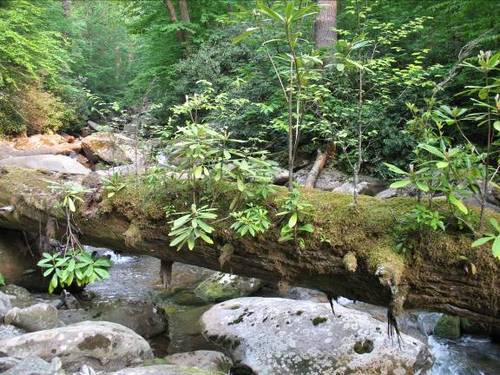
The line composts the sentence

Carson’s Sappho composts a dozen ways and more. One one student noted is, the enjambed and lightly punctuated line breaks a (propositional) thought into smaller (experiential) thoughts.

And in it cold water makes a clear sound through
apple branches and with roses the whole place
is shadowed and down from radiant-shaking leaves
sleep comes dropping.

The poet composes the line. The line composts the sentence. That’s general to poetry but more prominent here than often it is. “And in it cold water makes a clear sound through” is a whole phase and phrase and frame of feeling. Notwithstanding its unfinish as a sentence. The effect is to reorient thought — to reorient thinking — away from proposition and toward proprioception.

Sappho is a compost occasion

We found as a class three things compost does. One, there’s a breaking down of old forms, cauliflower leaves corn cobs egg shells radish greens, they begin to lose the walls that bound them as what they were. Two, there’s a blending and a merging, as the elements released in the breakdown start to wander in search of new figurations. (See mandibles in Empedokles, the clinamen of Lucretius, the fact that matter does wander, that’s its nature, that is nature.) Three, something’s nourished, as nutrients released by the breakdown and rearranged in the blending become the constituents of new forms, new ways of being life.

And found all three at work Carson’s translations of Sappho in If Not, Winter. Just one for now (all things in their times). The first line of the one poem of hers we have whole, called often her “Hymn to Aphrodite,” in the Greek is

Ποικίλοφρον ἀθανάτ Ἀφρόδιτα

Transliterated that is, I think, I have no Greek,

Poikilophron athanat’ Aphrodita

And translated word for word,

Spangle-minded deathless Aphrodite

One character is in question. Where Carson reads phi (φ), others read theta (θ), and that one difference, between a sphere crossed vertically and an ellipse crossed horizontally, is a difference between poikilophron, mind, and poikilothron, throne. Is it the mind of Aphrodite, or the chair she sits in, that’s glinting, variegated, subtle, ambiguous, changeful?

What makes this compost is that the two readings coexist. A word Sappho wrote, or had written, was made by time two words, jostling. We can never get rid of one of the other. Time’s co-author of the poem.

Deathless Aphrodite of the spangled mind

We’re going live

So this is The Art of Compost and it’s a blog. Because what the world really needs is another blog. It began with my prep for a course of the same name and soon took on a life of its own at plural intersections of my reading thinking teaching writing speaking feeling looking wondering.

Pretty sure to go in the bin are my thoughts on and misunderstandings of

  • 20th and 21st C. poetry and poetics in North America, esp. objectivist and Black Mountain traditions — what Stephen Burt has called The New Thing.
  • A mostly subterranean lineage connecting us to Very Old Things — busted up clay tablets, cave paintings, the intelligence of stones (sitting still).
  • Whatever collapses, rots, blends, merges, fosters, nourishes.
  • Stray thoughts on teaching, writing, reading, appearing, disappearing.

The impetus comes from Jed Rasula’s This Compost but he has neither reviewed nor approved this usage. Time for a picture of a nurse blog.

image

I hope you’ll check it out. If you like what you see, you can follow on by clicking the “Follow me …” button. Or watch for new posts on Facebook. (If you Like the Facebook page you’ll hear about new posts. I think. Pretty sure.)

And let me know what you think! Leave a comment in the comment box …

Faithfully,
Chris

Opening the field

This by Robert Duncan, in Rasula’s This Compost, out of the body of which many of my thoughts here take sprout.

It is only the midden heap, Beauty: shards,
          scraps of leftover food, rottings,
          the Dump
where we read history, larvae of all dead things,
          mixd seeds, waste, off-castings, despised
          treasure, vegetable putrefactions
– Robert Duncan, “Nor is the Past Pure”

Speaking of the opened field. I’ve found a good prompt for working a way into Olson’s “Projective Verse” with students is to ask them just what that “field” in “composition by field” might be. Last time I did it I was way taken by the breadth of their answers. The page. The sensuous surround at a given perceptive moment. The expanse of possible questions.

I’m paraphrasing here, but my gist is, they helped me see how “composition by field” is itself composed by field, meaning at multiple vectors fruitfully.

The course

If the blog’s to be companion to the course, the course can be companion to the blog also, and I hope they’ll be buds, swapping gists and piths. Here’s what the syllabus will say to our brave company at the opening.

When you make compost you break down old forms to make new forms. From banana peels and lawn clippings you grow a lemon tree. From street signs and Twitter feeds you grow a poem or a flash essay. In this class you’ll turn a fairytale inside-out. You’ll burrow wormwise through your own prose in search of the secret text it holds. You’ll build a poem out of physical objects. What you won’t do is stare at a blank page or screen trying to figure out “what on earth to say.” In other words, your life’s already a perfect poem, a perfect story, a perfect meditation, you just need to compose it a bit.

I’m new to bloggery but already very struck by how form and process extend the content and back again. I’ve long loved the thought and the fact of the serial poem (e.g., Spicer’s Language, Blaser’s Moth Poem) but haven’t till now come close to composing one …

(There’s a thought in me half-formed about Black Mountain prose style, its relentless parataxis, and how like that the serial poem is in its play ethic. Something about going on your nerve, not resorting to a supervisory intelligence, the mind that knows as the sentence begins what the whole of it will say. A dead form, nature mort. Gonna mull this one a bit more.)

Butterfly & rock

Here’s a similar thought to Olson’s (below) but somehow delicater. Olson’s bears down, you can feel the weight of the town crouched on the stone. Niedecker’s comes up through the butterfly and with its lightness.

Life is natural
       in the evolution
              of matter

Nothing supra-rock
       about it
              simply

butterflies
       are quicker
              than rock

– Lorine Niedecker, “Wintergreen Ridge”

What I been areading. NiedeckerNorth Central.

Rock & flowers

That language is material, yes, but alongside it, that matter is a thinking.

earth is interesting:
ice is interesting
stone is interesting

flowers are
Carbon
Carbon is
Carboniferous
Pennsylvania

Age
under
Dogtown
the stone

the watered
rock Carbon
flowers, rills

– Charles Olson, “Maximus—from Dogtown, II”

Brings to mind Issa, that we walk on the roof of hell, gazing at flowers. And Ronald Johnson’s thought that light evolved the eye in order to see itself.

What I’ve been reading here. Jed Rasula, This Compost. Charles Olson, The Maximus Poems.