Inanna hellbound

No saying why Inanna heads to hell. She’s queen of 2/3 of the universe — the whole of the known universe. What’s the call of the third third to her? Her ejected other? a secret melancholy? just a lust to acquire more turf? The “measuring rod and line” she takes as one of her me, her powers, suggests she means to chart and apportion the unapportionable. Or maybe she goes to rescue the lover she sent there a little while earlier.

Whyever she goes, she hears the call, and goes.

From the Great Above she opened her ear to the Great Below.
From the Great Above the goddess opened her ear to the Great Below.
From the Great Above Inanna opened her ear to the Great Below.

Why 3X? Because liturgy. An altered state we’re invited to enter the goddess through. And ear if I remember right is metonym for wisdom. Well anyway she abandons heaven and earth and holy office and all her earthly temples to fall to the underworld. If you got abandonment issues this is the goddess for you.
When they tire

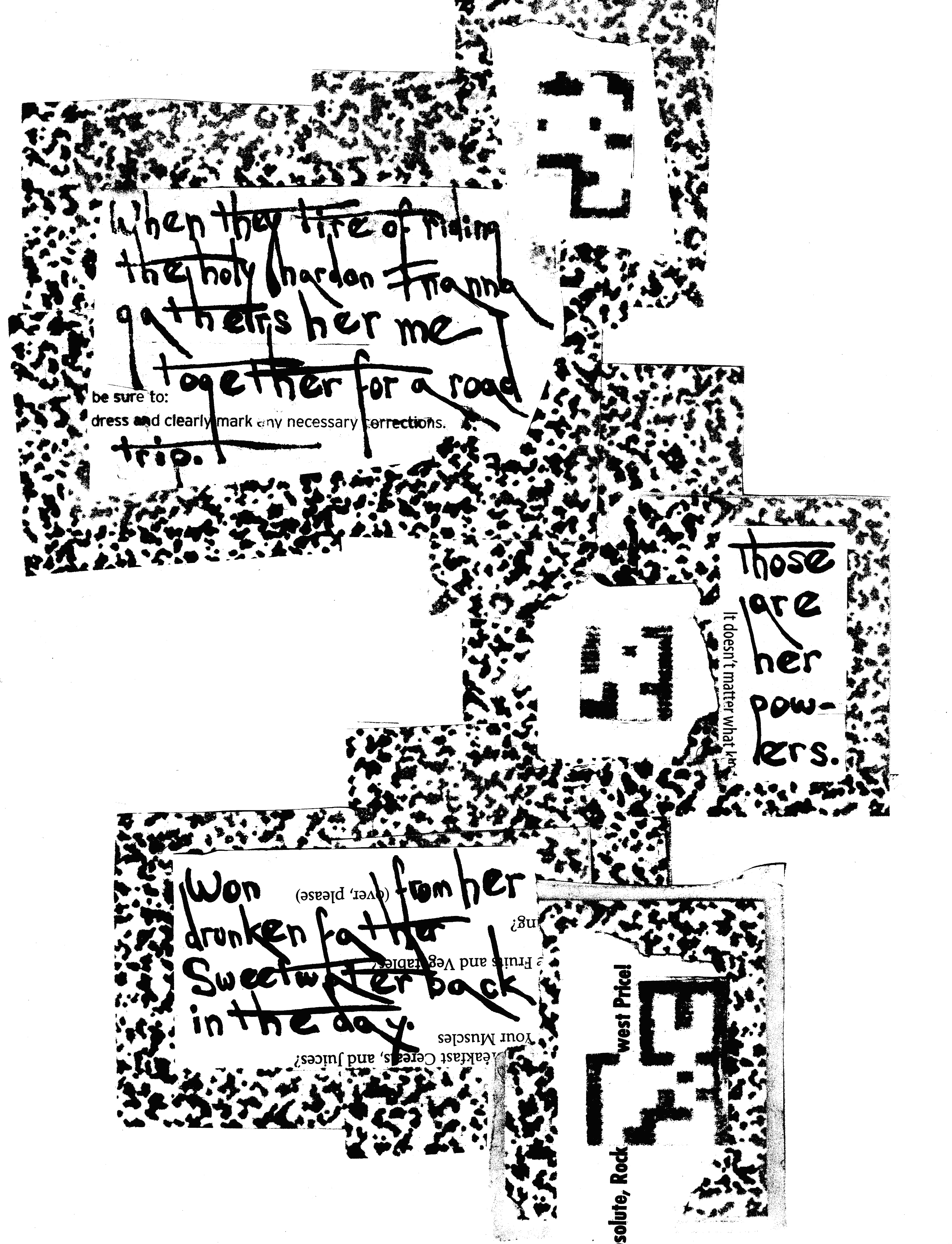
Hard to read on this scale so the text goes:

When they tire of riding the holy hardon Inanna gathers her me together for a road trip.

Those are her powers.

Won from her drunken father Sweetwater back in the day.

I’ve crassed it up some, sorry. But I wanted to bind it to their apex, when all is going lovelyly for both Dumuzi and Inanna, lettuce sprouting in its furrow, black boat quickened with cream, etc. The faces are harvested from scan codes on envelopes like this one.
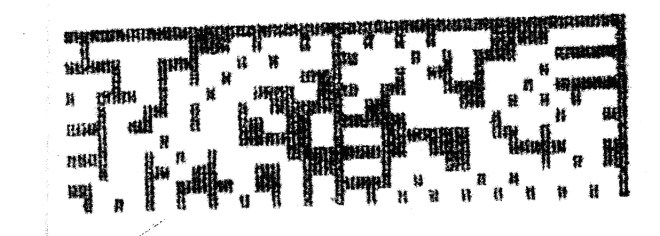
scan code

Riding the pareidolia wave again. They’ve become for me the galla, the demons come from the underworld to claim their own. They’re neither inner nor outer and terrify me. The whole book’s my effort to make a peace with them. That’s why they get to narrate this whole sequence — thought being, give them some say, they might quiet down some?

I’ll hope to remember to write of Milarepa and his demons sometime, that tale, what I think it taught me. In the meantime we know this about the galla they have
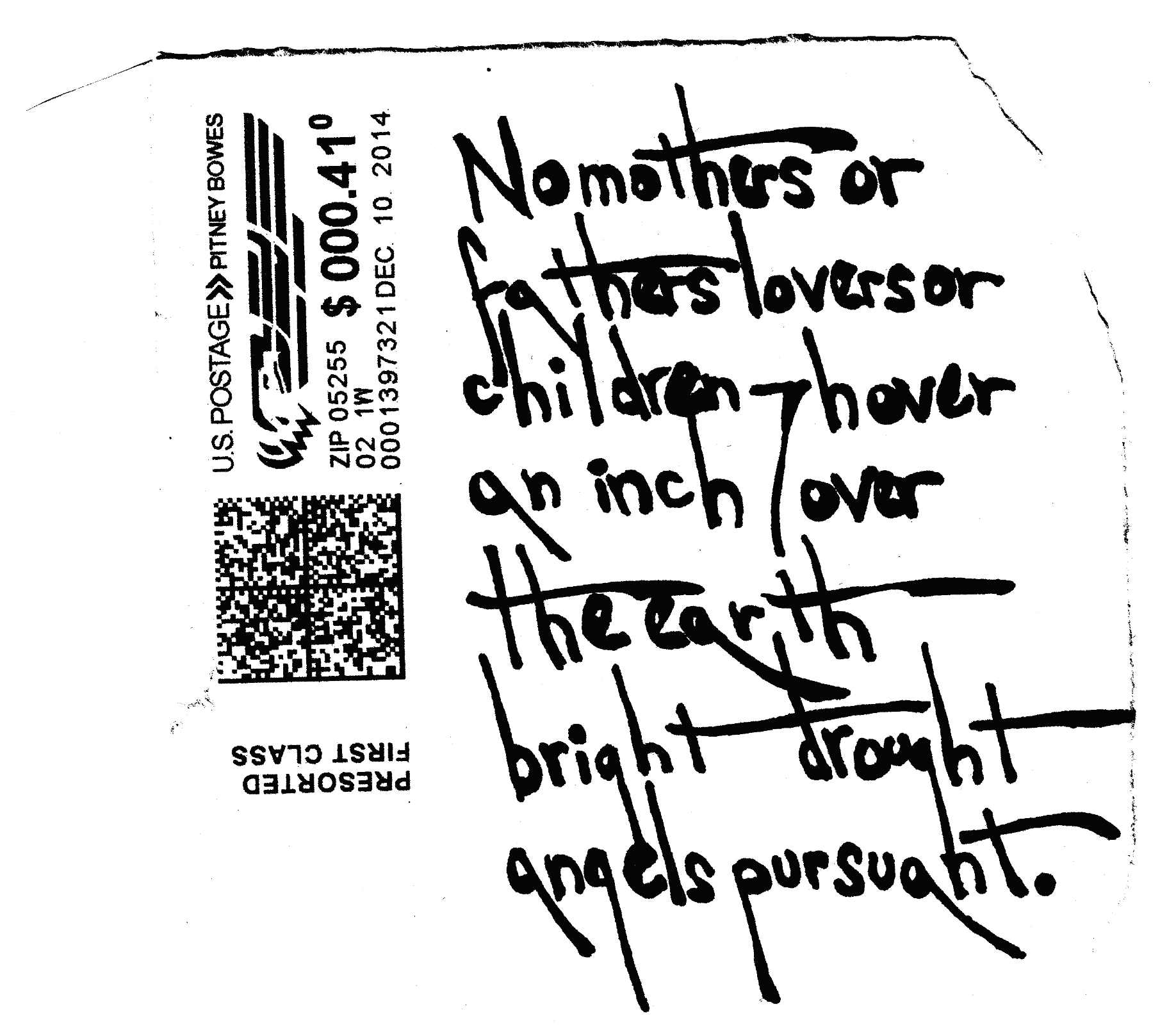
No mothers

Oooh scary right? Anyway I want to get brave Inanna, sad Inanna, maddening Inanna, on the road so I can go have some dinner, so here she is, with her galla attendant, and her faithful sidekick, cut from the same barcode as she. Thanks for your indulgences, many.
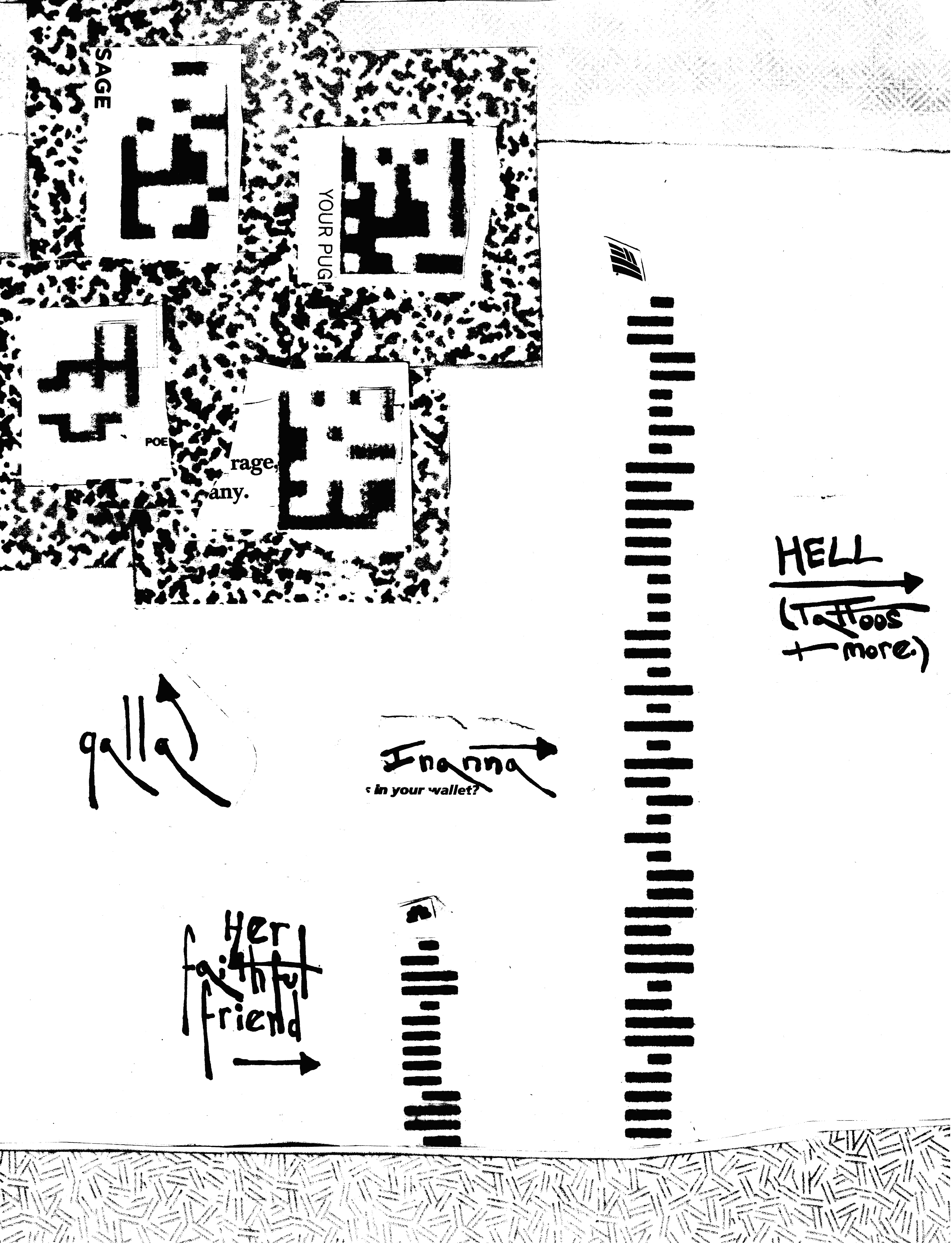
Hell (tattoos

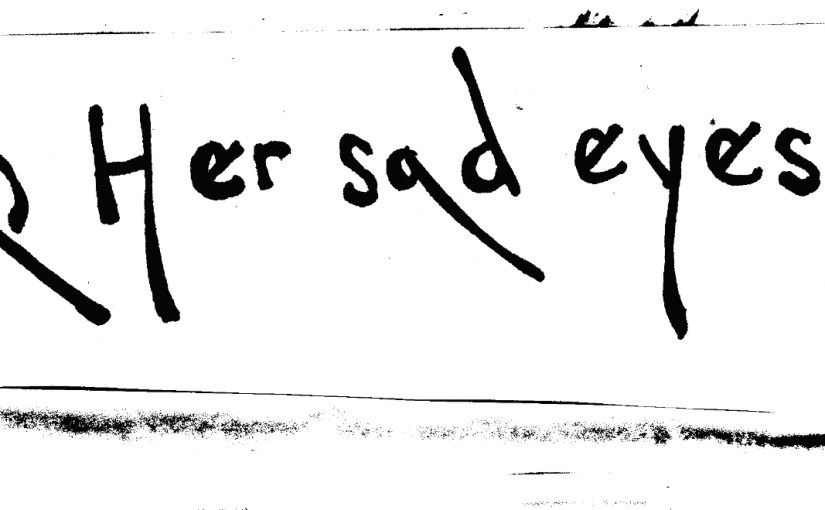
Sad Inanna

I’ve been posting scattershot this and that from Dumuzi and am feeling moved now to be a bit more steady and thoroughgoing at it. So I think I’ll post, as they come into their final framing, the picture poems I’ve made to tell the descent to hell and rescue and apotheosis of Inanna.

She’s the one who drew me into this biz in the first place many years ago. Before my true north turned out to be her rather less empowered but dearer to me now shepherd lover. She for me has been every woman, starting with the first of me, I have wanted to save or hold or leave or be safe with or from. “Devastatrix of the Lands.” O she’s a terror. And too she’s those eyes in the tent with Pound at Pisa not scornful. Kuanyin, what gentles.

So that got heavy. Also this is a comic book built out of junk mail. Anyway I’m thinking here at blog to intersperse the images with the source texts – in a way I won’t be able to in Dumuzi itself. If anyone’s ever fool enough to publish the damn fool thing.


The sequence begins with a word poem I hope gets the hapless awe one feels in the face of powers orders of magnitude huger than anything one could imagine mustering.

Reft

Tears
off a face
in bad

weather
at an altar
torn in

weather of
another
order.

Holy
sweet being
shining

gone
and the mountain
ashes in

flower.

The title came from Pound’s “What thou lov’st well shall not be reft from thee.”

Next, a picture poem.

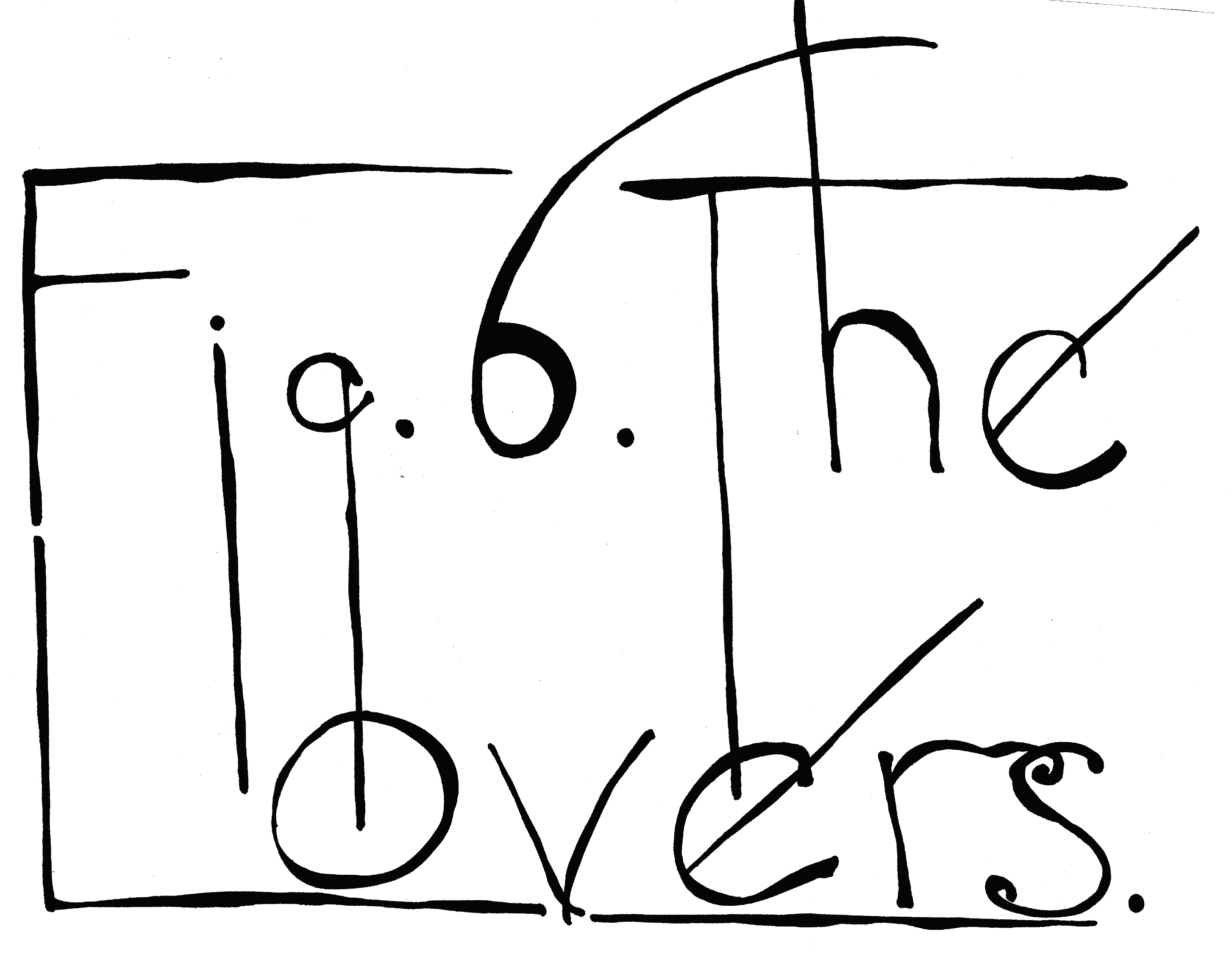
6. The lovers - fig

Kinda porny, I know, sorry. Goes with the territory (fertility myth). Intertitle, to tuck in at lower right, looks like this.

6. The lovers - title

The ground for it, the coitus and the tristesse, looks like this in the source where I first found them (The Ancient Near East: A New Anthology of Texts and Pictures, Vol. II, ed. James B. Pritchard).

The “honey-man,” the “honey-man” sweetens me ever,
My lord, the “honey-man” of the gods, my favored of the womb,
Whose hand is honey, whose foot is honey, sweetens me ever.
Whose limbs are honey sweet, sweetens me ever.

My sweetener of the . . . navel, [my favored of the womb],
My . . . of the fair thighs, he is lettuce [planted by the water].
It is a balbale of Inanna.

Somewhat more felicitous, and just for that more blushful, is Diane Wolkstein and Samuel Noah Kramer’s translation in Inanna: Queen of Heaven and Earth:

He shaped my loins with his fair hands,
The shepherd Dumuzi filled my lap with cream and milk,
He stroked my pubic hair,
He watered my womb.
He laid his hands on my holy vulva,
He smoothed my black boat with cream,
He quickened my narrow boat with milk,
He caressed me on the bed.

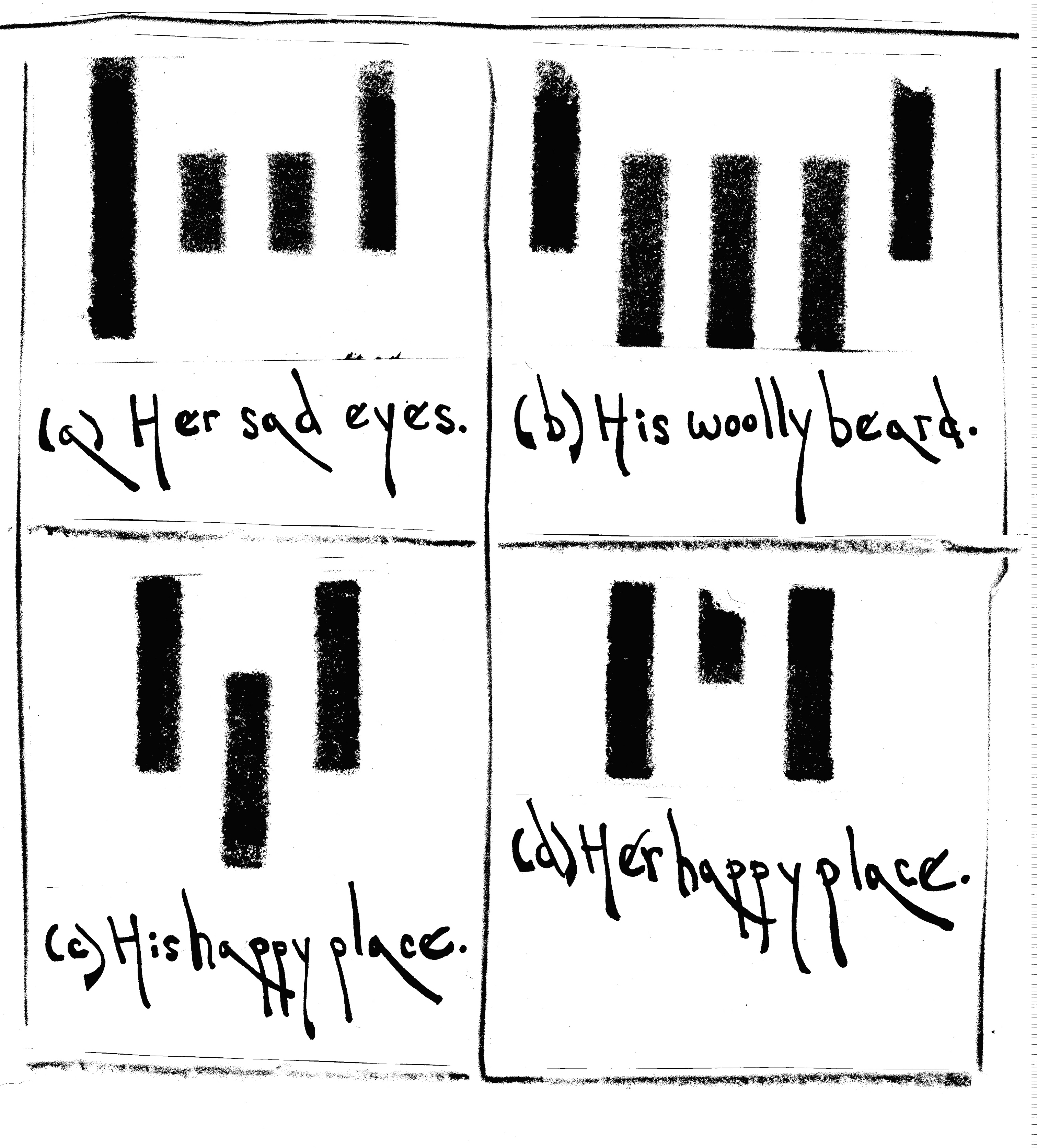
I prefer the anatomically more precise term “happy place.” Anyway, as all things must, this comes to dust. Says Inanna:

Now, my sweet love is sated.
Now he says:
“Set me free, my sister, set me free.
You will be a little daughter to my father.
Come, my beloved sister, I would go to the palace.
Set me free . . .”

I gave the restless to her cuz she’s the one to go awandering. That’s up soon. Thanks for scanning.