Columbia’s capitulation

Sent this off the other day. I encourage my fellow Columbians to do likewise.


Dear President Armstrong,

I am writing to express my disappointment and anger that my alma mater has capitulated to the bullying and coercion of the Trump Administration. I understand how worrisome a threat to withhold hundreds of millions of dollars in funding must be. I recognize how complex and contested issues of free speech and peaceful protest on Columbia’s and other American campuses are in these fraught times. Nonetheless, as an institution of higher learning in a free society, you have a duty to resist, even at great cost, powers that want to replace American democracy with an authoritarian and even – I no longer think the term is hyperbole – fascistic state. Next time they come demanding concessions, and you know as well as I that they will, please do the hard thing, and say no. You should be a model to other institutions of rectitude, not cowardice.

Respectfully,
Christopher Patton (SOA ’96)


Some bonus content from one of many newsletters I’ve begun following:

This week I want to talk about a small thing that gives me hope. A “green shoot,” if you will, in a time when so much seems to be withering.

It’s early, it’s scattered, and it’s more of a tendril than a surge of green.

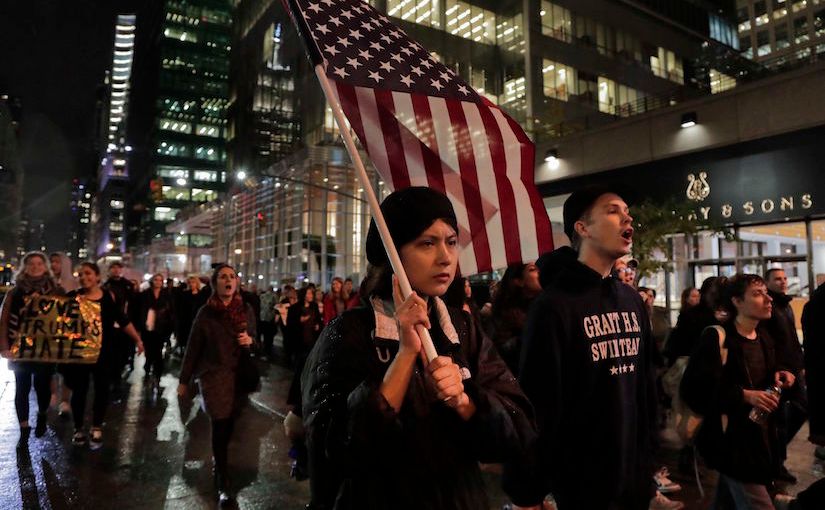
When the leadership of institutions bows down to the autocrat — happening a lot these days — that’s often not the end of the story. In many key cases, the people who make up those institutions are refusing to go quietly. The individuals with less power, not more, are stepping up to defend our democracy.

… If this trend continues, with ordinary people showing courage where their leaders fail, that may just be the determinative factor in whether the autocratic project ultimately falls short.

—Ben Raderstorf, “When leaders fail, people… step up?”

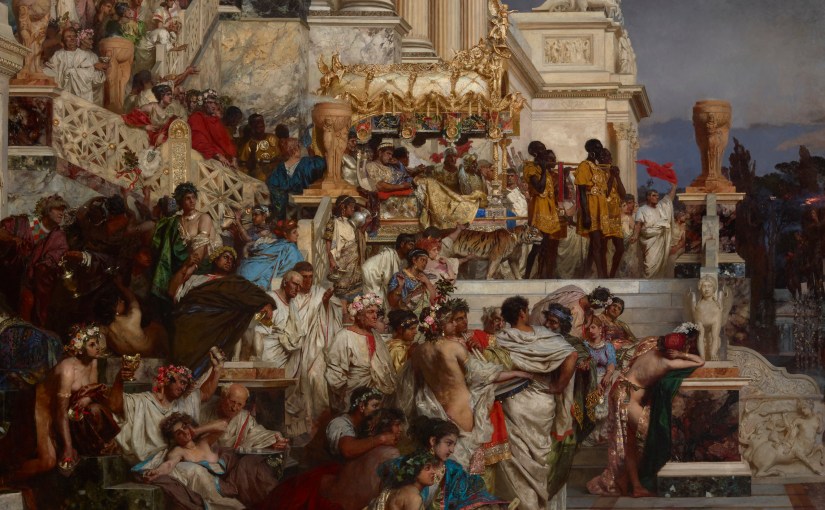
Nero again

We’re watching an administrative coup unfold in real time. Call it what you like, competitive autocracy, illiberal democracy, techno-authoritarianism, patrimonial state, First Galactic Empire come home to eat its makers, this is world-historical bad, end of the Pax Americana, its repressed terms & disjected others unleashed.

If it were it up to me, our world would be small egalitarian communes, each developing its own inner science & making such tools as subsistence requires, each at a cautious distance from the others, permitting & inviting trade in the goods that make this, let’s just say it, hard life, worth living & sometimes a joy to. The bow that so moves me in Japanese public life as diplomatic axiom. Now you know me.

So. No fan of empire. Have always sided with the Rebel Alliance. You too, I assume. But now it’s on its way out, the American Imperium, I can see the good it did, anchoring a fraternity of democracies, extending soft power around the globe. Witness the demolition of USAID occurring in real time in a digisphere that really is too much with us. Getting & spending we lay waste our powers.

A caul of illusion has been torn from my eyes. Liberal democracy, those rights & freedoms, in the sweep of history they’re the exception, not the rule. Even at the best of times, some folks are granted them freely, others have to fight for them, bitterly. And this is not the best of times.

What does #resistance look like at this moment? I’ve signed petitions, written to my reps, disinvested from corporate bodies performing anticipatory obedience with balletic ease, had beers with Democrats Abroad, scheduled recurring small donations to groups advocating for migrants & trans folk & Zen peacemaking & practice, and committed with less than perfect followthrough to withdrawing my attention & business from Facebook, Instagram, Whats­App, Amazon. What else? What works? Boycott? General strike? Divert sums owed the IRS to beleaguered NGOs & university departments? What can we draw from the repertoire of the roshis of civil disobedience who achieved independence for India & civil rights law in America? Do we need a Ghandi, an MLK, or in a time when charisma belongs to the con man, can we do it dispersedly?

And will I, if my one country invades my other, take up arms? I bawled when I killed a mouse my cat only half had. Can’t see myself killing a person – killing a world. Maybe my little cottage up north can be refuge for women & men brave in other ways than I. Meanwhile I read & watch counterfactual fictions, Plot Against America, Man in the High Castle, Civil War & try my hand at same. Here’s one, the last piece I’ll write for Occam’s Aftershave, prospectively dated 2028, the earliest it might see a public or private shelf.


9 March 2028

Last year Articles of Impeachment fell short by three votes. Republican senators who voted to convict have enlisted Academi (né Blackwater) mercenaries to guard their families 24/7. Key cabinet positions, Defence, Commerce, Agriculture, have been arrogated to the Presidency. Elon the Ketamine Jester is halfway to Mars.

Talk-show historians describe the Republican Party as a cult of personality with patrilineal followthrough. Comparison to the People’s Republic of North Korea is the common socmed cliché. Tiktok has resumed operations & benefits from lucrative government contracts. The Democratic Party has split along ideological fault lines. Armed secessionist movements in restive west coast & northeastern states have given President Vance, who assumed power last year upon Donald Trump’s full incapacitation by an assassin’s bullet – late-night comics vie for the best riff on the term “vegetative state” – a pretext for suspending civil liberties & postponing federal elections, even as Trump’s children vie for the Republican nomination.

Among our new entertainments are cagematches between AI-generated corporate avatars of competing socmed algorithms. Hesitant to gather in streets patrolled by federal troops – the Posse Comitatus Act has been invalidated by the Supreme Court, the extent of whose financial enmeshment with the ruling family has only been properly understood since last year’s exposé in the Washington Post, awarded a Pulitzer on the day the paper published its final issue, a gesture whose poignancy was lost on no one – opponents of the regime gather in virtual spaces established by Meta offshoot Maté to cheer progressive factions on to victory over TelegramX8Chan. Bluesky always wins. In WWII the Japanese Imperial government encouraged citizens to dedicate their leisure time to haiku about cherry blossoms. Detention camps bloom in the desert.

In Canada, the newly formed People’s Party, a separatist entity formed by disaffected holdouts from the Liberal–Conservative merger, holds 23 seats in Parliament & is negotiating a Pacte avec le Diable with the Bloc Québecois.

NATO has reformed its Charter to eject the United States & Hungary. Serbia has been admitted. France & Britain extended their nuclear umbrellas to all European Union nations in 2026 upon the latter’s return to the EU on terms compared unfavourably in the tabloid press, which against all expectations continues to thrive, to those of the Versailles Treaty. Iran, Saudi Arabia, Egypt, South Africa, South Korea, Indonesia, Brazil, Argentina, & possibly Japan & Colombia – policies of strategic ambiguity are the norm – have the Bomb.

A climate change feedback loop is releasing vast sinks of carbon stored in northern tundras, laying waste arable land in equatorial & sub-equatorial regions & prompting speculation in diplomatic backrooms that Canada, enjoying robust population growth thanks to an influx of climate refugees & the opening of swaths of land to newly bioengineered supercrops, will be a global power in two decades.

With Canada’s admission to the European Union the world has cohered into four spheres of influence – United States, European Union, People’s Republic of China, Russian Federation – inviting comparison to the nineteenth-century world of Great Powers. Nations of the Global South play these actors against each other as best they can. More align with China than with others due to China’s skilful projection of soft power. International organizations such as the WTO & IPCC have not survived American withdrawal. All but the second listed above are authoritarian regimes with democratic facades that fool no one but are sustained for the injury they inflict on constructs of objective or intersubjective truth. Masha Gessen has taken the lead in close-reading the post-truth world.

The European Union remains committed to representative democracy but is under assault from within by neo-fascist movements that harness popular discontent over immigration, a fraying social safety net & draconian pollution controls. Petrol is €15 a litre. Execution by firing squad is making a comeback. Ukraine is a rump state centred on the city of Lviv, prey to an AI-driven disinformation campaign & slipping in spite of the best efforts of its elites into the Russian sphere of influence. Vladimir Putin was embalmed last month in rosewater. Historical mocudramas set in the early Roman Empire continue to gain in popularity.

“20 Lessons from the 20th Century on How to Survive in Trump’s America”

We are watching a full blown assault on American democracy.

The coronavirus pandemic, which might have seemed to doom Trump to electoral defeat, is providing cover for a renewed attack on democratic norms, practices, institutions, values. Trump has the aid of lackeys in his Cabinet, enablers in Congress, allies he placed in the courts, racist & brutal police forces, and armed paramilitary groups committed to white supremacy & the breakdown of civil society.

Here, because we need it, is Timothy Snyder’s “20 Lessons from the 20th Century on How to Survive in Trump’s America,” as published on November 21, 2016. (It grew into a book which you can get here.) I’ve formatted it to emphasize bits that seem extra salient to me.

If you don’t feel up for marching (no. 10) there are 19 other things here you can do.


Americans are no wiser than the Europeans who saw democracy yield to fascism, Nazism or communism. Our one advantage is that we might learn from their experience.  Now is a good time to do so. Here are 20 lessons from across the fearful 20th century, adapted to the circumstances of today.

1. Do not obey in advance.

Much of the power of authoritarianism is freely given. In times like these, individuals think ahead about what a more repressive government will want, and then start to do it without being asked. You’ve already done this, haven’t you? Stop. Anticipatory obedience teaches authorities what is possible and accelerates unfreedom.

2. Defend an institution.

Follow the courts or the media, or a court or a newspaper. Do not speak of “our institutions” unless you are making them yours by acting on their behalf. Institutions don’t protect themselves. They go down like dominoes unless each is defended from the beginning.

3. Recall professional ethics.

When the leaders of state set a negative example, professional commitments to just practice become much more important. It is hard to break a rule-of-law state without lawyers, and it is hard to have show trials without judges.

4. When listening to politicians, distinguish certain words.

Look out for the expansive use of “terrorism” and “extremism.” Be alive to the fatal notions of “exception” and “emergency.” Be angry about the treacherous use of patriotic vocabulary.

5. Be calm when the unthinkable arrives.

When the terrorist attack comes, remember that all authoritarians at all times either await or plan such events in order to consolidate power. Think of the Reichstag fire. The sudden disaster that requires the end of the balance of power, the end of opposition parties, and so on, is the oldest trick in the Hitlerian book. Don’t fall for it.

6. Be kind to our language.

Avoid pronouncing the phrases everyone else does. Think up your own way of speaking, even if only to convey that thing you think everyone is saying. (Don’t use the Internet before bed. Charge your gadgets away from your bedroom, and read.) What to read? Perhaps The Power of the Powerless by Václav Havel, 1984 by George Orwell, The Captive Mind by Czesław Milosz, The Rebel by Albert Camus, The Origins of Totalitarianism by Hannah Arendt, or Nothing is True and Everything is Possible by Peter Pomerantsev.

7. Stand out.

Someone has to. It is easy, in words and deeds, to follow along. It can feel strange
to do or say something different. But without that unease, there is no freedom. And the moment you set an example, the spell of the status quo is broken, and others will follow.

8. Believe in truth.

To abandon facts is to abandon freedom. If nothing is true, then no one can criticize power because there is no basis upon which to do so. If nothing is true, then all is spectacle. The biggest wallet pays for the most blinding lights.

9. Investigate.

Figure things out for yourself. Spend more time with long articles. Subsidize investigative journalism by subscribing to print media. Realize that some of what is on your screen is there to harm you. Learn about sites that investigate foreign propaganda pushes.

10. Practice corporeal politics.

Power wants your body softening in your chair and your emotions dissipating on the screen. Get outside. Put your body in unfamiliar places with unfamiliar people. Make new friends and march with them.

11. Make eye contact and small talk.

This is not just polite. It is a way to stay in touch with your surroundings, break down unnecessary social barriers, and come to understand whom you should and should not trust. If we enter a culture of denunciation, you will want to know the psychological landscape of your daily life.

12. Take responsibility for the face of the world.

Notice the swastikas and the other signs of hate. Do not look away and do not get used to them. Remove them yourself and set an example for others to do so.

13. Hinder the one-party state.

The parties that took over states were once something else. They exploited a historical moment to make political life impossible for their rivals. Vote in local and state elections while you can.

14. Give regularly to good causes, if you can.

Pick a charity and set up autopay. Then you will know that you have made a free choice that is supporting civil society helping others doing something good.

15. Establish a private life.

Nastier rulers will use what they know about you to push you around. Scrub your computer of malware. Remember that email is skywriting. Consider using alternative forms of the Internet, or simply using it less. Have personal exchanges in person. For the same reason, resolve any legal trouble. Authoritarianism works as a blackmail state, looking for the hook on which to hang you. Try not to have too many hooks.

16. Learn from others in other countries.

Keep up your friendships abroad, or make new friends abroad. The present difficulties here are an element of a general trend. And no country is going to find a solution by itself. Make sure you and your family have passports.

17. Watch out for the paramilitaries.

When the men with guns who have always claimed to be against the system start wearing uniforms and marching around with torches and pictures of a Leader, the end is nigh. When the pro-Leader paramilitary and the official police and military intermingle, the game is over.

18. Be reflective if you must be armed.

If you carry a weapon in public service, God bless you and keep you. But know that evils of the past involved policemen and soldiers finding themselves, one day, doing irregular things. Be ready to say no. (If you do not know what this means, contact the United States Holocaust Memorial Museum and ask about training in professional ethics.)

19. Be as courageous as you can.

If none of us is prepared to die for freedom, then all of us will die in unfreedom.

20. Be a patriot.

The incoming president is not. Set a good example of what America means for
the generations to come. They will need it.

Masha Gessen on autocracy

How Masha Gessen wishes Clinton’s concession speech had begun:

Thank you, my friends. Thank you. Thank you. We have lost. We have lost, and this is the last day of my political career, so I will say what must be said. We are standing at the edge of the abyss. Our political system, our society, our country itself are in greater danger than at any time in the last century and a half. The president-elect has made his intentions clear, and it would be immoral to pretend otherwise. We must band together right now to defend the laws, the institutions, and the ideals on which our country is based.

Her conciliation, Obama’s too, was an abdication, says Gessen, and I can’t say I disagree. This is not an ordinary defeat to an ordinary opponent. We need to sustain the norms of civil society – peaceful transfer of power and such – while saying loud and clear that the other party is an enemy to those norms.

Gessen sees us headed for an autocracy like that of Putin’s Russia. I hope they’re wrong. I hope the inertia of a massive civil service, and the dispersal of so much of governance to the several states, and the moral competence of ordinary women and men in positions of care and stewardship, will get us through. But honestly I’m scared shitless.

Scared whatever scale I look at this catastrophe on. Attacks on people of colour and queer folk on a steep rise right this very moment. Sea level rise getting locked in that’ll straiten human and non-human life the planet round for millennia. Attacks, autocracy, apocalypse.

Well, what matters is to act, not the scale of the act. Can’t stop global warming but I can spread the word re: resistance guidelines. Gessen’s Rules for Survival in an autocracy:

  1. Believe the autocrat. He means what he says.
  2. Do not be taken in by small signs of normality.
  3. Institutions will not save you.
  4. Be outraged. It is essential to maintain one’s capacity for shock.
  5. Don’t make compromises.
  6. Remember the future. Nothing lasts forever.

The whole article here. It’s eye-opening.