
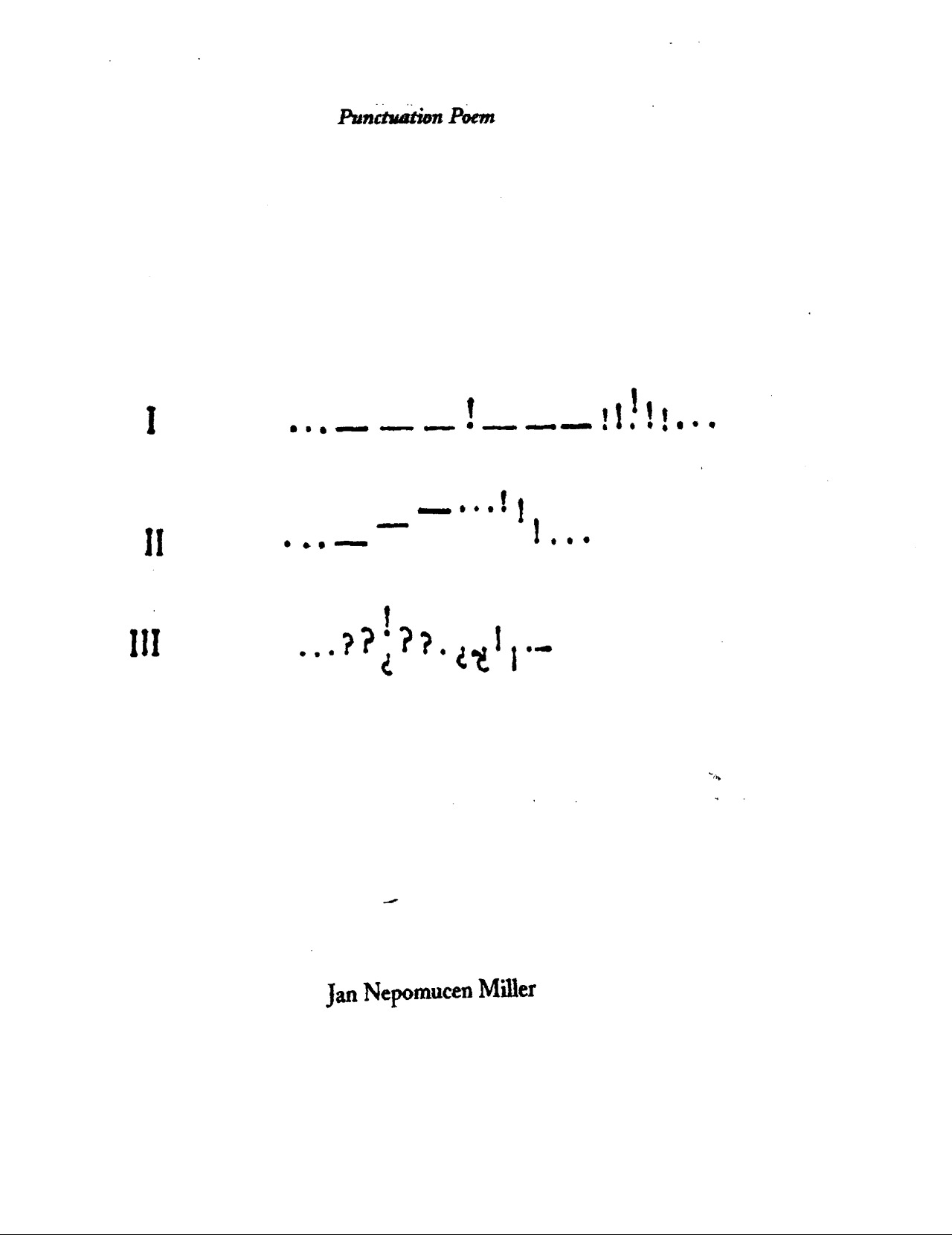
In Imagining Language, eds. Jed Rasula and Steve McCaffery
In Imagining Language, eds. Jed Rasula and Steve McCaffery
Yestereven, erasure marked typographically, as with Carson and Schwerner, giving a feel of fidelity, though that’s often mock. Also, erasure as palimpsest, as in Bervin’s Nets, the source poem receding into the page but not altogether invisible.
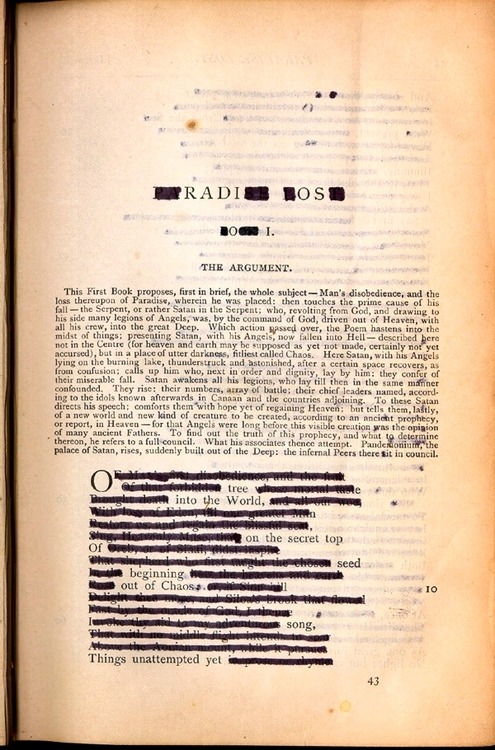
The maybe most austere mode is just to leave the page untouched in its white or creamy presentness. That’s Ronald Johnson’s approach in Radi Os, his seminal erasure of Milton’s Paradise Lost —

If austere is one end of a spectrum, and illuminative the other, somewhere in the middle’s any practice that retains the erasure marks, making what art of them they propose. Can find a precursor to that in this page from Johnson’s draft copy of Paradise Lost —
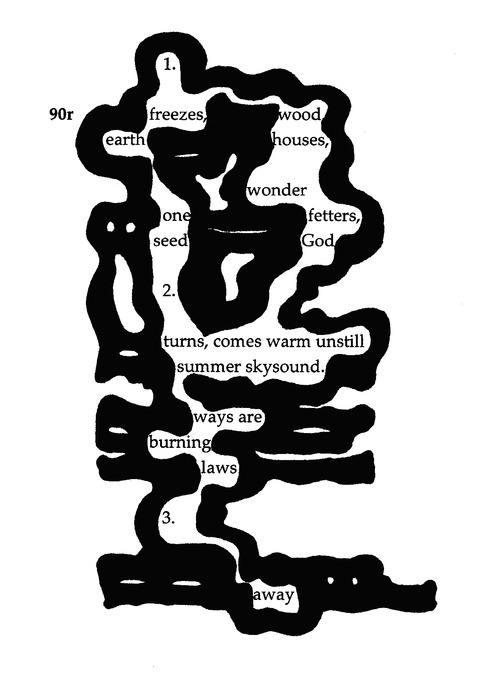
It’s a question I’ve messed with some in Overject, erasures I’ve tried out of a minor Anglo-Saxon poem sequence variously called “Maxims” or “Gnomic Verses” or (by me) “Proverbs.” Here I work up the redaction marks to make some funny (and some not-so-funny) faces.
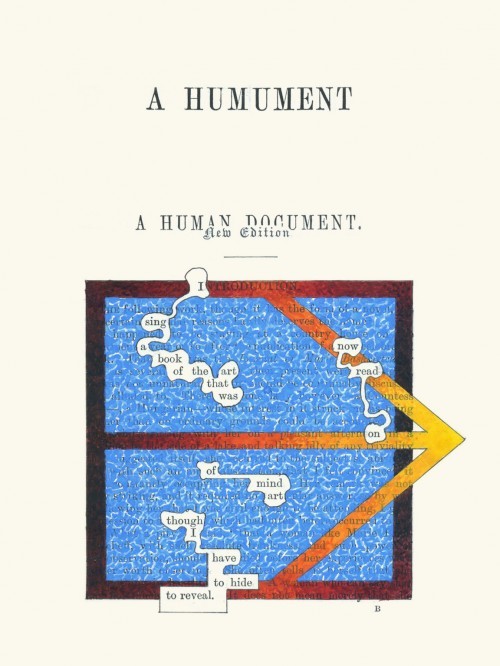
At the illuminative end of the spectrum (both ends and all middles presided over majestically by Wm. Blake) must for sure be Tom Phillips’s A Humument.
Fun fact. My college roommate, Johnny Carrera, my first year at Oberlin, recently had a show with Phillips at MassMOCA. And that’s all for tonight, mes amis, dormez bien.

This from poetsorg:
Jack Spicer‘s postcard, mid-1950s, announcing a reading of 5 Boston poets: Jack Spicer, Stephen Jonas, John Wieners, Joe Dunn and Robin Blaser


This from erikkwakkel:
Norwich pattern books
These happy-looking books from the 18th century contain records. Not your regular historical records – who had died or was born, or how much was spent on bread and beer – but a record of cloth patterns available for purchase by customers. They survive from cloth producers in Norwich, England, and they are truly one of a kind: a showcase of cloth slips with handwritten numbers next to them for easy reference. The two lower images are from a pattern book of the Norwich cloth manufacturer John Kelly, who had such copies shipped to overseas customers in the 1760s. Hundreds of these beautiful objects must have circulated in 18th-century Europe, but they were almost all destroyed. The ones that do survive paint a colourful picture of a trade that made John and his colleagues very rich.
Pics: the top two images are from an 18th-century Norwich pattern book shown here; the lower ones are from a copy kept in the Victoria & Albert Museum in London (item 67-1885), more here.
Love this. The swatches put me in mind of the colour stripes on resistors that tell you just how much resistance they put up in ohms.
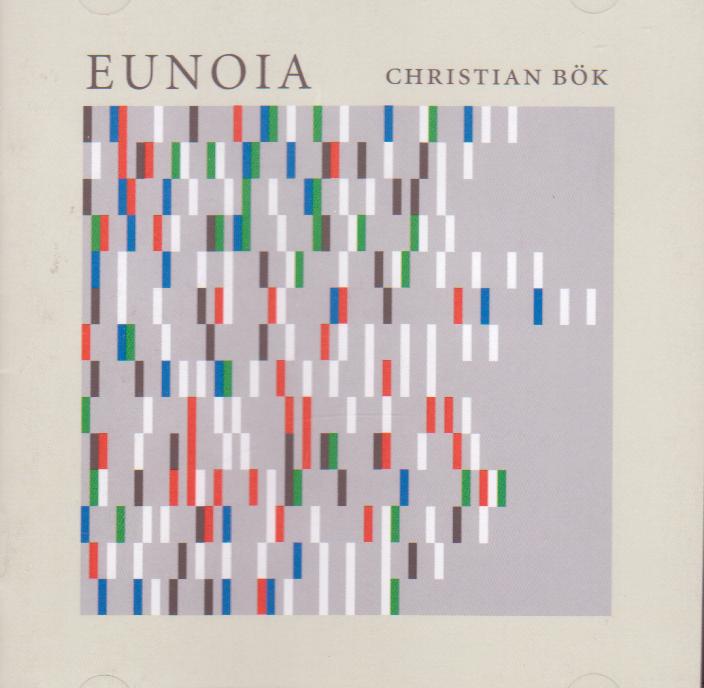
Too, the cover of Christian Bök’s Eunoia, a sound-to-hue translation of Rimbaud’s “Voyelles.” Here’s the image.
Here’s the poem it translates.
A noir, E blanc, I rouge, U vert, O bleu: voyelles,
Je dirai quelque jour vos naissances latentes:
A, noir corset velu des mouches éclatantes
Qui bombinent autour des puanteurs cruelles,
Golfes d’ombre ; E, candeur des vapeurs et des tentes,
Lances des glaciers fiers, rois blancs, frissons d’ombelles;
I, pourpres, sang craché, rire des lèvres belles
Dans la colère ou les ivresses pénitentes;
U, cycles, vibrements divins des mers virides,
Paix des pâtis semés d’animaux, paix des rides
Que l’alchimie imprime aux grands fronts studieux;
O, suprême Clairon plein des strideurs étranges,
Silence traversés des Mondes et des Anges:
— O l’Oméga, rayon violet de Ses Yeux!
Bök translates each vowel in the poem according to the equivalences laid out in the first line. Consonants make the grey field. He calls perversely the sum of it “Of Yellow.”
A digital version of Robert Grenier’s seminal Sentences. My students have a great time with it and the questions it raises—what’s part and what’s whole? what’s the function in a poem of silence and empty space? how does dispersal of the poem as a digital edition affect its prior existence as a pricey handmade edition? when he writes “bird,” does he mean a bird, or does he mean “bird”?—keep us happy and hopping a long time.
Whalecloth’s home page, with a bit of context for the poem.
 The Art of Compost