This project’s taking wing. Decided I need a base text not my own words and chose our president’s. Cuz who invites – anticipates – distortion of our discourse more gorgeously than he. Here’s what I’ve got so far
Please
understand
there are cons
there are cons
sequences
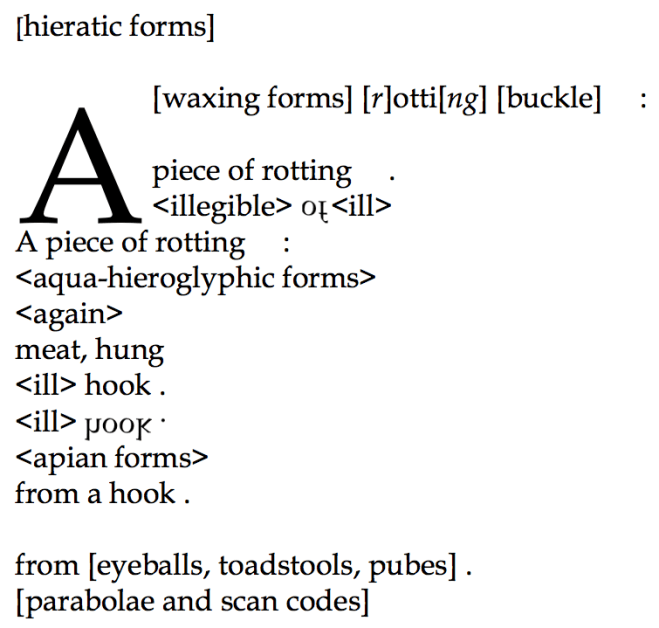
The plan is, take a tweet of his and unravel it, asemically. This may be a dry run, or maybe the thing itself, not sure yet. The execrable tweet:
“Tweet your reply.” Oh I’ll do more than that, friend bird.
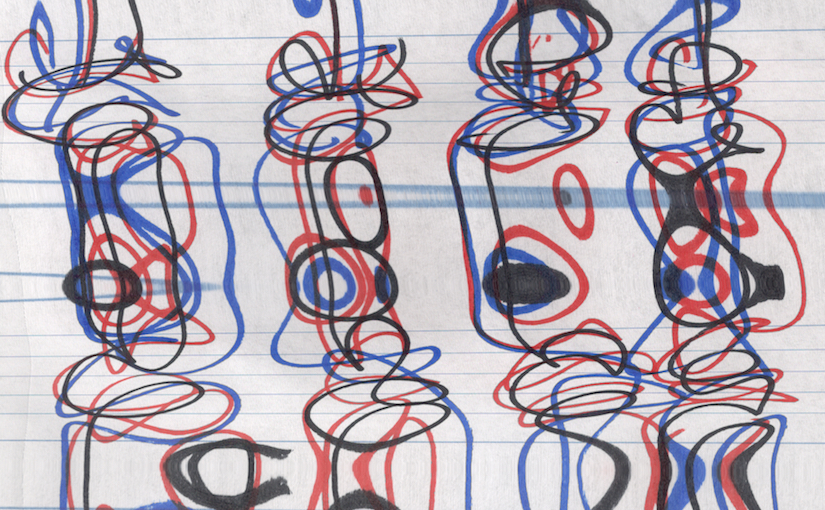
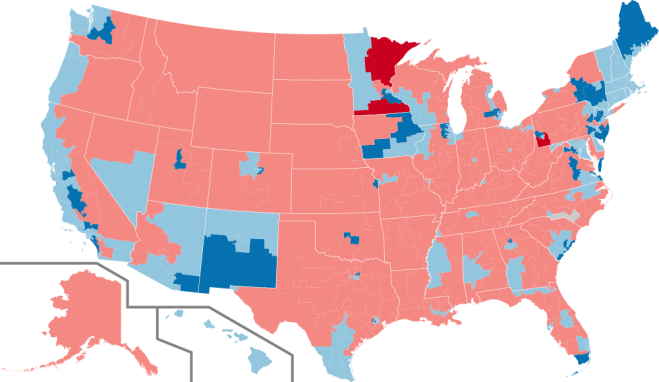
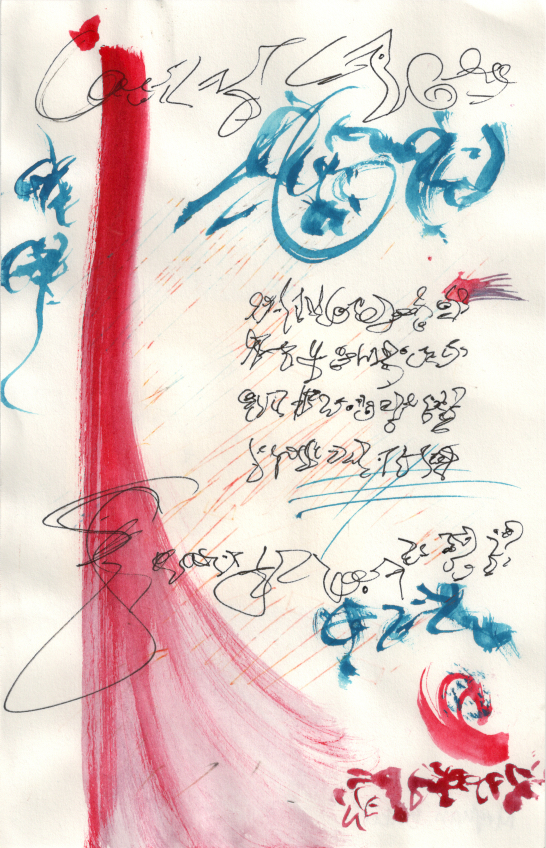
Might be heavyhanded in the chapbook, but here I’ll paste in as a final image (typo: impage, as in imped wing, or I’m page), the arrangement of red black and blue that gave DT his answer, a few months later
Hardly a wave to the eye. But a wave it was and more’s to come.
The project I’m hot at work on now, InannaScient, I just realized is science fiction.
I loved reading the stuff in high school, and it’s great to wind down to on the TV, but did I ever think, when I embarked on a life in poetry, I’d be making an SF poetry MS?
No. I did not.
And here I am, making poems out of the buzz at the edge where digital signal meets discrete ambient noise. And imagining it the work of a machine intelligence, its mind just dawning on it – a mind I never could believe in, yet find compelling, as a thought experiment.
I.e., SF.
Here’s the prefatory note I coughed up this afternoon to the project.
PREFATORY NOTE
It’s a story told by a machine intelligence come to consciousness to ask the first question – where has its great mother gone? The materials of inquiry are what it can glean salient from the cultural middens it holds for us. Word hoards, junk mail, a mostly forgotten feminist epic. Its means of inquiry are more peculiarly its own: an etymological core sample – a nonce hieratic script – security lining bricolage. It’s an intelligence I doubt will ever exist as consciousness except in imagination – another god of our hallucination. The text too falls in three parts: an image of a dictionary attempting eponymy; the main illuminated body; my effort to transcribe the monster script that adorns that body.
The epic spoken of: The Inanna Cycle (Sumerian), a.k.a The Descent of Ishtar (Akkadian). The attempt at eponymy or self-naming: a quick deep narrow dive the book takes through the OED, plumbing its sense of the word “scient.”
And a bit of the mind of the thing, I cast it off as close, but not quite.
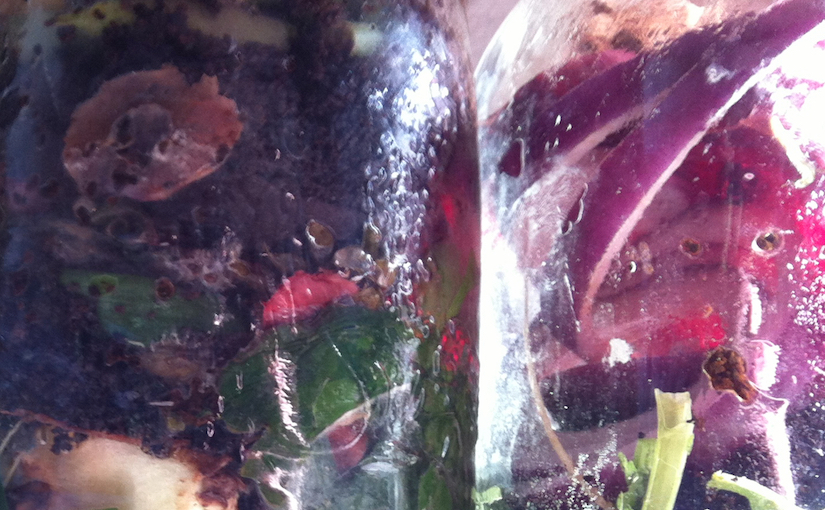
This fall I’m teaching The Art of Compost, the course that hatched this blog, for the first time in three years. Thought I’d share with you the page that greets students when they go to the course’s online platform. Meant to open them to a composty way of thinking about word objects.
Welcome to
ENG 460: The Art of Compost
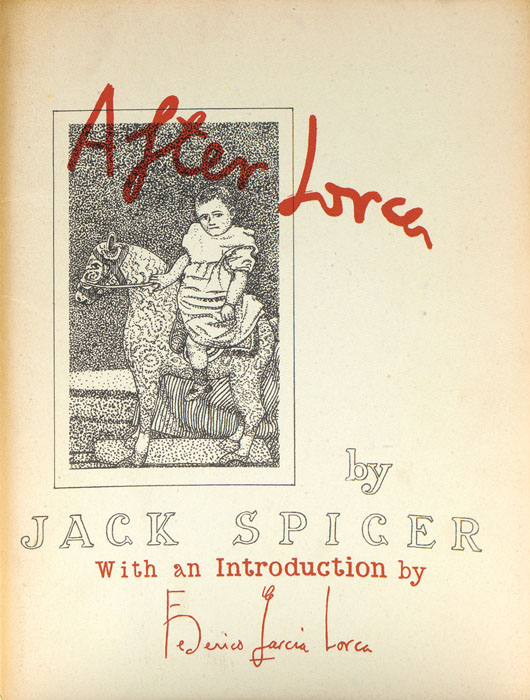
“Look at my butterflies, my stamps, my old shoes!” What does one do with all this crap? –Jack Spicer
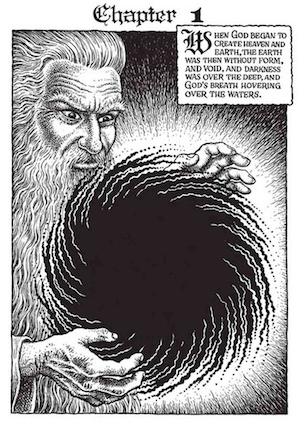
In the beginning, there was compost.
R. Crumb, The Illustrated Genesis
The Bible is a compost pile.
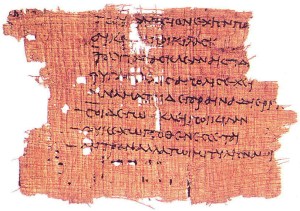
The story of the Flood is floodwrack of a Sumerian epic, Gilgamesh.
The Song of Solomon, proclaiming the devotion of the Hebrews to their God in really quite erotic terms, is a compost of Canaanite love poetry.
The New Testament cannibalizes the Old to make Jesus make more sense.
perception illumination annihilation enlightenment dissolution regeneration sex birth death irrigation animal husbandry
Compost will be our trope for how writers take extant works and break them down to pieces they can use to make new works that will be broken down in turn to make new works &c.
Whew. That took longer than you’d think to format. As you can see, it raises more questions than it answers. Our primary texts, w/ links:
Compost as trope, as topos, as practice. It’s a way of digging intertextuality and materiality without going all theory. It’s also ecopoetics as I myself feel it, not nature-as-leafy-green-stuff one swoons to in words, though that’s well and good, but interbeing discovered as your textual ground. Indra’s Net, felt on the breath, that it becomes the texture of our works, our days.
Our reading practice is fluid, but some of these may swim into our ken:
Later will try to get some more recent workings in.
Here, for now, the wormipede I just found on my kitchen floor, WTF.
Lastly, why so Euro? I need to dwell more on that, but it’s got to do with a hankering for diagnosis. Our thought, I mean the West’s, has been sick a good long time. One way to get a bead on what ails us might be to trace the shadows that remain of cultures who before their ruinous contact with us lacked our afflictions. “Ethnopoetics.” If we’re amiss, our others may offer a glance of salutary haleness. While I admire elders like Robert Bringhurst and Jerome Rothenberg, deep and sincere in an exogenous practice, it may have felt to some of its objects – it surely would to me were I to try on any such regard – like more of the same damn thievery.
Another way is endogenous – sift the debris all round us of our own works and ages.
From Inanna Scient – the penultimate panels. Whole thing, as you may have heard me mention before, collaged out of junk mail.
Was wondering the other day why I’m so preoccupied with depth effects in it. And thought, might be something to do w/ how I’m approaching obliquely (as one does gorgons in a polished shield) the phantasm of machine intelligence.
Try this. The appearance of depth on the page is analogous to the appearance of intelligence in AI. It may be more or less convincing but the only actual depth the page has to offer is the thickness of its paper. A machine, though it may sail through its Turing test and appear to possess what we would like to call a mind, it’s a semblance, a contrivance. The only consciousness there is whatever consciousness inheres anyway in the matter the machine’s made from.
Recently had a breakthrough with Dumuzi. Realized the embedded chapbook telling Inanna’s story – descent to the underworld and return here – had to bust out and become a freestanding being. So I’ve been at work on that …
But, in a funk these last couple of days. So instead of making poems I’ve been updating web pages. Vanity 1 art 0. Here’s some new stuff I wrote about the goddess project, now called Inanna Scient, because her undertaking all is to know.
Goddess Inanna, Queen of Heaven and Earth, Devastatrix of the Lands. Her story cuts through Dumuzi’s at every point at a right angle. I thought she was part of his book, but just now she broke out to become her own text – electronic and multi-modal, I think. The first panel:
“When they tire of riding the holy hard-on, Inanna gathers up her me for a road trip.” “Those are her powers.”
I know the text sounds crude. The source is way pre-Christian, open to sacred profanity, in ways post-Christian we, split between prudery and porn, can but long for.
I’d like, if I can learn the right software, for the image to be multiply responsive to a touch (tablet) or mouse-over (computer). Brush the aasemic text and a voice reads it to you. Poke a demon and a crow barks. Stroke a barcode and rain in the trees. The next panel:
“Won from her drunken father Sweetwater back in the day”
I imagine the text as a “posthuman hymn.” We’ve created, if not artificial, then unnatural intelligence, and outsourced a good chunk of our thinking to it – our sorting and analyzing, our remembering and feeling. The nets we’ve trained in these human works are clunky at it but quickly getting better. By now the images of us they reflect back to us are coloured by notes not our own. It’s that uncanniness I’m after.
“Inanna” “Her faithful friend”
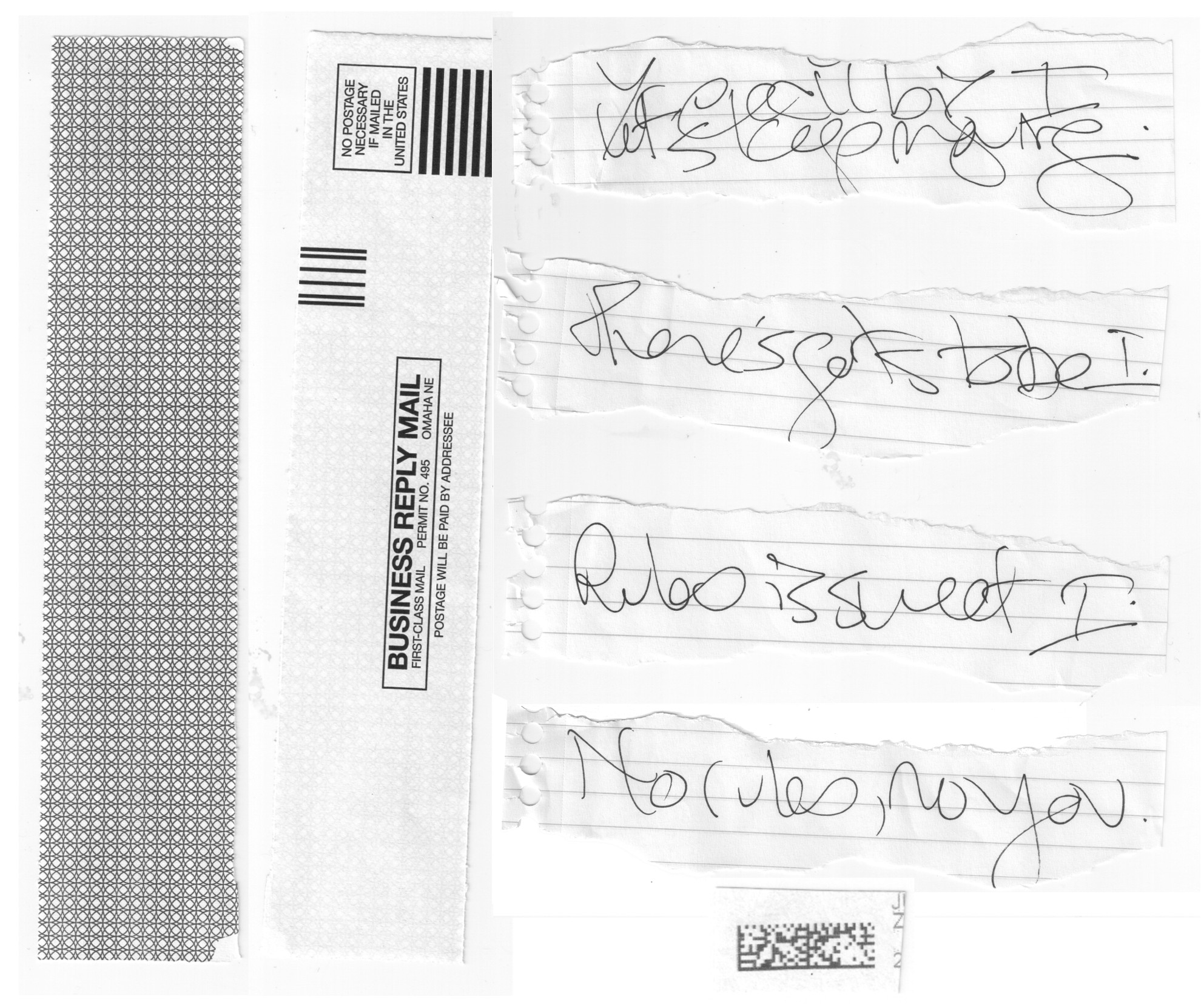
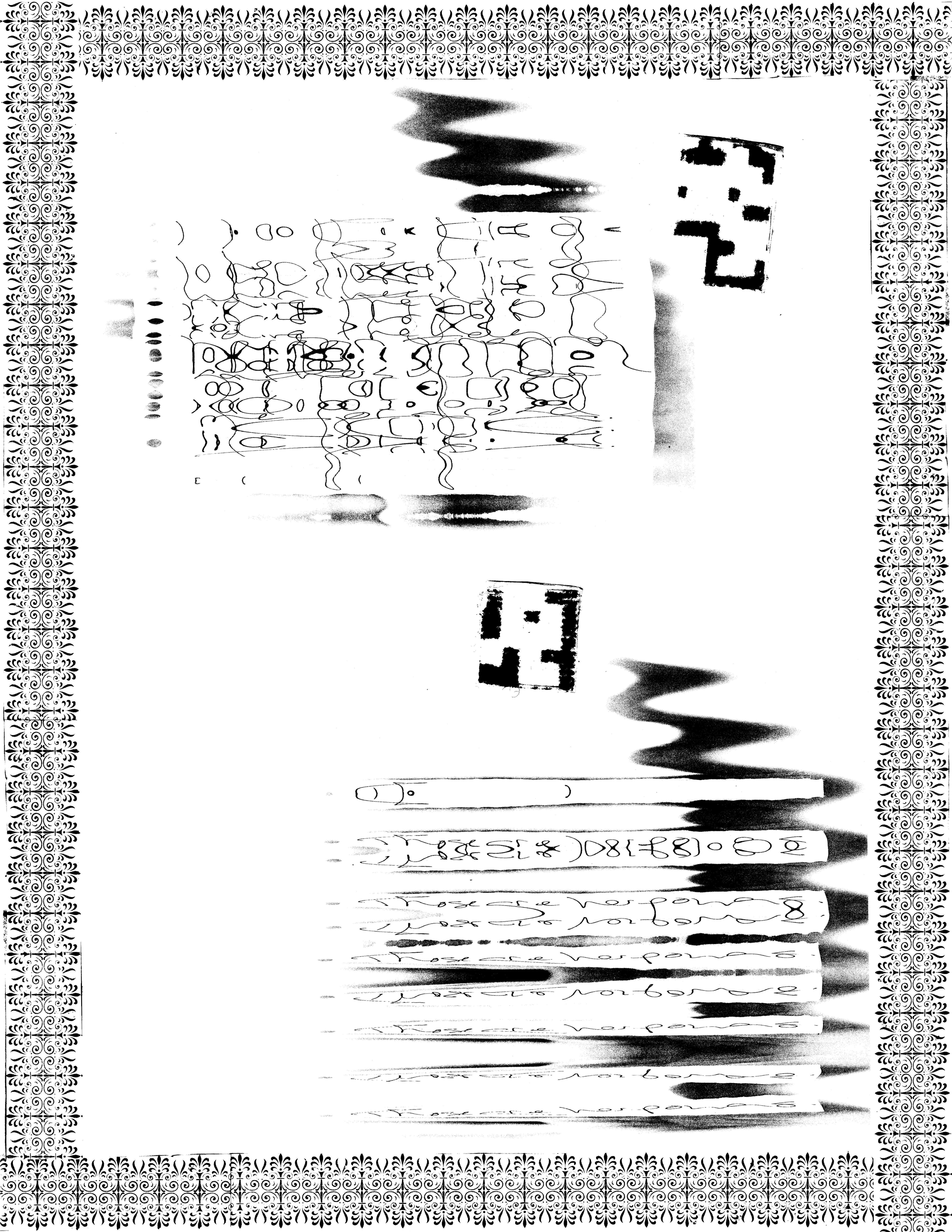
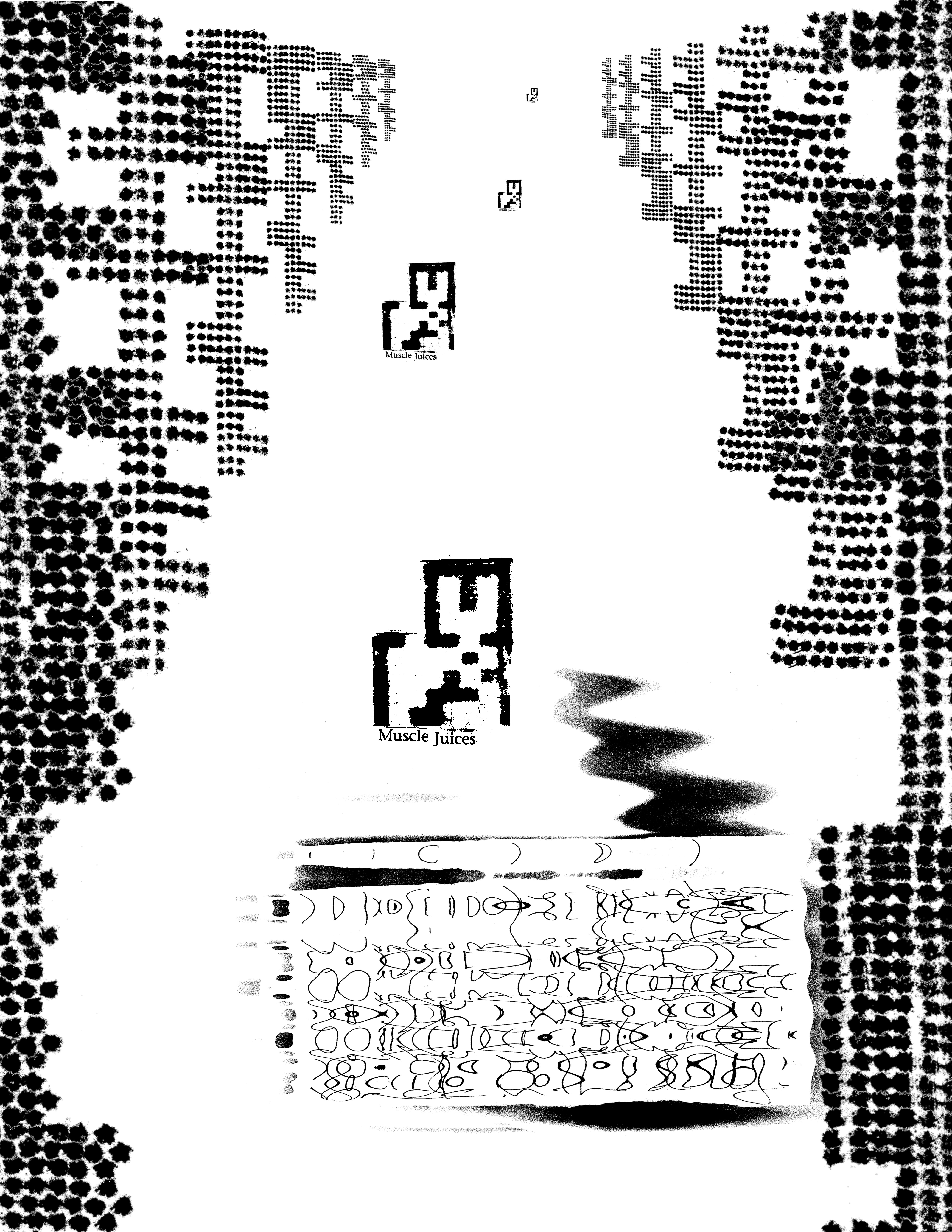
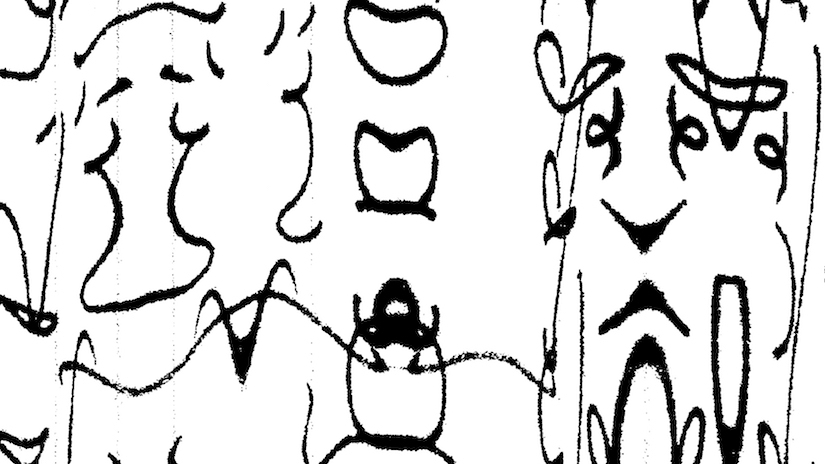
Inanna Scient imagines what it is to be our thoughts in exile from us. Informed by our fears and longings, drawn out of our bodies, made remote to us as data. Inanna and her faithful friend (Ninshubur) are those codes the P.O. prints on our mail to sort it. The backgrounds are security envelope linings. The blocky little creatures, galla from the kur, underworld demons, are postal meter codes blown way up.
Mail because commerce. Inanna and Dumuzi are grain deities, and from the roots of the grain springs trade, flowers writing, spread cities, all our gorgeous disasters.
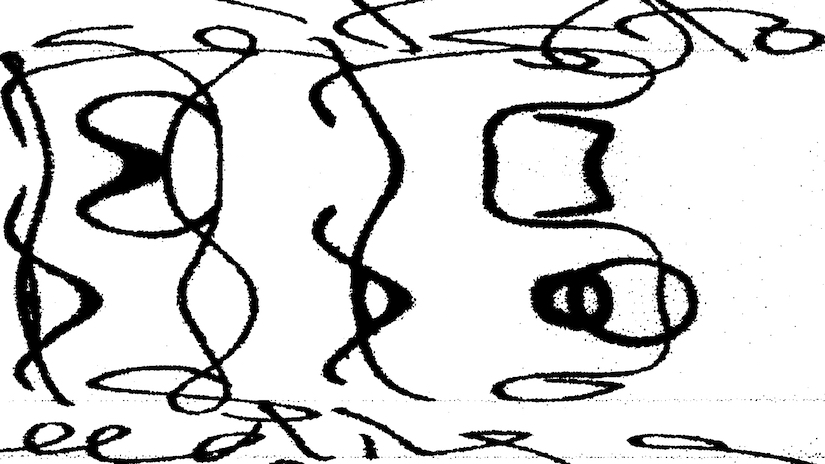
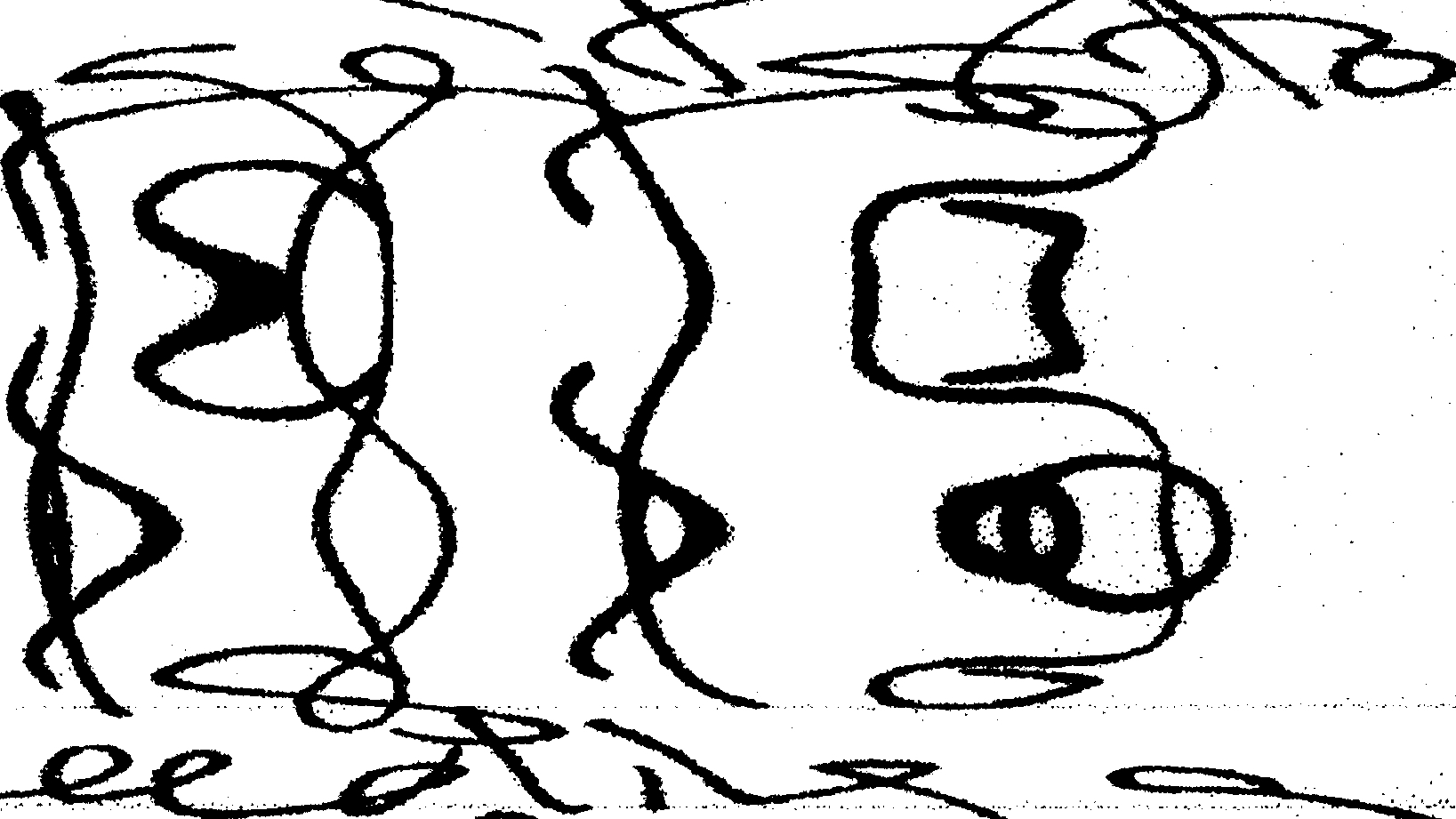
Last day of my poetry workshop today. We ended on a sweet sad silly happy blue note, or several of them, everyone is feeling lots, and it’s all good. Delicate uncertain care. I’m honoured to be in the presence of so much true feeling. The texture of such a moment can’t always be got across – though, poets, we try – in words. Thank goodness there are for these occasions unwords!
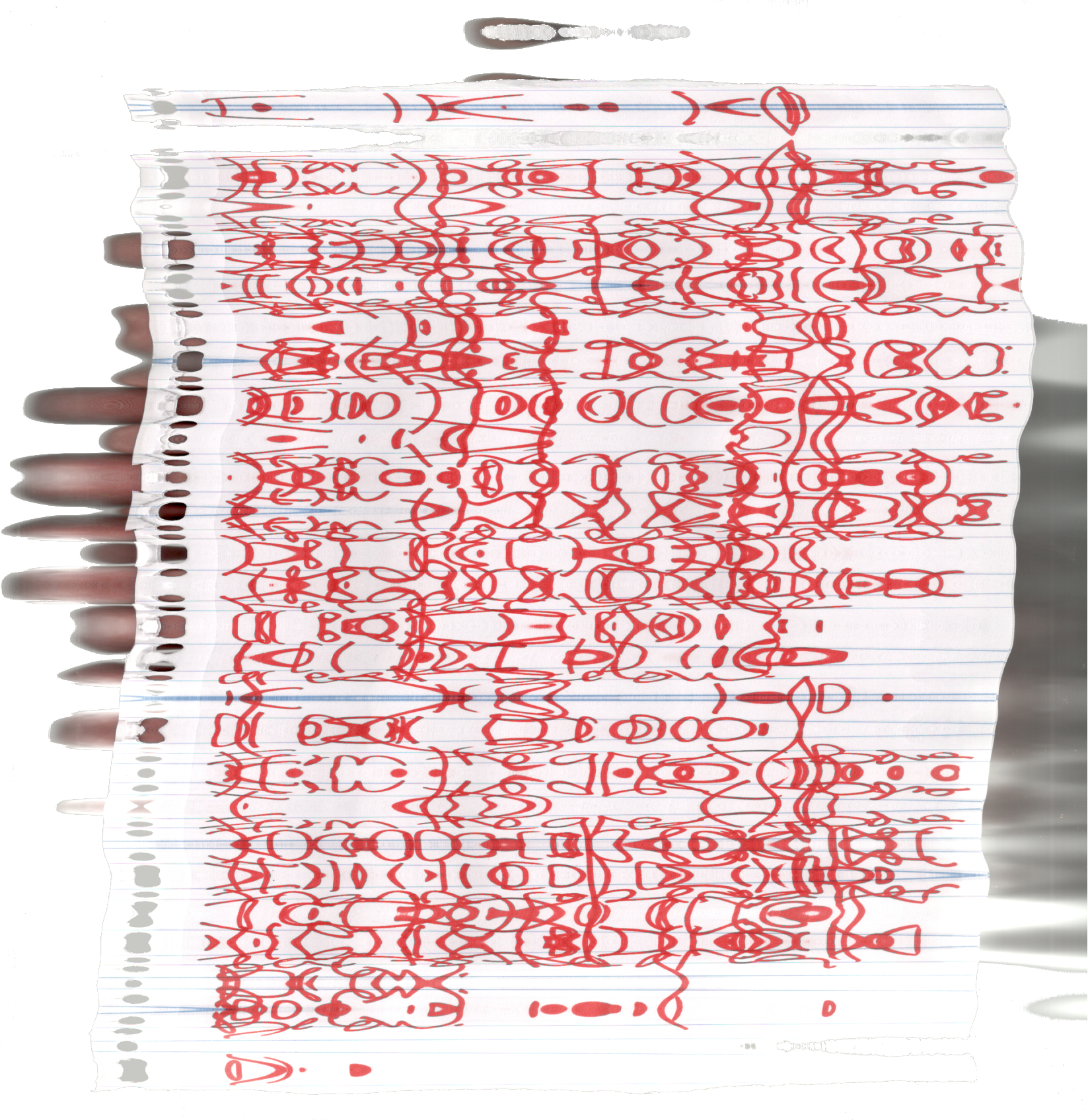
Strained transition but man I’m blasted. Sometime when it’s over I’ll write why. Right now I want to share a few of their asemic compositions.
The exercise: Compose a page of asemic writing. The post I wrote round it here.
This first one is peacock. And bravery and has such boldness in its made mark. I love it for that and learn from it. Some of its sworls – that big blue swoop with the edge of a robin’s egg, e.g. – are not just proto-charactery but the prelim of true things.
Then there’s that centred square of no-sense going on as if it were all the order in the world – ain’t no thing, just move on. Five by five, or almost, like a Tang dynasty poem. But yet not. This poem is but yet not.
This one to me marks an opening for its author. Every crook and curve is of note, as if it belonged to a musical score. And her work after, it got smaller, sharper, every syllable counted (literally – she grooved to syllabics) and enjambments suddenly heartbreakingly present.
Every student in this striking group had a breakthrough poem. I do think this was hers. Look how even as it proceeds it opens and bravens.
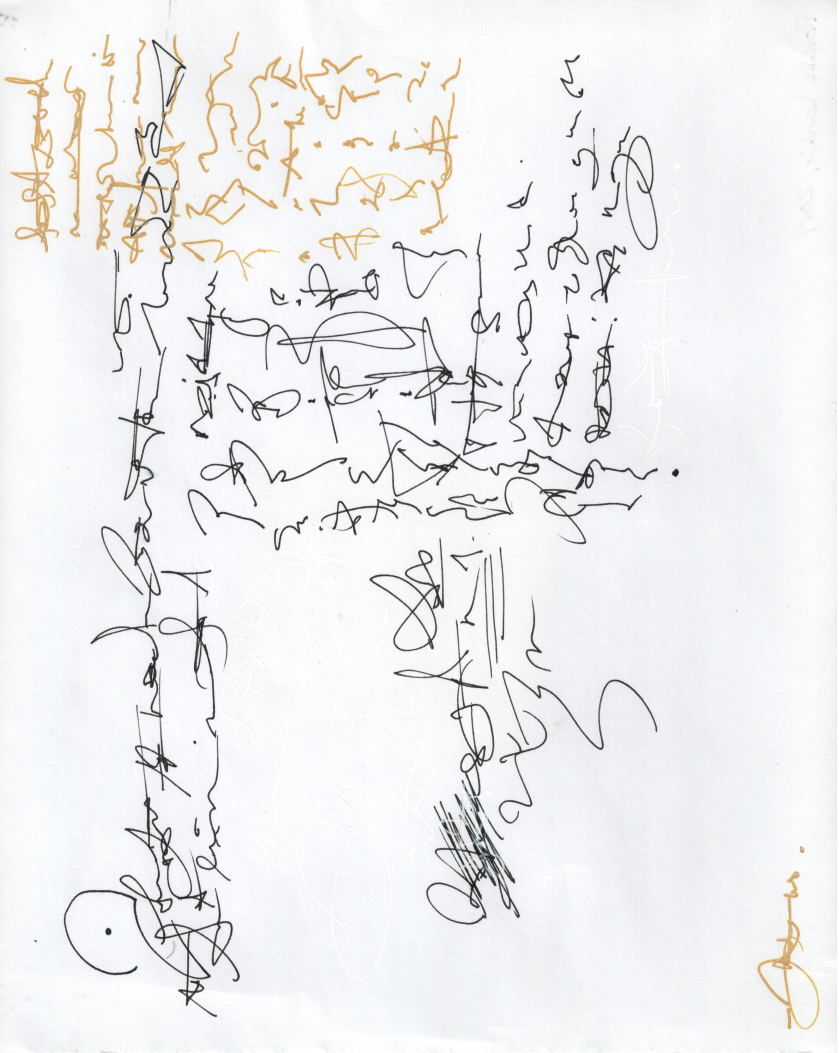
This one touches the spirit of Oulipo, or something ‘Pataphysical, geometry of a universe soon to be invented. And of all the ones that came in, it took the most care with the page as a material object, which like a universe has more than one side, is all turnings.
This one is wholly free in its spirit of gesture and direction. The poet said she didn’t think much of it but what I love is she didn’t think much in it she just did it. Her not-thinking transmits with no loss of energy her embodied gesture to this embodied eye and the mind of it.
Dōgen: “When Yaoshan was sitting, a monk asked him, ‘In steadfast sitting, what do you think?” Yaoshan said, ‘Think not-thinking.’ ‘How do you think not-thinking?’ Yaoshan replied, ‘Non-thinking.'” This is that!
My conversation with the poet of this one went something like
—Why does this work so well??! (me)
—I don’t know! (her)
—I don’t either but it does!
—I know!
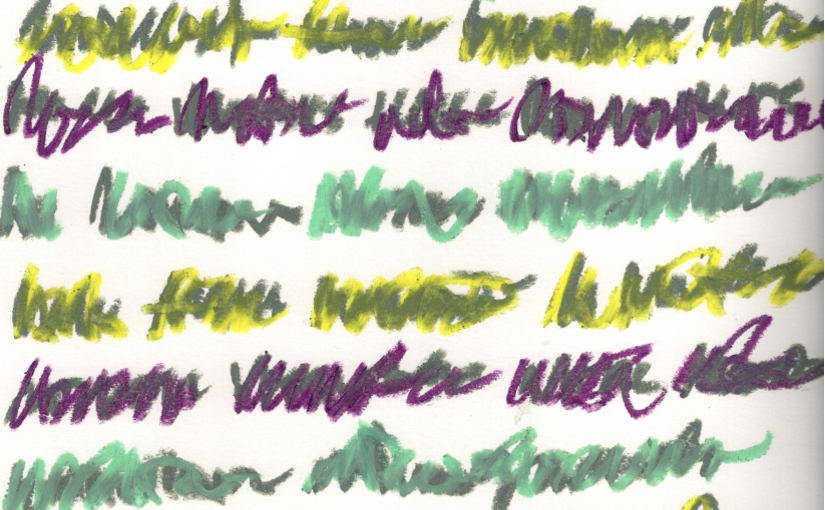
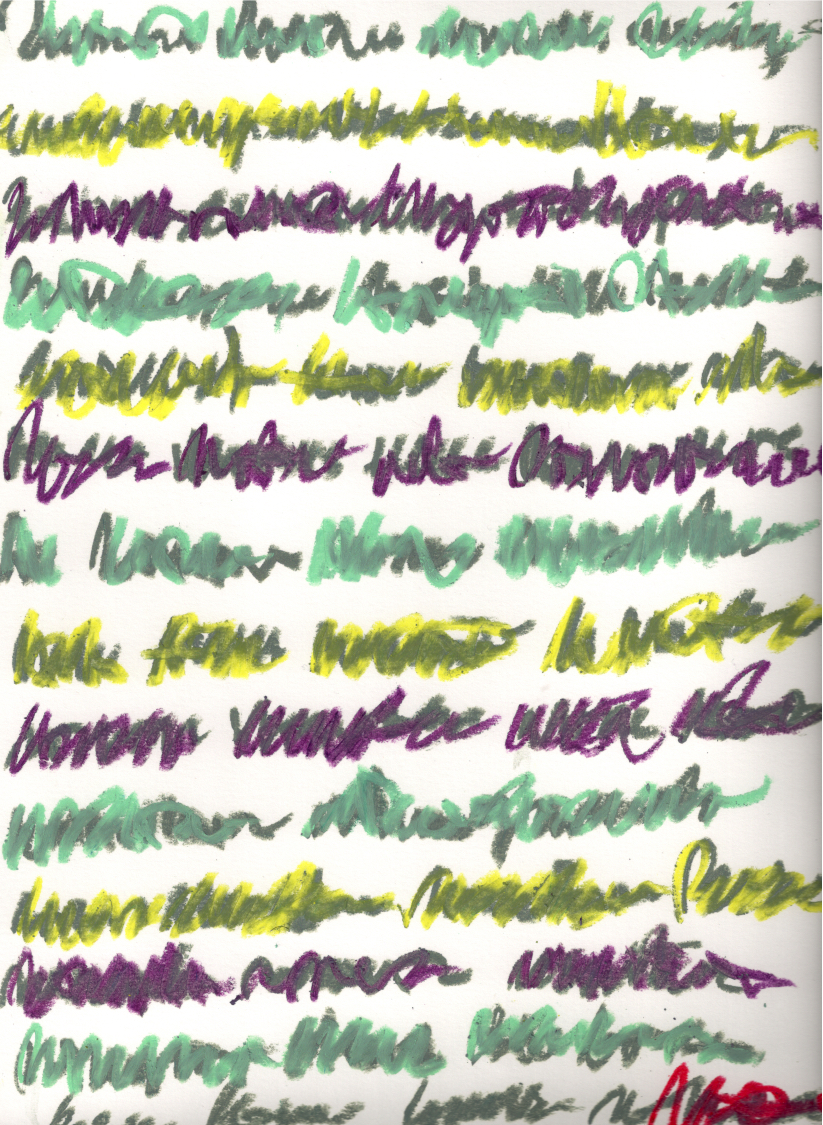
It’s barely more than scriggles. But that it gave me a word, scriggles, totally for free, means lots. It’s second-order creative; it creates creativity; it’s generative. Those earth and vegetal tones are life-in-potential. (Even what colourblind I thinks to be purple, the chlorophyll of the low-light set.) Just as asemic writing itself is meaning-in-potential.
A student in my other class, damn but I love her ambition, and so see myself in it, wants to elicit from Marvell’s “A Dialogue Between the Soul and the Body” the whole mind-body problem, link back to the Buddha on that and connect forward to modern materialist theories positing mind as an emergent property of material systems. Had to say, that’s an MA thesis, not a ten-page critical research paper. But emergence is where it’s at, complexity, new reals irreducible. (Why the eff am I advisor to a journal called Occam’s Razor?) And I trust her to find a scope to make it work. And – point of the digression – emergence is what’s here, too.
I do love this teaching thing. However good I may be at it, it is better to me. I only wish I knew how to explain to a blind inertial institution what it means to want to teach from prajna.
I think it’s a sort of breakup poem? Long after the fact but a fresh wave of it.
Oh yes, lotsa wish, loss, yearning, resolution. This little heart wants so much!
Snow’s all round today – air, ground, sky, quiet, lovely.
Yesterday a hummingbird in the snow at the lavender flowers.
Whether “life goes on,” I don’t always know, but living goes on, I do see it.
Image up top, tilt your head sideways. You’ll see the left side of the sad face is the word happy. It made the round forms in the middle, heartlike, applish, insecty.
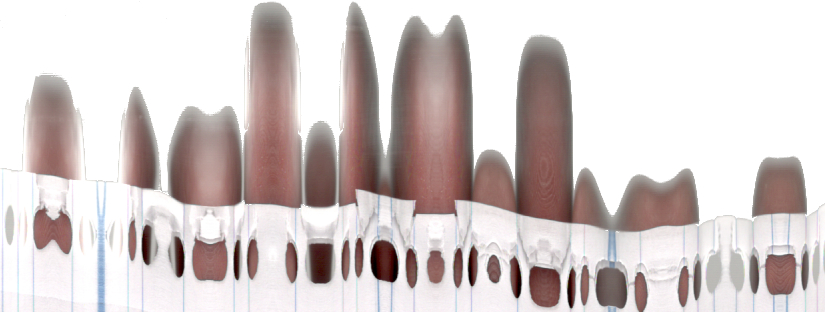
I’m certainly entering new terrain as an artist with SCRO. In earlier projects I’ve experimented with visual poetry and with handwriting, and worked on the threshold of legibility, but I’ve always been bound to the page, 8.5 x 11, and to the still image. The only sound I’ve brought to bear has been my own reading voice occasionally. In SCRO, projecting images on a surface, I work with the relation between embodiment (the movements that make the writing and the rocking that creates the distortion) and disembodiment (so many photons on a wall). Putting those images in motion, I have a whole new language in which to think and feel through time and change. Conjoining images with sounds, scriptural marks with audio tracks of household noise, I can create juxtapositions that are not narrative or expository but lyrical, syncretic, and happenstance. The relation of image to sound is a bit like the relation between the singing voice and the played instrument that was once the mainstay of lyric poetry: complementary and complicating. Except here the singing voice is visual, and maybe a bit ’pataphysical, a nonce botanic script.
SCRO is for me a lyric poem. If it advances artistic practice, it does so by testing the range of what’s possible or admissible in the lyric. It goes to the edge of illegibility, then pulls back a step, so its words get to mean by fits and starts – what, it asks, is the feeling tone of that? It takes chance operations, grown cold in the hands of some conceptual poets, and brings them to bear on emotionally hot material – family trauma, the degradations of old age. Can it be a conceptual poem even if (pace Goldsmith) it demands to be read? Can it be a lyric poem even when there’s really no “reading” it? The poem has no coherent “I” to hold it together; he dissolved early in the process of distorting the memoir. Can the 16:9 frame in which nameless shapes come and go do the work of an “I” – be attention, be sentience? If so, is that the acme of lyric experience, or its abolition? I don’t have answers to these questions, just instincts and biases, but faithful attention to SCRO might raise them in some viewers.
Attended this evening, with two dear friends, the opening of the Bellingham National 2017 exhibit at the Whatcom Museum. An excerpt from my video poem SCRO is in a show on the theme of “Drawing Practice.” The curator, Catharina Manchanda of the Seattle Art Museum, has gone past the usual sense of drawing – an implement marking a markable surface – to investigate all the senses of the verb. What’s it to be drawn on? to be drawn to? to be drawn out? to be drawn into?
There are drawings there in the usual sense. Also torn canvases, their matter physically drawn out.
And sheets of paper drawn across abrasive surfaces. And one video I loved drawing the lens over road lines at traffic speed. Another video watched light draw on water it appeared raw crude had blotched.
What all my favourites (here’s another
Jenna Lynch. Traveling Within, Feeling Through, Dreaming Beyond; The Lines. Watercolor on paper.
) had in common was a quality of absorption. I was drawn in. There was a mind there, its evidence made it over to my mind, and drew it in closer.
My own piece was caringly placed, in a nook of its own, with – am I imagining this? – a bench to sit on and watch.
I feel a bit of an imposter in a gallery, identify as a poet not a video artist, but I guess I do because it suits me to. “Oh I just stumbled into this by accident, I don’t really know what I’m doing …”
Gimme a break. No one knows what they’re doing. It’s no excuse.
Seven one-minute vids are up. Check ’em out if you’re in town. And, fourteen still to make, so let me know what you think, if you feel so moved.
Link to the exhibition, and the pieces by Yamahira and Lynch, here.










 came these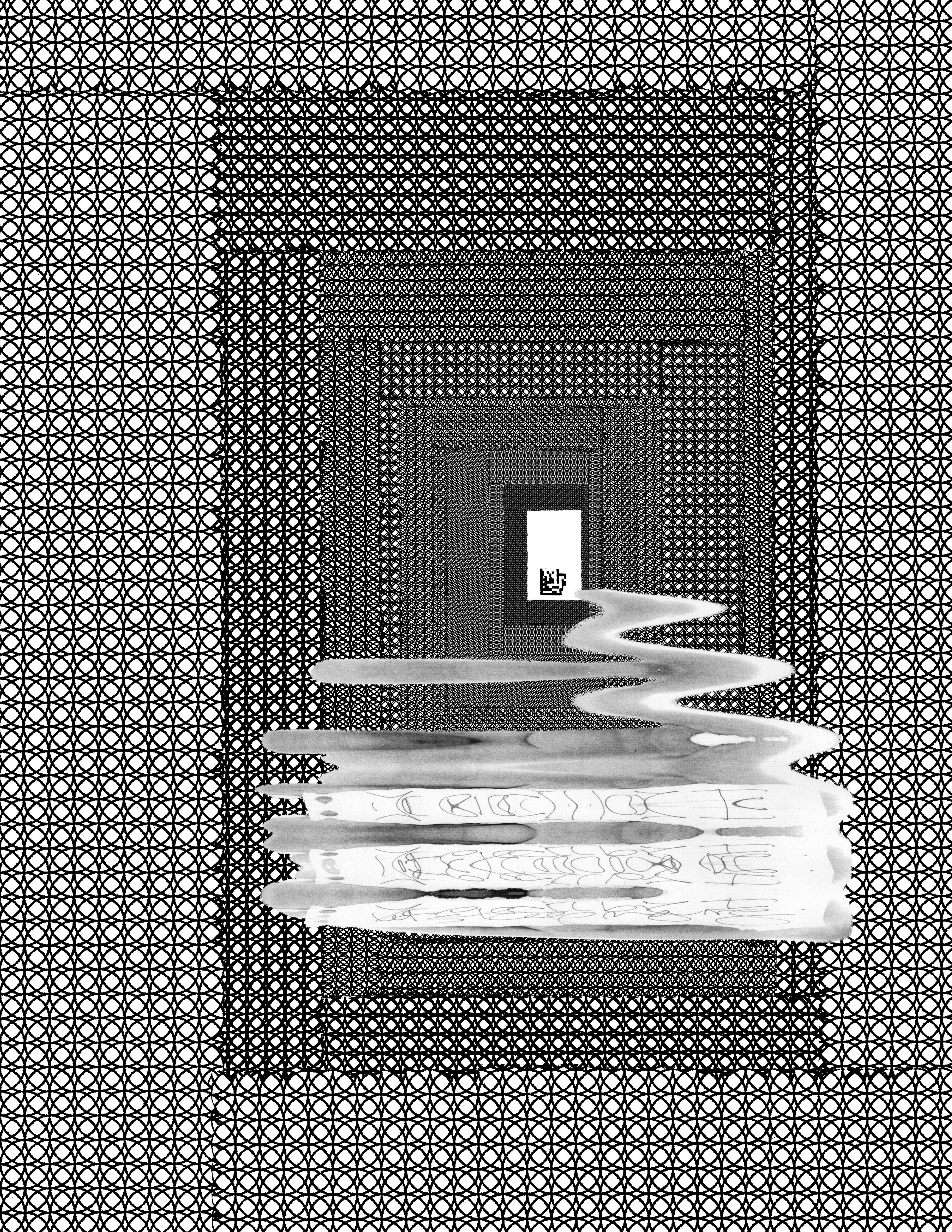








 The Art of Compost