Inanna, a chapbook

Some nice news! A swatch of poems from Dumuzi will be published as a chapbook by Little Red Leaves. I’ve loved their books (fabric covers, hand sewn, venturesome poems) since I first came across them. Sew colour me thrilled. (Sorry, terrible.)

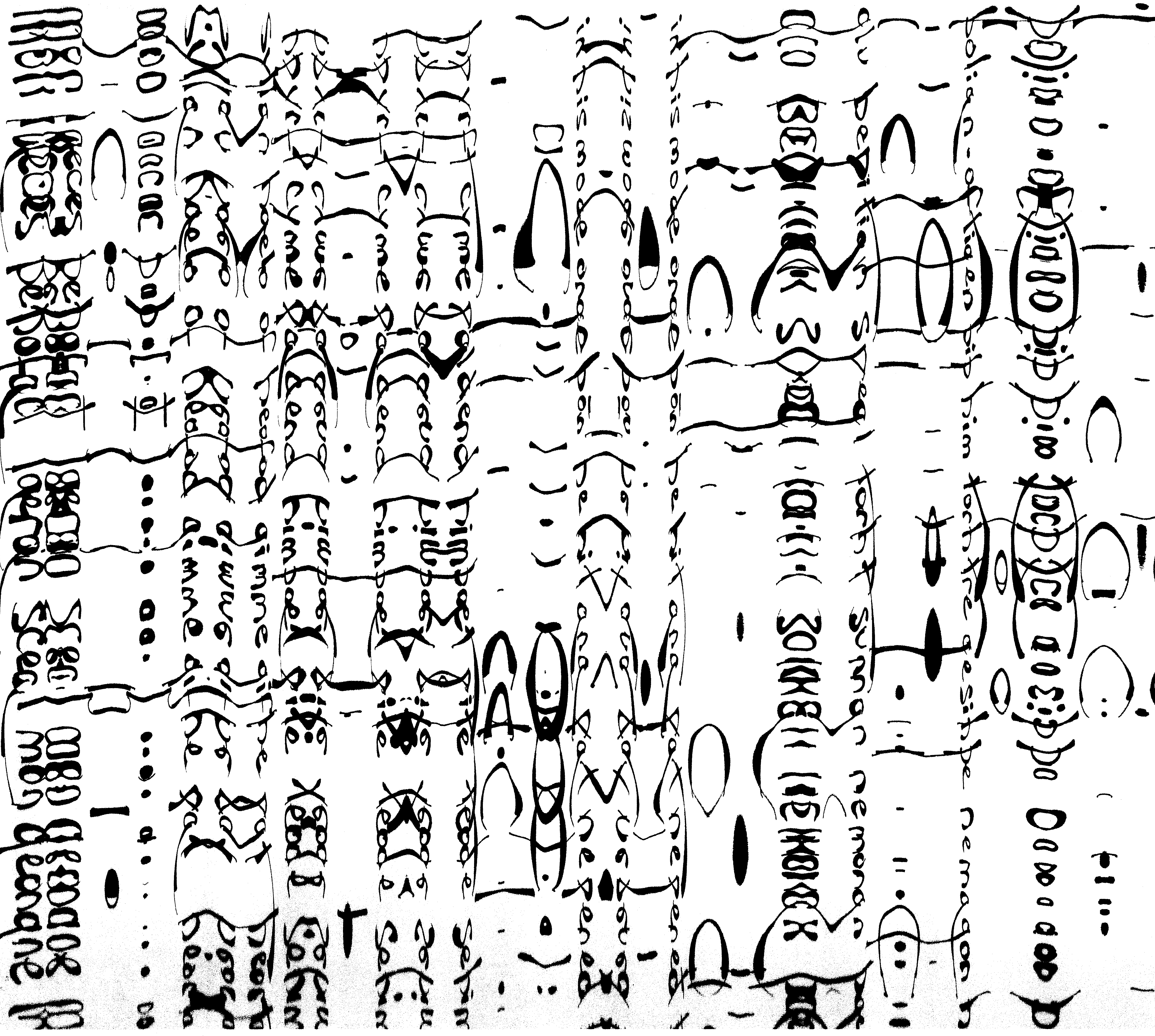
Title to come but I’m thinking simply Inanna Sent. The poems are a graphic novella, collaged out of junk mail, that tells the story of Inanna’s trip to the underworld. Thought I’d post a few panels, final versions. Here’s the first –
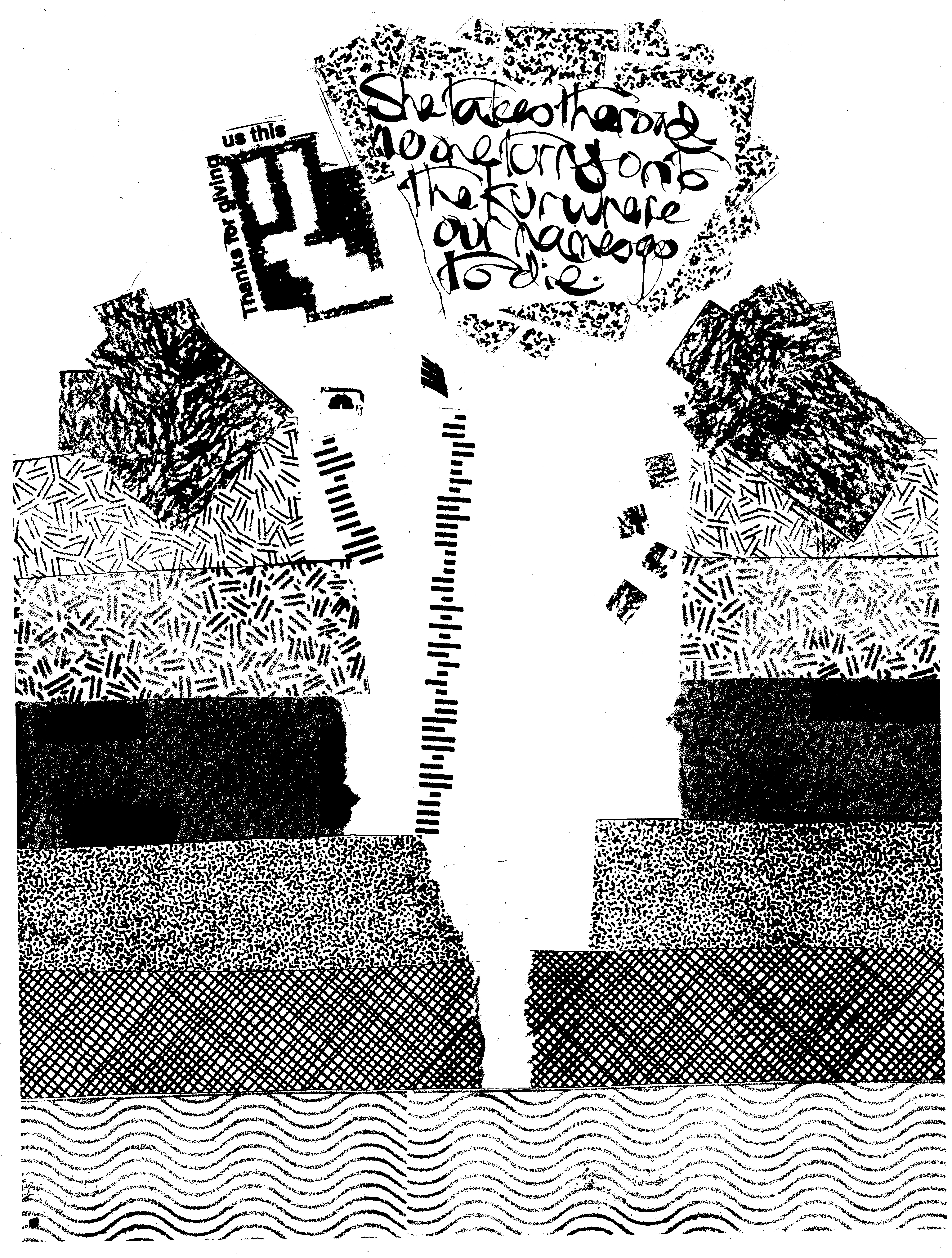

Panel 1

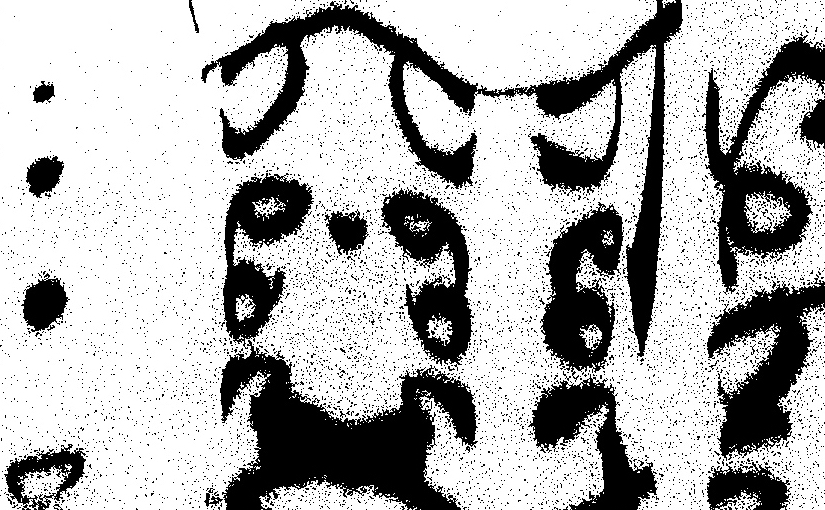
The strata are the linings of security envelopes. Inanna and her sidekick, the scancodes you see on autosorted mail. Her jaunty cap, the Bank of America logo, while he sports the NBC paycock (Pound’s spelling). The speaker is one of the galla, demons of the underworld; to them’s given the work of narration. They’re all blown up out of these:
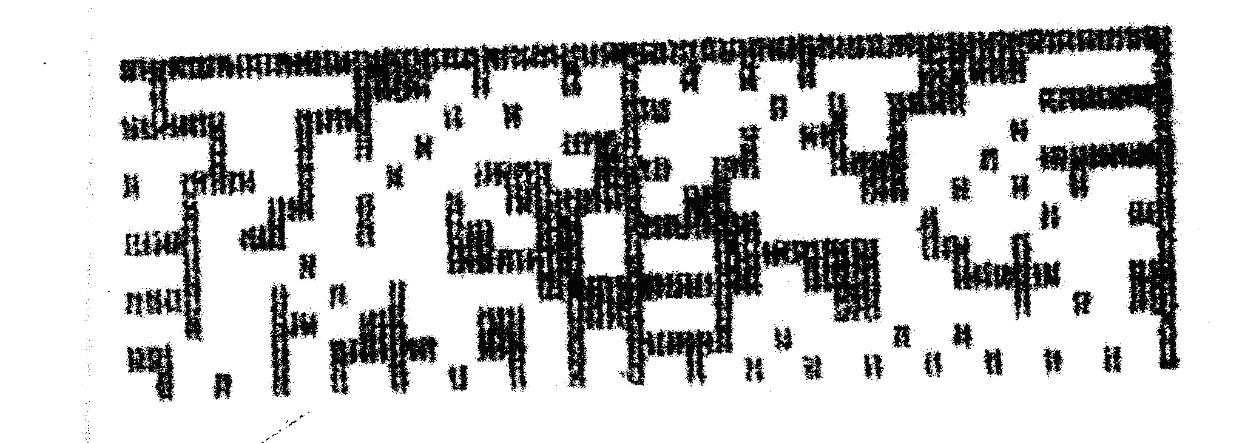

scan code

If you get your pareidolia on, that can look like a postmodern Roman frieze, gods, monsters, epic struggle. Next panel.
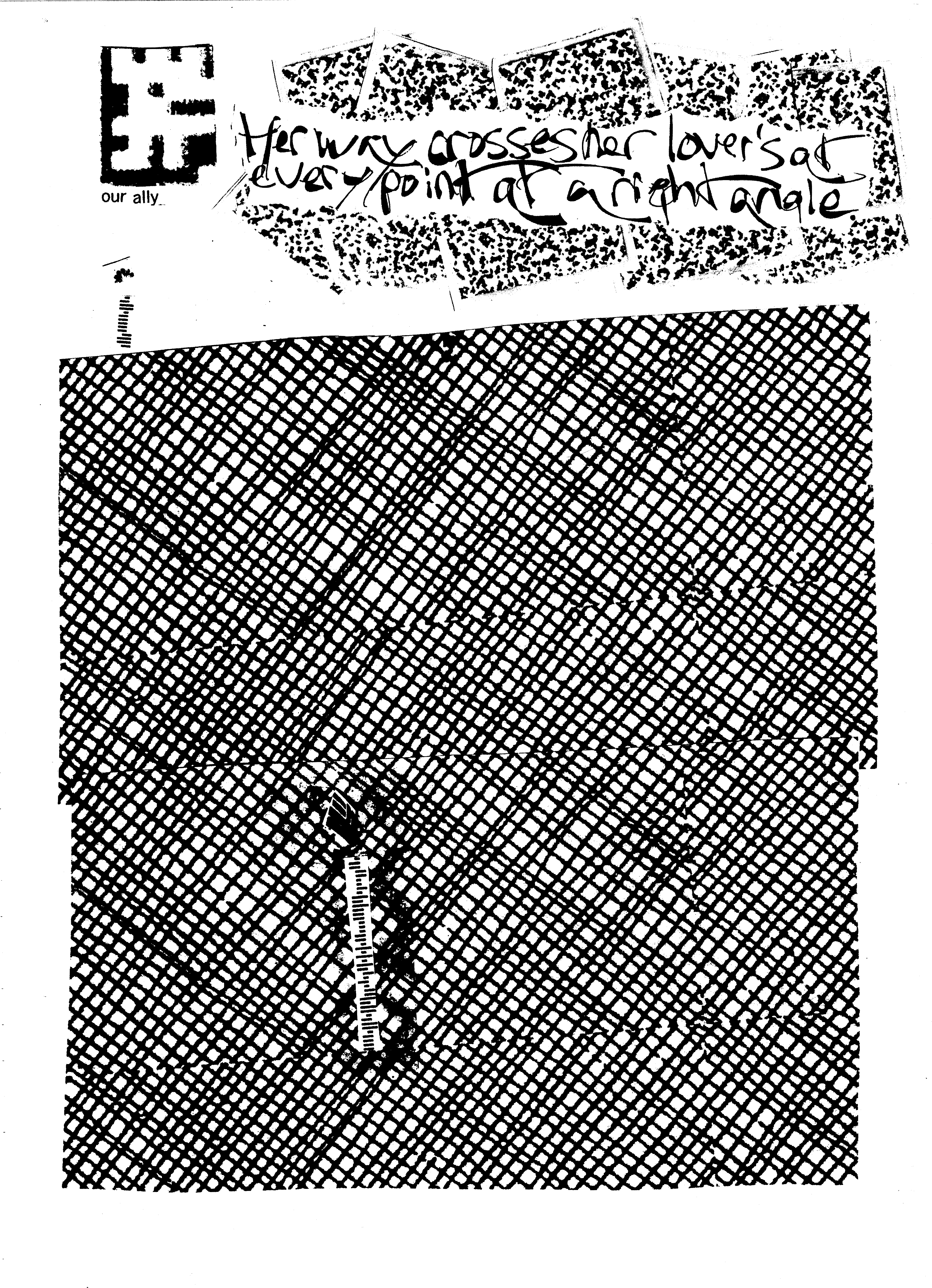

Panel 2
As Inanna gets deeper in, her logo-feather-flame hat dirties and darkens. Small serendipities: with each new panel, I lifted the logo from the last with a letter opener and taped it down on the new one. Each move brought more scuffing, each layer of tape more obscuration and road dust. One more.
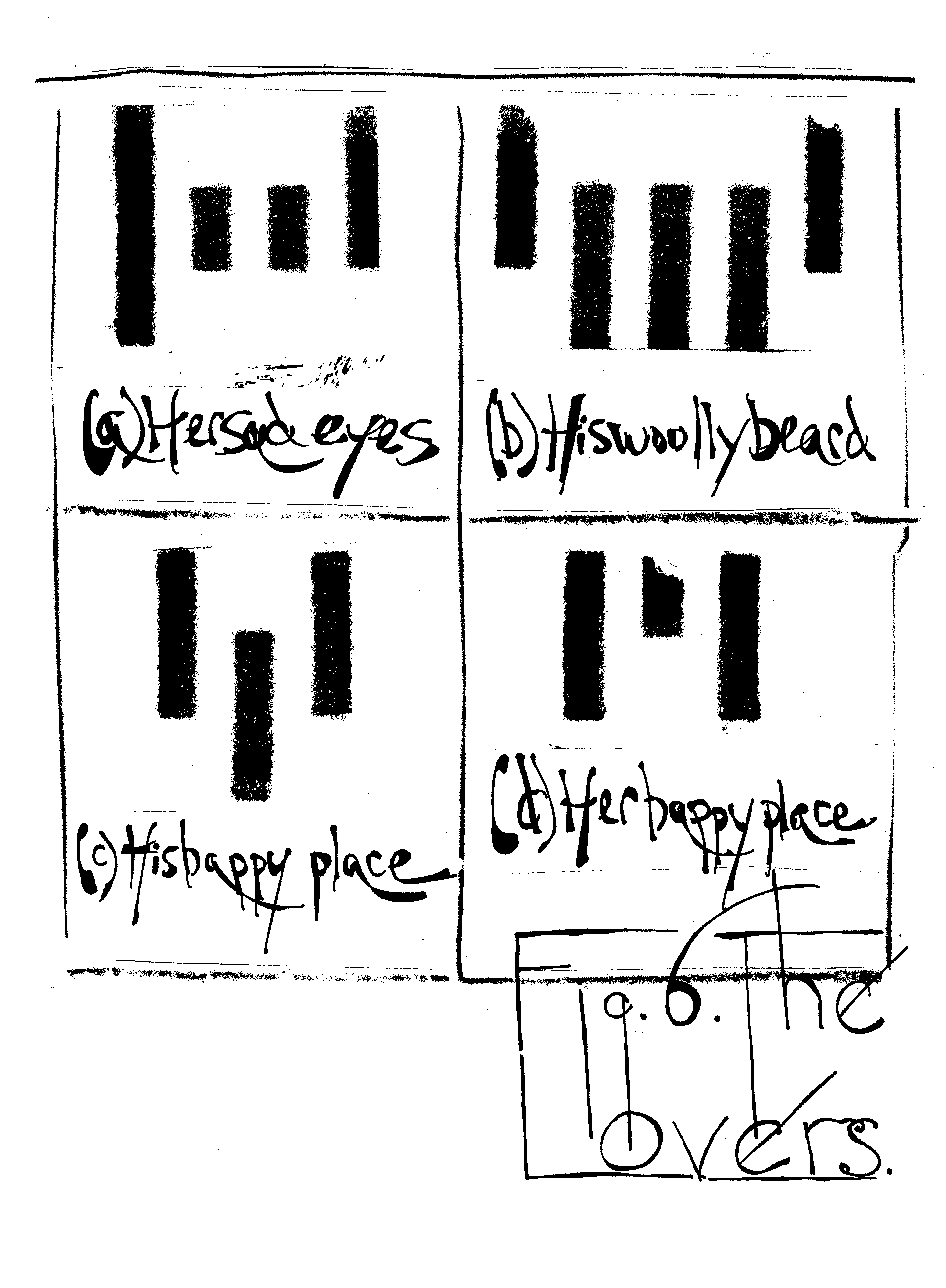

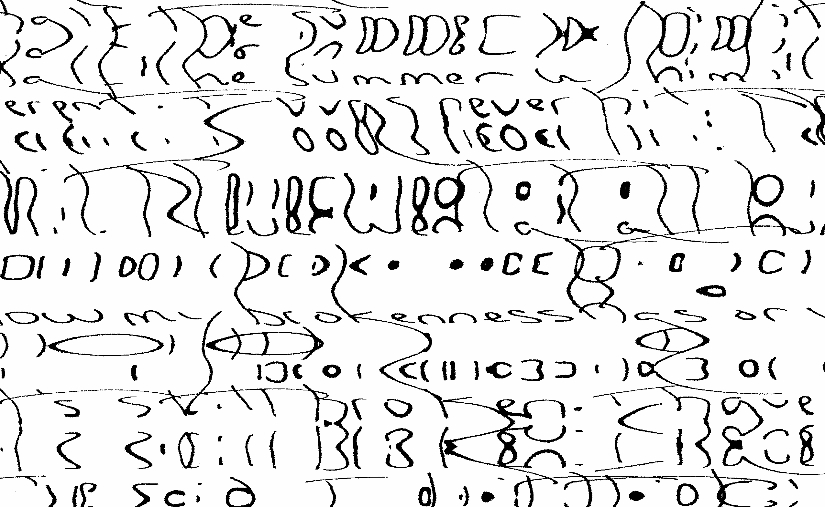
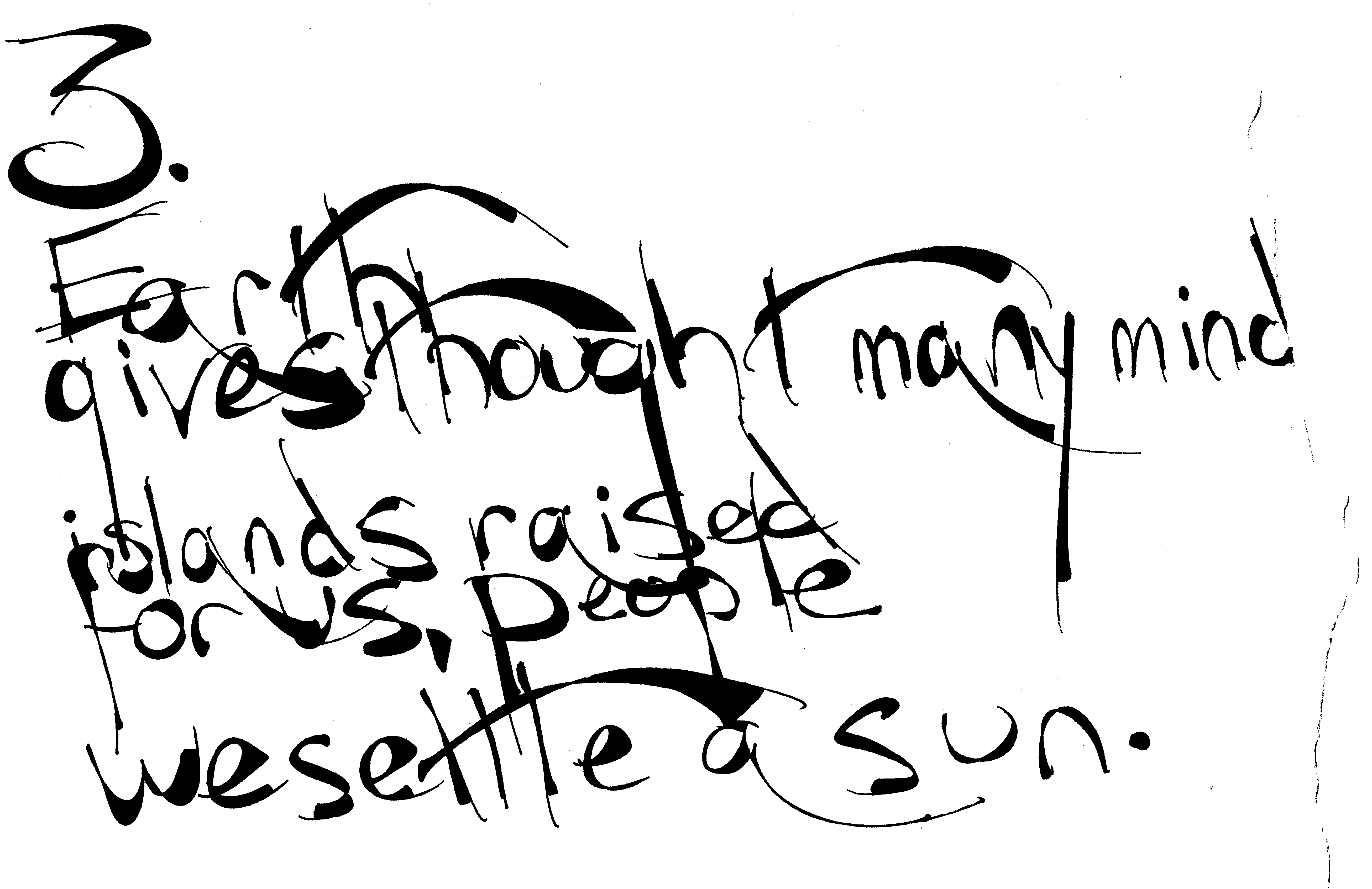
Panel 3
Scancodes and photocopy noise. Have written some more about Inanna, what and why she means to me, the space I was in (an intense one) making these poems, here and here and here and here. And a bit at the end here. If curious. (Old images there, the script far less open, but in the spirit of blog, I’m going to leave as was.)

Oh and the grainy oblique smudges above “Her sad eyes”? Bits of pinewood, my writing desk, pulled up by scotch tape I’d stuck there momently while I spotted a paperscrap just right. The meaning of the whole is, make peace with your accidents. (Not in a hey-do-this sort of way. In a note-to-self sort of way.)

Tried to explain the desk splinters to Stephen Burt when he asked me about my work. Talk about happy accident! But, he seemed not so impressed. Oh well.


If you’ve made it this far, thoughts on the title? I sent it out as Junk Inanna Down. That now feels like a hostile mouthful. Do you think so too? What about Inanna Sent? Too mild? Comment away …
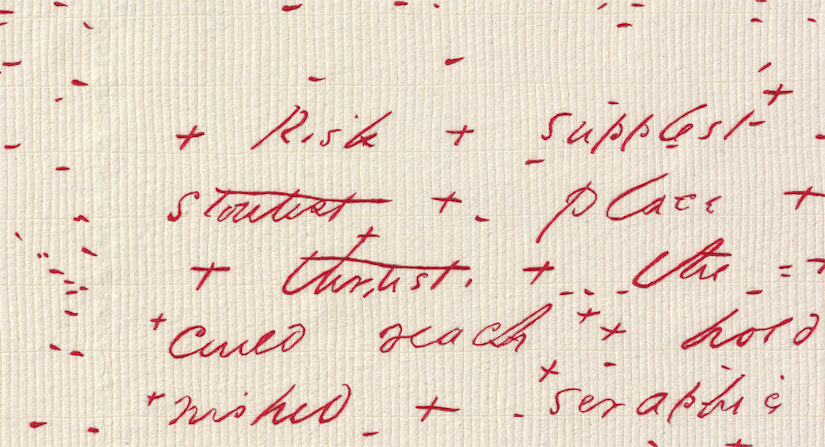
Envelope poems

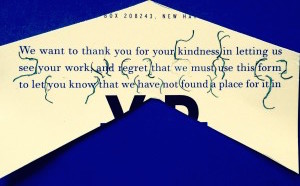
Yeah been weeks. And nothing now much to say of my own. Goes that way. But saw this on my friend Barbara Nickel’s blog and wanted to share. She’s been perusing Bervin & Werner’s compilation of Dickinson’s envelope poems, and a lovely blog post’s the fruit borne –

The Yarrow Graces – magnolia, forsythia, peach, even the bleeding heart – have been serviced lately. Town abloom on the first day of Poetry Month; thank you Emily Dickinson for getting it right – spring always seems – at least in this part of the world, not on the prairies where I grew up – somehow too gorgeous, masking the inevitable sting; the other day a violist died.

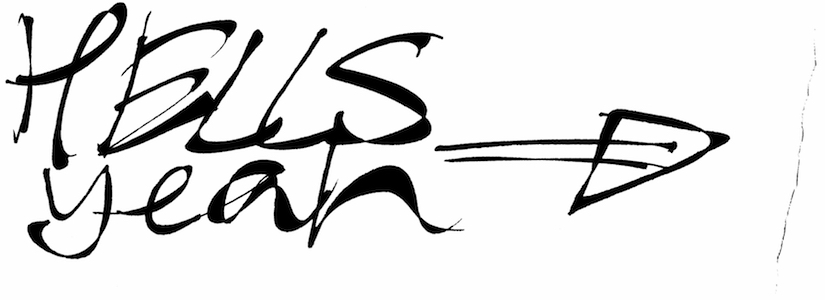
Read the all of it here, with vis poem, rejection slip made projective,

Barb's arrow

and regrets into egress.


Not much to say, except, don’t eat foraged morels and drink wine, or not much anyway. Lost a coupla days there. Viz. Probably should have sautéed them longer, too. But hells they was tasty.


Aasemic writing

Asemic writing is writing you can’t read. Semic writing is writing you can. (A back formation, there’s no such word.) I am at play, finessing the difference, with aasemic writing.

A joy of asemic writing is that it draws all the promise of meaning-making, all the whole multifoliate interpretive apparatus, into activity, w/o resolution or conclusion. It’s Steinian indeterminacy, in not the syntax but the graphemes. It’s the made mark as blastocyst, as stem cell, as potential to become. Is it a Deleuzian plateau? Maybe, still sweating that concept out.

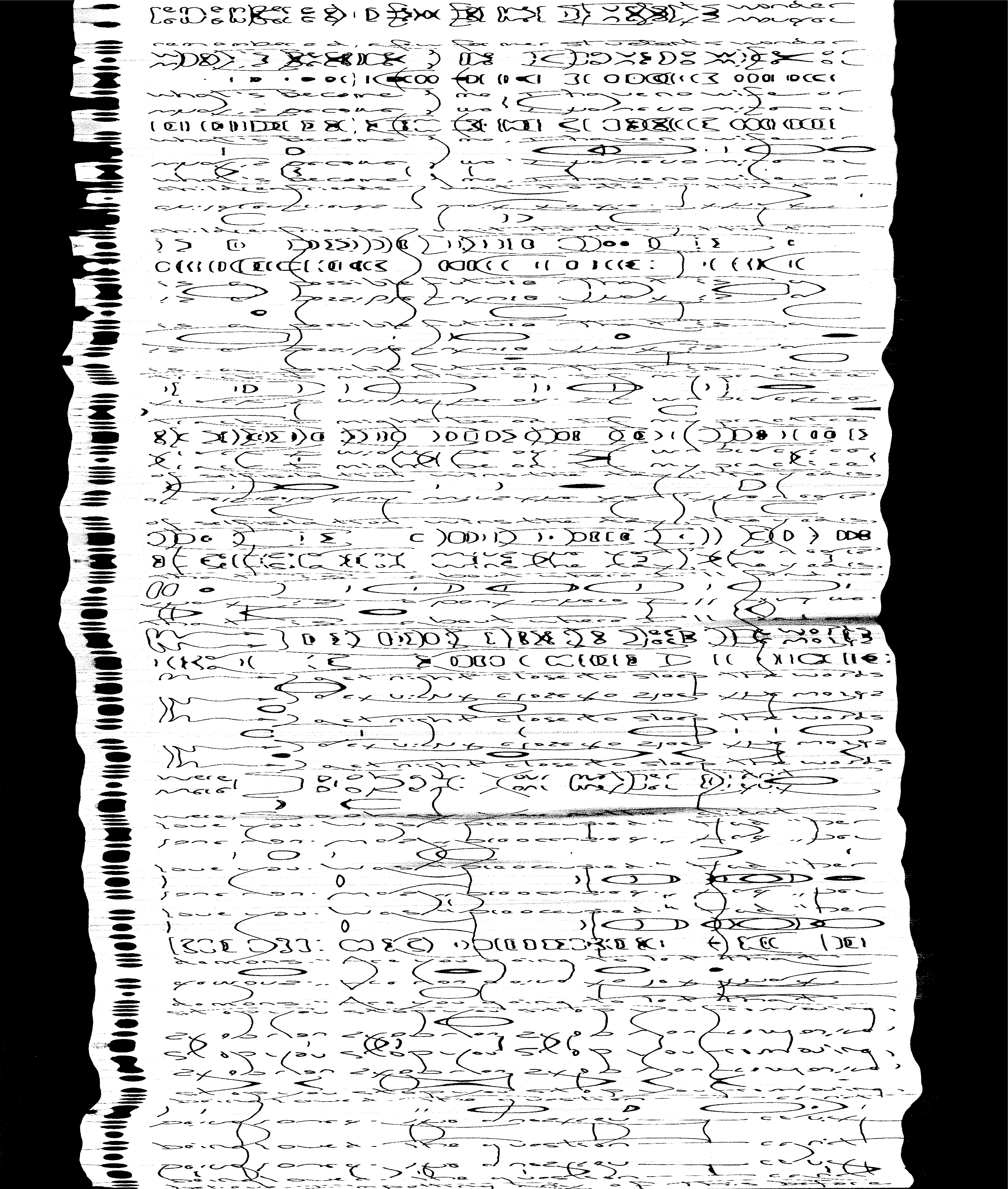
So the aasemic script I’ve been playing with is neither indeterminate nor determinate. (GOD you can take this non-dualist thing too far, mm? how’s this not just centrist squish?) It starts with a journal page transcribed in a projective hand – descender a plunge, cross-stroke a jailbreak. Then I wave or shiver it over the photocopier light bar as it slides under, gathering data in.

All this is lead in to say, The New Post-Literate has posted a few, and that makes me happy, cuz they’re the first bits of Overject to be published, other than here, which don’t count. Here’s the link.

And here are a few other recent offerings there I think especially cool.

The home page of The New Post-Literate where it’s all to be found.


A lot of my trouble w/ academic parlance comes from trying to translate Buddhist vocabulary and values to a non-Buddhist circumstance. Most of the rest of it comes from being a lazy and a lousy Buddhist. (The latter’s 90%.)


Feste to Viola, Twelfth Night, “I am [a] corrupter of words.” After they’ve just rung their changes on live, stand, lie. I compared the move on lie to a triple-axle – Viola to Feste, “yo watch this move” – and one of my students found a sextuple axle in it, bam. Post-structuralism, its insights, e.g., words’re banana peels, dates back at least to Shakespeare, if not to Jesus? “On this rock I build my church,” that’s a pun, Jesus is making a funny, I told them, explaining the finger joints of a dactyl, by way pterodactyl. Petros (Peter), petra (rock). Long live the rhizome. Weed shoot that cracks the rock.

Shakespeare, Martian script

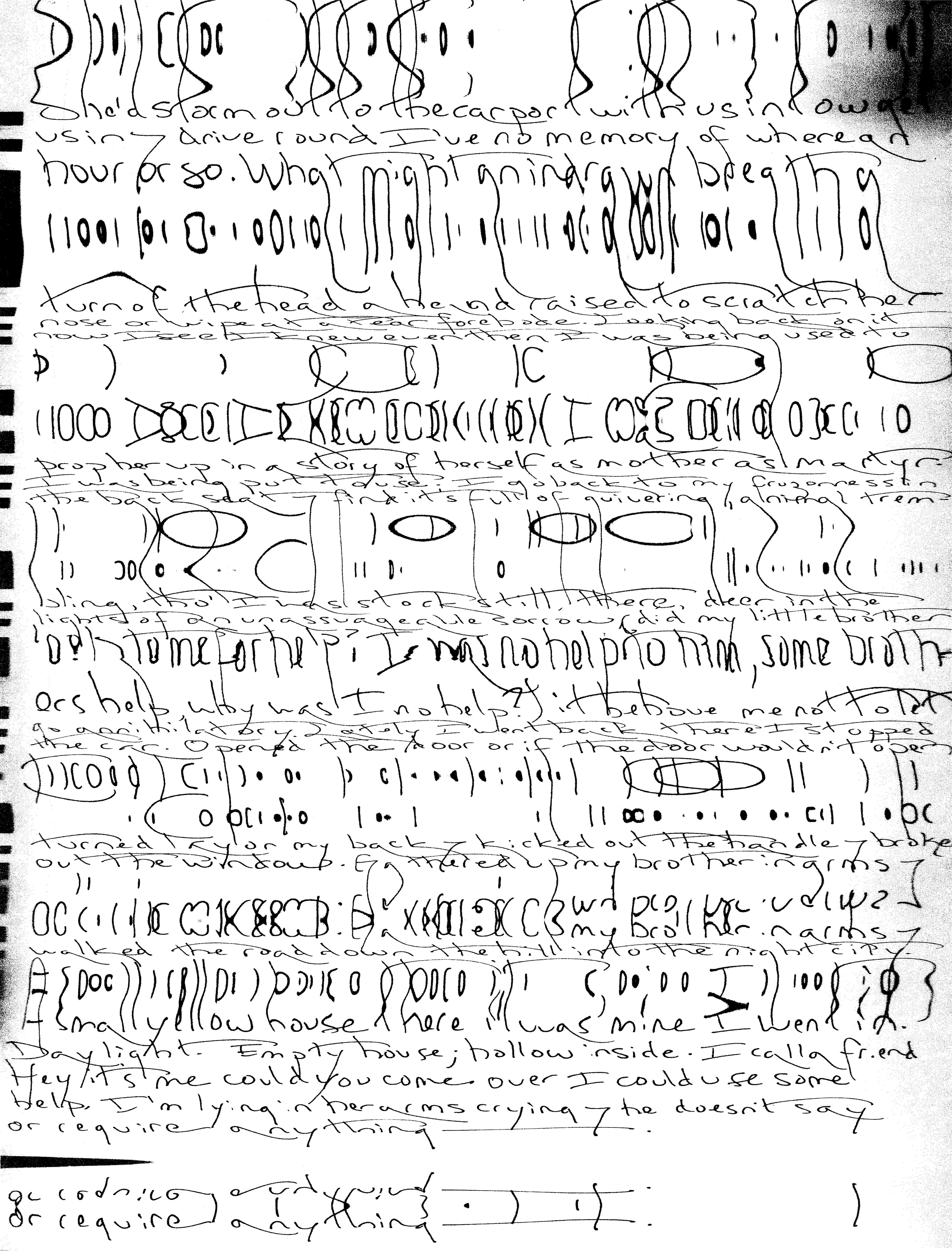
Oh my, getting prepped to teach Shakespeare takes some time. Eats whole days, all up, slurp and yum. Well here’s, as a sort of sorbet, and sans much comment, another bit of Martian script for yehs.


She'd storm - warped

The source text, a draft of it, should you wish it’s, here.

I’m liking how movement across the moving beam of the copier instantiates hesitancy, rush, prolongation, quavering. Not necessarily exactly when and as I felt them, writing this, but I felt them, writing this.

Pee, ess, I say “Martian script” with deference to Hélène Smith, and mean what is called more properly asemic writing, to which a not bad intro is here. Ah I’m commentating said I wouldn’t that.

Maybe a bit like this

I was at a lovely poetry event last night, Kitchen Sessions Bellingham, very capacious in its tastes (its heart also), though the emphasis was spoken word, and I found me thinking near the end, Cool. Spoken word poets are the scops, the bards, of our time. And this form they work in, spoken word, is about the one form we’ve got that says direct intense heartfelt personal disclosure is crucial to (not an impediment to) the art.

And here you are (we in here said to me) doing “total translation” of an oral poem. Which means sometime or other you’re going to need to translate its orality. Meanwhile here you also are, wanting to draw intense heartfelt you into art, without arting it up the way your literary training says you’re supposed to.*

And so why not (we in here said to me) take these journal pages you’ve been making, and rewrite them as performance poems?

Brilliant! Didn’t work.

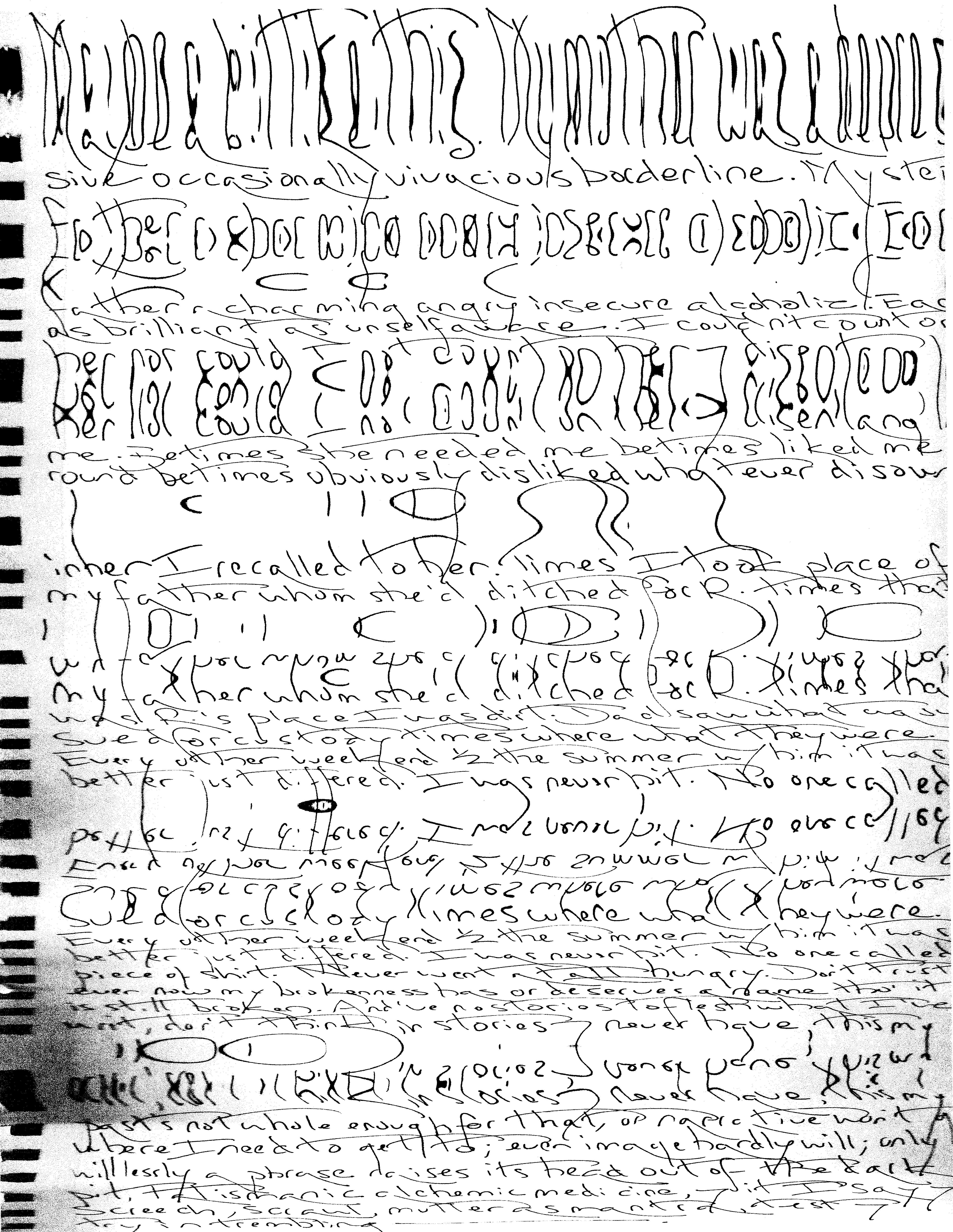
Who knows, maybe I’ll make and do a performance poem, now that I see I’m not done till I also translate the poem’s oral being, but the journal pages (here’s the one I’ve been working with tonight –


Maybe a bit

–) are wood, not plastic, have grain, can’t be remoulded into just any shape.

These thoughts come quick on the heels of an e-mail exchange with one of my most trusted readers about a draft of a bit of Overject. She expressed, not doubts, not trepidation, nor unease – astonishment, that’s the word, a mix of consternation and amazement – about the journal pages, of which the above’s one of three. And they were the three I was most concerned of, not for the personal exposure, surprisingly that don’t fret me much, but for the aesthetic risks they run, which are grave: banality, triteness.

So, the other play I’ve tried out this evening, is to rock** or wave the sheet up and down as the scanner scans. A translation of orality, I suppose, in that it makes visual the scop‘s or the slam poet’s speeds and slows. Sort of, sort of.


Maybe a bit - warped

And I think, we’ll see, that’s how it’ll look in the book.

The Martians are writing us.

Not to us – us.


* Why not? I think we’re back at “total translation = translate the translator.” The text is made of layers, some of them finished, some of them inchoate. The translator is made of layers, some of them public, some of them inchoate.


** How is rock the verb for the gentlest most restful action imaginable, the noun for the oldest hardest substance known to us? (I’m setting the music aside for the mo.)

On trauma, karma, genre

I’ve felt ashamed, in the face of Paris, Homs, Beirut, drowning seas off Turkey and Lesbos, murdered and maimed Frenchwomen and men, Syrian migrants around whom walls of the mind have now reached further skyward, to have been vexed by my little troubles – though for whatever reason, surgery, readiness, the fall’s brought them forward for my study.

But harm is harm. Sometimes we confuse the perspectives of justice and mindfulness. From the perspective of justice (redress) one harm does weigh against another, more, less. From that of compassion, though, there’s maybe just whatever’s in you, filling the cup. To weigh a present this against a remembered that is it-consciousness (Buber). And it-consciousness is the original harm.

What is sin? Distance from God. Don’t believe in God yet I believe that.


I don’t get to separate. That’s the meaning, as I take it, of the precepts my teacher gave me. (He told me the meaning of my name, endless spring, and asked Do you understand. I have the pine needles he brushed my forehead with on my altar.) It means the assholes gunning down concertgoers in a club in Paris are me. The lost boy in Roseburg executing his schoolmates in coldness is me.

I don’t mean I know what it’s like to be them, that would presume. I mean what they’re burning in, I’m burning in.

Shit, I’m going all Christian sounding, or Eliot or something, because I don’t know how to express something I feel as dimly as I do strongly. I just feel it matters how I take care of my undone karma, the busted-up places, even if to a calculative eye, my trials are small to nil.

I don’t get to separate from any of it. All I get is to choose whether or not to create craziness. I’m not ever, as this body, going to pick up a gun. I doubt I’m ever, as this body, going to even punch anyone. But I already have, as the gunner, goddamn him, as the suicide bomber, goddamn him and him and him, and him and him and him – God I want to cut their throats – given up to my craziness and slaughtered scores.

Of course I’m ashamed, of course I’m stricken.


So I’ve been wondering, is there any art, a possibility of art, in my dim stumbling efforts to take charge of my own karma. Harms I’ve received and want not to make more harm of (than I surely already have).

Not an art found by sifting and refining records of those efforts. Rather, could those records, taken whole in all their roughness, with minimal alteration, move. Could there be beauty, insight, transport, in the very awkward transparent mostly untransformed material mess of them.

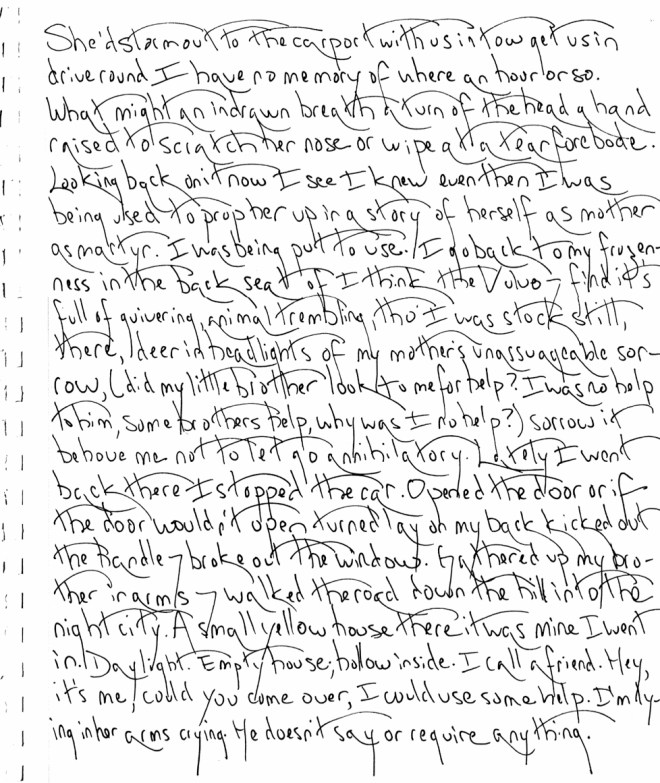
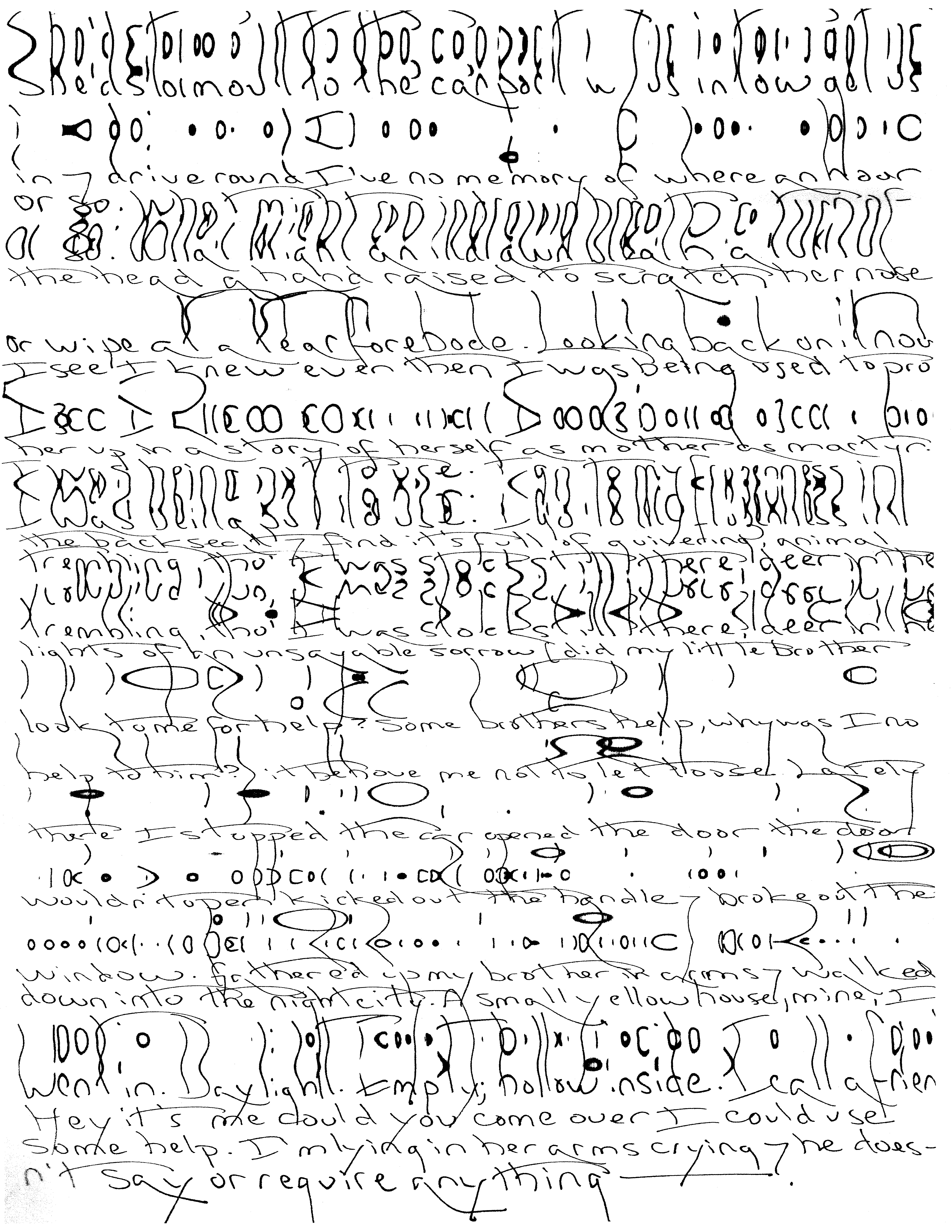
Here’s one such, a journal entry, lightly edited. It begins as a memory that became an episode of lucid dreaming – the transition is around where “I” kick out the handle of the car door.

Journal page 2

I mean it as a visual poem. It has to be handwritten – doesn’t work typed. Every cross-stroke is a jailbreak, the force of the kick breaking the boy free.

For context, since I’m disclosing bravely here, this was a little bit of solo EMDR work. EMDR’s a protocol for working with traumatic memories that instead of describing in detail I’ll just link to here. I picked a memory that was charged, but not too charged, because I’m still learning how to handle this practice, and can easily get overwhelmed by it.

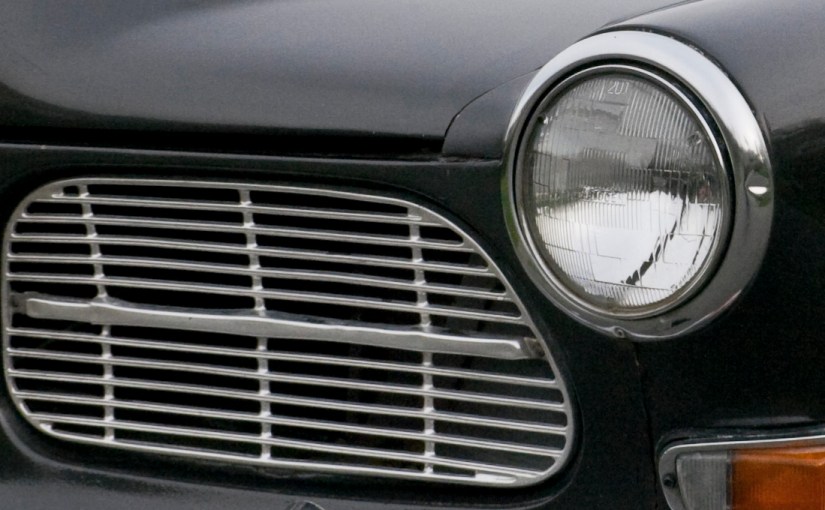
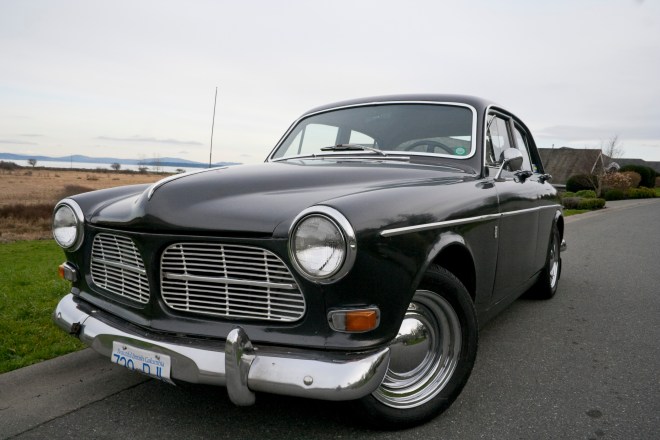
I’m so curious the friend morphs gender. The friend’s my mother and father, I think so, as I knew they could also be. Not as I would get them to be if I were good enough – fuck that, done with that. But as they are now, somehow, in me. volvo-122-1966-6

To end, an image I found online, eerily like the very car. Right navy/eggplant colour. BC license plate though the landscape looks more Delta/Surrey than West Van where the memory lives …


ADDENDUM. Came to feel, in the setting of Overject, the text needed more alterity – to be more other to itself. Started playing with moving it on the photocopier glass as the blue light bar moved along under the glass gathering in the image. And found, this was nice, that when I induced the movement that the text, its content, and yes my students I do still care about content, that the text induced in me, waving or trembling or rocking or whatever – that was the image that felt most true.

In the case of the page above (reinscribed) that was this.

She'd storm - warped (new)
Getting my HTML on. Click to enlarge and then some.

Not asemic writing, properly, because it has legibility (versus “is legible”). Aasemic writing?

To translate the translator

Third and last of the aleatory proposals is mine. Strikes me as dullest of the three. Buzz goes, buzz buzz. And with that ringing encomium – read on.


I’ll present on Overject, an exercise in total translation – trans­lation that holds every verbal and visual trace that can be caught of how a poem refracts as it passes through its translator. The project performs various manipulations on its source text, a minor mediocre didactic Old English poem, to investigate the role of the translator’s impurities and opacities in the activity of translation. While the project may not appear classically aleatory, it turns out to encounter and depend on accident at every turn.

SI 3 (89R) - text - newMost of the poems are hand-written, and contingency hangs on the inscription of each character. I set each one down fast, too fast for thought, and a second time just as fast. Then meticulously I ink in the spaces left open between the two passes. The gangly pseudo-graffiti that results is a gestural translation of the scribe’s stately calligraphy. The practice may not be aleatory, strictly speaking, for no random element from outside the poet has been introduced. But although the forms are laid down by my own hand, I experience them to appear from outside my will intention and control. I decide the process, as the aleatory poet decides to roll the dice, then submit to the results. And I take from the practice all the joy and constraint, freedom and burden, the aleatory is famed to offer.

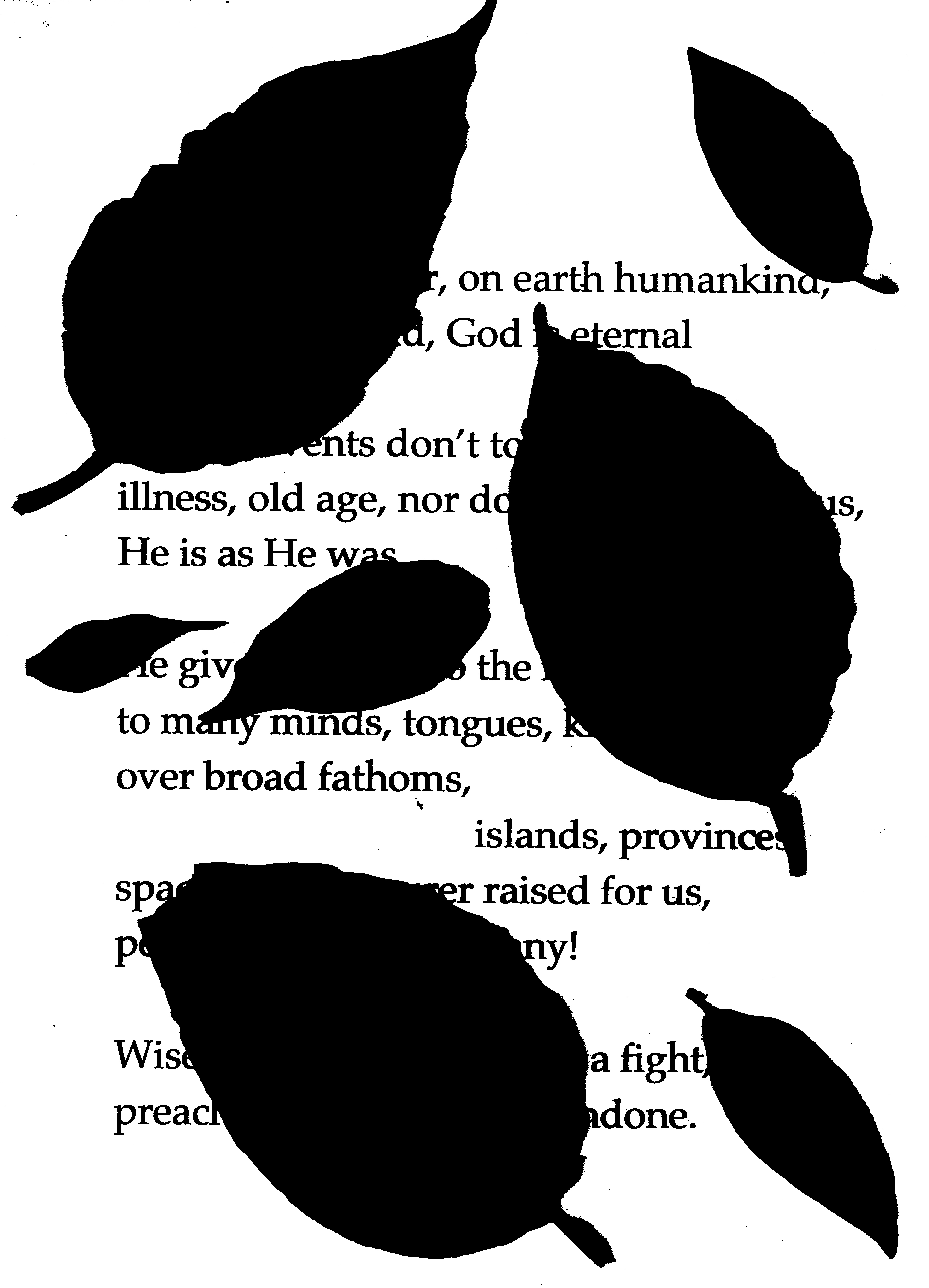
FT 3 (89V)My work with my materials – leaves paper cellophane – also has aleatory respects. Leaves first entered the poem by accident at the corner of my eye, a dogwood in the wind out my window. I picked some and dropped them on a page and that became a thing. Their placement as masks over semantic translations is a mix of chance and design: they fall as they will, then I get to nudge them around, but a little. Meanwhile, most images, after they’re drawn and before I scan them, are put at risk, torn on all sides. What course the tear takes is not altogether up to me. Nor can I say which parts of the tear line will appear, and which will stay invisible, when I take the scrap to my scanner. Lines of scanner noise that become hills and clouds, the very lay of the land.

Questions I expect to address or at least brush on: How do aleatory practices intersect with proprioceptive elements (the embodied gesture) and objectivist concerns (the thing­liness of the poem)? Burroughs said that all writing is cutups – is there a meaningful sense in which all writing is aleatory? Does a practice count as aleatory when the random factor comes from the poet herself or himself? What sympathies exist between the drive to the aleatory and longings among our poets for the organic, the spontaneous, the irrational, the impersonal?


Yeah whatevs. To come soon, student blogs. Some are striding into readiness, a few yes are trudging, a couple have fleeted there. Links to those last, anon.