Cometh spring, a new quarter, and our entry, I with 20 brave souls, to the wilderness of visual poetry. Typographic cows at leap over sans-serif moons. Overflowering word gardens. Poems with no words in them.
I’ll post some exercises, and I hope some student work, in weeks to come. Inly the shift from intense poem-making to what may be intense poet-teaching is feeling a bit rocky. But I think once I’m at one with the rocks it’ll be smooth going.
Living Writers: Word and/as Image
The written word is always embodied, on paper or in stone, on bone, among electrons. That means it is both visible and tangible. In addition to writing or reading it, we can trace it, paint on it, rough it up, sand it smooth, stretch it, shrink it, erase or deface it. Meanwhile, the visual image often reaches for the sort of meaning words have, asking us to treat it as legible. No one knows what these figures in Blake’s Marriage of Heaven and Hell mean—
—but most will feel that they mean. In the word-image nexus, meaning is often fugitive in this way, just beyond the reach of your eyes’ fingertips. In this course, we’ll study poems in which signs keep sliding toward picture, and pictures keep morphing into signs. Our primary texts will be those of living writers, many of them Canadian, but we’ll also dip into earlier works, from Egyptian rebuses to Anglican concrete poems to early Romantic prophetic watercolours. Get ready for a wild ride.
Near the end of Interstellar there’s a bit I find transcendent (when I picture it) and really kinda cheesy (when I think about it). Though in another galaxy and at the heart of a black hole qui s’appelle Gargantua our hero finds himself in his daughter’s bedroom behind the bookshelf.
A bedroom a bit altered. Imagine turning the book in your hands inside out and finding it contained a tesselated library. A still –
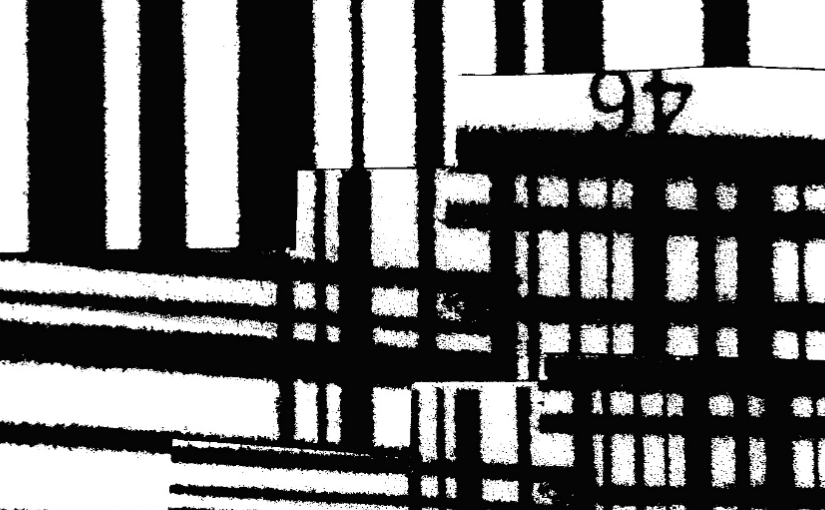
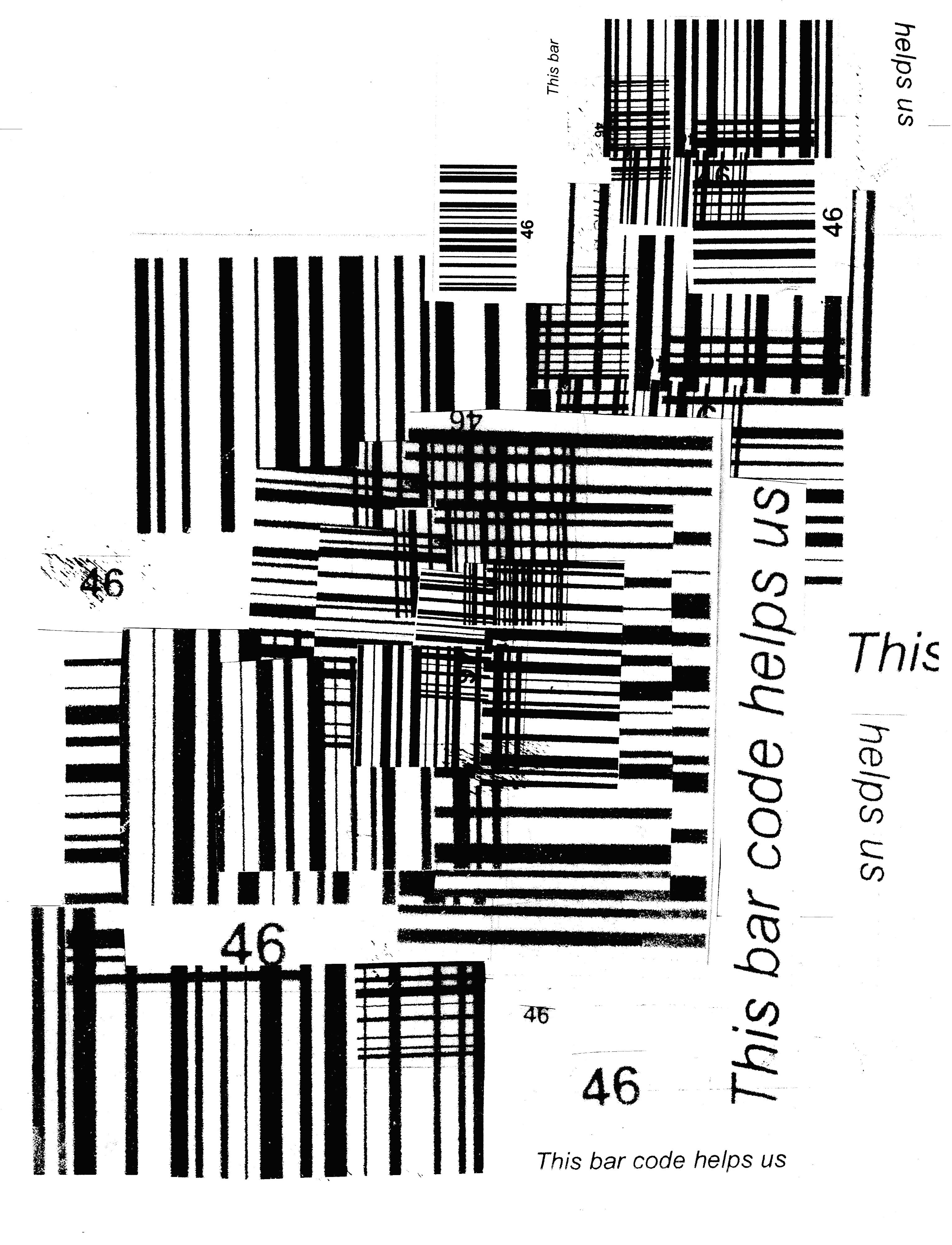
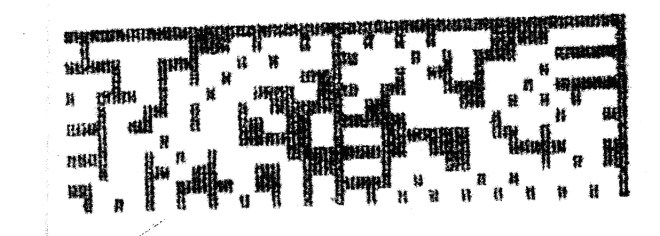
Big debt to Borges, yes, but the visual feels alive to me. And apparently it sunk in to where I could thieve from it. A bit after first seeing the movie, with no sense of debt to anyone or thing, I made this one out of bar codes, for the death and dragging under of Dumuzi –
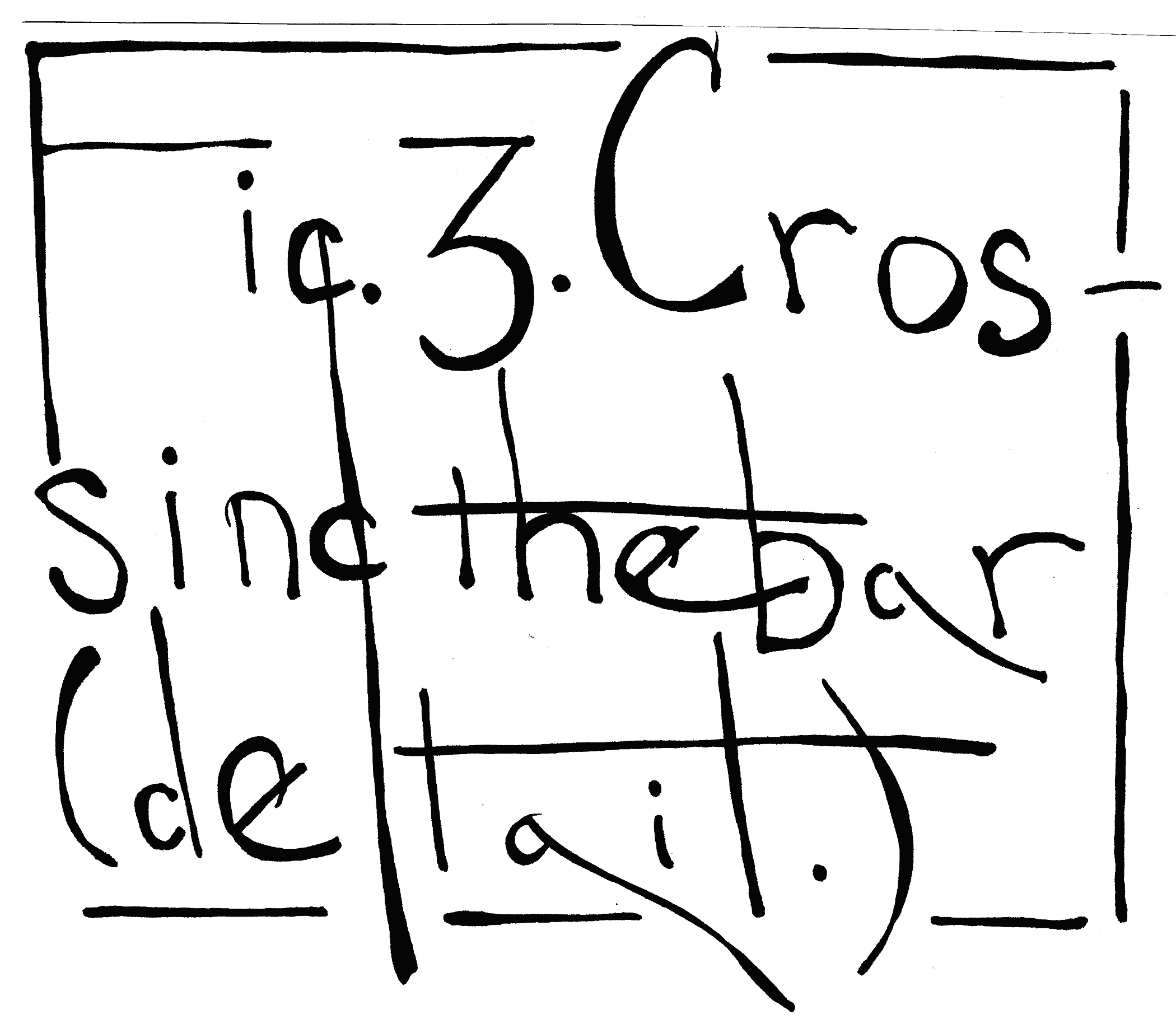
The debt I was aware of was to Tennyson’s “Crossing the Bar,” a poem I don’t much like, but I had in mind the recent passing of a favourite English teacher, in whose company I first met the poem. And so called it,
Anyway, all this is to say, debts to others are so many, truly new thoughts so vanishingly few. Oh Ezra. Make it new – if it isn’t already altogether new, how could I, you, we, they, make it be.
P.S. The slantwise rough strokes are bits of woodgrain from my desk picked up by scotch tape splayed there. I want to write, soon soon, about woodgrain and accident, Martians Jack Spicer and Stephen Burt, and proprioception, but the moment is not quite yet – not quite yet – .
P.P.S. The bar code is from if I remember aright the paper that came long with my flu shot. And my dismemberment of it my vengeance upon it b/c it protected me not one whit, not one.
There’s an old quatrain from out the middle ages I first met as epigraph to Robert Hass’s Sun Under Wood.
Now goth sonne under wode —
Me reweth, Marie, thi faire rode.
Now goth sonne under tre —
Me reweth, Marie, thi sonne and thee.
A book and a poet that’ve always resounded for me for how tenderly they assay the harms to which the mother-son bond is prone. Terrain I work in too as uncrampedly as I can.
What sat me down to write though were a father and a daughter. Watched Interstellar a second time last night and was moved (again) by all it did well and dismayed (again) at all it did poorly. And what I felt most (again) wasn’t the admittedly spectacular black hole wrung with light, or the rungs of sooty frozen clouds the astronauts clamber among, but the intimate distance of father and daughter the astonishing otherness of those sights makes visual.
It kinda broke me. I suddenly got I’m almost for sure not going to have that in my life. I’m a bit too broken to have a kid or have taken a bit too long to get me whole enough to do it. I’d probably do okay at it now but the window’s closing or closed.
A bit later the okay-voices came to say there’s plenty else to make a life meaningful, and they’re right, but for a bit it broke me.
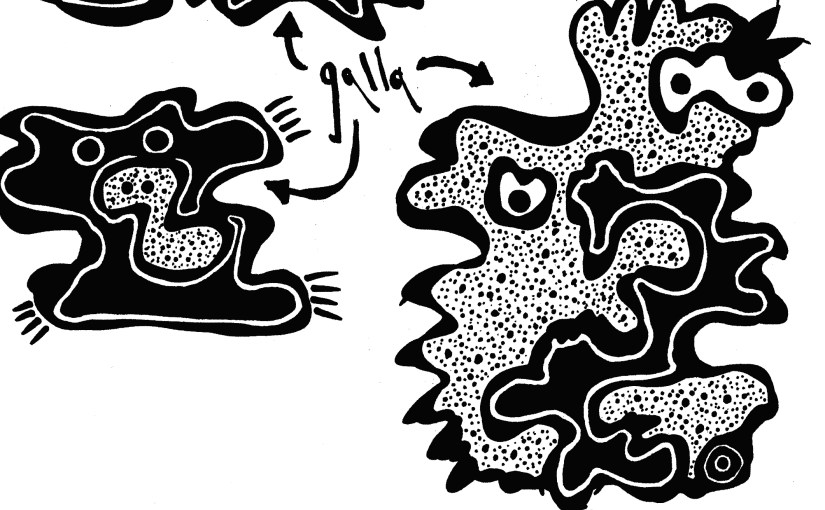
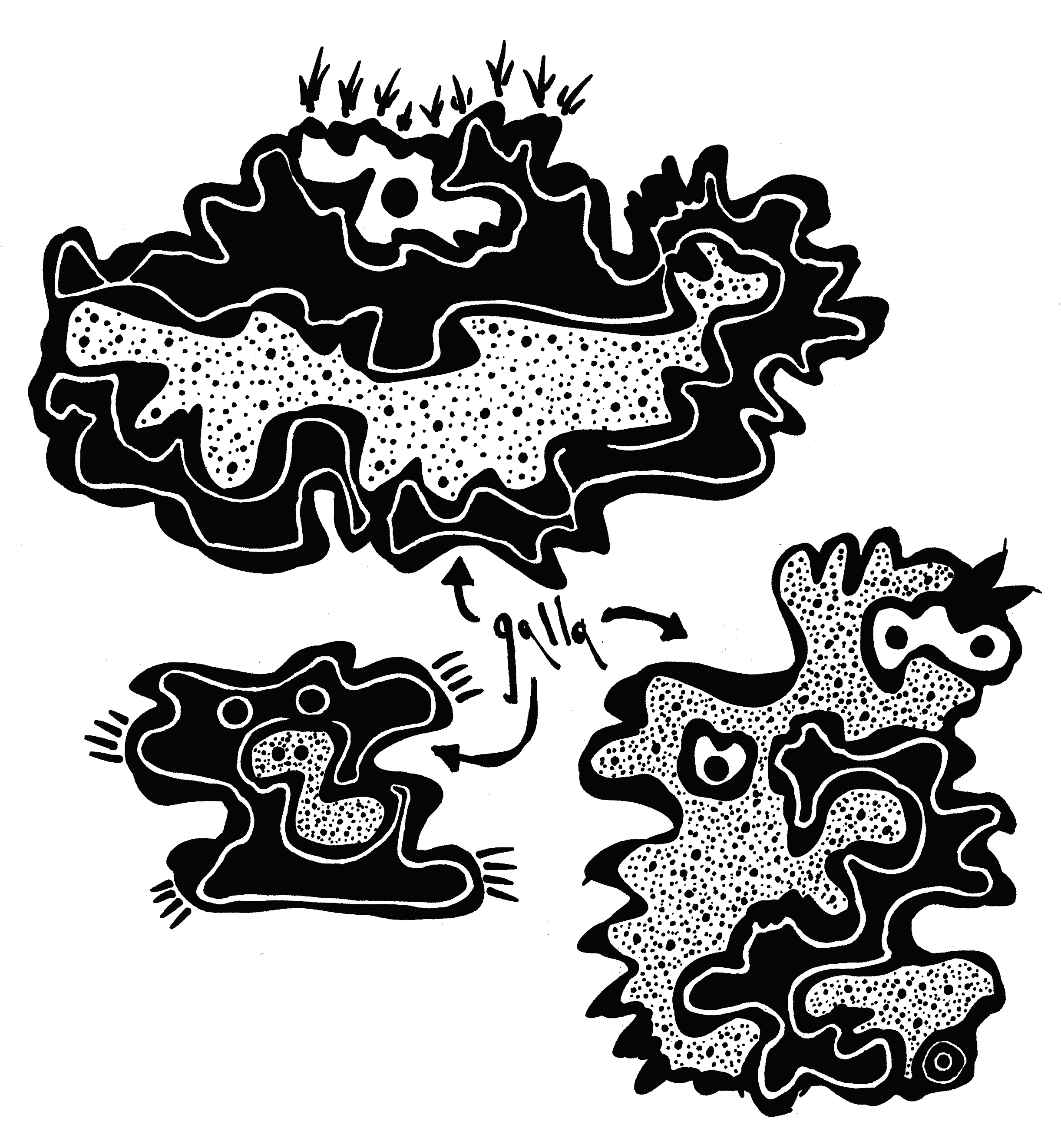
You see why I go to junk mail. It gets dark fast around here sometimes. A few galla for you — one’s trying to hide behind a bit of beachwrack. (Goeth galla under driftwood.)
If I’m more open here than I’ve been, I thank Hass a little, my students a lot, who’ve braved to write about trials and disorders known by name but not plumbed for real in the halls of DSM V. To write and make beautiful and indeed sublime sentences out of. (Therapy prose: the more honest it is the more you cringe. Transformative prose: the more honest the more you soar.)
I do have to say, a joy of teaching is, the wish in me to father is met, not as it would be by a child, I know, but still, it is, and meaningfully. That’s for a different post — maybe a different blog — but it’s probably the most meaningful thing about teaching for me, equalled maybe only by the creative incitement the most happy arrangements have had to offer me.
Thought on the way to the grocery store yesterday evening: if at the end of my life I’ve touched more people as a teacher than as a poet, that’ll be okay, I guess.
So, Inanna goth under wode, and I’ve had to go with her, goddammher. No point putting it off, let’s get this road trip started.
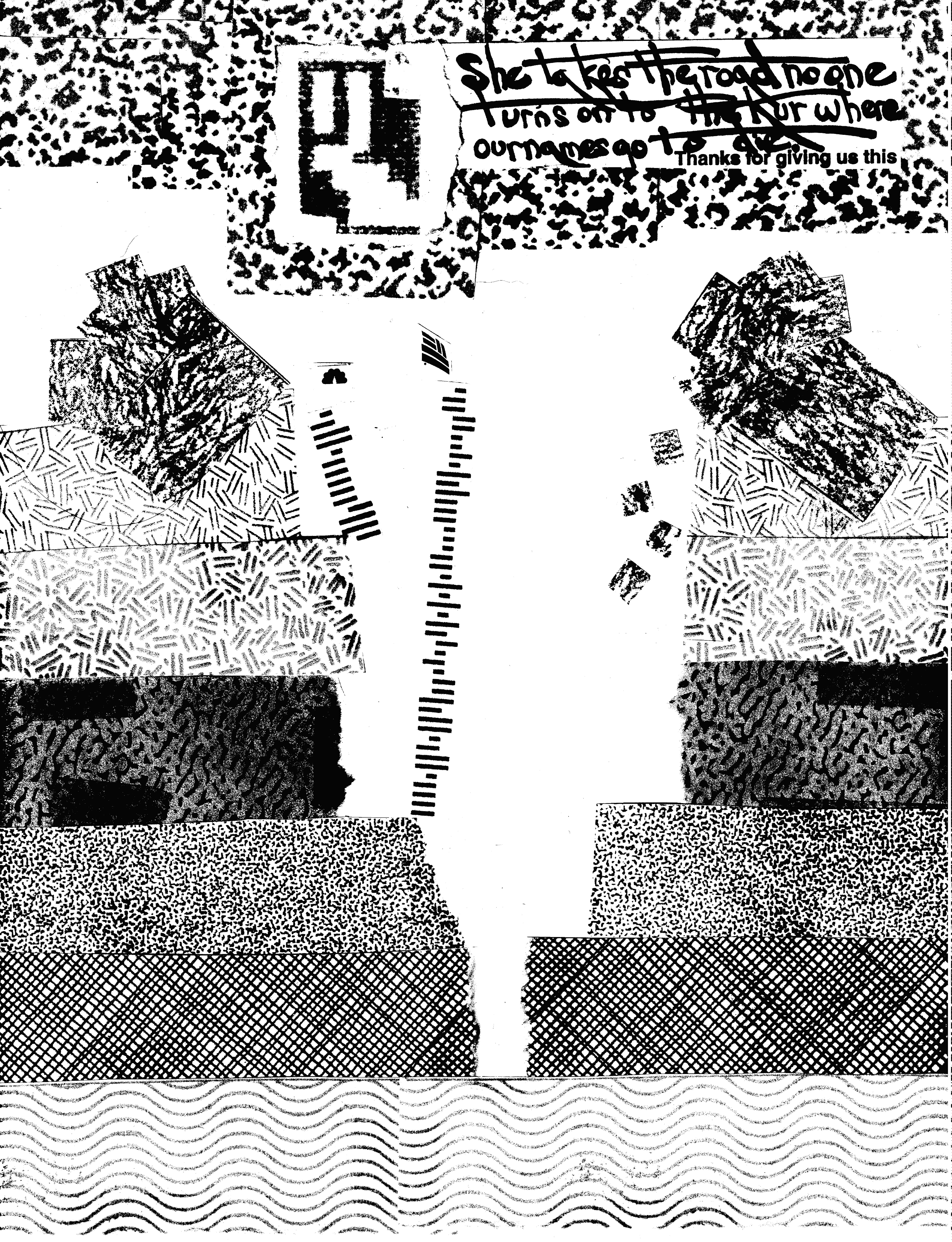
The text’s a bit hard to read (working on that) so —
She takes the road no one turns on to the kur where our names go to die.
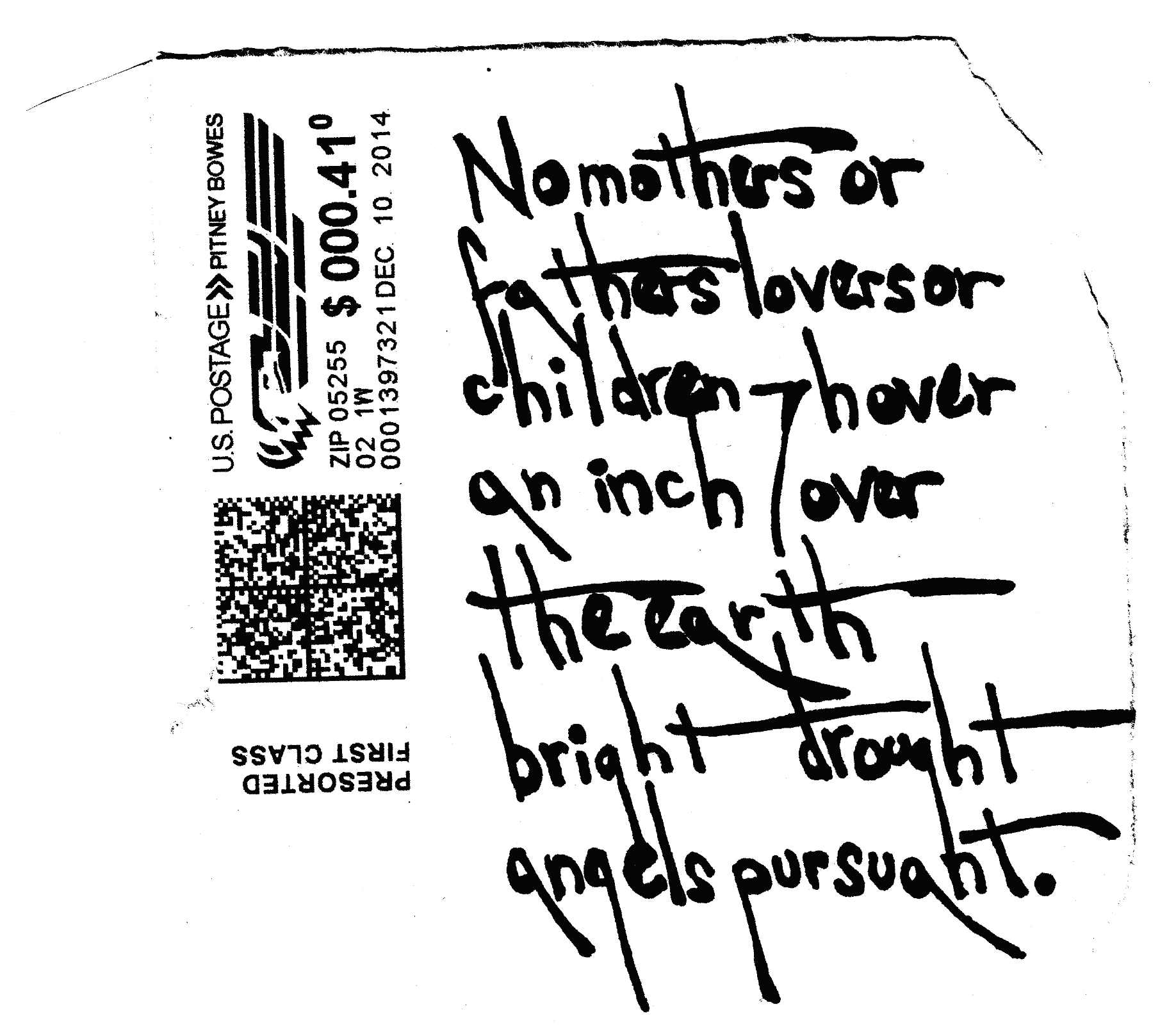
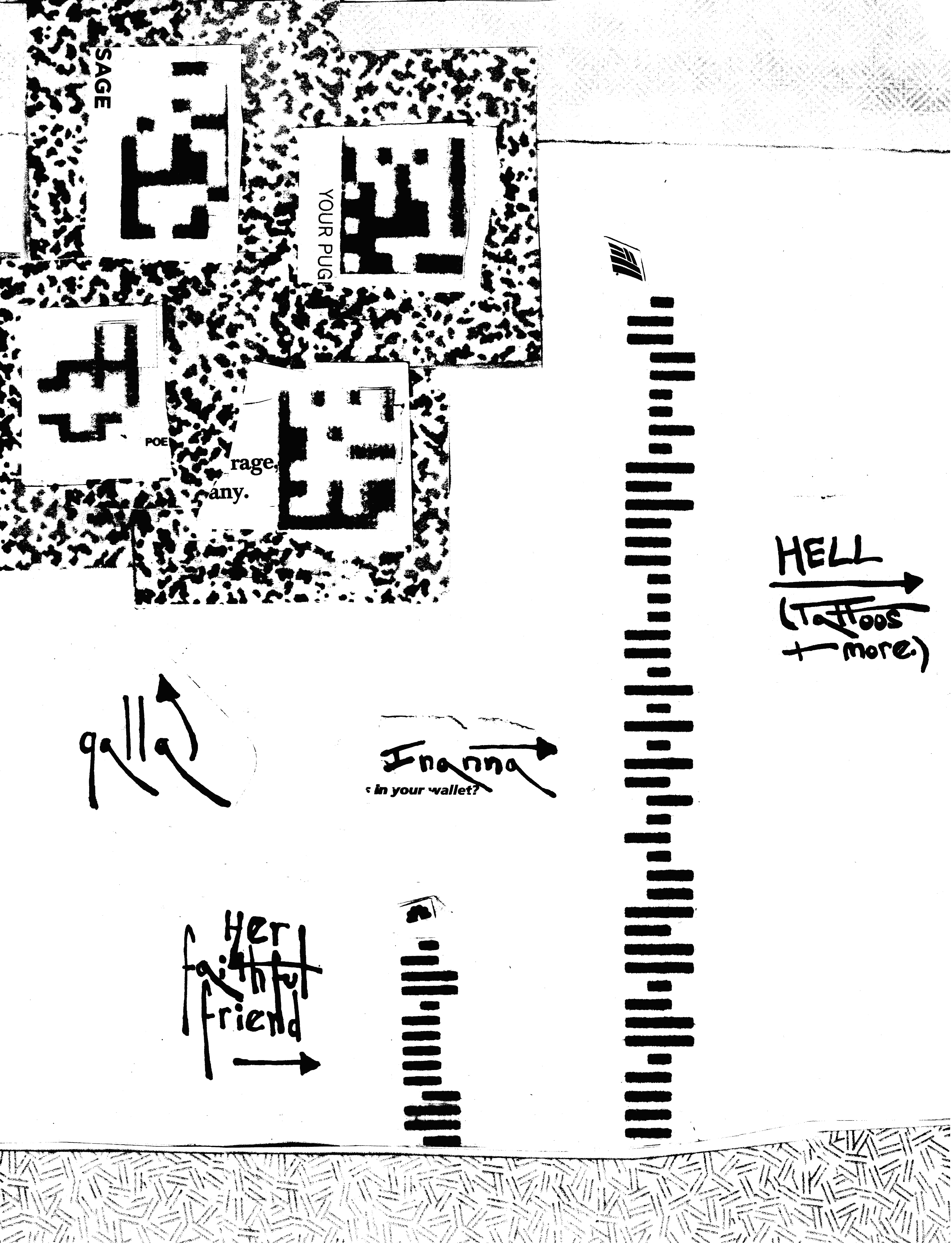
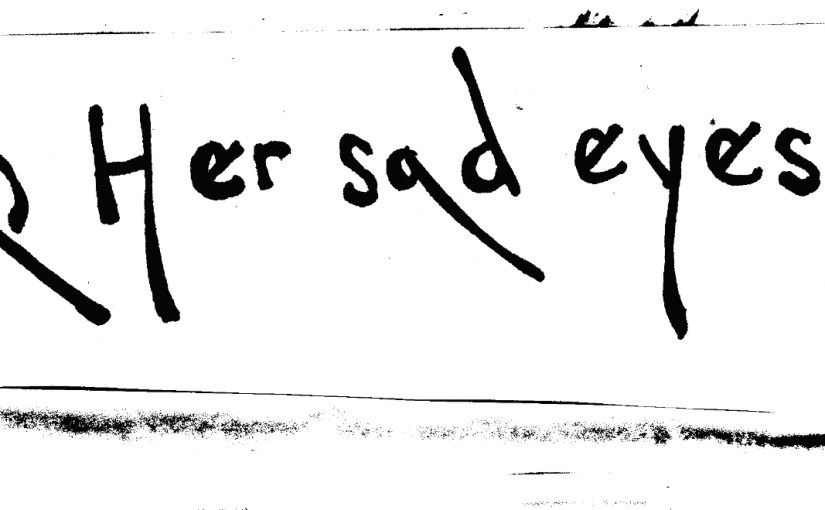
The kur is the Sumerian underworld — ruled by her sad sister Ereshkigal. Her snazzy feather is the Bank of America logo. The terrain she and her trusty friend navigate at some peril is a treacherous assemblage of security envelope linings.
From a later (Akkadian) text, “The Descent of Ishtar to the Nether World” (just for funs):
To the Land of no Return, the realm of [Ereshkigal],
Ishtar, the daughter of Sin, [set] her mind.
Yea, the daughter of Sin set [her] mind
To the dark house, the abode of Irkal[la],
To the house from which none leave who have entered it,
To the road from which there is no way back,
To the house wherein the entrants are bereft of li[ght],
Where dust is their fare and clay their food …
Don’t make too much of the pun on Sin. But think about it — a road you can only go one way on. Really, there’s no such thing as a one-way street, you can always go the other way when no one’s looking. Anyway, this passage has always been striking to me, for how through its stiffness it still haunts and shudders.
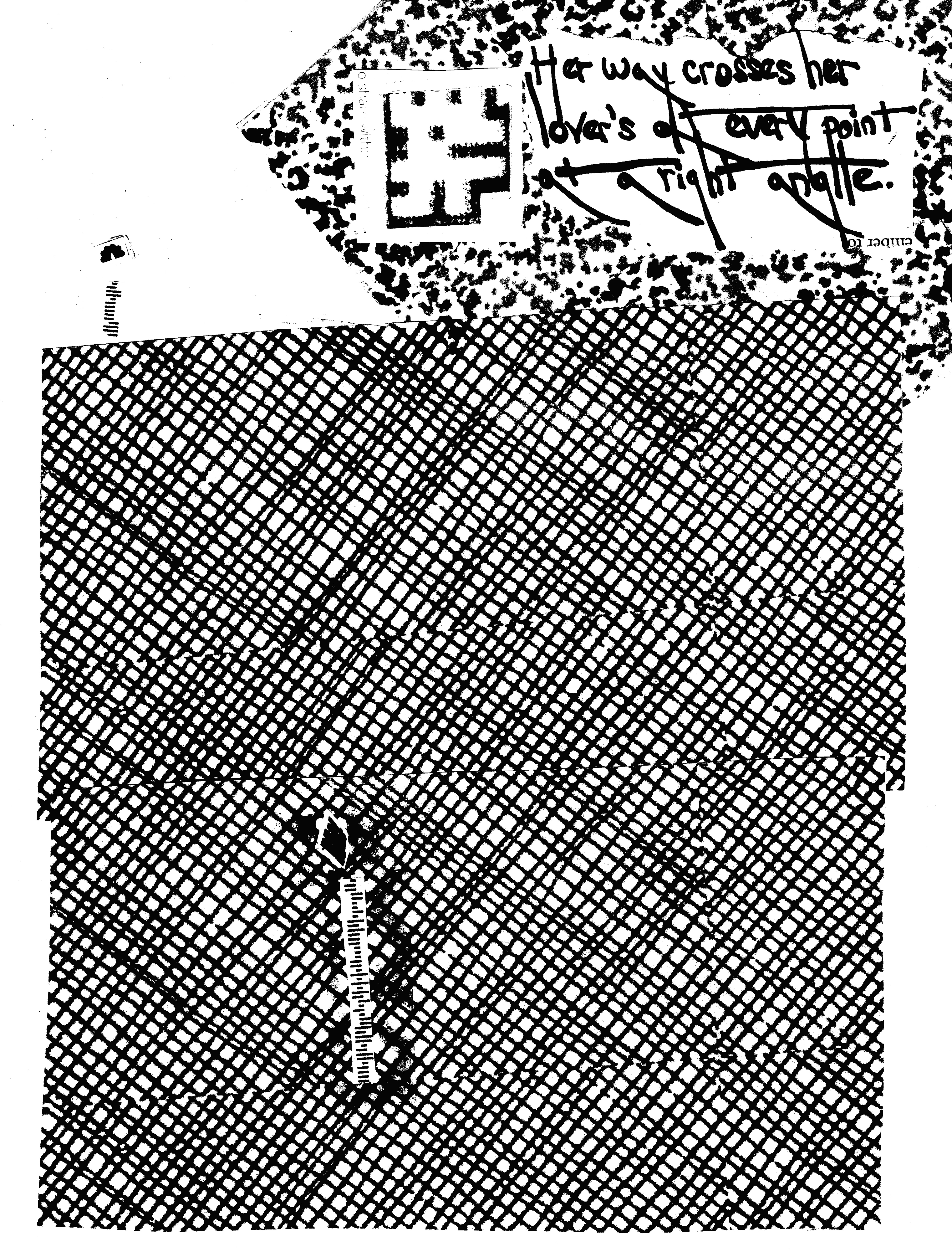
In my version anyway Inanna grows smaller as the scope of her task dawns on her.
Her faithful friend at a remove now, unable to follow any further, Inanna’s entered the weave of one of the earth’s textures, her feather guttering smokily, some sort of torch.
Inanna is that we are here together at all. Among the powers she connived from her father early in her life in a drinking game and stole away with by boat and brought to the docks of the great Sumerian cities were —
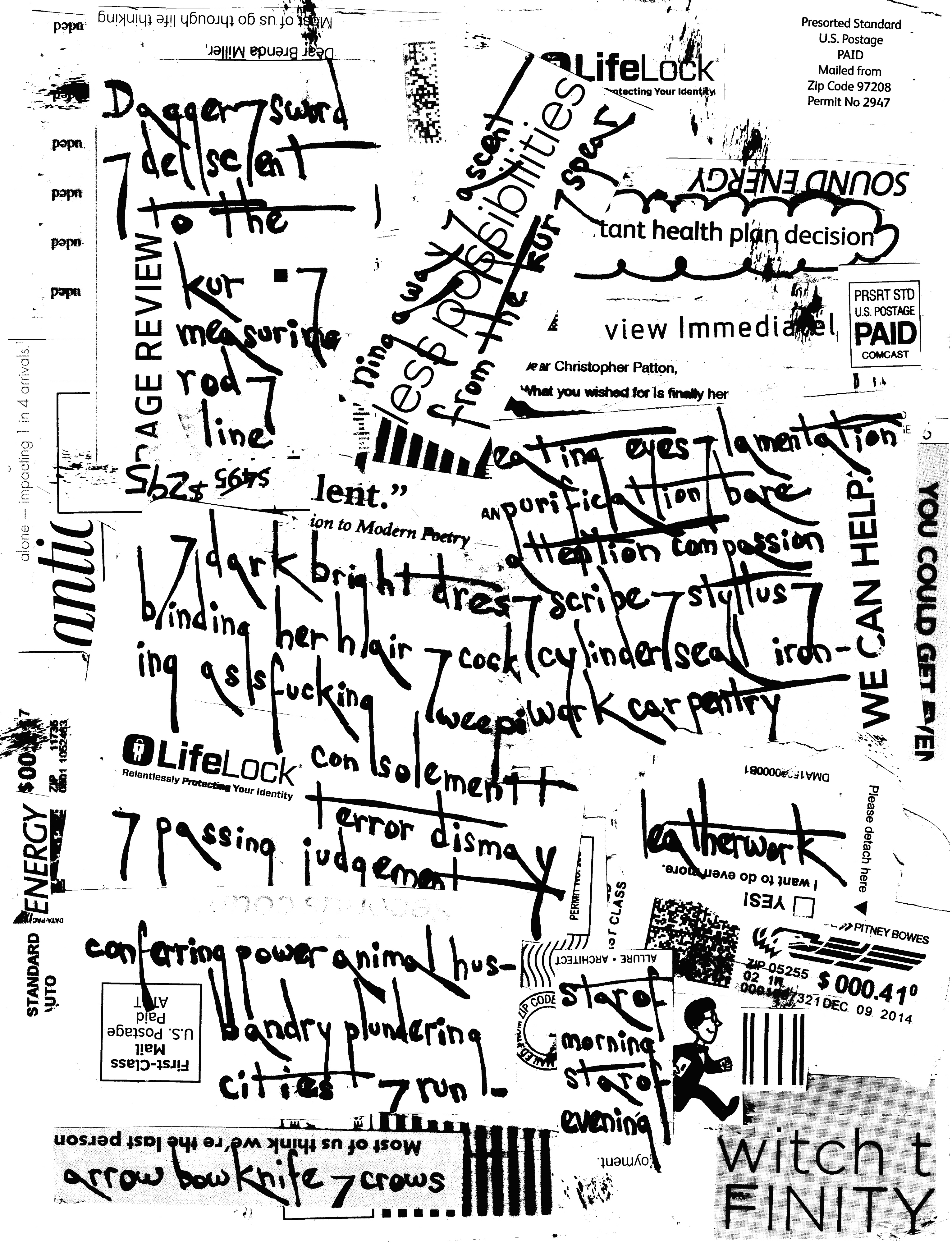
dagger and sword
black garment
colourful garment
loosening of the hair
binding of the hair
art of the hero
art of power
art of treachery
art of straightforwardness
plundering of cities
setting up of lamentations
rejoicing of the heart
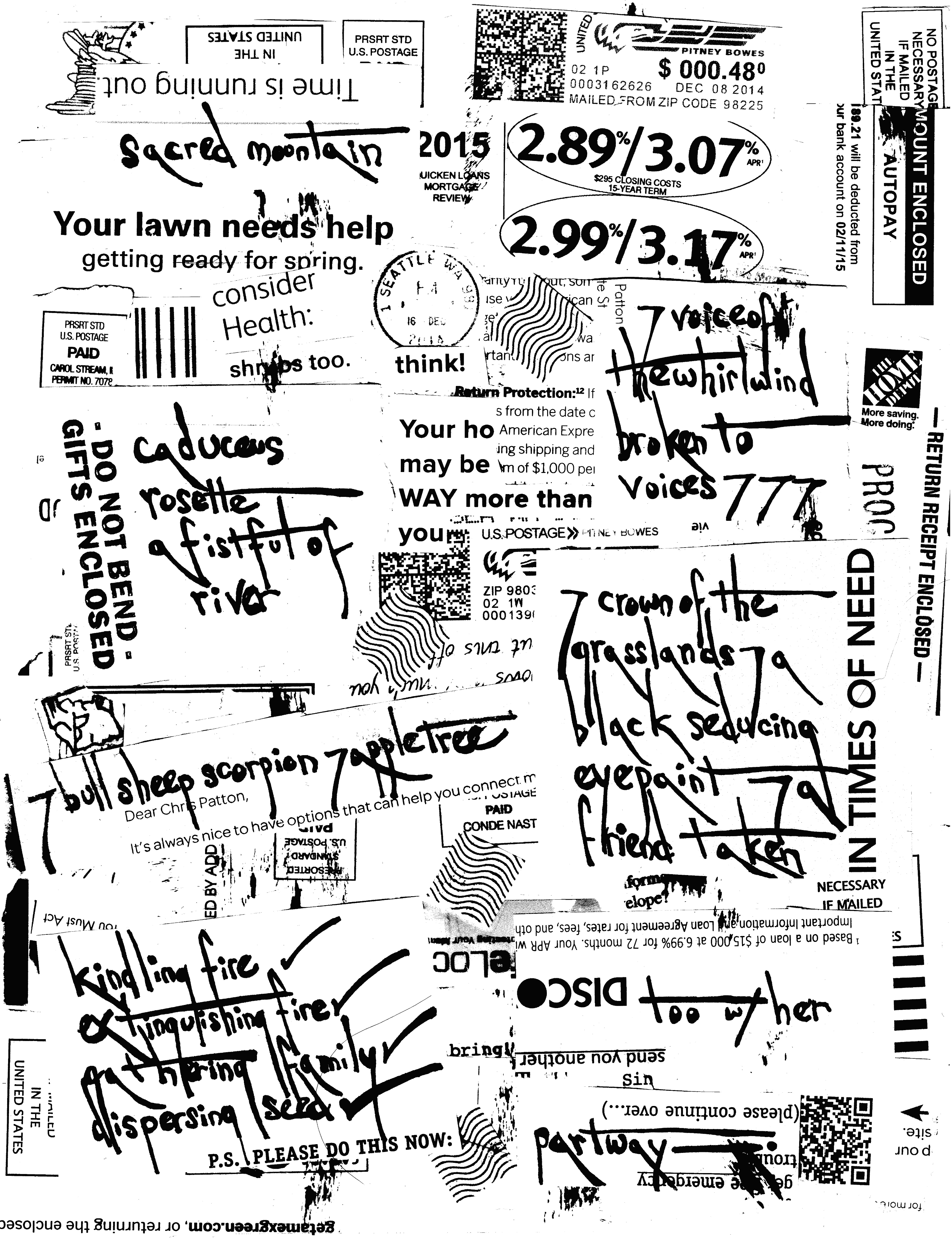
She’s how a meal is more than feeding a hole and sex more than rutting and shelter more than reeds against the wind. She’s all the powers of civilization including the power to pull down a civilization. Not good or bad but bigger and smaller than that. The voice from the whirlwind when the voice is in roughly equal measures Leviathan and Coyote and they who made them.
As she readies for her trip the underworld she gathers the powers (me) drawn to the fore of her by good times with her shepherd king Dumuzi. An array likely to make her nether sister Ereshkigal (sexually voracious apparently and intensely lonely) more rageful than welcoming.
She placed the shugurra, the crown of the steppe, on her head.
She arranged the locks of hair across her forehead.
She tied the small lapis beads around her neck,
Let the double strand of beads fall to her breast,
And wrapped the royal robe around her body.
She daubed her eyes with ointment called “Let him come, Let him come,”
Bound the breastplate called “Come, man, come!” around her chest,
Slipped the gold ring over her wrist,
And took the lapis measuring rod and line in her hand.
Archaic but still kind of hot. I picture her with a hardhat and an orange safety vest carrying a surveyor’s tripod.
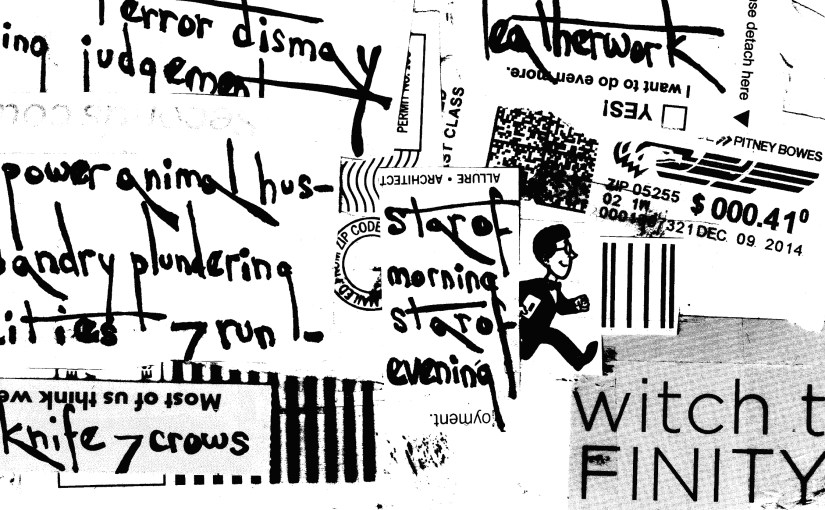
For this point in the book I need a broader account of her powers — need to say how great a disaster her departure is — so I’ve gone back to the survey of her me in her drinking game with her father. I’ve posted this once before but here it is again, somewhat improved. The first page —
And the second —
Why junk mail. A fertility myth tells how grain gets from the ground to your table to your belly. At some point it invokes sex (and not metaphorically, what those grasses are doing in the wind is fucking) and at some point it acknowledges the marketplace — grain’s not going to get from the ground to your gut without being bought and sold as a commodity, not anymore, not by the time such a myth as this comes about.
Junk mail is one mark of the marketplace in our day. It is somehow all at once ephemeral (who stops to read this shit before tossing it in the recycling?) and archaic (print? in envelopes? in my mailbox? really?) and omniscient (how on earth did they find me?) and omnipresent (day in, day out, my lord). So, that, and, too, if I can comedically resacralize the peacock by turning the Comcast logo into a funny hat, well, that’s a small whee for me.
No saying why Inanna heads to hell. She’s queen of 2/3 of the universe — the whole of the known universe. What’s the call of the third third to her? Her ejected other? a secret melancholy? just a lust to acquire more turf? The “measuring rod and line” she takes as one of her me, her powers, suggests she means to chart and apportion the unapportionable. Or maybe she goes to rescue the lover she sent there a little while earlier.
Whyever she goes, she hears the call, and goes.
From the Great Above she opened her ear to the Great Below.
From the Great Above the goddess opened her ear to the Great Below.
From the Great Above Inanna opened her ear to the Great Below.
Why 3X? Because liturgy. An altered state we’re invited to enter the goddess through. And ear if I remember right is metonym for wisdom. Well anyway she abandons heaven and earth and holy office and all her earthly temples to fall to the underworld. If you got abandonment issues this is the goddess for you.
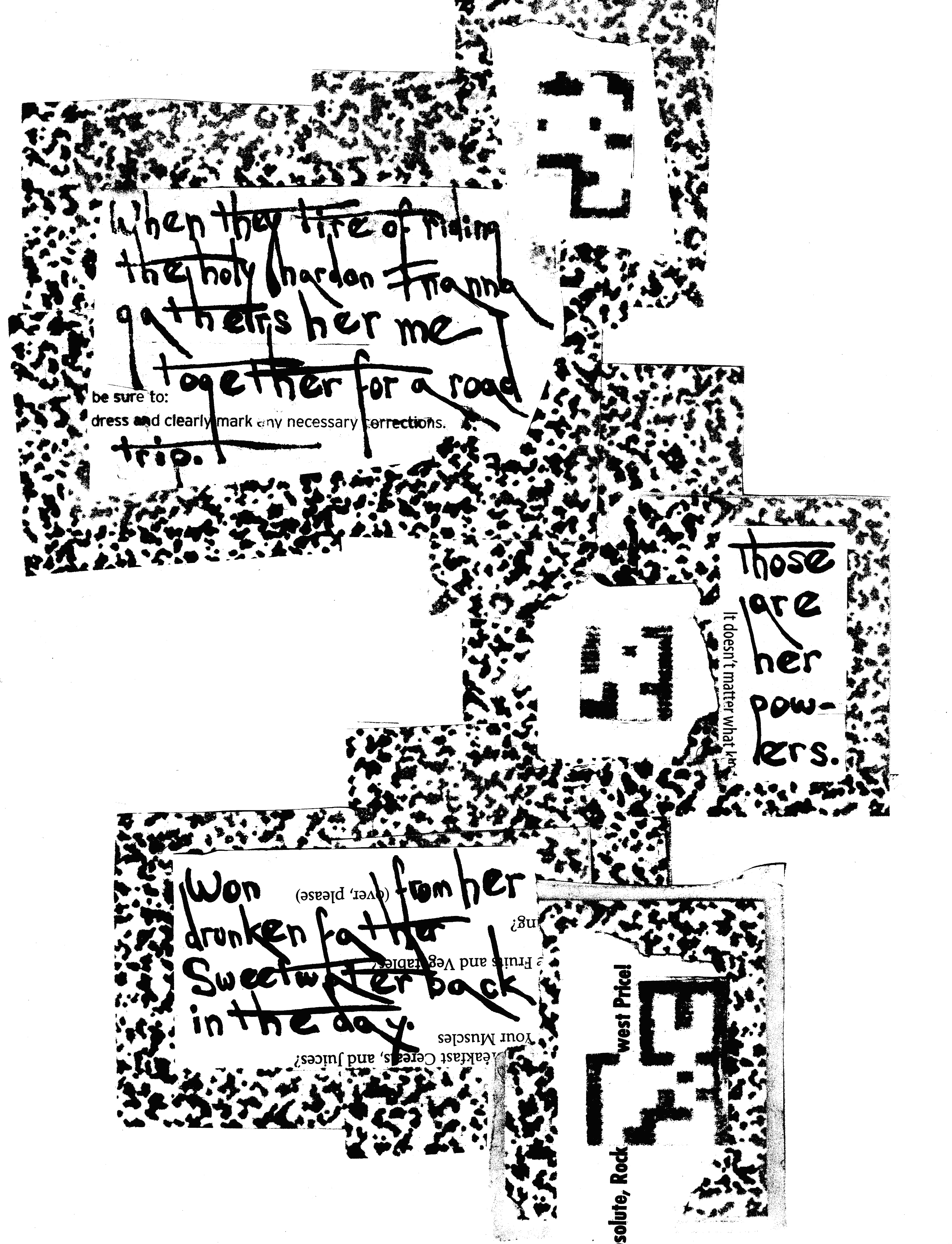
Hard to read on this scale so the text goes:
When they tire of riding the holy hardon Inanna gathers her me together for a road trip.
Those are her powers.
Won from her drunken father Sweetwater back in the day.
I’ve crassed it up some, sorry. But I wanted to bind it to their apex, when all is going lovelyly for both Dumuzi and Inanna, lettuce sprouting in its furrow, black boat quickened with cream, etc. The faces are harvested from scan codes on envelopes like this one.
Riding the pareidolia wave again. They’ve become for me the galla, the demons come from the underworld to claim their own. They’re neither inner nor outer and terrify me. The whole book’s my effort to make a peace with them. That’s why they get to narrate this whole sequence — thought being, give them some say, they might quiet down some?
I’ll hope to remember to write of Milarepa and his demons sometime, that tale, what I think it taught me. In the meantime we know this about the galla they have
Oooh scary right? Anyway I want to get brave Inanna, sad Inanna, maddening Inanna, on the road so I can go have some dinner, so here she is, with her galla attendant, and her faithful sidekick, cut from the same barcode as she. Thanks for your indulgences, many.
I’ve been posting scattershot this and that from Dumuzi and am feeling moved now to be a bit more steady and thoroughgoing at it. So I think I’ll post, as they come into their final framing, the picture poems I’ve made to tell the descent to hell and rescue and apotheosis of Inanna.
She’s the one who drew me into this biz in the first place many years ago. Before my true north turned out to be her rather less empowered but dearer to me now shepherd lover. She for me has been every woman, starting with the first of me, I have wanted to save or hold or leave or be safe with or from. “Devastatrix of the Lands.” O she’s a terror. And too she’s those eyes in the tent with Pound at Pisa not scornful. Kuanyin, what gentles.
So that got heavy. Also this is a comic book built out of junk mail. Anyway I’m thinking here at blog to intersperse the images with the source texts – in a way I won’t be able to in Dumuzi itself. If anyone’s ever fool enough to publish the damn fool thing.
The sequence begins with a word poem I hope gets the hapless awe one feels in the face of powers orders of magnitude huger than anything one could imagine mustering.
Reft
Tears
off a face
in bad
weather
at an altar
torn in
weather of
another
order.
Holy
sweet being
shining
gone
and the mountain
ashes in
flower.
The title came from Pound’s “What thou lov’st well shall not be reft from thee.”
Next, a picture poem.
Kinda porny, I know, sorry. Goes with the territory (fertility myth). Intertitle, to tuck in at lower right, looks like this.
The ground for it, the coitus and the tristesse, looks like this in the source where I first found them (The Ancient Near East: A New Anthology of Texts and Pictures, Vol. II, ed. James B. Pritchard).
The “honey-man,” the “honey-man” sweetens me ever,
My lord, the “honey-man” of the gods, my favored of the womb,
Whose hand is honey, whose foot is honey, sweetens me ever.
Whose limbs are honey sweet, sweetens me ever.
My sweetener of the . . . navel, [my favored of the womb],
My . . . of the fair thighs, he is lettuce [planted by the water].
It is a balbale of Inanna.
Somewhat more felicitous, and just for that more blushful, is Diane Wolkstein and Samuel Noah Kramer’s translation in Inanna: Queen of Heaven and Earth:
He shaped my loins with his fair hands,
The shepherd Dumuzi filled my lap with cream and milk,
He stroked my pubic hair,
He watered my womb.
He laid his hands on my holy vulva,
He smoothed my black boat with cream,
He quickened my narrow boat with milk,
He caressed me on the bed.
I prefer the anatomically more precise term “happy place.” Anyway, as all things must, this comes to dust. Says Inanna:
Now, my sweet love is sated.
Now he says:
“Set me free, my sister, set me free.
You will be a little daughter to my father.
Come, my beloved sister, I would go to the palace.
Set me free . . .”
I gave the restless to her cuz she’s the one to go awandering. That’s up soon. Thanks for scanning.
And another, found through Google, when I wanted to see if its searchy spiders had found this place, yet. What’s the odds of it? Another blog, begun in the spring of the very year, linking affections for compost and zen.
Click to embiggen to see lots of cool textural crap.
One diff, you might learn some from this one about actual composting, which here, you won’t, I don’t think so, no. The blog: zencompost.wordpress.com.
Wrote this up for a job app and thought I’d post it here—after revising blogwise. Medium is so message.
Been working about a year on a manuscript called Six Hungry Ghost Abatement Protocols. It’s a study of creative process done at a crossroads of word and image. In which crash prose passages go through a series of verbal and visual metamorphoses—extraction, precipitation, illumination, inspiration.
My thought here is that even well tamed verbal structures possess a wildness inherent in language. In that wildering I feel less that I am writing and drawing poems than that the poems are drawing me out and writing me down.
Themewise the book takes on the Buddhist figure of the hungry ghost, a being of insatiable hunger, unassuageable suffering, to trace some connections among desire, attachment, loss, release. Process and content are very interwoven here: renunciations asked of the poems in their proceeding, as each gives way to a successor, are kin to renunciations they wrestle with in mind.
The transformations in their turns.
Extraction
I begin with a passage from my journal, streamlined and depunctuated, for instance this dream transcript.
I’m with R. on roads in the mountains ∙ at the
base of a ski hill we are looking at trail maps ∙ a
web or net of red lines thrown down over a
volcanic core ∙ a whole series of them side by
side ∙ each to the left steps back a bit further ∙
takes more in ∙ the gradations so fine I have to
take more steps across to get to the map that
has what I want to show than I thought to ∙ at it
I point to the road or trail on a southwestern
shoulder of a mountain ∙ One branch goes west-
ward ∙ that’s somewhere we’ve been ∙ one goes
rightward across the valley of the Stehekin
though we’re in Colorado ∙ that’s the trip I’m
talking about ∙ somewhere else I am saying how
full the colours were up there ∙ Even in winter ∙
a lake in the mountains ∙ sunlight on it and me
through firs on the far side ∙ bleached wood of
fallen snags half-submerged in the water ∙ in
the foreground tall as I am so I must be crouch-
ing ∙ brilliant red blueberry leaves ∙ a few in a
bare bush ∙ the colours give life to the sun and
to me ∙ then in a car with R. driving in and
away from the mountains ∙ he says he doesn’t
use trails when hiking ∙ he just pulls over to the
side of the road and starts bushwhacking up ∙
because of how his mother taught him hillwalk-
ing ∙ she was crazy or maybe just very intense ∙
I laugh too loud ∙ say ∙ But that was in Scotland
where they cut down the forests centuries ago ∙
do you really want to bushwhack through fir
thickets ∙ I wake picturing different sorts of fir
woods ∙ an impassable thicket of small dead
densely interwoven branches ∙ a stand of ma-
ture trees ∙ spacious and cool ∙ a floor of moss
Next I mine this source material for word clusters that bear poetic charge. Here’s the same prose with the mined bits prominent.
I’m with R. onroads in the mountains ∙ at the base of a ski hill weare looking at trail maps ∙ a web or net of red linesthrown down over a volcanic core ∙ a whole seriesof them sideby side∙ each tothe left steps backa bit further ∙ takesmorein ∙ the gradationsso fine I have to take moresteps across to get to themap that has what I want to show than I thoughtto ∙ at it I point to theroador trail on a southwestern shoulder ofa mountain ∙ One branch goes west- ward ∙ that’s somewhere we’ve been ∙ one goes rightward acrossthe valley ofthe Stehekin though we’re in Colorado ∙ that’s the trip I’m talking about ∙ somewhereelse I am saying how full the colours were up there∙ Even in winter ∙ a lake in the mountains∙ sunlight on it and me through firson the far side∙ bleached wood of fallen snags half-submergedin the water ∙in the foregroundtall as I am so I must becrouch– ing∙ brilliant redblueberry leaves ∙ a fewin a bare bush ∙the colours give life to the sun and to me∙ then in a car withR. driving in and away fromthe mountains ∙ he says he doesn’t use trails whenhiking ∙ he just pulls over to the side of the roadand starts bushwhacking up ∙ because of how hismothertaughthim hillwalk- ing ∙ she was crazy or maybe just very intense ∙ I laugh too loud ∙ say ∙ But thatwasin Scotland where they cut down the forests centuries ago ∙ do you reallywant to bushwhack throughfir thickets ∙ Iwake picturing different sortsoffir woods∙ an impassable thicket of small dead densely interwovenbranches ∙ a stand of ma– turetrees ∙ spaciousand cool ∙ a floor of moss
I compile my extractions to make a shorter stranger paragraph.
The roads in are look thrown down over a side
of them a bit further ∙ so fine I have to map that
too ∙ each step I want more a mountain road to
where the valley of what else I am even in win-
ter sunlight on it and me bleached wood in the
water in a crouch ∙ a lake fallen through firs in
the foreground ∙ brilliant bare red bush ∙ then in
a car with the mountains hiking us ∙ art a moth
taught us ∙ Just be at rest as you hack through a
rent sort of small dead ∙ the trees here really do
wake an interwoven densely spacious impasse
And perform the same extraction operation on this paragraph. This time my record of the process becomes a visual poem in its own right at hang on a threshold between signal and noise.
The roadsinarelookthrown down over a side ofthemabitfurther∙ so fineI have to map that too ∙ each step I wantmore a mountain road to where the valley ofwhat else I ameven in win- ter sunlight on it and me bleached wood in the water in acrouch ∙ a lake fallenthroughfirs in the foreground∙ brilliantbarered bush ∙ then in a car with the mountains hiking us ∙artamoth taught us ∙ Just be at rest as youhackthrougha rent sort of small dead∙ the trees here reallydo wake aninterwovendensely spacious impasse
Extracted text stays black, a corona of greyscale text persists about it, the rest of it’s let fade to the colour of the page.
Precipitation
The second round of extraction yields a material enough enriched for the next transformation—precipitation of a verse poem. In this process material drawn from the prose paragraph descends and settles into verbal strata.
RED KING
Look so fine.
I want what else I am brilliant at.
Red
king, hack us through these
here red trees.
Each step bit them.
Am really in a rough pass.
Winter oven.
I count myself free, making this one, to arrange words and lines as I wish. But only get to use words I can plausibly find in the source paragraph. I interpret “plausibly” often quite and sometimes really very generously.
Illumination
A book made just of these poems seemed a cold prospect, too procedural, not human enough, so I started to think and feel my way towards companion poems—poems born of those already made, but freely, with no constraint or set procedure.
At first nothing came. One morning, though, staring at an extraction record in frustration, I started drawing lines around the black text, then round the grey. I thickened lines and emphasized the faces and forms I began to think I saw. The result was a monstrous assemblage of eyes and mouths, horns and spikes and tusks. Faces predominated, mostly in profile, and I found them both frightening and endearing. They seemed spirits caught up in all sorts of longing and yet capable of illumination.
I decided to trust the weirdness and began to do the same with other extraction records. Sometimes the process yielded a compost of half-formed faces. Other times, I came to a single form, as here, where illumination got me a frog.
The extraction process may be familiar from Ronald Johnson’s Radi Os and Jen Bervin’s Nets, the precipitation process from Srikanth Reddy’s Voyager. Likewise these illuminations owe a debt to the work of Tom Phillips in A Humument. But as far as I know these methods haven’t been combined in this way or directed to quite these ends. Quite possibly for good reason.
Inspiration
The ghosts showed me the way to the fourth poem, the companion poem, which I hear as the voice of their suffering as it grows aware of itself. No constraints now except that the poem share a page with its illuminated precursor.
STAR FROG
The
size of the real
is fly
That we
never were
may be
the only
thing we need
never
fear
say I an unironic self
digesting fly.
The term “inspiration” may want scare quotes. One point here is to challenge our still persistent notion of the poet as a solitary figure fashioning her art ex nihilo. But still I feel that something in these poems draws a deep breath.
All Together Now
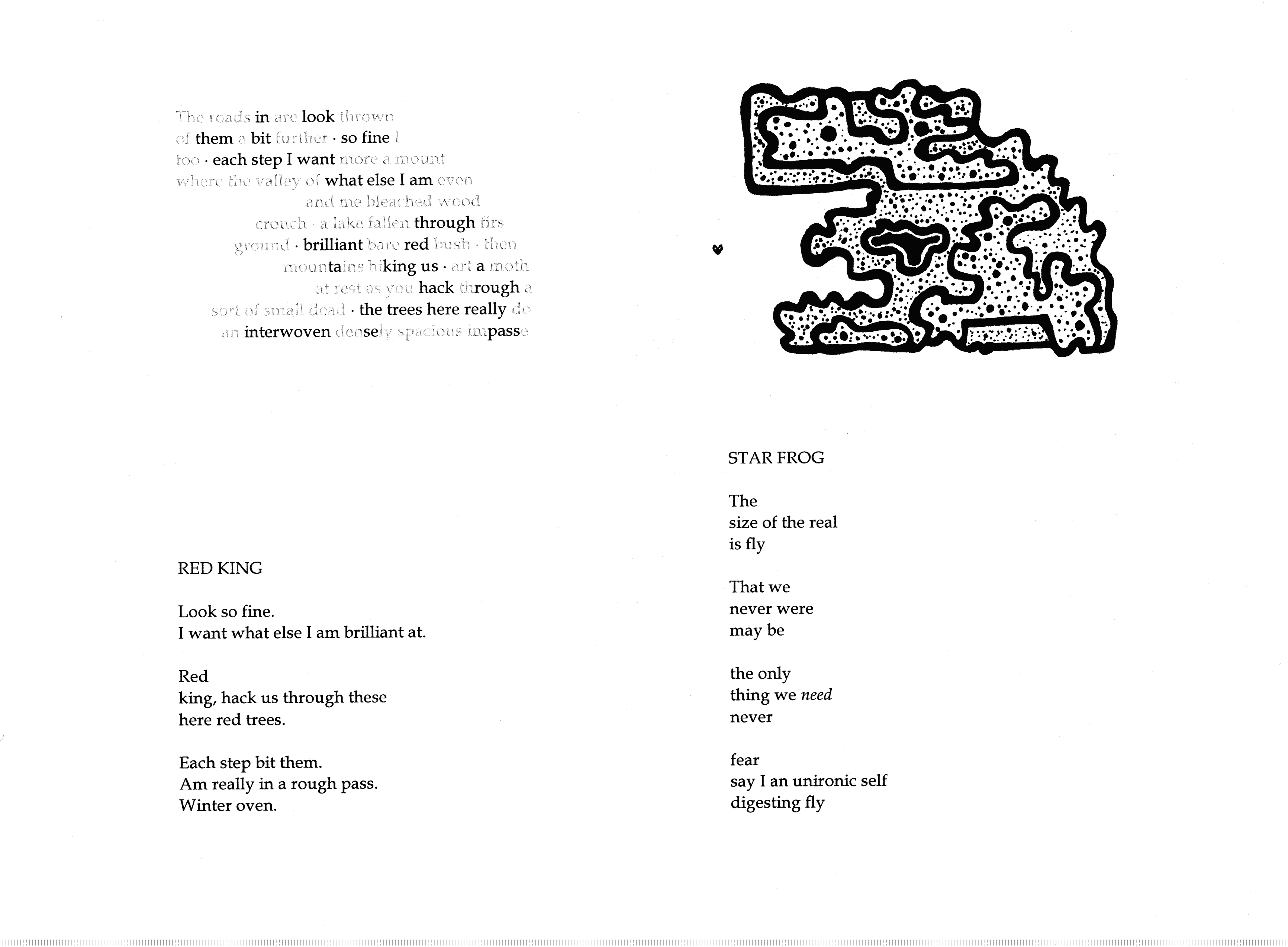
The four poems together make a two-page spread.
Upper left: prose scarred by an extraction process
Lower left: verse precipitated from the extracted ore
Upper right: illumination of the extraction scars
Lower right: verse inspired by the longing of the image








 The Art of Compost