Spring and All encore

Today planted, from Cloud Mountain Farm, a frost peach, settler apple, self-fertile plum. Here’s in which spirit – a recovered letter writ to my old teacher on WCW’s Spring and All. Maybe the most important text to me ever. Sprawly and incomprehensible though it yeah be.


Dear Don,

First, do no harm. The thing itself suffices. Nothing one says or does should injure it

patches of standing water
the scattering of small trees

Spring and All as articulated innocence. Second, to cleanse perception and return to innocence, the spring of the mind, essential simplicity –

One by one objects are defined –
It quickens: clarity, outline of leaf

– sharp & rough acts of imagination may be called for, the rending & renewal of the earth even –

The imagination, intoxicated by prohibitions, rises to drunken heights to destroy the world. Let it rage, let it kill…. None to remain; nothing but the lower vertebrates, the molluscs, insects and plants. Then at last will the world be made anew.

Third, against, or alongside, Pound’s “day by day make it new,” the thought that moment by moment it is new –

But the thing he never knows and never dares to know is what he is at the exact moment that he is. And this moment is the only thing in which I am at all interested …

In fact now, for the first time, everything IS new.

It was, is, always new, & now at long last perception, cleansed by the divine flood imagination has unstoppered, catches up with reality –

It is spring. That is to say, it is approaching THE BEGINNING.

Spring and all. Spring in all. Fourth, the poem is not about reality, it is of reality. This might seem a poem about a painting of a pot of flowers –

red where in whorls
petal lays its glow upon petal
round flamegreen throats

– but it’s not actually about anything, it just is … being, disclosed, its unconcealedness. (Right, that is to say, under your nose.)

Fifth, being real, being of what is real, it’s natural, one of the forms of nature –

The work will be in the realm of the imagination as plain as the sky is to a fisherman – A very clouded sentence. The word must be put down for itself, not as a symbol of nature but a part, cognizant of the whole – aware – civilized.

– linking Williams to Coleridge:

it shapes as it develops itself from within, and the fullness of its development is one and the same with the perfection of its outward form.

Organic form. The poem may take the shape of

the reddish
purplish, forked, upstanding, twiggy
stuff of bushes and small trees
with dead, brown leaves under them
leafless vines –

or that of a crowd

moved uniformly
by a spirit of uselessness
which delights them –

but it is organic. (And is not always pretty. Pretty is the road to a beautiful illusion, i.e., a divorce from experience. Whatever it is, rose petal, jaundiced eyeball, let it be unvarnished.) As long as it sees clearly and mimics naught and has no truck with the representational delusion, it is, of necessity, organic. Which brings to mind Robert Bringhurst, whose book The Tree of Meaning I do mean to bring you –

Trees grow in and on the earth. Where do stories grow? They grow in and on storytelling creatures. Stories are epiphytes: organisms that grow on other organisms, in much the same way staghorn ferns and tree-dwelling lichens … grow on trees.

I have a hunch that from a lichen’s point of view, the basic function of a tree is to provide a habitat for lichens. I have a hunch that from a story’s point of view, the function of storytelling creatures – humans for example – is to provide a habitat for stories. I think the stories might be right. That’s what you and I are really for: to make it possible for certain kinds of stories to exist.

– or Weil, whom he quotes:

Il leur appartient de témoigner à la manière d’un pommier en fleurs, à la manière des étoiles.

Sixth, more continuity with Coleridge, his sense of the imagination as what

reveals itself in the balance or reconciliation of opposite or discordant qualities: of sameness, with difference; of the general, with the concrete; the idea, with the image; the individual, with the representative; the sense of novelty and freshness, with old and familiar objects (etc.)


You see I was doing rhizome mind here right?


For Williams too imagination takes disparate parts of experience (“the sight of the sky through a dusty window, birds and clouds and bits of paper flying through the sky, the sound of music from his radio, feelings of anger and love and amusement roused by a letter just received” – Levertov) and joins them into wholes that reveal – what? – that experience was whole to begin with, a small quibbling mind made it seem broken & partial. Poem VIII seems a conscious illustration of just how many & disparate the elements are that can be united: a rhombus of sunlight on a wood floor, song, tires, anemones, Persephone spirited away, an industrial magnate (J. Pluto Morgan), how much & how many it is impossible

to say, impossible
to underestimate –
wind, earthquakes in

Manchuria, a
partridge
from dry leaves

Each stanza here, each plaque of mind-light, seems a place from which one can move in any and all directions. The freedom of the imagination detoxed of prohibition.

This is not “fit” but a unification of experience

The oneness of experience is the oneness of a rose with the space that surrounds it

The fragility of the flower
unbruised
penetrates space

nor does it bruise space

each petal ends in
an edge, the double facet
cementing the grooved

columns of air –

It ends, is edged. Also, pervades, is edgeless. It is at the edge where petal meets air that love moves and lives. Which, seventh, is why “The Red Wheelbarrow” is about its prepositions – about, that is, stationing, edges, points of contact –

So much depends
upon                                                    (and this sort of stationing is on a par with

a red wheel
barrow

glazed with rain                               this sort
water

beside the white                               and this)
chickens

Finally, given all this, how then does one proceed? One moment

a boy of eight who was
looking at the middle of

the man’s belly
at a watchchain –

and then the next

I saw a girl with one leg
over the rail of a balcony

of all of which it is unseemly to speak

It is the presence of a

&

The imagination is a –

Love,
Chris
teaching portfolio

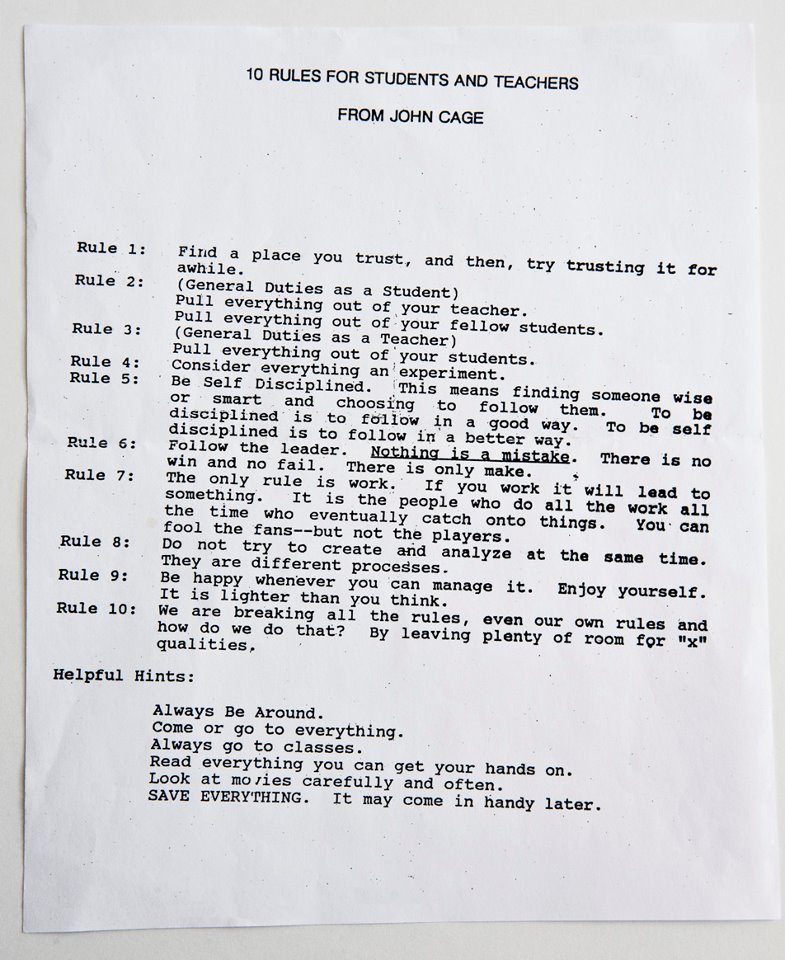
Cage on teacher, student

Found this on a blog that linked to this one and looks kindred but clearer headed. John Cage on being a teacher being a student.

cagerulesteachersstudents

Gonna direct my students to this, and this blog, because honest to G-d, sometimes I think they think I’m making this shit up all on my lonesome.

P.S. No, my students, rule 6 does not sound like Yoda. Yoda sounds like rule 6. Am I sounding testy? It’s that point in the quarter. Nothing is a mistake. Try (note to self) trusting it awhile.

Student work: Poems with no metaphors in ’em

The exercise: Compose a short poem with no metaphor or simile in it.

Not that there’s anything wrong with metaphor. Some of my best friends are metaphors. But we in the West are metaphor junkies, thank you Aristotle (“to be a master of metaphor is the greatest thing by far, a sign of genius”). So it’s good now and then to go dry. What can you do minus that junk? How do you make a poem work without yer fix?

Hello, syntax and line. Hello, metonymy. Hello, objectivist mode, basically, though I save that for elsewhile. And coinages, hello too! Language is full of forces we are totally out of control of and yet surf fluently in our wake and sleep with astonished ease. Tweak them just a bit and you draw them into awareness and that’s poetry. (See what went on there with wake, e.g.? Didn’t intend it, just saw it and commented latterly, and that’s prose.)

Enough preamble, on to some student work.


Here’s one by Steve Lemma – excuse me, that’s “Goldenrod Steve” – that’s quite careful, in a seemingly careless way, with the composition, the putting-in-places, of its syntax – fragments and all. It also has an admirably various line, not just its length, also how little or much torque it asserts upon the syntax of the thought passing through.  

Subtle
fading
ink running down the wrist.

Specifically!

Subtle fading
blues.

Darker than
the
car,

Lighter

than
your irreparable attitude.

Welcome to this side of the world,
kid.

You may n
ever make it back.

The under
belly is hungry
almost
as much as me.

I think a couple of the moves here, re: the line, are stretches, but that’s less important to me, as teacher, than that he’s messing around, trying stuff out. (BTW, I’m counting the comparisons as not similes, since they compare extant objects in the poem’s field, to others the same.)


First aside. “Go dry.” Is that metaphor or metonym? How about “that junk”?


Another one, by Rob Jones – turns out no one wants to be anonymous, why was I doing that, don’t remember, probably had a good reason that’ll come back to bite me – short and sweet –

FREQUENCIES

That ringing,
A sound
I will never hear again.

The frequencies

Heard less
And less frequently,
As my eardrums become less taut.

My proposal to Rob was, cut the last line. With that line the poem is nailed to its occasion. Without it, the occasion’s forgot, and the language can widen beyond whatever thought happened to incite it. (This is an curious case of what Richard Hugo called the “triggering subject” showing up in the last line. But one feels it was held in reserve all the poem long – I’m suggesting, hold it in reserve even longer, till the poem is fine without it.)


Second aside. Compose, not write, because as I did say later, they mighta done a visual poem, and solved their problem right there. I give maddeningly open exercises. But in them every word does matter: “embody spring” means embody spring; “myth consciousness” means myth consciousness. Why so uptight? In the poem, too, every word matters, otherwise no word does, in which case, stop.


Here’s another, by Alex Hastings, who has a very Creeleyan ear for speech under pressure – pressure of strong feeling dimly understood (TOTAL INSIGHT MOMENT: Creeley was an avatar of Shakespeare), and she’s been learning how to get, not just the dimness, also the understanding and the strength, onto the page, by way of line, syntax, the tortured dance of them.

Legs
crossed over
cheap carpet, we
blink at our
each tired
faces and pick
another
fight.

Change the slightest thing here and you wreck it. For instance, fix the syntax, “each other’s tired / faces” – wrecked. The contortion of the syntax there recalls me to how my powers of language flee me when I’m in a fight with someone I love and who says they love me but isn’t seeming like that. I mean, oh my students, you can create great storms of emotion in a poem without ever naming an emotion. Also, FYI, without many adjectives – “cheap,” “tired” are the only here.


Third aside. Since I went to Urban Dictionary (“elsewhile”) – the poetry of that. Our natural unconscious and dionysiac poetic fluency. And let’s aleatorize the fuck out of it. My pasketti is boiling so let’s be quick also. Random number generator to choose letter then entry. Let’s say thrice and see what comes.

 “Zombie company.”

1. A technically bankrupt company that is kept alive with large infusions of government money for the sake of “stability” in the U.S. financial system. 2. A large financial company with negative net worth that continues to operate, despite having no clear path to solvency. 3. The UnDead of Wall Street.

“rrrrrrrrrrs”

what stoner says when mad

stoner 1: rrrrrrrs, i need money to buy weed, but i smoke weed because i have money.

preppie boy 1: wait…..what?

gpoyefd

Gratuitous Picture Of Yourself Every Fucking Day

I see a picture of someone who is asleep in class, “GPOYEFD”

So I was real worried, around word two, how I was going to get a poem out of this, but GPOYEFD saved the day. Does this not come together as an incisive remark upon the tedium a certain once awesome post-apocalyptic fantasia has come to?

AMC ODE

Zombie? Company.
Rrrrrrrs.
Gratuitous picture of yourself,
every fucking day.

I go back and forth on the comma. Imagine it spoken by a career extra.


Coupla more. This by Lauren Edison, who like Alex is working in a short line, not quite as enjambed, and not quite as spare of sense data, but headed in that dir.

DEPRESSION

I wake
to a preset tune
and white plaster walls.
Barren, save for shadows.
I blink. Rollover.
My screen says 7:00
January 18. Monday.

This wall, too, is barren.

Lauren’s syntaxes are intact, untorqued – she looks for what can be got through denotation and lineation within the rules of normative syntax, inhabited austerely. I am on her case about titles.


And one more, from Haley Kenville, which I suddenly now realize is her myth consciousness poem, that I was looking for in the exercise she submitted for that assignment, and was kinda hard on. (I’ll do a post on that ex., I hope.) Hear myth mind in that third bullet point?

In Order;

• Call ahead,
they’ll want to know you’ll be early
• Roll in late with hair
still wet from shower.
• Saturate trees with buds, so
they are prepped for your petal
firework finale
• Reign. Relax.
They have been waiting for your ascension

Not sure what she’s doing there with punc but that last line rocks my world. Because of the indefiniteness of the “you” – possible because the poem has let go of its inciting occasion – it points to me and to you, and anything green in anyone, even as it also calls to the Persephone-figure (as I read her) of the poem’s surface levels.


Last aside. Realizing once more how much of my teaching style comes from my Zen training. Don’t feed the ego – affirm the person. Cultivate intuition, spontaneity, not-knowing. Nourish faith in their inborn abilities, empathy, insight. And, be always poking, wherever they’re at rest, unsettle them.

And, to that last, I am always causing problems – as if my students didn’t have enough problems already? One asks me a question, and instead of answering him, I respond with a question. Then, as he’s working towards an answer, I interrupt him with another question. I must be maddening.

The intent’s generous – how can I in this moment help you further your inquiry – but I’m a limited human being. Right this moment anyway I’m feeling my limits. Often the generous is mixed up with stress or my own shit or simple fatigue or I’ve got a tummyache. I’m not often the Platonic ideal of Socrates the method seems to want.

Dude. Zen, Plato, you should ride a motorcycle, and then maybe write a book.

What am I here to say. I’m grasping towards a place where fucking it up somewhat is still okay. For them or for me. Hurting other people heedlessly is not okay – don’t do that in my classroom. You’ll hurt other people, I have, you will, but not heedlessly, please. Also, don’t be lazy – this is the Zen training coming in – treat this as the matter of life and death it is (OMG did I write that, do I believe it, I do). Other than that, be free.

And with that, my dream syllabus, any course

Don’t hurt anyone heedlessly.
Don’t be lazy.
Treat it as a matter of life and death.
Other than, in that, be free.

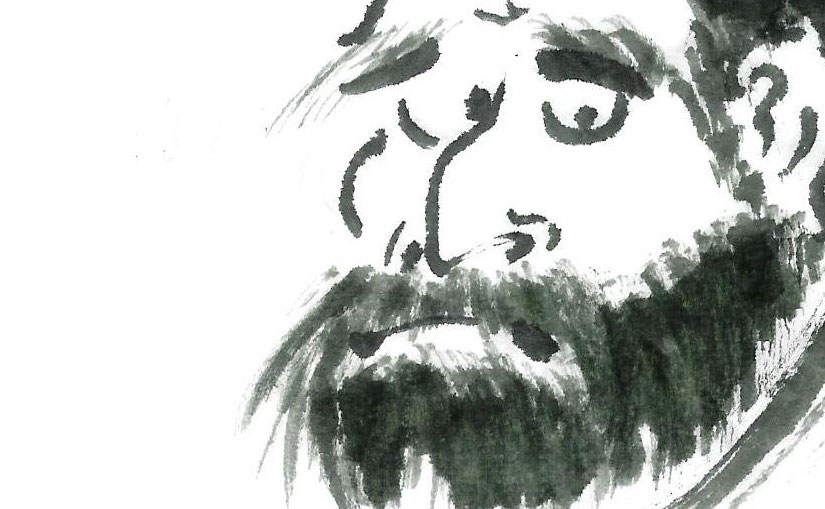
bodhidharma2athis post must come to an end. Oh and here’s Bodhidharma for ya.

teaching portfolio

Metamorphosis (bbeepp)

Long teaching day, could go on, won’t. Here’s a description of an upcoming course, hope it makes you laugh.


ENG 334: Texts of North America and Europe: Metamorphosis

Change happens. Now, there’s a vulgar way to say that, begins in S and ends in T and says “hello” in the middle. And that about sums it up. Change happens, and we don’t always like it, and so we call it after a process that humiliates us, even as change meets us anyway with an ahem-eating grin.

All that’s to say, Euro-American culture has felt sort of averse, much of the time, to the facts of metamorphosis, and has proposed various stays against it. Platonic Forms. An Eternal Immutable Deity. Your Immortal Soul. Important Things In Capital Letters. But an equally complex literary tradition, the indigenous American one that predates the Euro-American on this soil and now lives uneasily intertwined with it, offers responses to transience, loss, mortality, that at least feel different, and may mean differently, too.

Instead of the hero Aeneas, the trickster Raven. Instead of immortal gods, spirit beings learning to spit mussels from a longhouse roof. Instead of a Heaven incalculably distant, a mythworld alive in your own speech, your own dreaming.

Ah but these binaries are too easy. The West, too, has always been embracing change, the mercurial, even in the middle of texts honouring a changeless God or King or State or whatever. We’re going to read us some of those. Meanwhile the texts of indigenous America express a wish (elegiac) that some changes not ever have happened, and an intention (political) that changes to come go one way not another. And we’re going to read us some of those, too.

Texts of Europe: Cave paintings of Lascaux, Chauvet. Fragments of Herakleitos, Parmenides, Empedokles. Plato’s cave parable. Ovid, from Metamorphoses. Dante, from Inferno. The Bible, Revelation. Shakespeare, The Tempest. bpNichol, from The Martyrology.

Texts of North America: Newspaper Rock. Ghandl, Nine Visits to the Mythworld. Rothenberg, from Technicians of the Sacred. okpik, Corpse Whale. Drunken Boat 15, “Native American Women Poets.” Abel, The Place of Scraps.

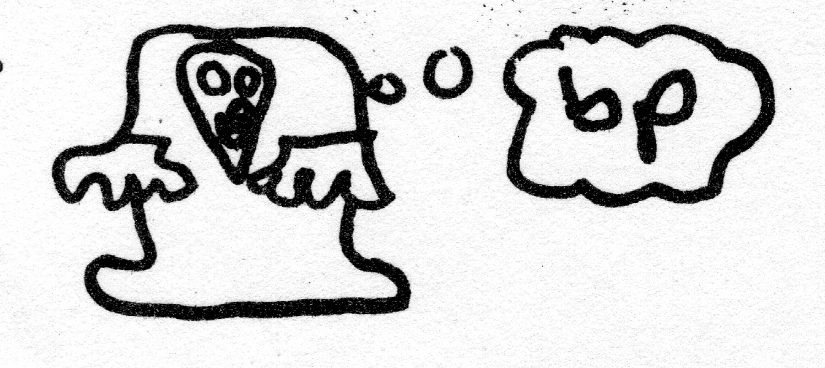
bpNichol liked to alter words like this. Storm becomes St. Orm. Strap, St. Rap. Stranglehold, St. Ranglehold. What happens to permanence, and hell to sainthood, when a period can change meaning underfoot, like that?


Student work: Write spring

The exercise was to write a poem that enacts or embodies spring.

Not a poem “about” spring, that’s easy. A poem that is spring, be’s spring, bees spring, in its flesh, its bones. How do you write a poem that’s green, that’s growth, motion, variance, blowsiness, or whatever spring is to you – no, in you – such that it comes across, takes root in reader, flowers and seeds there?

Many fell into the trap of subject matter, and that’s okay, it’s a good where to start from. By the time we were done talking of Williams’s Spring and All they got, I think, what it is to meet spring, eyeball-to-eyeball, a gist of it anyway.

And for sure our talk of the supreme importance of the spectacle

an elderly man who
smiled and looked away

to the north past a house—
a woman in blue

who was laughing and
leaning forward to look up

into the man’s half
averted face

and a boy of eight who was
looking at the middle of

the man’s belly
at a watchchain—

passing namelessly landed for me, and that was them teaching me, I learned more about the line there as such, its supremacy (if that word might ever be rescued for re-use) and ephemerality.

More than one did get what it was to enact spring but only one gave me hers back to post. This is by Hannah Bender and it’s made of joy –

YOU

—doublemint cars dusty ceramic roses unpainted fingernails white underwear white undershirt white ankle socks nineteen fifty seven chevy bel air in pink and cream leather pearly cocaine pears and game hen hospital wall green punch bougainvillea bunny teacup airplanes red velveteen movie theater milk chocolate strawberry gift wrap hair throw up cake mice tv saint francis bambi’s mother anne frank donald duck orange juice baths buttons—

I asked her about it, she said something like, you don’t have to wait for spring for it to be spring. You just take any moment and look at it close enough – spring is coiled in there. I hope I have that right; I think she put it better.

Anyway she put it beautifully – she got the intention of the assignment better than I ever did when I came up with it. Those em-dashes, I imagine reaching into any moment of perception, physically prying it open, and those dashes are the beams I prop in to keep it from slamming closed on me while I walk among the moment’s occult contents.


Cornell - Celestial
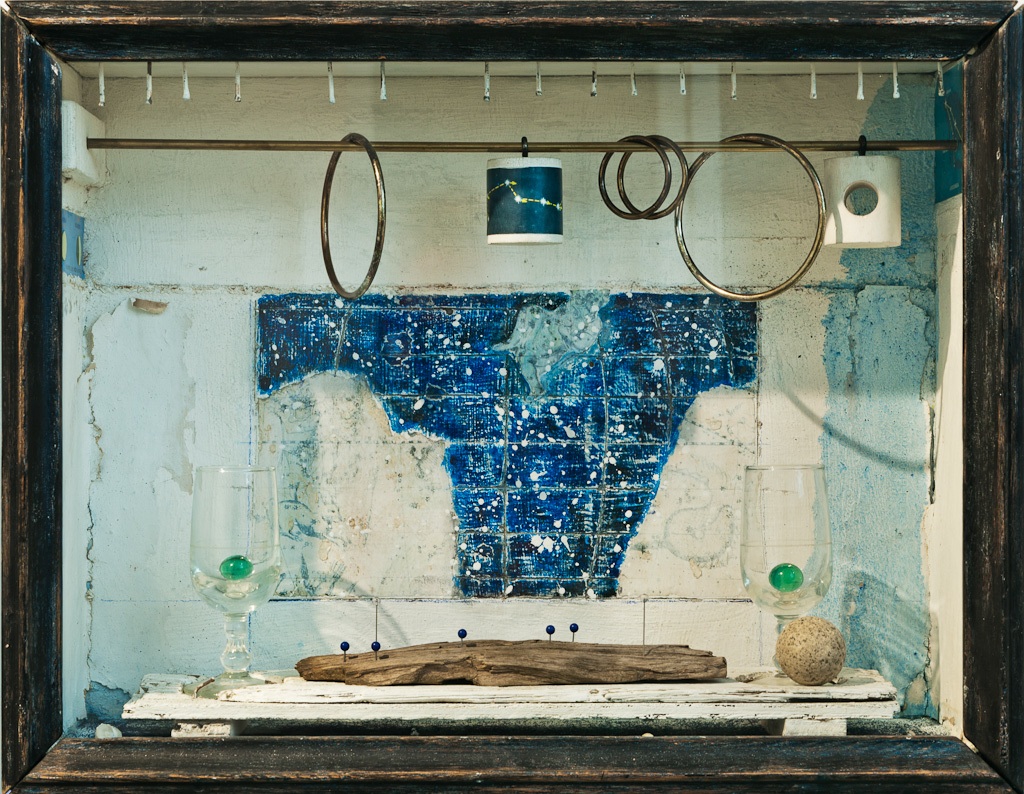
Which are the poem. Also come to mind Cornell’s boxes, which, whatever in specific they contain, have as one of their utterances spread evenly over all they hold, I’m glad you are.


Look topside. My “featured image” removes the boxed from the box. Why’s that feel like an injury? But it does. When’s sampling a denaturing? It is, sometimes. Spring couldn’t spring had it no winter to push off from.


Almost forgot the title of Hannah’s but you see how it matters. The whole poem’s a synonym for its title yes?

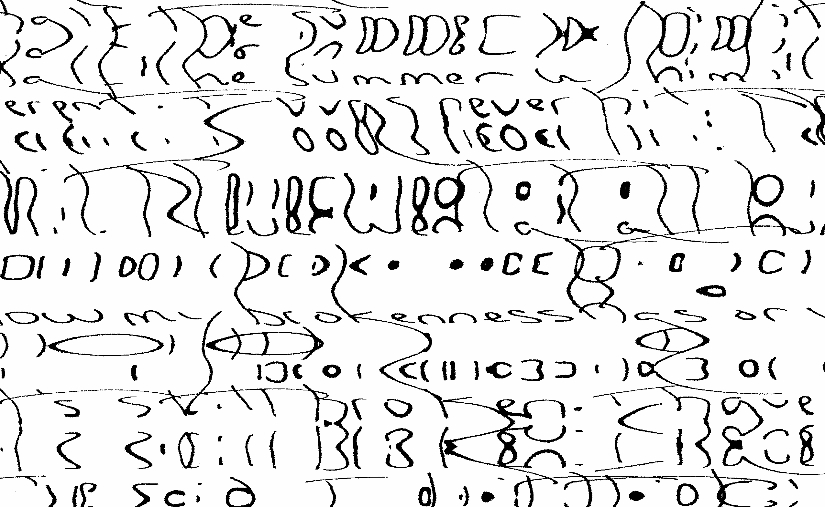
Aasemic writing

Asemic writing is writing you can’t read. Semic writing is writing you can. (A back formation, there’s no such word.) I am at play, finessing the difference, with aasemic writing.

A joy of asemic writing is that it draws all the promise of meaning-making, all the whole multifoliate interpretive apparatus, into activity, w/o resolution or conclusion. It’s Steinian indeterminacy, in not the syntax but the graphemes. It’s the made mark as blastocyst, as stem cell, as potential to become. Is it a Deleuzian plateau? Maybe, still sweating that concept out.

So the aasemic script I’ve been playing with is neither indeterminate nor determinate. (GOD you can take this non-dualist thing too far, mm? how’s this not just centrist squish?) It starts with a journal page transcribed in a projective hand – descender a plunge, cross-stroke a jailbreak. Then I wave or shiver it over the photocopier light bar as it slides under, gathering data in.

All this is lead in to say, The New Post-Literate has posted a few, and that makes me happy, cuz they’re the first bits of Overject to be published, other than here, which don’t count. Here’s the link.

And here are a few other recent offerings there I think especially cool.

The home page of The New Post-Literate where it’s all to be found.


A lot of my trouble w/ academic parlance comes from trying to translate Buddhist vocabulary and values to a non-Buddhist circumstance. Most of the rest of it comes from being a lazy and a lousy Buddhist. (The latter’s 90%.)


Feste to Viola, Twelfth Night, “I am [a] corrupter of words.” After they’ve just rung their changes on live, stand, lie. I compared the move on lie to a triple-axle – Viola to Feste, “yo watch this move” – and one of my students found a sextuple axle in it, bam. Post-structuralism, its insights, e.g., words’re banana peels, dates back at least to Shakespeare, if not to Jesus? “On this rock I build my church,” that’s a pun, Jesus is making a funny, I told them, explaining the finger joints of a dactyl, by way pterodactyl. Petros (Peter), petra (rock). Long live the rhizome. Weed shoot that cracks the rock.

Teaching note (adjunct life)

What made me think to redesign two courses, poetry workshop, Shakespeare intro, at the same time? I sniffle this at the tail end of a 60 hour week, on my way into another, having calced that, when I work I mere 40 hour week, I earn what I would serving burgers in SeaTac, where a sane minimum wage is on offer. Last week, and this, more like $10 an hour. It’s good I love what I do.

And I do. Above’s not what I sat me down to whine. Sat down rather with this.

Was slipping across campus, fat binder in hand, full of matter I spent days compiling for a teaching award I am, for reals, honoured to be considered for. That compiling said matter for consideration is exhausting depleting and ironic is no one person’s fault and goes some way to explaining abstractions like Patriarchy and The Man.

Was gliding across campus, one student evaluation in there heavier than all the others, it called my course asinine and me moronic. Now I’m insecure about a lot but smart ain’t on the list. (About the only thing not on the list? Uh oh.) But that someone was harbouring that much hate and I didn’t know – K that hurt.

Friend teachers, you know this, right? A hundred evals, ten adoring, thirty really fond of you, thirty more are favourable, twenty-five more are various flavours of meh, and five kinda somewhat negative, and one of those over-the-top hostile. Which one stays with you? Which do you have conversations with in the 3 am? Way to get my attention.

All this is to say, I’m lugging this fat portfolio to the office where I need to drop it, and I run into A., a former student, and we say a happy hi. She says, you look exhausted, I say, that’s funny, I am exhausted. I ask how she is. She says not so hot. I say what’s up. She tells me what’s up, a bit. I say, are you getting some help. She says she is. I say, come by and talk, and we make a plan for her to.

A couple hours later, I remember talking to my chair, about a senior colleague poaching my classroom, in a way that felt, I’ll use the word uncollegial. And K., my chair, getting it and asking, how can I help, and me saying and I really meant it – the help I need, you’re giving by hearing me.

Brushed my mind, remembering that, maybe I might have been something like that, a little, for this kid. Why do I give a flying fuck about evaluations.

They’re momentary gestures of mind, captured freeze-dried and framed.

I teach a poetics of the moment. I’m testing a pedagogy of the moment. What would be an institution of the moment? Anarchy, probably.

Anyway, I dropped off my fat gelid binder of congealed impressions, and back on the same walkway, happily met two current poetry students, both smart and talented, one quiet and very keen, one confident and a bit slacker, and we chatted a couple minutes about John Taggart’s “Rothko Chapel Poem,” which, ahem, at least the second hadn’t started, but still I came away thinking, you guys are why I do this.

An award would be nice. Won’t get it but that’s beside the point. Only connect. It keeps recurring in Tom Phillips’s A Humument and while superficially it’s a shout-out to Forster I think more truly it’s a distillation of all that’s holy in the English literary tradition, worthy of salvage. I find it writ large in Taggart –

To love to love those to love those who
are in to love those who are in a condition
in a condition
of hiding to love those who are in
a condition of hiding to
love those as children as the
valiant children who have gone into hiding
children who hide in a house from the roaring.

Care touches the face, untwists the face.
                                        (“Peace on Earth”)

and even crosswise in Malvolio, the poor sod. We’re bound to misunderstand each other. Is that what his cross-gartering means. I thank him either way for saying so.


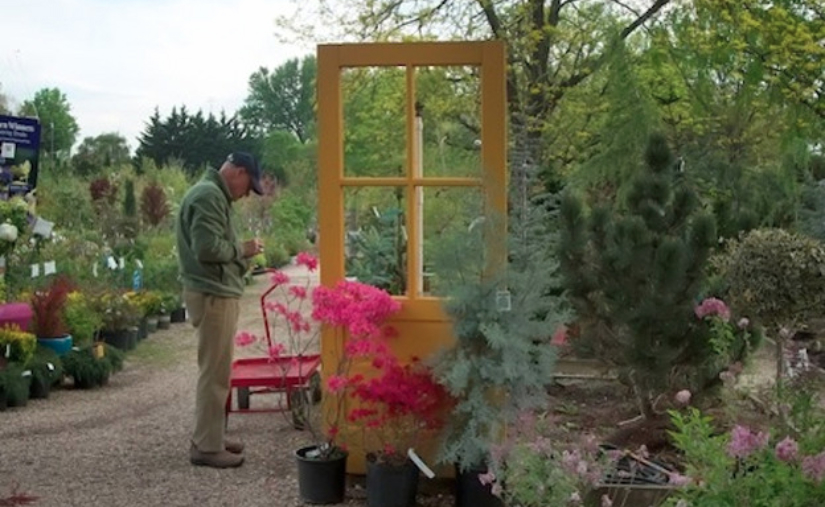
I was having trouble finding an image for topside. Liked this I found in Jacket 2 but it felt in the wrong key for the post –

Taggart-Door
John Taggart

Decided, blogger of the mo, to just plug in a phrase from Taggart, “care touches the face,” and use something from the first screen of image results.

Oh my fucking dear.

Want to try it? Try “care touches the face” as an exact search string, w/ quotation marks, see how much comes up, how much care we have for this great man and his work. (I got 3 images.)

Now try ‘care touches the face’ without quotation marks. What great care we have for skin care products, deathlessness, commerce, sex, and the pubic triangle one of those sits at the centre of.

I got lucky (“got lucky”), the latter search, specs set to large image, got me to this somewhat earnest site, God love ’em. Gotta go teach tomorrow, g’night.


Springly exercises

That’s a wrap on Spring and All and great good fun it’s been. Dunno if I’ve had a class meet this one so freely or fleetly before. Here are their first exercises in case any’d like to play along:

  • Write a poem that interrupts itself more than once.
  • Write a poem that enacts or embodies spring.
  • Write a poem with no metaphor or simile in it.

Any familiar with Spring and All will get why. (WILLIAM LOGAN. YOU COULD TRY THESE. IF YOU THINK THE HISTORICAL WHEELBARROW MATTERS TRY THESE.

And I quote, “The only realism in art is of the imagination.”

And I quote, “First must come the transposition of the faculties to the only world of reality that men know: the world of the imagination.”

And I quote, “poetry: new form dealt with as a reality in itself.”

WILLIAM LOGAN. THE PROVENANCE OF THE RED WHEELBARROW DON’T MATTER. READ THIS. SAVE YOURSELF. WE SUFFER W/ YOU.
                – da white chickens

and no we no Plato)


So much to say about this little poem, which is so easily denatured, benumbed, by anthologies, high school classrooms. Students often come to college hating it. Or, worse, thinking it a metaphor. Consider, there’s no metaphor in it –

so much depends
upon

a red wheel
barrow

glazed with rain
water

beside the white
chickens

How, though, does it tell us not to cut to metaphor? Its particularity. There aren’t a lot of particulars, but those there are, they have roughness, rugosity, they refuse the reduction, the simplification, the let’s just say it dumbing-down, you gotta do to a thing before you can make it tenor in a metaphor, and space-tie it to a vehicle. That the rainwater glazes the surface it lies on, makes it tangible, specific, momentary, and unconvertible.

It’s language, so it’s part of a system of semiotic exchanges, no way round that, but it resists entry into the second-order system of exchanges that sustain literary tropes like metaphor. It refuses to be made currency.

What depends on a red wheelbarrow,

I asked them to consider, beforehand, and please commit it to paper?

—And be particular?

—The poem, one said, depends on it.

Yeah, good answer.

The wheelbarrow is, as one student said, touching our earlier talk of Buber’s I-Thou, let be a value in itself. Though it’s in ordinary use a tool, instrument, for the sake of the poem it’s a good in itself. (Coulda gone to Heidegger there but thought to spare her. But think Van Gogh’s worn out shoes.)

I got tenor and vehicle the wrong way round up there, but I ha!, like my metaphor too well to bother to fix it.


This one is, by the by, for my old teacher Don Revell. I wonder how he is.

Much else I’d love to say, but time presses, and appetite. I treated myself last night to a Dungeness crab after a tenured colleague made me sad, angry, perplexed by poaching my classroom from me – today I well remember I’m contingent labour – and half’s in the fridge there awaiting me eagerly.

So I won’t try to say all the else about the poem I learned today from talking with my students about it. Why it’s a not the red wheelbarrow – the definite article would be more particular but at the cost of exclusion. And how much world comes to mind metonymically, a barnyard and American era, without the edge-smoothing of metaphor (“not that there’s anything wrong with that”). That each line is a moment of perception beseeching total attention. For reals, see how it’d be broke if the lines broke different –

glazed with
rain water

beside the
white chickens

– it’s destroyed, right? All the held energy, everything bearing the elements up in a network of dynamic tensions, gone. Line as perceptual trace. A whole world for as long as it lasts, and gone when it’s gone. So the next can live.

WILLIAM LOGAN – oh, why do I bother?

teaching portfolio

Spring and All and all

One week in, both my classes, and they’re so nice! In a life that feels, gonna just say it, a bit thin for human company, my teaching is textured, rugose. They go by fast, these students, even those I connect with beyond the usual. (They’ve got lives to get on with, yo?) But in their meteoric transits through, briefly they’re as if my kids – kids I never raised, but get to feel tender toward a spell, aren’t they.

Didn’t think to go there. (Even the ones who don’t remember my name. The ones whose names I have to reach for. Somehow, and more than formally, them too. What is that?) (A leopard makes a rhizome with a newborn baboon. Our instincts, drives, are endlessly various and flexible; are originally free; hence, maybe, art.*) (There’s a thesis for you – interspecies bonds and art happen by the same mechanisms.**)

My mind goes this way, these ways, thanks to William Carlos Williams’s Spring and All, first text of our rhizome workshop, whose motive is life and more life, life in nooks and crannies, life in standing water and sickbeds. Spring and yes are synonyms.


It’s late, Sunday tracking to Monday, so just this, second para:

There is a constant barrier between the reader and his consciousness of immediate contact with the world. If there is an ocean it is here. Or rather, the whole world is between:

Consider how odd that is. Intimacy with the world is intact. Consciousness of intimacy with the world is intact. There’s a barrier, and it’s constant, but it’s not anywhere you’d think to posit it. More than intact, maybe, inviolable, and yet, a barrier, a constant one.

And more – the barrier between you and your awareness of intimacy with the world – is the world. How are you not intimate with that?

Dharma of a red wheelbarrow. Why the participle glazed matters, why the prepositions, their stationing in mental space, matters.

so much depends
upon

a red wheel
barrow

glazed with rain
water

beside the white
chickens


And a key to Paterson. I think so. Williams is a shitkicker, but his question’s a loving one, why don’t we treat each other more tenderly as we might? That’s not rhetorical – if it were it’d be schlock. He’s really asking. He puts a life’s energy into asking.

He moved me to ask it too. I tend to ask in the first person singular, cuz the plural feels presumptuous, though as I’ve looked at my poetry this weekend, I’ve had fears of narcissism … I, I, I, the vowel in die, the vowel in live (adj.) …

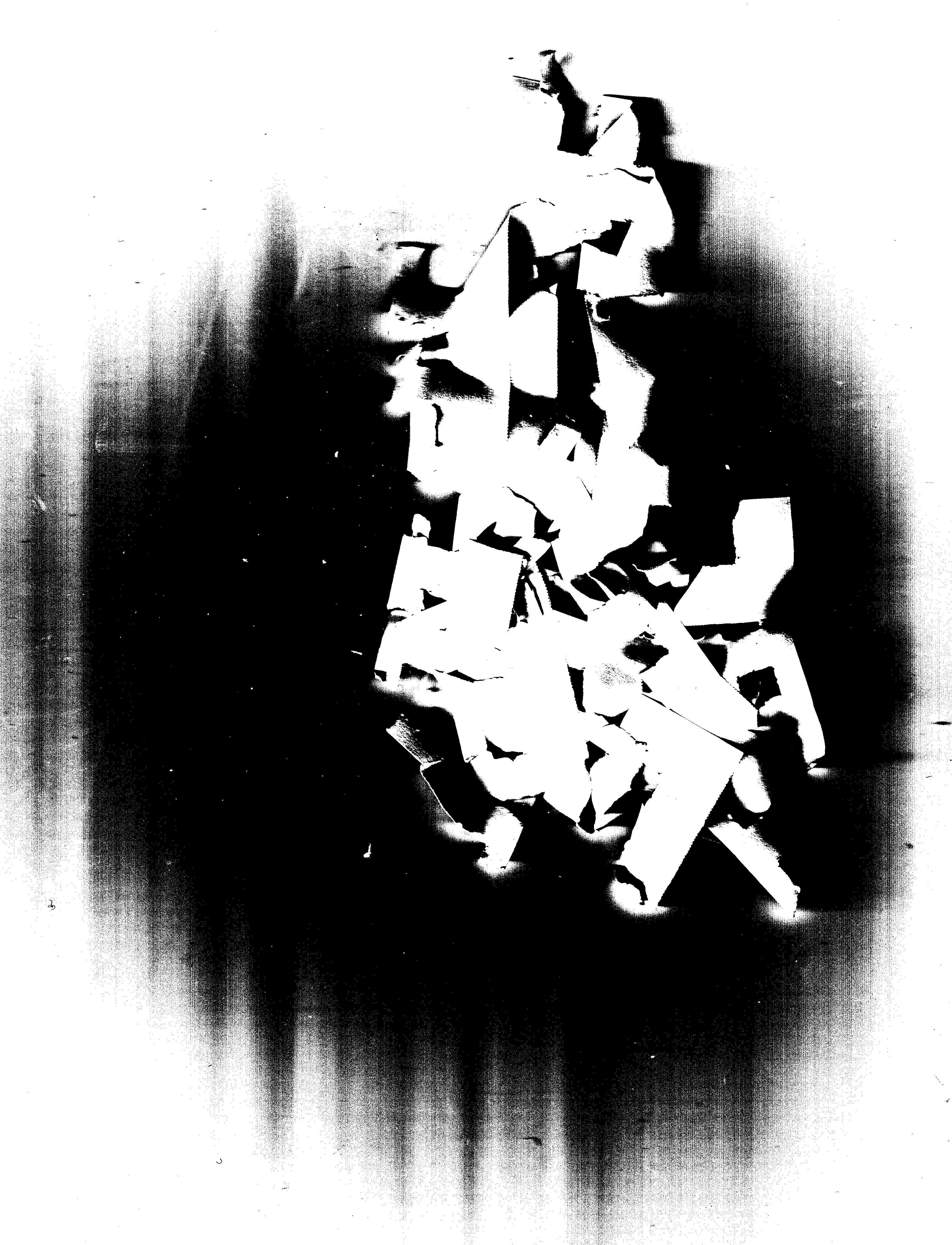
In which vein, this little one came yesterday, out of crumpled disjecta, I see a bear cub, but that may be my pareidolia talking.


Disjecta scan 1.jpg


* Check out that link! See if you don’t think art is incipient there. In the leopard’s uncertainty – do I nurture or do I pounce. In its unfitness – how will it feed its new charge. And in its untowardness – it’s ventured where it should not have. Those are three of the uns of art, yes, no?

It’s broken, I mean, into a new space, which it, and the baby baboon, and the forest, and 2 million YouTube views all honour in their ways.

As I do you by tapping “Publish.” G’night.


** (Next morning.) Try this. Art is second-order play. Art is when play becomes the content of new play. Which could be why it feels to us both vital and inutile, and why its nature slips out of our grasp, and why we’re tempted to think of it as transcendent, when in fact it’s supervenient …

Down boy. You’re supposed to be lesson planning.

teaching portfolio

On co-teaching

A bit more from the syllabus of my upcoming poetry worksop.

How’s that for a Freudian typo. Workshop.


Something started happening with the presentations in a class I taught last spring. Between the work of the presenting student, and my pesky interrupts, and the contributions of everyone else, they ceased to be presentations, without becoming anything else at all defined. A little bit seminar, a little bit Q&A, quite a lot of free-for-all. The presenter and I were, in effect, teaching the class together in an ongoing improvisation, and though there was sometimes awk­wardness there was a lot of joy. I think a lot got learned. I came to call the practice co-teaching.

Scruffy, unpredictable, co-teaching is a surrender of control and dispersal of authority very much in the spirit of the rhizome. So I propose that we take up co-teaching as a practice this quarter also. First time round, it came adventitiously, and I don’t want to over-plan things now, it might kill the spontaneity. Soon to come, then, bare traces of a structure, offered tentative, for us to revise if we find them too much, or too little, or simply amiss.

For now. Each of you will sign up to co-teach one poetry text and one poetics text. (Full list below.) In most cases you’ll be collaborating with one fellow student and with me. I’ll give you some pointers – poems or concepts I think important to touch on in the text – and will count on you to develop a plan of action, ahead of time, with your student collaborator. (If you need to involve me in your plans ahead of time, cool, but otherwise I’m happy improvising in response to whatever unfolds.) Sign-up will happen soon, so please acquaint yourself with the course texts promptly.


The list, i.e., the crazy we be up to:

William Carlos Williams, Spring & All

Robert Creeley, Pieces
Charles Olson, “Projective Verse”

John Taggart, “The Rothko Chapel Poem”
Denise Levertov, “Some Notes on Organic Form”

Ghandl of the Qayahl Llaanas, from Nine Visits to the Mythworld*
John Cage, “Lecture on Nothing”

Will Alexander, from Towards the Primeval Lightning Field*
Calvin Bedient, “Against Conceptualism” (CV)

Adonis, from Selected Poems*
Federico García Lorca, “Theory and Play of the Duende”

Jean Valentine, Break the Glass
Lyn Hejinian, “The Rejection of Closure”

Coral Bracho, from Firefly under the Tongue*
Adrienne Rich, “When We Dead Awaken”

*Selections to be worked out in consultation with co-teachers.


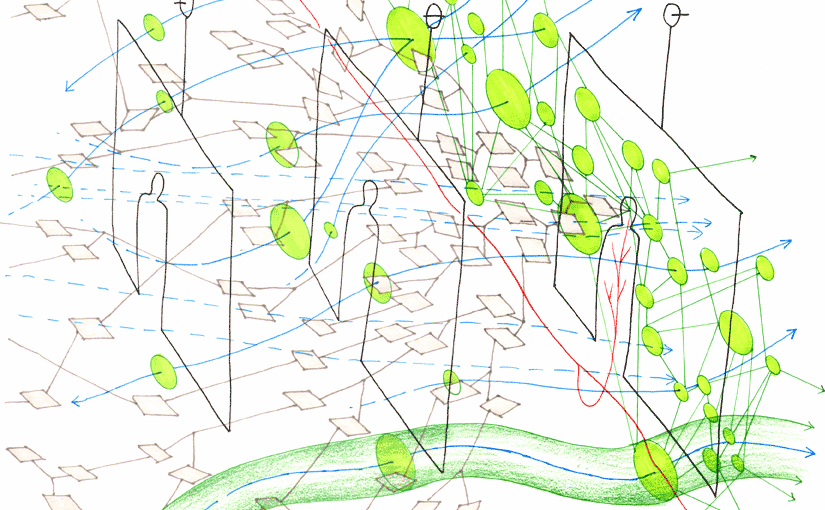
Image credit: Marc Ngui, Thousand Plateaus.

teaching portfolio